
Review · EGYPT
From Aswan: Trip to Abu Simbel by Bus
Wake before dawn for ancient wonders. This Aswan excursion takes you to Abu Simbel by modern air-conditioned bus, with hotel pickup, entrance fees, bottled water, and an English-speaking Egyptologist guide included. I like the chance to see both rock-cut temples in one small-group trip, and I like that the early departure can place you at the monuments before the largest crowds arrive.
The colossal statues of Ramses II are the main event, but the Temple of Queen Nefertari adds an important second chapter. I also appreciate that the price covers transport and admission, which keeps the day simple. The drawback is clear: this is a very long road trip, often involving about four hours each way, and the guide service may be brief or uneven.
Key points to know before booking
- The drive takes most of the day: Expect an early start and a long return journey between Aswan and Abu Simbel.
- You see two major temples: Ramses II’s great sun temple and the nearby Temple of Queen Nefertari are both included.
- The 4 a.m. departure has a purpose: An early arrival can mean cooler conditions and better morning views.
- The $110 price includes useful basics: Hotel pickup, return transport, admission, bottled water, taxes, and an English-speaking guide are covered.
- Guide time may be limited: One account describes only a short explanation outside, followed by time to explore and photograph the temples.
- Some pickup locations cost extra: Hotels on Soheil Island, Hisa Island, Aswan Airport, or a Nubian hostel require an additional charge.
Why Abu Simbel is worth the long road
Abu Simbel is not a quick side trip from Aswan. It sits far enough away that the road journey becomes a major part of the day. Still, the temples are among Egypt’s most powerful ancient monuments, and their remote setting gives the visit a sense of occasion.
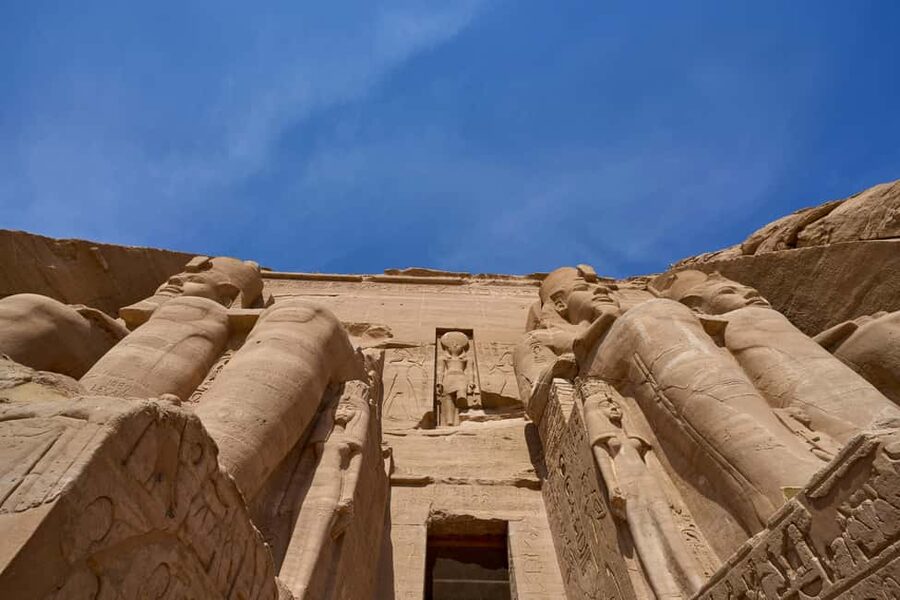
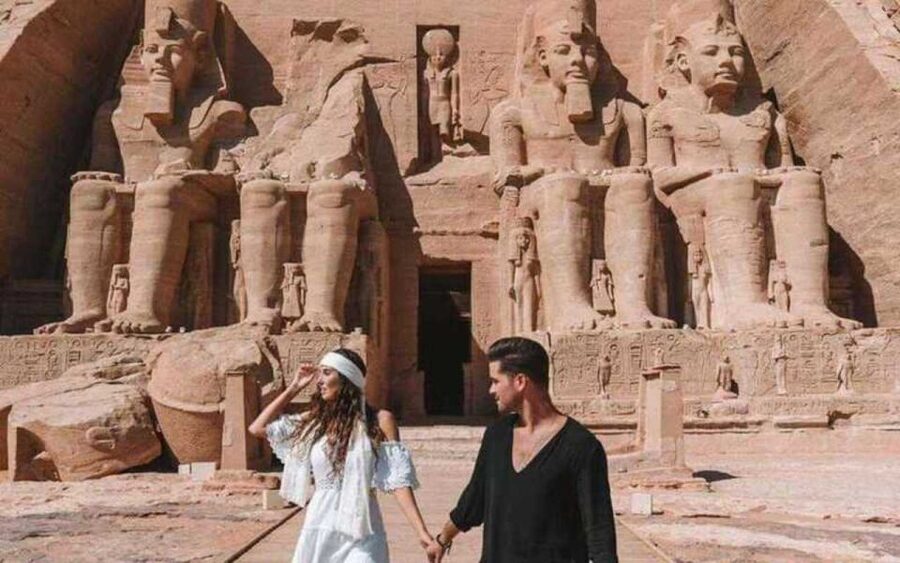
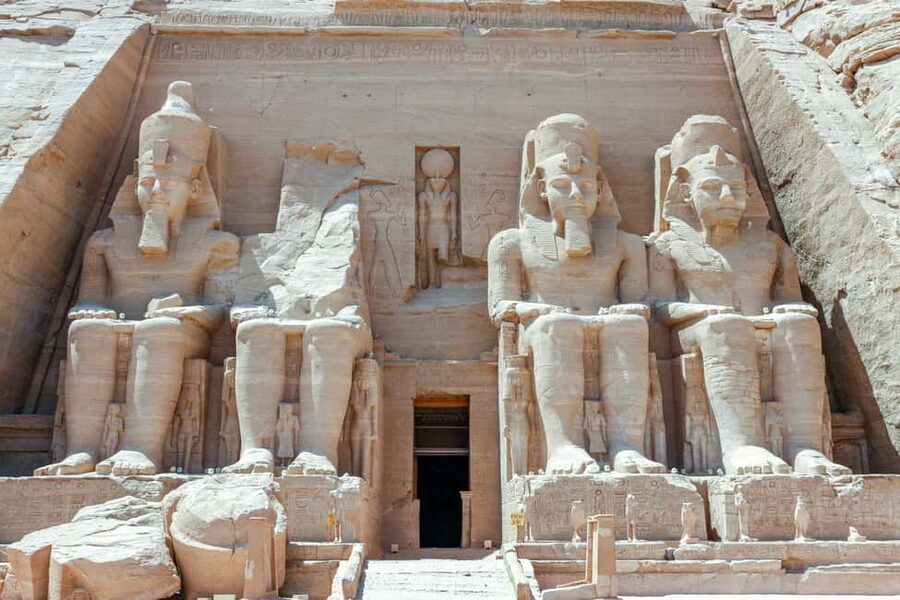
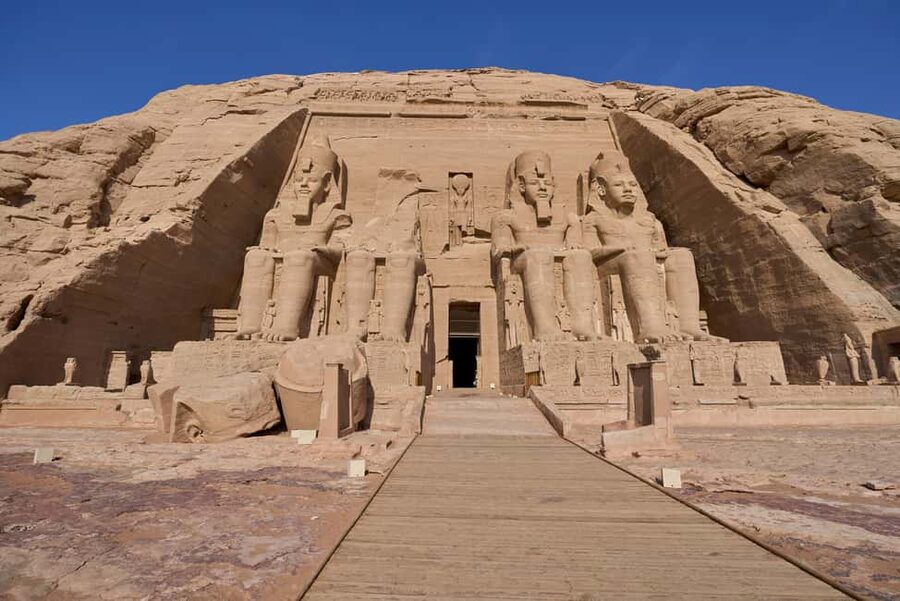
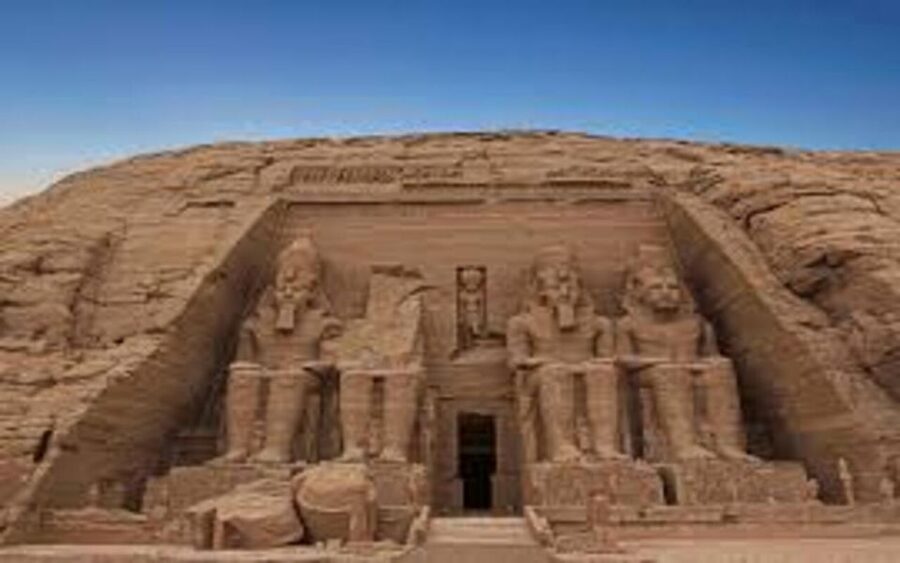
The first sight is the façade of the Great Temple, cut into the rock and guarded by four enormous seated statues of Ramses II. Even from a distance, the scale is hard to grasp. The figures dominate the entrance, and their size gives you a direct sense of the king’s power and ambition.
This is the Temple of Ramses II, also called the Sun Temple of Ramses II. It was dedicated to Ptah, Re-Her-Akhtey, Amun-Re, and Ramses II himself. Those names can sound like a list when you first hear them, but they help explain the purpose of the building. This was not simply a royal monument. It joined the king with major gods in a grand statement of authority.
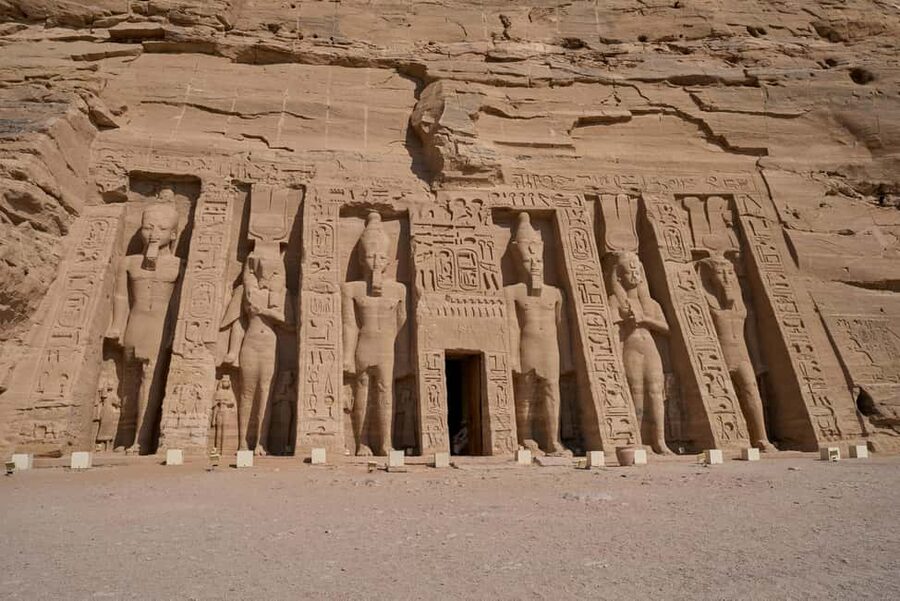
The second temple belongs to Queen Nefertari and is also linked with Hathor, the wife of the Sun God. Together, the two temples connect Ramses II, Nefertari, Hathor, and the sun deity in a carefully planned royal and religious setting.
I find the pairing especially useful for understanding ancient Egyptian power. The larger temple celebrates the king, while the smaller one honors the queen. You are not just looking at two old buildings. You are seeing how royal identity, religion, and family ties were presented in stone.
A few more bus tours around Egypt worth a look
- VIP Day Trip to Cairo by Bus with Top Tour operators
★ 5.0 · 739 reviews - Cairo By Big Bus full day From Hurghada (Pyramids-sphinx-Egyptian Museum-Lunch)
★ 4.5 · 494 reviews - Day trip to Cairo by bus from Sharm el Sheikh
★ 4.5 · 334 reviews
The early pickup from Aswan
The day begins very early, usually around 4 a.m. One booking was moved from a planned 10 a.m. departure to 4:15 a.m., so you should confirm the pickup time carefully before the morning of the trip. The early schedule may not suit anyone who wants a relaxed start, but it has a practical advantage.
An early vehicle can reach Abu Simbel ahead of many larger buses. One especially positive account described a small van moving quickly past much of the bus traffic and arriving among the first groups. That meant better morning views and a quieter first look at the temple façades.
Do not expect a slow breakfast outing. You will be leaving your hotel while it is still dark, then spending hours on the road. The reward is arriving at one of Egypt’s great monuments before the day feels fully underway.
The transport is advertised as a modern, air-conditioned bus, with bottled water on board. Air conditioning matters on a long desert road, and water is a small but welcome inclusion. The group is described as small, although the exact maximum size is not provided.
A four-hour road trip each way
The distance is the main practical issue. One account describes roughly four hours going to Abu Simbel and another four hours returning to Aswan. That is close to a full day in a vehicle, even though the actual temple visit is the reason you booked.
I would plan your expectations around endurance rather than speed. The road journey may feel worthwhile on the way out because the temples are ahead. On the return, tiredness can set in, especially after an early wake-up and several hours on your feet.
The bus gives you a chance to rest, but it also means the quality of the driving matters. One account raised serious concern about fast driving and said passengers repeatedly asked the driver to slow down. That is not a small complaint. If you feel uncomfortable, speak up early and clearly. A long excursion should not require you to accept driving that feels unsafe.
At the same time, another account praised the quick early journey and the ability to reach Abu Simbel before many other vehicles. Driving speed and comfort may vary by driver and vehicle, so I would treat this as a point to watch, not a guaranteed feature of every departure.
Meeting the four statues of Ramses II
The Great Temple is the emotional high point. Its entrance is framed by four massive statues of Ramses II, each seated and facing outward. The façade does most of the talking before your guide says a word.
Take a moment to study the scale. The statues are not simply large decorations. They are a public announcement of the king’s status, designed to impress anyone approaching the temple. I like to view them first from a little distance, then walk closer and examine the carved details.
The guide is meant to explain the history of the temple and Ramses II. A good explanation should help you understand the four gods connected with the building, the role of Ramses II, and the relationship between the two temples.
The actual guide experience may be less thorough than the description suggests. One account says the main English-speaking guide gave about five minutes of explanation outside, then allowed roughly an hour for photographs and independent time inside the monuments. The guide then focused heavily on another group, and a different guide who did not speak English provided another short walk through the temple.
That arrangement may be fine if you prefer to explore alone, but it is disappointing if you are paying mainly for detailed interpretation. I would arrive with a few questions ready, especially about the temple’s gods, the royal imagery, and the rescue of the monuments.
Same place, a different way to ride:
- Sharm El Sheikh: Great Pyramids, Sphinx, Museum Tour by Bus
★ 3.7 · 287 reviews - Sharm El-Sheikh: Full-Day Tour of Cairo and Pyramids by Bus
★ 4.8 · 237 reviews - Ras Mohamed National Park Half Day Tour by Bus In Sharm El Sheikh
★ 4.5 · 60 reviews - Abu Simbel Excursion 1 Day Trip from Aswan (Sharing Bus & Egyptologist Guide)
★ 4.0 · 52 reviews
Seeing Queen Nefertari’s temple
The Temple of Queen Nefertari is smaller, but do not treat it as an afterthought. Its connection with Hathor gives you a different view of royal Egypt and of Nefertari’s place beside Ramses II.
The two temples were designed to work together. The great temple presents Ramses II in a powerful royal and divine setting. Nefertari’s temple links the queen with Hathor, a major goddess associated here with the Sun God. The result is a symbolic family and religious grouping formed by the king, queen, goddess, and sun deity.
This second stop also helps break up the visit. After the huge façade of Ramses II, the smaller temple offers a different scale and emphasis. You can compare the two buildings rather than treating Abu Simbel as one single monument.
Entrance to both temples is included in the price. The available information does not promise a set amount of time at each one, so your visit may depend on the guide, group, and site schedule. If photography is important to you, use the free time carefully and ask the guide how long you have before walking away from the group.
The rescue of the temples from rising water
Abu Simbel also carries a modern story. The temples were threatened by flooding, and the Egyptian government worked with UNESCO to save them. That rescue is one reason the site feels especially important today.
Your guide may discuss the relocation project and the danger posed by the flood. This context adds meaning to the visit because you are seeing monuments that survived not only thousands of years of weather and political change, but also a major modern engineering challenge.
The supplied information does not give technical details about how the temples were moved, so I would not expect a full engineering lecture as part of the standard trip. Still, ask about the rescue if it is not covered. It is one of the most useful subjects to understand before you leave the site.
Nasser Lake and the setting around Abu Simbel
The temples sit near Nasser Lake, and the water adds a striking contrast to the carved stone. After hours on the road, the sight of the lake helps explain why the rescue of Abu Simbel mattered so much.
You may have time to appreciate the setting around the temples, but this is not described as a boat trip or a lakeside excursion. The lake is part of the visual experience, not a separate activity. Keep your camera ready, but do not expect a full tour of the shore.
I like this part of the visit because it puts the monuments in a wider setting. The temples are not just isolated façades. They belong to a place shaped by water, desert, ancient authority, and modern construction.
What the $110 price really covers
At $110 per person, this is not the cheapest way to see Abu Simbel. Its value depends on what you would otherwise need to arrange yourself.
The package includes:
- Pickup from your Aswan hotel and return
- Transport in an air-conditioned bus
- An English-speaking guide for the group
- Entrance fees to the listed historical sites
- Bottled water
- Service charges and taxes
That is a useful bundle. You are paying for a full day of transport, entry to both temples, and a guide without having to assemble each part separately. The hotel pickup is particularly helpful for a 4 a.m. departure.
The value becomes weaker if your guide provides only a short explanation and the rest of the visit is mostly self-guided. One account considered the cost high for that reason, especially after paying for a long journey and receiving limited interpretation.
You should also budget for a tip, since tipping is not included. Extras are not covered either. If your accommodation is on Soheil Island, Hisa Island, at Aswan Airport, or in a Nubian hostel, an additional pickup cost applies.
Who will enjoy this trip most
I would recommend this excursion to anyone who considers Abu Simbel a priority and wants a straightforward way to reach it from Aswan. The temples are too important to skip simply because the road is long.
It suits you if:
- You want both temples in one organized outing.
- You value hotel pickup and included admission.
- You can handle a very early start.
- You are comfortable spending much of the day on the road.
- You are happy to explore independently if the guide’s explanation is brief.
- You want the chance to arrive before larger groups.
It may not suit you if you dislike long bus rides, need a relaxed itinerary, or expect a detailed private guiding service. The experience is described as a small-group trip, but it is not a private tour. The guide’s attention may be divided among groups.
The overall rating supplied for the experience is 3.3 out of 5 from four ratings. That mixed result fits the practical picture: the destination is exceptional, the early arrival can work very well, but transport comfort and guide quality deserve careful thought.
Booking advice for a smoother day
Confirm the pickup time before you go, especially if you originally saw a later departure. The early departure appears to be common, and one booking changed from 10 a.m. to about 4:15 a.m.
Ask where your pickup will take place and whether your hotel falls into one of the locations with an extra charge. Bring water beyond the included bottle if you normally drink a lot during a long day, and plan for limited rest during the temple visit.
I would also decide in advance how much guidance you need. If you mainly want transportation, entrance, and time to see the monuments, this package may work. If you want a detailed lesson at every stage, make that expectation clear at the start and ask the guide questions directly.
The cancellation policy allows a full refund when you cancel at least 24 hours in advance, and you can reserve now and pay later. Those terms give you some flexibility while you settle your Aswan plans.
Should you book the Abu Simbel bus trip?
I would book it if Abu Simbel is high on your list and you want the simplest organized route from Aswan. The early arrival and included entrance fees are the strongest advantages, and seeing the four statues of Ramses II beside the Temple of Nefertari makes the long ride worthwhile for many people.
I would hesitate if you are sensitive to fast driving, need a long and detailed guided visit, or dislike spending eight hours on the road. At $110, the tour offers fair convenience, but its value depends heavily on the driver and guide assigned that day.
For the best chance of a good experience, accept the early start, confirm your pickup, ask for clear English explanations, and treat the free time as an important part of the visit. Abu Simbel itself is extraordinary. The question is whether this particular long bus day gives you enough comfort and guidance to enjoy it.
FAQ
Where does the Abu Simbel trip begin?
Pickup is provided from your hotel in Aswan, followed by return transport to your hotel after the visit.
How early does the tour leave Aswan?
The trip leaves early in the morning, with one confirmed departure described as around 4 a.m. Another pickup was scheduled for 4:15 a.m.
How long is the journey to Abu Simbel?
The road journey has been described as roughly four hours each way, making this a full-day outing.
What temples are included?
The visit includes the Great Temple of Ramses II and the Temple of Queen Nefertari, also associated with Hathor.
Is the guide included?
Yes. An English-speaking guide for the group is included, along with entrance fees to the historical sites.
Is transportation included?
Yes. The package includes hotel pickup, return transport, and transfers in a modern air-conditioned bus.
Are there extra pickup charges?
Yes. An extra cost applies if your accommodation is on Soheil Island, Hisa Island, at Aswan Airport, or in a Nubian hostel.
Just added around Egypt
- Tour In Luxor From Hurgharda By Bus★ 5.0 · 3 reviews
- Trip to Cairo from Hurghada By Bus★ 4.5 · 2 reviews
- Full-Day Tour in Cairo by Bus★ 4.0 · 6 reviews
- Cairo Tour by bus, Pyramids, Sphinx & Museum with Lunch -Hurghada★ 4.5 · 21 reviews
- Day Trip to Cairo from Hurghada by Bus with Lunch & Guide★ 5.0 · 2 reviews
- Over Day Cairo By Bus From Hurghada★ 5.0 · 4 reviews
- Day trip from Safaga port to Luxor by bus★ 5.0 · 5 reviews
- Luxor Day Tour from Hurghada by bus★ 4.0 · 5 reviews
Egypt Bus Tours, compared.
VIP Day Trip to Cairo by Bus with Top Tour operators
Read our review →
Cairo By Big Bus full day From Hurghada (Pyramids-sphinx-Egyptian Museum-Lunch)
Read our review →
Sharm El Sheikh: Great Pyramids, Sphinx, Museum Tour by Bus
Read our review →
Sharm El-Sheikh: Full-Day Tour of Cairo and Pyramids by Bus
Read our review →
Ras Mohamed National Park Half Day Tour by Bus In Sharm El Sheikh
Read our review →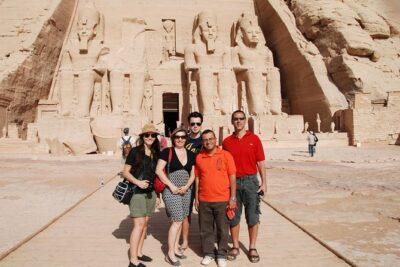
Abu Simbel Excursion 1 Day Trip from Aswan (Sharing Bus & Egyptologist Guide)
Read our review →
Pyramids Of Giza And Egyptian Museum Day Tour By Bus From Sharm
Read our review →Browse the lists this tour appears in