
Review · USA
Double Decker Austin Single Loop Sightseeing Tour
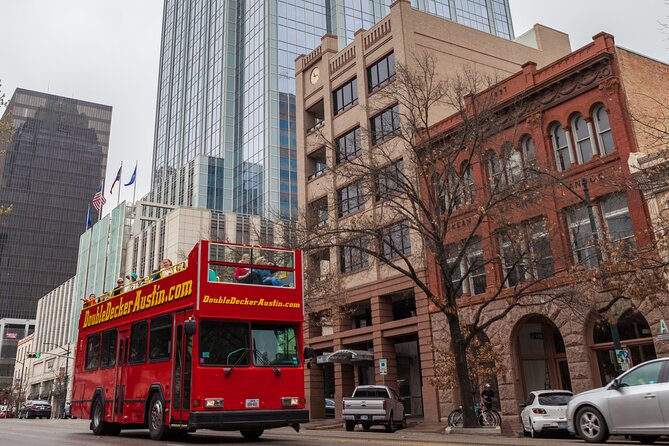
Austin rewards wandering, but first get oriented. The Double Decker Austin tour gives you a quick ride through downtown, past the Capitol, Driskill Hotel, University of Texas, South Congress, and the Congress Avenue bat bridge. I like the open-air upper deck for city views, and I like the climate-controlled lower deck when the Texas sun turns serious.
The live commentary adds local color, and guides such as Jason, Lawrence, and Will have earned praise for their stories and recommendations. The main tradeoff is simple: this is a fast overview, not a hop-on, hop-off service or a detailed stop-by-stop visit. You see many places from the bus, but you usually will not get off to explore them.
Key points to know before booking
- A 75 to 90 minute city sampler: You cover central Austin quickly, making this useful on your first day.
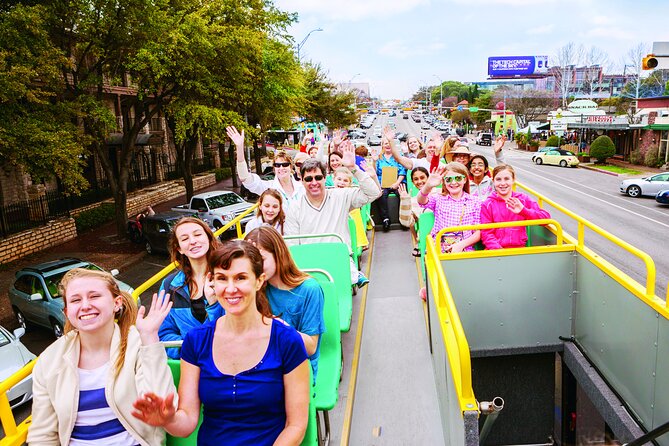
- Two very different seats: The open top deck offers better views and photos, while the lower deck provides air conditioning.
- A strong downtown route: The bus passes the Texas Capitol, 6th Street, the Driskill Hotel, UT Austin, South Congress, and Lady Bird Lake.
- Live commentary matters: The best guides add jokes, local advice, and context that you would miss on a self-guided drive.
- The route is not a full city tour: West Austin and many attractions are not covered in depth, and the bus keeps moving.
- Good value for a short orientation: At $36.81, the tour costs less than many longer sightseeing outings, but its value depends on wanting an overview rather than extended visits.
Starting at the Austin Visitor Center on East Fifth Street
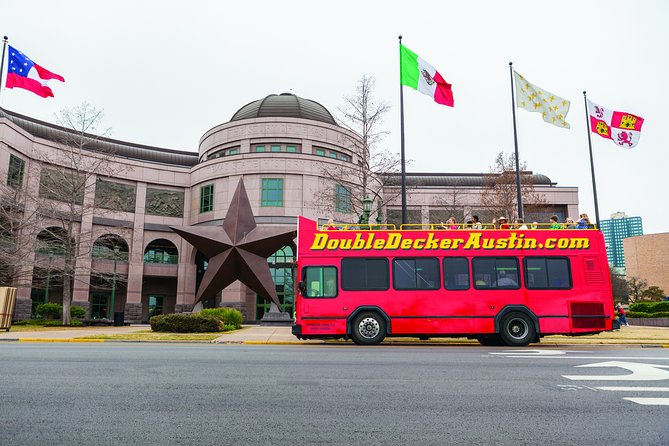
The tour begins at 103 E 5th St., at the Austin Visitor Center on Red River Street between Fourth and Fifth streets. This is a useful launch point because you can gather information, pick up souvenirs, and get a coffee before or after the ride.
You receive a mobile ticket, and the tour is offered in English. The bus holds a maximum of 35 people, which keeps the group more manageable than a large city coach. Arrive before departure so boarding is not rushed. The operator asks people to load about 15 minutes early and generally keeps a tight schedule.
The route ends back at the same meeting point. That makes planning easy, especially if you are using the ride to decide where to spend the rest of your day.
More Open-Top Bus Tours in the USA
- New York: Hop-on Hop-off Sightseeing Tour by Open-top Bus
★ 4.2 · 5,863 reviews - Big Bus NYC: Hop-On Hop-Off Sightseeing Tour by Open-top Bus
★ 3.5 · 4,762 reviews - Hop-on Hop-off Sightseeing Tour by Open-top Bus with 18 Stops
★ 3.5 · 3,848 reviews
Choosing between the sunny upper deck and cool lower deck
The upper deck is the main attraction. You get a wider view of the streets, better sightlines over traffic, and an easier chance to take photos. On a pleasant day, the breeze turns the ride into a relaxed introduction to Austin.
There is one practical warning. Low tree branches can reach the upper deck, and some riders have had to duck. Keep your head and camera alert when the bus passes beneath trees. The driver may also slow down, but the ride is still a moving tour, not a photo stop at every landmark.
The lower deck is climate-controlled, a welcome option in hot weather or during rain. You lose some of the open-air feel, but you gain shade and a steadier place to listen. I would choose upstairs in mild weather and downstairs when heat, wind, or sudden weather makes the top deck less comfortable.
East Sixth Street and the first taste of downtown Austin
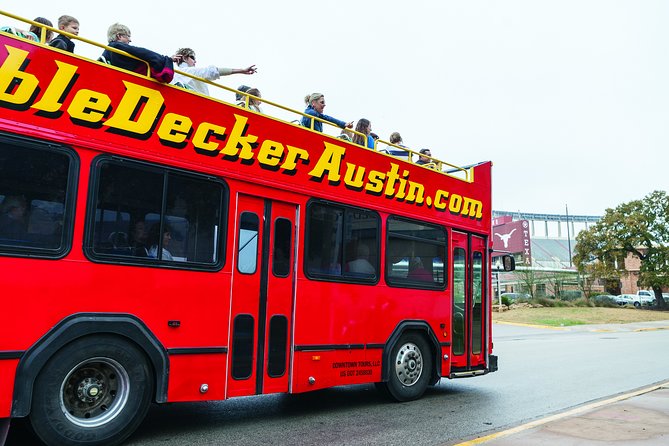
One of the early highlights is the Historic Sixth Street Entertainment District. This is Austin’s famous nightlife corridor, lined with music venues, bars, restaurants, and old commercial buildings. From the bus, you get a sense of its role in the city without spending time in the middle of the crowds.
The Austin Convention Center follows as another useful point of reference. It helps you understand the scale of downtown and the relationship between the central business area, entertainment streets, and the waterfront.
The route also passes Central Fire Station No. 1, home to the Austin Fire Museum. The museum displays uniforms, photographs, and firefighting items from the 19th through 21st centuries. You may want to mark it for a later visit, since the bus gives you only a passing look.
Small historic homes with big Texas stories
The Hannig House offers one of the tour’s more personal stories. Joseph Hannig built the 1869 house for his wife, Susanna Dickinson, who survived the Battle of the Alamo and carried news of its fall to Sam Houston. That account connects one modest Austin home with the events that shaped the Republic of Texas.
The route also reaches the home connected with William Sydney Porter, better known as O. Henry. You can learn about his life in Austin and, depending on your later plans, visit the interior. These stops add variety to the tour. You are not only seeing grand civic buildings, but also places tied to individual lives.
More Sightseeing Bus Tours in the USA
- New Orleans City Sightseeing Hop-On Hop-Off Bus Tour
★ 4.5 · 4,943 reviews - Big Bus Las Vegas: Sightseeing Night Tour by Open-Top Bus
★ 4.0 · 3,612 reviews - San Francisco: Hop-On Hop-Off Sightseeing Tour with 17 Stops
★ 4.5 · 3,600 reviews - City Half Day Tour of Miami by Bus with Sightseeing Cruise
★ 3.5 · 2,747 reviews
The Driskill Hotel and the Texas Capitol

The Driskill Hotel is one of the most photogenic buildings on the route. Completed in 1886 in Romanesque style, it is the oldest operating hotel in Austin. Colonel Jesse Driskill, a cattleman, built it as what he hoped would be the finest hotel south of St. Louis.
The Texas State Capitol is the visual centerpiece. It is widely regarded as one of the most notable state capitol buildings in the United States and is listed as both a National Historic Landmark and a site on the National Register of Historic Places.
The bus gives you a useful first look, but do not expect a full Capitol visit. One rider wished the bus had slowed near the Capitol and courthouse for better viewing. That is a fair concern. Have your camera ready, but plan a separate visit if the building is high on your list.
The Governor’s Mansion is another important stop. It has served as the official home of Texas governors and their families since 1856. It is the fourth oldest continuously occupied governor’s residence in the country and the oldest west of the Mississippi River.
The mansion suffered major damage in a 2008 arson attack, then underwent restoration. The tour explains why this elegant home matters, though again, you see it from the bus rather than touring its rooms.
UT Austin, presidential history, and major museums
A large part of the route crosses the University of Texas at Austin campus. You pass Darrell K Royal Texas Memorial Stadium, home of the Longhorns football team since 1924. Its former official capacity was 100,119, a figure that gives you a sense of the scale of college football in Texas.
The 307-foot UT Tower, completed in 1937, is the university’s best-known landmark. The tower is easy to spot and makes a strong photo from the upper deck.
The Lyndon Baines Johnson Library and Museum offers a different view of Texas and American politics. Its exhibits examine the presidency of Lyndon Johnson, including triumphs, failures, and difficult decisions. You pass the building during the loop, so set aside another block of time if you want to see the exhibits properly.
The Bullock Texas State History Museum opened in 2001 as the official history museum of Texas. It presents the state’s story through exhibits and educational programs. The Blanton Museum of Art holds more than 19,000 works, ranging from ancient Greek pottery to abstract expressionism.
The Harry Ransom Center, also at UT, focuses on literature, photography, film, art, and the performing arts. These institutions make the university portion worthwhile for anyone who likes museums, though it can feel long if you came mainly for downtown streets and civic buildings.
One useful way to approach this section is to treat it as a list of ideas for later. The bus helps you choose between the LBJ Library, Bullock Museum, Blanton, and Ransom Center instead of guessing which fits your interests.
The Congress Avenue bats and South Congress
The Congress Avenue Bridge shelters North America’s largest urban bat colony. From April through October, roughly 750,000 to 1.5 million bats may fly out near dusk. The tour cannot replace the evening bat experience, but it shows you where it happens and explains why the bridge has become one of Austin’s signature sights.
South Congress, often called SoCo, brings a change of mood. The neighborhood south of Lady Bird Lake is known for boutiques, food, galleries, music venues, and older Austin character. The bus lets you preview the area before deciding where to return on foot.
This is one of the most useful parts of the ride because South Congress is not simply another downtown block. It has a different feel and works well as a later walking stop. The drawback is that the bus cannot pause long enough for browsing, eating, or shopping.
Lady Bird Lake, the Long Center, and the final loop
The route also passes Lady Bird Lake and its hike-and-bike trail. You see the water and the connection between downtown, the riverfront, and nearby cultural venues. It is a good reminder that Austin is not only offices, nightlife, and government buildings.
The Long Center is a major performing arts venue that presents music, theater, films, festivals, and other community events. Its location near the lake makes it easy to pair with a waterfront walk or a later show.
Other points along the route can include Waterloo Park, the Paramount Theatre, the Warehouse District, Austin City Hall, the Moody Theater, the Bremond Block, Moonlight Towers, Santa Rita No. 1, the Heman Marion Sweatt Travis County Courthouse, Auditorium Shores, and the Lady Bird Lake trail.
You will not receive the same depth on every location. The guide has limited time, traffic affects the pace, and some buildings pass quickly. That is the central compromise of the tour: broad coverage in exchange for short looks.
How good is the live commentary?
The guide can make or break this experience. Strong guides add dates, local stories, food and entertainment suggestions, and a sense of why Austin developed as it did. Jason has been praised for combining local knowledge with recommendations, while Lawrence was described as warm and welcoming. Will has also been singled out for clear, entertaining commentary and a thoughtful manner.
Madi brings a younger, playful style. That works well for some people and not for others. One guide may offer energetic jokes, while another may speak more slowly and focus on facts. A few riders have found the delivery too light, too fast, or not detailed enough.
I would book this knowing that the human part is variable. The route is fixed, but the tone and amount of commentary depend on the person leading your departure. Most positive feedback centers on guides who are friendly, cheerful, and clearly pleased to talk about Austin.
Price, timing, and who gets the best value
At $36.81 per person, the tour is reasonably priced for a 75 to 90 minute ride with live commentary and a return to the starting point. You are paying for convenience, orientation, and the chance to cover several separated parts of central Austin without arranging transport.
The value is strongest if you are new to the city, have limited time, or want help planning later outings. It is also useful for families, couples, solo visitors, and people who would rather not walk downtown in the heat.
The value is weaker if you expect to leave the bus at major sights, explore West Austin, or receive a full historical lecture on every building. The ride is an introduction, not a substitute for the Capitol, museums, South Congress, or the bat viewing experience.
The tour is usually booked about eight days ahead. Confirmation is normally sent at booking, although a reservation made within one hour of departure is confirmed as soon as possible if space remains. Free cancellation is available up to 24 hours before the start time. Within 24 hours, the fare is not refunded.
The experience depends on good weather and a minimum number of participants. If poor weather or insufficient bookings cancel the tour, you can choose another date or receive a full refund.
Practical advice for a better ride
- Take it early in your Austin stay. You will see places to revisit and can shape the rest of your schedule around them.
- Check the forecast. The upper deck is best in comfortable weather, while the lower deck is the safer choice in strong heat or rain.
- Arrive before departure. Early loading helps the bus leave on time and gives you a better chance of choosing your preferred deck.
- Keep your camera ready near the Capitol and UT Tower. The bus keeps moving, so do not wait for a second chance.
- Think of the route as a preview. Mark South Congress, the museums, the Capitol, and the lake for later visits.
- Ask the guide for suggestions. Several guides have offered useful food and entertainment ideas, which can be more helpful than a printed list.
- Mind low branches upstairs. Ducking briefly is better than losing a hat, camera, or pair of sunglasses.
The tour also permits service animals, runs near public transportation, and is suitable for most people. Those details make it a practical choice for a wide range of sightseeing plans.
Should you book the Double Decker Austin tour?
I would book it if you want a quick, friendly introduction to central Austin and understand that most sights are viewed from the moving bus. The Capitol, UT campus, Driskill Hotel, South Congress, Lady Bird Lake, and Congress Avenue Bridge give you a solid first map of the city.
I would skip it if you want long stops, a very detailed lecture, or a route that covers every part of Austin. For most first-time visitors, the sensible plan is to take this tour near the start of your stay, sit upstairs when the weather allows, and use the rest of your time to return to the places that catch your eye.
FAQ
How long does the Double Decker Austin tour last?
The tour lasts about 1 hour 15 minutes to 1 hour 30 minutes.
Where does the tour begin?
It begins at 103 E 5th St. in Austin, at the Austin Visitor Center on Red River Street between Fourth Street and Fifth Street.
Where does the tour end?
The tour ends back at the same meeting point.
Is the ticket available on a mobile phone?
Yes. The experience provides a mobile ticket.
What language is the tour offered in?
The tour is offered in English.
Can I sit on the top deck?
Yes. The bus has an open-air upper deck, subject to available seating.
Is there an indoor seating option?
Yes. The lower deck is climate-controlled.
How many people can join the tour?
The maximum group size is 35 people.
Can I cancel for a full refund?
Yes, if you cancel at least 24 hours before the experience begins. Cancellations within 24 hours are not refunded.
Just added around the USA
- Viator Exclusive: 10:15PM Las Vegas Night Tour by Open-Top Bus★ 4.0 · 103 reviews
- Sin City Party Bus Club Crawl★ 4.5 · 17 reviews
- Strip Club Crawl & Open Bar Party Bus – Las Vegas★ 3.5 · 40 reviews
- Private Party Bus Up to 30 People Vegas Nightclub Tour★ 3.0 · 4 reviews
- Rockstar Pool Party Crawl w/ VIP Entry & Party Bus Ride★ 3.5 · 9 reviews
- Skip-the-Line at Vegas Clubs with a Party Bus!★ 5.0 · 39 reviews
- Las Vegas Party Bus Club Crawl★ 4.0 · 76 reviews
- Party Bus Dayclub Crawl★ 4.0 · 9 reviews
Open-Top & Double-Decker Bus Tours, compared.

Big Bus Hop-on, Hop-off Open-Top Sightseeing Tour
Read our review →
Hop-on Hop-off Sightseeing Tour by Open-top Bus
Read our review →
London by Night Sightseeing Open-Top Bus Tour
Read our review →
Big Bus NYC: Hop-On Hop-Off Sightseeing Tour by Open-top Bus
Read our review →


Hop-on Hop-off Sightseeing Tour by Open-top Bus with 18 Stops
Read our review →
Big Bus Las Vegas: Sightseeing Night Tour by Open-Top Bus
Read our review →Browse the lists this tour appears in