
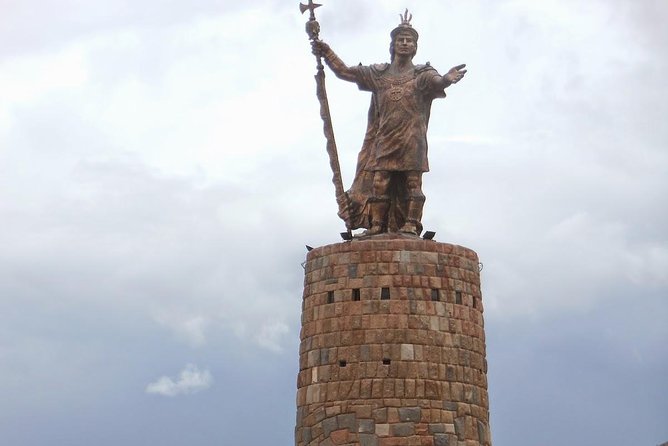
Review · PERU
Open Bus Cusco City Tour
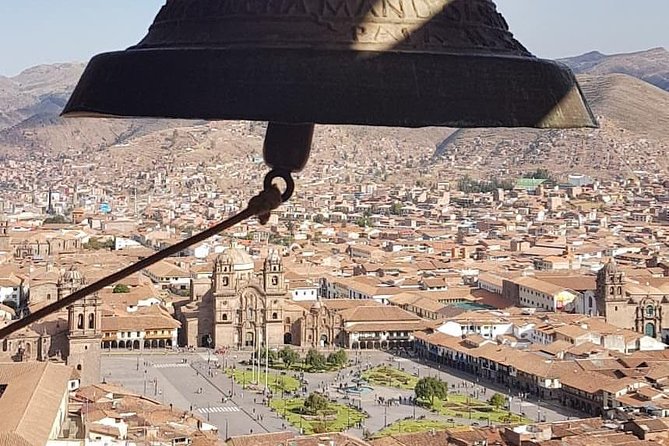
See Cusco from above. The open-top double-decker bus gives you a quick look at the city, hillside neighborhoods, and Inca sites without demanding a long walk. I like the broad views from the Christ statue and the chance to hear local background while passing landmarks. The low price is another strong point. The main catch is that some departures run late, and the English guiding can be uneven.
I also like this tour for a first day in Cusco, especially if you are still adjusting to the altitude or feeling tired after Machu Picchu. You get a useful orientation, a few photo stops, and a look beyond the historic center. Just know that most archaeological sites are viewed from the bus, not explored on foot, and some stops may involve shopping or a traditional ceremony.
Key points at a glance
- Christ statue viewpoint: A short stop brings wide views over Cusco and time for photos.
- Mostly a sightseeing ride: You pass several important places, but only a few stops allow you to get off.
- Bilingual service varies: Some guides, including Victor and Paulo, have provided strong English commentary, but other departures have had communication problems.
- Expect changing weather: Rain gear may be available, but the upper deck can turn cold quickly, especially later in the day.
- Cultural ceremony: A traditional offering using coca leaves may be included, with participation intended to be optional.
- Small advertised group: The bus is limited to 24 people, though some passengers still find busy departures crowded.
What this Cusco bus tour is really like
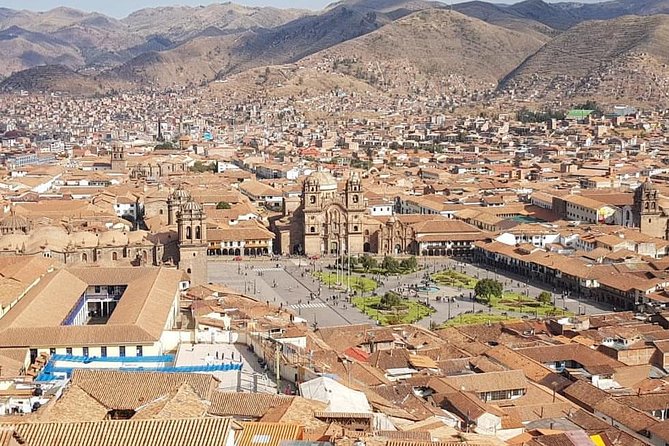
This is a three-hour city and hilltop circuit that begins near the center and ends a couple of blocks from the Plaza de Armas. The route combines a brief introduction in the main square, an open-bus ride, a stop at the Christ statue, and views of several major places connected with Cusco’s Inca and Spanish past.
At $14.09 per person, the price is easy to justify if you treat the outing as a moving overview rather than a full archaeological tour. You are paying for transport and a bilingual guide, not museum entries, meals, or a long walking visit at each site.
I would set your expectations early. This is not a hop-on, hop-off bus where you spend an hour at every monument. It is closer to a guided loop with two meaningful stops and several drive-by explanations. That makes it useful when you want to see more with little effort, but less satisfying if you want detailed time inside ruins.
The bus holds a maximum of 24 people. That is a manageable size on paper, though the open upper deck can feel crowded when everyone wants the best view. Some departures have also been delayed by 40 minutes to more than an hour, so avoid booking another time-sensitive activity immediately afterward.
More City Tours in Peru:
- City Tour Panoramic Bus Departure from Larcomar
★ 5.0 · 97 reviews - Cusco: Open-Top Bus City Tour
★ 4.4 · 64 reviews - Lima : City Tour by Panoramic Bus – Walking & Catacombs
★ 4.3 · 41 reviews
Starting at Plaza de Armas
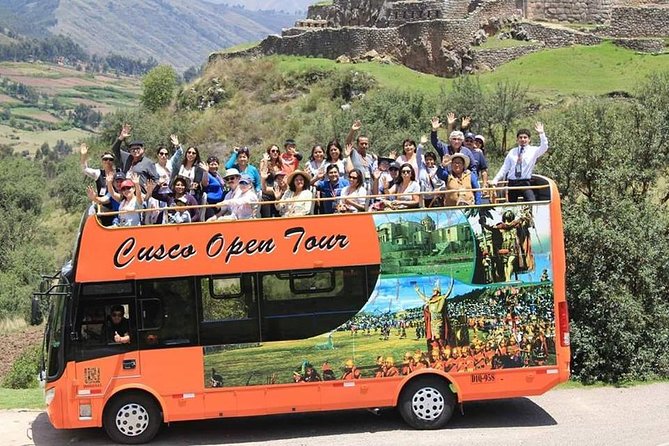
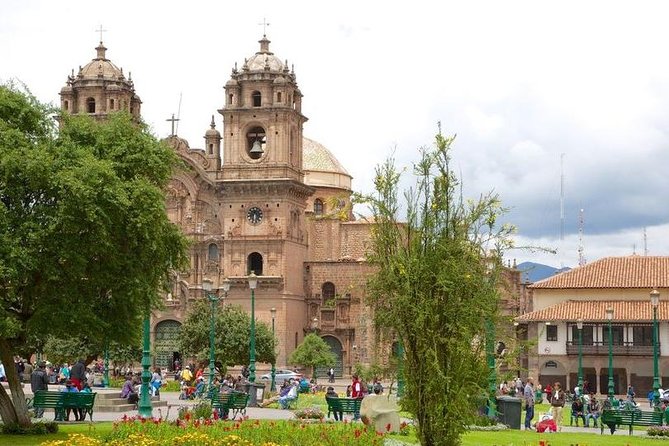
The outing begins at Plaza de Armas, the natural place to introduce Cusco. The guide gives a short orientation to the city’s culture and past before you board the bus.
This opening is brief, about 10 minutes, but it gives you a useful frame for the rest of the ride. Cusco is not simply a colonial square with photogenic buildings. Its Spanish churches and streets were built over, beside, and around an older Inca city. The tour’s best moments come when the guide connects what you see from the road to that older layer.
The meeting point is at Sta. Catalina Angosta 120. Some people have found the pickup confusing, with a walk from the square to the actual bus. The practical move is simple: arrive early, remain at the stated meeting point, and look for staff to lead the group. The bus used by the operator is orange, which helps you identify it.
The route ends at C. Saphy 661, about two blocks from the main square. That is convenient for returning to the center, but it is worth noting that the end point is not exactly the starting point.
A ride through Cusco beyond the center
Once aboard, you pass through parts of Cusco that many short walking tours skip. The bus moves through local streets and higher areas, giving you a look at daily life beyond the polished center.
The route includes Paccha and the Great Mural of Cusco. The mural presents scenes tied to the Incas and the Spanish conquest. From the bus, you get a quick visual introduction rather than a close study, so listen carefully if the guide points out details.
You also pass the site of Qorikancha, the Inca temple that was among the most sacred places in the empire. The Spanish built a church on its base after dismantling much of the Inca structure. That detail helps explain one of Cusco’s most important themes: old stonework was often reused rather than erased completely.
You may also pass archaeological sites outside the center. The tour description presents these as part of the route, but do not expect a proper ruin visit. The bus pauses briefly at one fortress for a panoramic look while you remain onboard. If you want to walk among the stones, read inscriptions, and spend time with an archaeologist or site guide, book a separate half-day visit.
This drive-by format has one clear benefit: you can cover more ground without exhausting yourself. It also has a clear limit: traffic, street noise, and the bus’s position can make it hard to catch every explanation.
The Christ statue stop and Cusco views
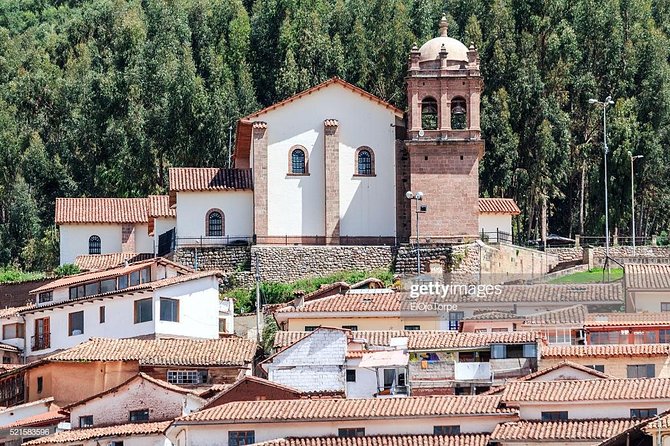
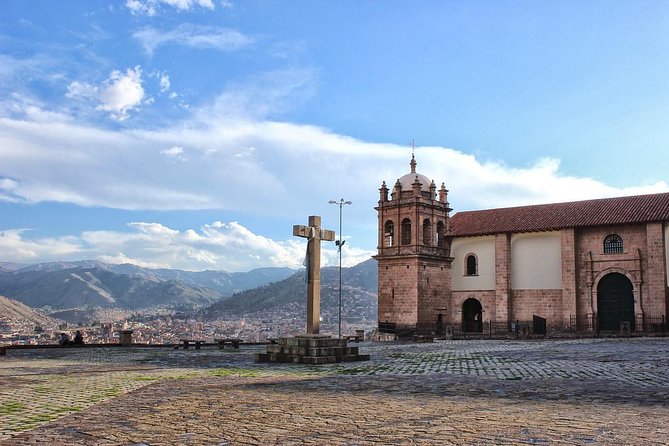
The most dependable stop is the white Christ statue above the city, often called Cristo Blanco. You get about 10 minutes to leave the bus, walk around, take photos, and look across Cusco.
This is the tour’s strongest photo stop. From here, the city spreads below you in a bowl of hills, with red tile roofs and dense streets filling the view. It gives you a fast sense of Cusco’s shape that is difficult to get from the central lanes.
Ten minutes is enough for photographs and a quick look, but not for a relaxed visit. Keep an eye on the guide and the bus. The stop is designed as a short viewpoint break, not an extended hilltop outing.
Altitude and weather matter here. Cusco sits high, and the bus climbs higher still. Several departures have become very cold, especially in the afternoon or after delays. Bring a warm layer even if the city feels mild when you leave the square. A hat, gloves, or scarf can make the upper deck much more enjoyable.
Rain can arrive quickly. One departure supplied rain gear for people seated upstairs, which helped when showers began. Still, the upper deck is exposed, so you should be ready to move inside. The view is the point, but comfort comes first.
A few more bus tours around Peru worth a look
- Cusco: Sightseeing Tour of the City on an Open-Top Bus
★ 4.0 · 481 reviews - Turist Bus Colca Canyon (Chivay) To Puno
★ 5.0 · 83 reviews - Lima : City tour 360° Panoramic bus – Sightseeing Tour
★ 4.0 · 15 reviews - Machu Picchu Entry Ticket and Bus from Aguas Calientes
★ 3.8 · 8 reviews
The cultural ceremony and shopping question
A traditional Andean ceremony is sometimes part of the outing. The experience has included a Peruvian traditional man offering a blessing or performing a ritual with coca leaves, along with opportunities to see llamas and alpacas.
For some people, this is the most memorable part of the tour. It presents living local practice rather than another quick look at a church facade. A ceremony connected with thanking Mother Earth can add meaning to the journey, especially if the guide explains what is happening.
For others, the stop feels uncomfortable. Some departures have included a shed or workshop where goods are offered for sale, including alpaca textiles. Several people felt pressured by sales pitches or disliked the prices. You should view the shopping as an optional commercial stop, not a required part of the cultural experience.
The same applies to the ceremony. The provider has said participation is voluntary, and that is the right approach. You should be able to watch respectfully without joining. If you do not want to take part, say so clearly and politely.
I would also ask at the start what the day’s route includes. The standard description emphasizes landmarks, but the actual balance between sightseeing, ceremony, and shopping can vary. That one question can prevent disappointment.
Guide quality and language service
The best departures are led by a lively bilingual guide who connects the sights into a story. Victor has been praised for translating into English while guiding a largely Spanish-speaking group. Paulo has also received strong praise for handling several languages quickly and keeping the ride engaging.
When the guide is clear, the bus becomes much more than transport. You hear why the Inca temple mattered, how Spanish construction used its foundation, and where local traditions remain visible. That context is the main reason to choose this over simply riding a sightseeing bus alone.
Language service is the biggest risk. Some English-speaking passengers have had full, useful commentary. Others have encountered a guide with limited English or a tour conducted almost entirely in Spanish. One complaint described an audio recording that was hard to hear over traffic and did not match the bus’s position.
The operator says the service is bilingual, but I would not treat that as a guarantee of equal English and Spanish commentary on every departure. If clear English instruction is essential, confirm it before boarding and listen for the guide’s explanation at the beginning. If the guide is difficult to understand, the visual part of the ride still has value, but the cultural side becomes much thinner.
Music volume has also been an issue. The upper deck can be fun, but loud music and street noise may drown out the commentary. Sit near the guide if you want the best chance of hearing the history.
Timing, comfort, and the open-top tradeoff
The tour is advertised at about three hours, but allow extra time. Delays have ranged from roughly 40 minutes to more than an hour. Reasons have included late starts and bus maintenance.
That matters in Cusco because many people plan museum visits, cooking classes, train connections, or evening meals around a short city tour. I would leave a generous buffer after the bus returns. Do not schedule anything that requires you to arrive at an exact time.
The open upper deck is the main attraction and the main discomfort. You get better views, cleaner sightlines, and a fun ride through narrow streets. You also get cold air, sun, rain, and diesel fumes, depending on traffic and weather.
The lower interior is the sensible choice in bad weather or when the temperature drops. You lose some of the panoramic effect, but you gain shelter. One late afternoon departure became too cold for people to remain upstairs, even after rain protection was provided.
The ride can suit someone recovering from a busy Machu Picchu visit or dealing with mild altitude fatigue. You remain seated for most of the route, with only short walks at the main stops. It is not completely effortless, though. The initial walk to the bus may be slightly uphill, and the Christ statue stop requires you to get out and move around.
Service animals are allowed, and most people can participate. Meals and drinks are not included, so bring what you need, especially water. Personal purchases and gratuities are also separate.
Is $14.09 a fair price?
Yes, if you want transport, views, and a basic introduction in one package. A private car or private guide would cost far more, while a walking tour will not cover the same distance with such little exertion.
The value falls if you expect a polished, exact-to-the-minute operation or detailed access to ruins. The price does not include archaeological entry tickets, and the tour does not function as a full site visit. You may also spend part of the route at sales-oriented stops, depending on the departure.
At its best, this is a cheap way to get your bearings fast and see the city from a different angle. At its weakest, it is a delayed bus ride with patchy English, loud music, and too much time spent waiting or shopping. The wide range of experiences makes the guide and the day’s organization especially important.
Who should book this Cusco outing?
I would recommend it to you if:
- You want a quick overview before exploring Cusco on foot.
- You are tired after Machu Picchu and prefer a low-energy activity.
- You enjoy panoramic views and do not need long visits inside ruins.
- You are curious about a traditional Andean ceremony.
- You can handle flexible timing and changing weather.
- You are comfortable with some commentary possibly being in Spanish.
I would choose something else if you need reliable English interpretation, strict departure times, or a serious archaeological visit. A dedicated walking tour or site tour will give you more detail and more time at each place.
Book at least 24 hours before the start if you want the option of a full refund. Cancellations inside that window are not refundable, and changes made within 24 hours are not accepted.
Final verdict: a useful first look, with conditions
The Cusco Open Bus City Tour earns its good reputation when the guide is strong and the bus leaves on time. The Christ statue, city views, Inca explanations, and low price make it a practical introduction, especially for a first morning or a quiet day after Machu Picchu.
I would book it for the overview, not for archaeological access. Arrive early, wear warm layers, keep your schedule open afterward, and ask about English guiding and any ceremony or shopping stops before departure. If you can accept those limits, this is an enjoyable and affordable way to see more of Cusco with less walking.
FAQ
How long does the Cusco Open Bus City Tour last?
The tour lasts about three hours, although delays have caused some departures to return later than planned.
How much does the tour cost?
The listed price is $14.09 per person.
Where does the tour start?
It starts at Sta. Catalina Angosta 120 in Cusco, near the historic center.
Where does the tour finish?
The tour finishes at C. Saphy 661, about two blocks from Cusco’s main square.
Does the tour visit archaeological sites?
The bus passes archaeological sites and pauses for views of at least one Inca fortress, but you generally remain onboard rather than entering and exploring the sites.
Is the tour conducted in English?
The service is advertised as bilingual, but the amount and quality of English commentary can vary by guide and departure.
What is included in the price?
Transport and a bilingual guide are included. Meals, beverages, personal expenses, and optional gratuities are not included.
Just added around Peru
- Machu Picchu Entry Ticket and Bus from Aguas Calientes★ 3.8 · 8 reviews
- Machu Picchu 2 Days / 1 Night (By Bus)★ 3.7 · 4 reviews
- LIMA WALKING TOUR CATACOMBS FROM MIRAFLORES, HISTORICAL CENTER, WINES+BUS★ 4.8 · 8 reviews
- Lima : City Tour by Panoramic Bus – Walking & Catacombs★ 4.3 · 41 reviews
- Lima: City Sightseeing Panoramic Bus Tour★ 3.3 · 3 reviews
- Lima : City tour 360° Panoramic bus – Sightseeing Tour★ 4.0 · 15 reviews
- From Lima : 360° Panoramic Bus★ 4.0 · 3 reviews
- From Cusco: Full-Day Touristic Bus to Puno with Guided Tours★ 5.0 · 3 reviews
City Tours, compared.
City Sightseeing Hop-on Hop-off Bus with Audioguide
Read our review →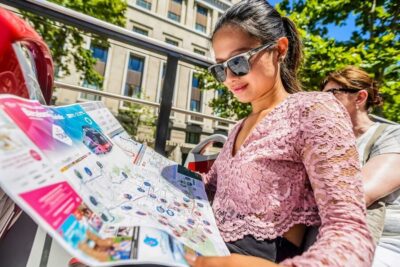
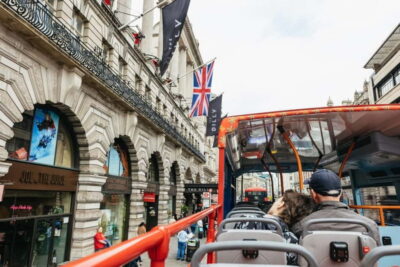
City Sightseeing London Hop-On Hop-Off Bus & Bookable Extras
Read our review →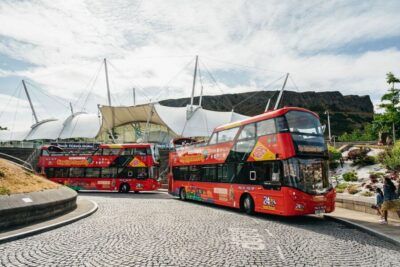
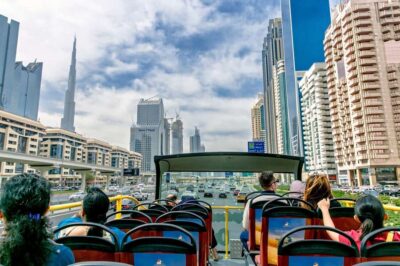
City Sightseeing HOHO Bus Tour + Sunset & Night Tour
Read our review →
City Sightseeing Hop-On Hop-Off Bus with Audio Guide
Read our review →
City Sightseeing Rome Hop-On Hop-Off Bus Tour
Read our review →
City Sightseeing Barcelona Hop-On Hop-Off Bus Tour: 24 or 48-Hour
Read our review →Browse the lists this tour appears in