
Review · VIETNAM
Sapa Trekking 3 Days 2 Nights by Bus – Homestay & Hotel
Sapa rewards sturdy shoes. This three-day trip links Hanoi with Sapa’s rice terraces, H’mong and Giay villages, Cat Cat waterfall, and a family homestay without requiring you to arrange every transfer yourself. I like the local homestay in Ta Van and the chance to walk with a guide through remote villages, where getting lost could quickly turn a pleasant hike into a problem.
I also like that the $165 price includes return bus travel, hotel accommodation, a shared homestay, admission fees, and seven meals. The main concern is organization: the schedule contains conflicting pickup times, and one unhappy account describes poor communication between the hotel and tour company. You should confirm the exact meeting details before departure.
Key points to know before booking
- Three walking days in Sapa: Expect moderate hiking, with up to about seven hours outside on Days 2 and 3.
- Two different beds: You spend one night in a private hotel room in Sapa, then share a homestay in Ta Van.
- Village-to-village route: Cat Cat, Y Linh Ho, Lao Chai, Ta Van, and Giang Ta Chai each offer a different look at local life.
- Bus travel saves planning time: Return transport from Hanoi is included, with Old Quarter pickup and drop-off.
- Weather can change the walk: Fog, drizzle, cold, and slippery paths are possible from December through March.
- Small group size: The maximum is 15 people, which should make village walks easier to manage than a large coach excursion.
What $165 buys you from Hanoi
At $165 per person, this trip offers good value if you want transport, lodging, meals, and guided walks bundled together. You are not paying only for a trek. The price covers the long bus ride from Hanoi to Sapa, hotel transfers in the Old Quarter, two bottles of water and tissues for each bus journey, an English-speaking tour leader on the bus, and a local guide in Sapa.
The food allowance is also useful. You receive two breakfasts, three lunches, and two dinners. Drinks are not included, so bring Vietnamese dong for coffee, tea, bottled drinks, or anything extra. Cash matters in Sapa because the banking system may not always work properly.
The hotel room is private, but sharing applies. You may be placed in a double, twin, or triple room. The homestay is shared as well. That arrangement keeps the cost reasonable, but it is not the right choice if you expect private accommodation every night.
The trip is usually booked about 42 days ahead. That suggests you should reserve early during busy periods, especially if your Hanoi schedule is tight. Confirmation is normally sent at booking, though reservations made within three days of departure may take up to 48 hours and depend on availability.
More Walks and Hikes in Hanoi:
- 2-Day Trekking Adventure of Sapa from Hanoi with Night Bus
★ 5.0 · 134 reviews - Sapa Trekking Tour 2 Days 1 Night By Bus
★ 5.0 · 86 reviews - From Hanoi: 2-Day Sapa-Fansipan Peak & Trek & Ha Giang Bus
★ 4.8 · 52 reviews
The long bus ride from Hanoi to Sapa
Pickup from a Hanoi Old Quarter hotel or the stated meeting point begins around 6:30 to 7:00 in the morning. The listed meeting point is Vietnam Open Tour, 9 Ng. Hàng Hương, Hàng Mã, Hoàn Kiếm. The return also ends at this meeting point.
The bus follows the highway toward Lao Cai, with a comfort break around 9:30 and another stop in Lao Cai around 11:00. You reach Sapa at roughly 1:00 in the afternoon. This is an efficient way to cover the distance, but the first day is not a full day of hiking. Much of it is spent sitting on the bus.
There is a small timing issue worth sorting out before you go. One part of the schedule says you are picked up from the bus office at 12:30, while another says arrival in Sapa is at 1:00. Ask the operator for the exact arrival and transfer instructions. Clear confirmation will save you from standing around with your luggage in an unfamiliar town.
The bus trip includes an English-speaking tour leader, while a local guide takes over in Sapa. The group can have up to 15 people. That is large enough to provide company but small enough for a guide to keep the walking group together.
Cat Cat and Shin Chai on the first afternoon
After lunch and hotel check-in, you leave around 2:30 in the afternoon for a three-kilometer walk toward Cat Cat and Shin Chai, areas associated with the H’mong community. The route takes about four hours and includes a hydropower station and Cat Cat waterfall.
Cat Cat is one of Sapa’s best-known village stops. Its appeal comes from the combination of steep mountain scenery, village paths, water, and traditional clothing. You also hear about local culture and the area’s past as a French colonial-era retreat for officials in the early twentieth century.
The walk is a good first test. It is moderate rather than extreme, but the route is not a gentle city stroll. You should expect steps, slopes, and uneven ground. The three-kilometer distance sounds modest, yet the terrain can make it tiring, especially after the morning bus journey.
Your hotel night is an important comfort break before the longer trek. One highly positive account praised the hotel and the mountain view from the room. That matters here because the hotel gives you a private room and a proper place to wash and rest before the homestay night.
Y Linh Ho and the old terraces
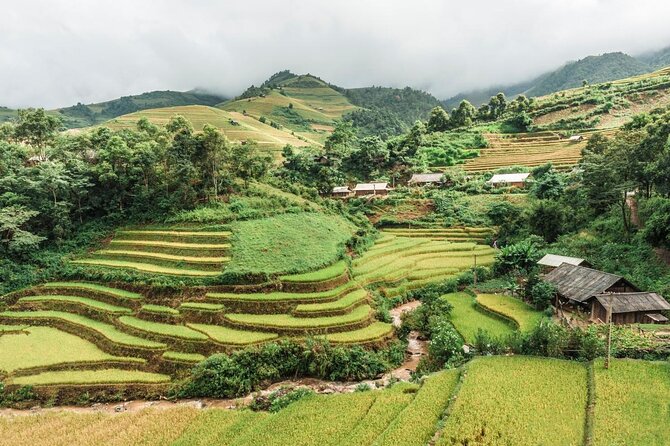
Day 2 begins with breakfast and checkout before 8:30. You walk down to Y Linh Ho, a H’mong village surrounded by rice terraces described as roughly 100 years old. This is the most serious walking day, listed at about seven hours including the village visit and lunch stop.
The terraces are the visual heart of the trip. Their value is not just in taking photographs. They show how farming has shaped the mountain slopes over generations. The view changes with weather and season, so you might see clear layers of fields, mist over the hills, or wet paths beneath a gray sky.
From Y Linh Ho, you continue to Lao Chai, a H’mong village, and stop for lunch for about an hour. That pause gives you time to eat, catch your breath, and take stock of the route ahead. Since lunch is included, you do not need to arrange food during the walk, though drinks remain your responsibility.
The route can be tiring because the day combines distance, hills, and changing ground conditions. The operator recommends a moderate level of fitness. I would take that seriously. You do not need to be an athlete, but you should be comfortable walking for several hours and handling slopes without regular vehicle support.
A few more bus tours around Hanoi worth a look
- Sapa 3-day Discovery Package Tour By Bus with 1 Night Homestay 1 Night Hotel
★ 3.5 · 3 reviews - Sapa 3 Days Trekking Tour By Bus from Hanoi (2 Nights in Hotel)
★ 3.0 · 2 reviews - Ha Giang Loop Adventure: 3D2N Full Packages – VIP Bus Hanoi
★ 5.0 · 2 reviews - Double Decker Hop-On Hop-Off City Sightseeing Philadelphia (1, 2, or 3-Day)
★ 4.0 · 562 reviews
A night with a Giay family in Ta Van
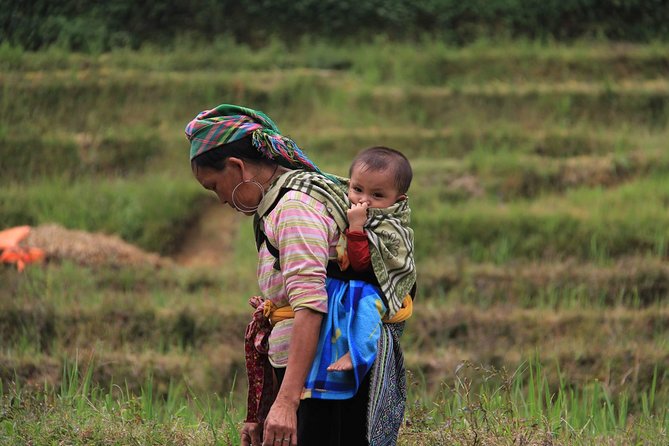
After Lao Chai, you continue to Ta Van, a village associated with both H’mong and Giay communities. Here you stay with a local Giay family. The evening includes cooking and dinner with the family, which gives the trip its most personal element.
A homestay is less polished than a hotel, and that is the point. You trade some privacy and hotel-style comfort for a closer look at household life and a night in the village. Because the accommodation is shared, pack with patience and keep your overnight gear simple.
The schedule does not describe the exact sleeping arrangements, so you should not assume a private room or ensuite bathroom. Ask before departure if those details matter to you. The included dinner and time spent cooking help make this more than a quick photo stop.
The second morning starts early with a rooster or pigs, followed by pancakes and hot tea or coffee outside. Breakfast comes with views across the rice terraces. It is a simple detail, but it captures why the homestay is worth accepting in place of another hotel night.
Bamboo forest, Silk Waterfall, and Giang Ta Chai
After breakfast, you say goodbye to the family and continue through a bamboo forest toward Silk Waterfall and Giang Ta Chai. The day again runs to about seven hours, with a picnic lunch taken at a scenic point along the route.
This section gives you a different setting from the open terrace views. Bamboo, forest paths, and falling water break up the long walk. You also get a chance to see how quickly the surroundings change as the trail moves between villages, cultivated slopes, and wooded areas.
At the end, you walk back to the main road and take a car or minivan into Sapa. The wording allows for either vehicle, so do not expect to complete every section on foot. You should reach Sapa around 2:00 in the afternoon.
The hotel provides a shower before your return to Hanoi. That is an excellent practical touch after two days of walking. At about 3:00, a shuttle takes you to the bus office, where the team checks you in. Sandwiches are prepared for the ride home, giving you something to eat during the journey.
Weather, clothing, and trail comfort
Sapa weather is unpredictable. Warm clothes, a scarf, hat, or cap are advised, with colder conditions especially common from September through March. December, January, February, and March can bring fog and drizzle because of the town’s altitude.
Good trekking shoes are essential. Sunglasses, sunscreen, and insect repellent are also listed as necessary. I would keep rain protection easy to reach, even if the morning begins dry. Wet paths can make a moderate walk feel much harder.
Bring medicine you may need. Sapa has chemist shops, but the selection may not match what you use at home. A small daypack is more useful than a large suitcase during the walking sections, while your main luggage arrangements should be confirmed with the operator.
The tour is not recommended for children under nine or for people with disabilities. A child rate is available only when the child shares with two paying adults. The key question for anyone else is simple: can you walk for several hours on uneven, hilly paths and manage changing weather?
Where the organization may fall short
The strongest positive point is the experience itself: mountain views, a respected local route, a welcoming family stay, and a comfortable hotel night. One couple described the first trek as tiring but worth the effort, with a particularly good hotel room and mountain view.
The main warning concerns communication. One account described an arrangement where the hotel did not seem to know what type of stay had been booked, and excursions and the guide were canceled after information was passed incorrectly. This is only one account, but it points to a real risk with multi-part trips involving a Hanoi bus company, a Sapa hotel, and local guides.
Protect yourself with a written check of the essentials: Hanoi pickup point, Sapa arrival transfer, hotel name, guide meeting time, homestay night, and return bus departure. If anything changes, contact the tour provider before leaving Hanoi rather than waiting until you arrive.
The itinerary can also change because of weather. That is sensible in mountain country, but it means you should allow some flexibility in your wider Vietnam plans.
Who should book this Sapa trek?
I would choose this trip if you want a guided introduction to Sapa and prefer one booking to cover transport, meals, lodging, and village walks. It suits active adults and older children who can manage moderate hiking. The group limit of 15 is a reasonable compromise between social company and manageable walking.
I would look elsewhere if you want a luxury stay, a private homestay, a short and easy walk, or firm control over every departure time. The bus ride is long, the two main walking days are demanding, and the accommodation changes from hotel to shared homestay.
Free cancellation is available up to 24 hours before the start time. After that point, the payment is not refunded, and changes are not accepted. That policy gives you some room to adjust plans, but once you are inside the final 24 hours, the decision is fixed.
Final verdict: good value with a communication check
This is a practical Sapa package with real contact with village life rather than a simple viewpoint visit. I like the balance of a hotel night, a family homestay, guided routes, included meals, and return transport from Hanoi.
The price is fair for what is covered, but the trip asks you to accept long bus journeys, shared accommodation, moderate hiking, and possible schedule changes. I would book it if the operator confirms the pickup and hotel details in writing. If that confirmation is clear, this offers a strong first taste of Sapa’s terraces and village paths at a manageable price.
FAQ
How long does the Sapa trekking tour last?
The experience lasts three days and two nights, including bus travel between Hanoi and Sapa.
What is included in the $165 price?
The price includes return bus transport, Hanoi Old Quarter pickup and drop-off, an English-speaking bus tour leader, a local Sapa guide, hotel accommodation, a shared homestay, two breakfasts, three lunches, two dinners, admission fees, and two bottles of water and tissues per person for the bus journeys.
Where does the tour start in Hanoi?
The stated meeting point is Vietnam Open Tour, 9 Ng. Hàng Hương, Hàng Mã, Hoàn Kiếm, Hanoi. Pickup is also offered from hotels in Hanoi’s Old Quarter.
How strenuous is the trekking?
The tour requires a moderate level of fitness. Day 2 and Day 3 each include about seven hours of walking, while Day 1 includes a three-kilometer walk to Cat Cat and Shin Chai.
Where do you sleep during the tour?
You spend one night in a hotel in Sapa and one night in a shared homestay with a local Giay family in Ta Van. The hotel room may be double, twin, or triple sharing.
Which meals are included?
Two breakfasts, three lunches, and two dinners are included. Beverages are not included.
What should I bring?
Bring warm clothes, a scarf, hat or cap, trekking shoes, sunglasses, sunscreen, insect repellent, personal medicine, and cash in Vietnamese dong. Sapa weather can be cold, foggy, or drizzly.
Is the tour suitable for children?
The tour is not recommended for children under nine years old. The child rate applies only when the child shares with two paying adults.
Can I cancel the booking?
You can cancel for a full refund up to 24 hours before the experience begins. Cancellations or changes made less than 24 hours before the start time are not accepted.
Just added around Hanoi
- Vietnam Day Trips All-Inclusive, Bus, Guide, Meals & Activities★ 4.5 · 8 reviews
- Sapa trekking 2days by bus from Hanoi ( over night in homestay)★ 5.0 · 21 reviews
- 2-Day Trekking in Sa Pa from Ha Noi by sleeping bus★ 5.0 · 4 reviews
- Sapa 3-day Discovery Package Tour By Bus with 1 Night Homestay 1 Night Hotel★ 3.5 · 3 reviews
- From Hanoi: 2D1N Ha Long Bay Deluxe Cruise with Bus Limousine★ 5.0 · 185 reviews
- Sleeping bus Ninh Binh to Hue★ 4.0 · 5 reviews
- Sapa Hard Trekking by Bus for 2 days★ 5.0 · 3 reviews
- Sapa Trekking Tour 2 Days 1 Night By Bus★ 5.0 · 86 reviews
3-Day Experiences, compared.

Double Decker Hop-On Hop-Off City Sightseeing Philadelphia (1, 2, or 3-Day)
Read our review →
2 or 3 Day Hop-On Hop-Off Bus with Walking Tour
Read our review →
Banff Lake Louise Excursion – 3-Day Calgary To Vancouver Bus Tour
Read our review →
Sapa 3-day Discovery Package Tour By Bus with 1 Night Homestay 1 Night Hotel
Read our review →
Ha Giang Loop Adventure: 3D2N Full Packages – VIP Bus Hanoi
Read our review →
Sapa 3 Days Trekking Tour By Bus from Hanoi (2 Nights in Hotel)
Read our review →Browse the lists this tour appears in