

Review · SOUTH KOREA
Jeju Island UNESCO Heritage Bus Tour
Jeju rewards a well-planned sweep. I like the way this tour joins UNESCO sights with local culture, from Seongeup Folk Village to the female divers at Seongsan Ilchulbong. I also like the variety: forest trails, volcanic cliffs, tea fields, markets, beaches, and waterfalls all fit into one organized experience. The tradeoff is time. You see a lot, but several stops are short and Seongsan Ilchulbong is for photos and the 2 p.m. performance, not a climb.
The guides can make a real difference. Lucas, Andy, Mr. Lee, Mr. Kim, and Terry have all led parts of this experience, with praise for their care, patience, English, and local knowledge. Ask exactly what guiding service you will receive, though, since groups of up to four may travel with a taxi driver rather than a professional tour guide.
Key points to know before booking
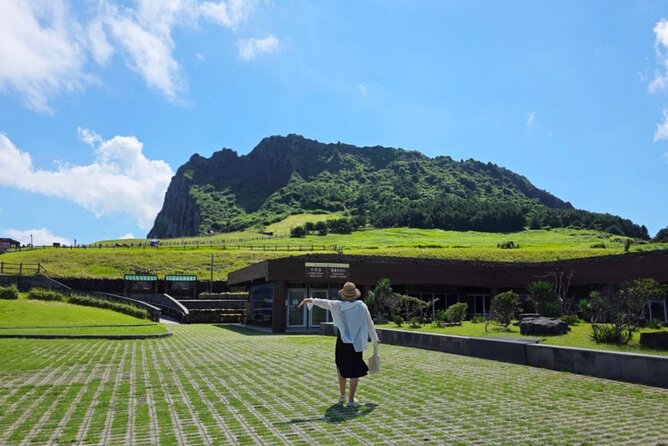
- Three routes cover different sides of Jeju: Eastern, Western, and South and Western options focus on separate parts of the island.
- The female diver performance costs extra: Admission and the 2 p.m. show at Seongsan Ilchulbong are not included, with the show listed at ₩5,000 per person.
- This is sightseeing, not a hiking tour: Eoseungsaengak includes a trail walk, but Seongsan Ilchulbong is specifically a photo stop with no hiking.
- Weather can change the day: Hamdeok may become a Haenyeo Museum visit, and Jeongbang Waterfall may be replaced by Cheonjiyeon Waterfall.
- Season matters: Camellias, hydrangeas, canola, cherry blossoms, pink muhly, and silver grass appear at different times.
- The price can be good value: At $56 per person, transport, fuel, parking, a licensed guide, and airport drop-off are included, but meals, drinks, tips, and some admissions are extra.
What this three-route Jeju tour actually covers
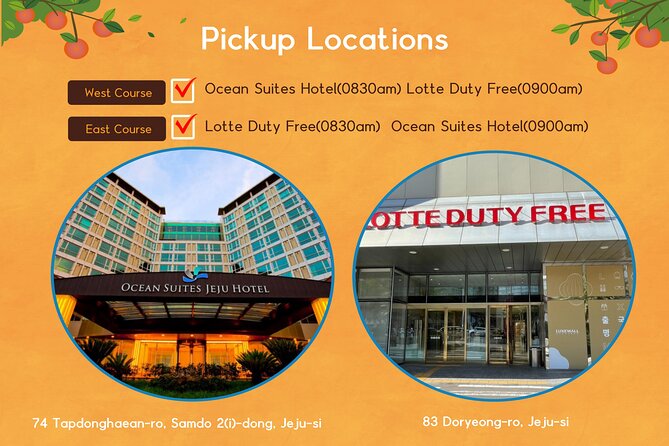
This experience is best understood as a set of full-day regional routes rather than one compact sightseeing loop. The Eastern route focuses on forests, village life, the coast, and Jeju’s famous female divers. The Western route combines Mt. Halla scenery with cliffs, flowers, a temple, and tea country.
The South and Western route adds a market, a sea-facing waterfall, and Hueree Natural Park. Since the tour information describes the experience as approximately three days, check whether you are booking all three days or selecting particular routes for your stay.
Transport is by air-conditioned vehicle, with round-trip transfers from the meeting location. Airport drop-off is also included. The maximum group size is 40, though the operator explains that groups of up to four may use a regular taxi with an advanced English-speaking driver. Larger groups of five to ten are offered a professional English guide.
That distinction matters. If you want detailed commentary at every stop, confirm your group size and guide arrangement before paying. Some people have had an excellent experience with drivers who explained Jeju well. Others expected a traditional guide and received transportation with a driver who waited while they explored.
More Vintage Bus Tours in South Korea:
- London: Guided Sightseeing Tour on a Vintage Open-Top Bus
★ 4.6 · 2,890 reviews - Dublin: Afternoon Tea Vintage Bus Tour
★ 4.8 · 1,664 reviews - London Christmas Lights Tour by Vintage Bus Open Top
★ 4.0 · 1,132 reviews
Eastern Jeju: forest, village, coast, and female divers
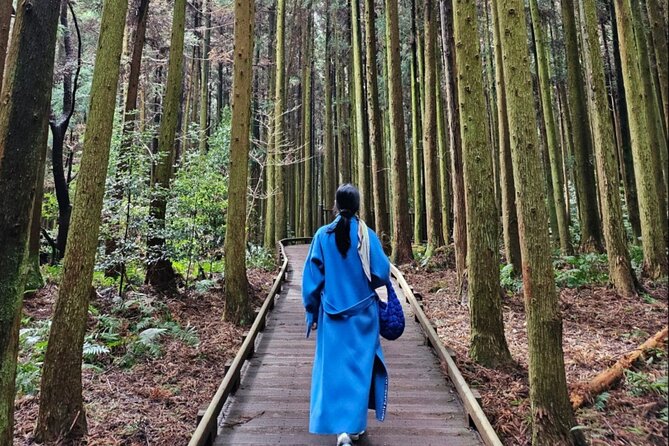
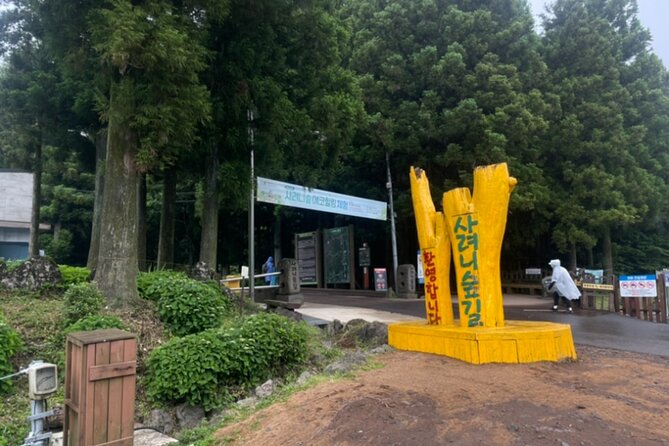
Saryeoni Forest Path, 50 minutes
Saryeoni Forest Path is a calm opening to the Eastern route. The walk is gentle compared with a serious mountain hike, and the appeal comes from protected woodland and fresh air rather than monuments or shopping.
You get about 50 minutes here, so wear shoes that can handle an unpaved or uneven trail. This is a good stop for anyone who wants a quiet start before the busier coastal sights. It is less rewarding if you want a long walk, since the schedule only allows a short taste of the forest.
Seongeup Folk Village, 50 minutes
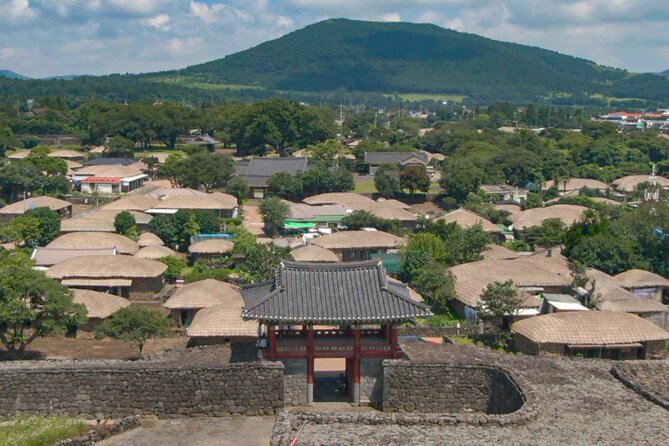
Seongeup gives you a look at older Jeju village life. The stonework is the main visual clue. Low walls and heavy piles of volcanic stone helped protect roofs from the island’s strong winds.
I find this stop valuable because it adds human context to a trip otherwise filled with scenery. You are not just moving from one viewpoint to another. The village shows how local building methods responded to Jeju’s weather.
Fifty minutes is enough for a focused visit, though you will not have unlimited time to wander. Listen closely if your guide explains the homes and customs, since this is one place where a good guide adds real value.
More History Tours in South Korea:
- Prague: Historic City Center Bus Tour with Top Sights
★ 4.4 · 2,360 reviews - 2-Hour Gettysburg Battlefield Guided History Bus Tour with a National Park Guide
★ 4.5 · 2,201 reviews - Prague: Hop-on Hop-Off Historical Tram Ticket for Line 42
★ 4.1 · 1,702 reviews - The Hague: Hop-on Hop-off Heritage Tram Tour
★ 4.5 · 1,311 reviews
Seopjikoji, 40 minutes
Seopjikoji sits at the end of Jeju’s eastern shore, with open coastal views and a particularly strong showing in April, when yellow canola flowers appear. The setting is built for photographs, but the short stop also keeps the route moving.
You should not expect a long coastal walk here. Forty minutes gives you time to take in the view and make photographs, not to explore every path. Spring is the obvious season for the famous yellow fields, while other times of year offer a different feel.
Seongsan Ilchulbong, about 1 hour 20 minutes
Seongsan Ilchulbong, also called Sunrise Peak, is the headline stop on the Eastern route. Its volcanic form rises beside the sea and is one of Jeju’s best-known natural sights.
This visit is specifically for photographs and the female diver performance. Hiking is not included, and the schedule does not provide a climb to the summit. You also need to pay separately for entry and the show, listed at ₩5,000 per person, with the performance at 2 p.m.
Plan your expectations carefully. If you have dreamed of climbing Sunrise Peak, this tour will not meet that particular goal. If you want a quick look at the site and a chance to see Jeju’s Haenyeo tradition, the stop is well chosen.
The Haenyeo are female sea workers known for harvesting from the water without modern equipment. Their performance gives the visit cultural meaning beyond the view. It can also be canceled because of weather or sea conditions, in which case a Haenyeo Museum visit may replace it.
Hamdeok Beach, one hour
Hamdeok is the route’s beach stop. You receive about an hour, enough for views and a relaxed break, but not a full beach day.
Rain can change this stop to the Haenyeo Museum. Another note refers to Jeju Stone Park as a possible rainy-day replacement, so the exact substitute may depend on conditions and the day’s operating plan. That flexibility is sensible on Jeju, where wind and rain can change an outdoor schedule quickly.
Manjanggul Cave is currently closed for anti-falling construction, with reopening information subject to change. Do not assume it will be part of your visit.
Western Jeju: Mt. Halla, volcanic cliffs, flowers, and tea
Eoseungsaengak Trail, about one hour
The Western route begins around Mt. Halla at the Eoseungsaengak Trail. You get roughly 70 minutes, making this a more active stop than the viewpoints and village visits.
The walk suits you if you want a modest mountain outing without committing to a major summit hike. Weather can alter the plan, and from April 11, 2026, the Western route is scheduled to change from Eoseungsaengak to the 1100 Altitude Wetlands.
That planned change is important for anyone booking after that date. Recheck the route close to departure, since the tour also allows weather-related substitutions involving the 1100 Wetland, Eorimok, or Saebyeol Oreum.
Jusangjeolli Cliff, 40 minutes
Jusangjeolli is one of Jeju’s most striking geological stops. Dark volcanic columns line the coast in regular shapes, resembling a large folding screen.
The visit lasts about 40 minutes, so you will mainly use the viewing areas rather than spend time walking along the coast. This is a strong stop for anyone interested in volcanic geology, and a quick one for anyone hoping for a long shoreline hike.
A tangerine-picking activity may be offered in winter for an additional ₩5,000 per person, paid on site. It is optional, seasonal, and not part of the basic price.
Camellia Hill, 70 minutes
Camellia Hill is one of the most generous stops on the Western route, with about 70 minutes among more than 500 camellia varieties. The garden changes with the calendar: red camellias in winter, hydrangeas in summer, and golden reeds in autumn.
This is where timing can shape your experience. You may see cherry blossoms, canola, pink muhly, silver grass, or camellias depending on the season. The garden is a good choice for easy walking and photographs, but flower displays are never guaranteed on every visit.
The longer stop gives you room to enjoy the paths without rushing as much as at the coastal viewpoints.
Bomunsa Temple, 40 minutes
Bomunsa Temple sits by Sanbangsan with ocean views and historic Buddha carvings. Forty minutes is enough to take in the setting and the temple atmosphere, but not to linger deeply.
The site offers a quieter change of pace after the cliffs and gardens. You should dress and behave respectfully around the temple, even though the visit is fairly brief.
From April 11, 2026, this portion is scheduled to change to the Sinchang Windmill Coastal Road. If the temple is a priority, confirm the date of your tour before booking.
O’sulloc Tea Museum and green tea fields, 50 minutes
O’sulloc combines outdoor rows of green tea with tastings, desserts, and exhibits. It is an easy stop, especially after a morning that includes a mountain trail.
You will not need special fitness here. The attraction is partly about the fields and partly about the food and tea products. Personal purchases are extra, as are drinks and meals elsewhere on the tour.
From April 11, 2026, the Western route is scheduled to stop at Aewol Café Street instead. That is a major change for anyone expecting the tea fields, so check the current route carefully.
South and Western Jeju: market food, waterfalls, and Hueree
Mt. Halla or a weather backup
The South and Western route also begins with the Eoseungsaengak Trail, usually for about 75 minutes. Depending on weather, you may instead visit the 1100 Wetland, Eorimok, or Saebyeol Oreum.
This route works well if you want some mountain scenery without spending a whole day on a serious hike. It also gives you a second chance at Mt. Halla scenery if you are taking more than one route.
O’sulloc Tea Museum, 50 minutes
The tea museum appears again on this route, with green tea rows, tastings, desserts, and exhibits. If you are choosing between regional routes, note the repeated stop so you do not expect a completely different experience each day.
Seogwipo Maeil Olle Market, one hour
The Seogwipo Maeil Olle Market is the practical food stop. You choose your own lunch, and there is time to browse souvenirs as well.
I like this arrangement better than a fixed group meal because you can decide how much and what kind of food you want. One hour is useful, but do not expect a slow, extended market visit. Keep an eye on the meeting time and return promptly to the vehicle.
Jeongbang Waterfall, 40 minutes
Jeongbang is unusual because the water falls directly into the sea. The visit lasts about 40 minutes and includes admission.
Access can be restricted in bad weather. When that happens, the route changes to Cheonjiyeon Waterfall. This is a sensible replacement, but the two sites are not identical, so anyone with a strong preference should treat the waterfall choice as weather dependent.
Hueree Natural Life Park, 70 minutes
Hueree closes the South and Western route with easy paths, seasonal flowers, and a quieter countryside setting. The longer visit allows you to slow down after the market and waterfall.
The park is especially appealing during seasonal flower displays. You may see hydrangeas, pink muhly, camellias, or other plantings depending on the date. You can also end your tour here, which may be useful if this stop is closer to your accommodation or onward plans.
Is $56 a fair price for this much Jeju?
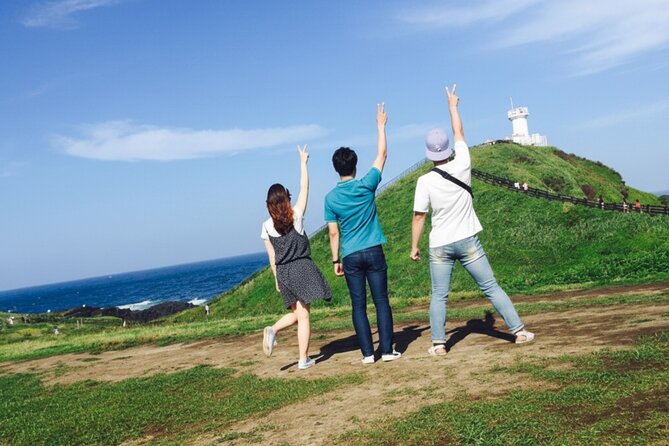
At $56 per person, the price is attractive for a day that includes an air-conditioned vehicle, round-trip transfers from the meeting point, fuel, parking, and a licensed guide. Airport drop-off adds practical value if you are finishing your Jeju stay.
The price is not all-inclusive. You pay separately for meals, drinks, tips, Seongsan Ilchulbong admission and the female diver show, and optional tangerine picking. Those extras are modest, but you should budget for them instead of treating $56 as the final cost.
The best value comes when you want coverage rather than independence. A private car, driver, and several separate attraction visits could cost more, while public transport would require much more planning and time. The compromise is a fixed schedule and short visits.
Who will enjoy this tour most?
I would choose this experience if you have limited time on Jeju, want to see both natural and cultural sights, or do not want to arrange transport between distant parts of the island. It also suits you if you like a mix of gentle walking, viewpoints, gardens, markets, and guided stops.
It is less suitable if your priority is serious hiking, a long beach stay, or an unhurried visit to each attraction. The schedule is active, and the vehicle must keep moving.
Families and most people with ordinary mobility can participate, according to the tour information, but the route includes trails, outdoor paths, and changing weather. Comfortable shoes and a flexible attitude will help.
Free cancellation is available up to 24 hours before the start time. Poor weather or failure to reach the minimum of three people can also lead to a new date, another experience, or a full refund.
Should you book the Jeju UNESCO Heritage Bus Tour?
Book it if you want a broad first look at Jeju and value easy transport over long visits. The strongest parts are the range of scenery, Seongeup Folk Village, the female diver performance, Jusangjeolli, Camellia Hill, and the market lunch.
Before booking, confirm three things: which regional route or routes you are buying, whether you will have a professional guide or an English-speaking taxi driver, and which attractions are operating on your date. If you accept the quick pace and extra admission costs, $56 offers a practical way to cover a great deal of Jeju.
FAQ
How long does the Jeju UNESCO Heritage Bus Tour last?
The experience is listed as approximately three days, with Eastern, Western, and South and Western routes described separately.
What is included in the price?
An air-conditioned vehicle, round-trip transfers from the meeting location, a licensed guide, parking fees, fuel fees, and airport drop-off services are included.
Are meals and drinks included?
No. Meals, drinks, and personal expenses are not included.
Is hiking included at Seongsan Ilchulbong?
No. The Seongsan Ilchulbong stop is for photographs and the female diver performance. Hiking is not included.
How much does the female diver performance cost?
The performance is listed at ₩5,000 per person, paid separately. It takes place at 2 p.m., subject to weather and sea conditions.
Is tangerine picking included?
No. Optional tangerine picking is available in winter and costs ₩5,000 per person, paid on site.
Can the route change because of weather?
Yes. Hamdeok may be replaced by the Haenyeo Museum, and Jeongbang Waterfall may be replaced by Cheonjiyeon Waterfall if conditions restrict access. Mt. Halla stops may also change.
What is the group size?
The tour requires at least three people and allows a maximum of 40. Groups of up to four may travel with a regular taxi driver who has advanced English skills, while larger groups may receive a professional English guide.
Just added around South Korea
- Jeju island Southern Unesco Mt.halla ONE day Bus Tour★ 5.0 · 15 reviews
- Small Group Jeju island Private Mini-Bus Tour★ 5.0 · 2 reviews
- Jeju Island UNESCO small group Join tour(Taxi, van & bus)★ 5.0 · 8 reviews
- Jeju bus tour with professional English guide for cruise customer★ 5.0 · 2 reviews
- East of Jeju island Bus Tour from Seogwipo city, Jeju island★ 5.0 · 3 reviews
- Jeju Eastern Must visit Unesco Bus Tour★ 5.0 · 4 reviews
- West of Jeju island Bus Tour from Seogwipo city, Jeju island★ 5.0 · 2 reviews
- Daegu Hop on Hop off City Tour Bus Discount Ticket (내국인불가)★ 3.5 · 6 reviews
Vintage & Classic Bus Tours, compared.
Guided Sightseeing Tour on a Vintage Open-Top Bus
Read our review →
London Christmas Lights Tour by Vintage Bus Open Top
Read our review →

Christchurch: Hop-On Hop-Off Tour by Vintage Tram
Read our review →
Vintage London Bus Tour Including Cruise with London Eye Option
Read our review →
Browse the lists this tour appears in