
Review · UNITED STATES
Chicago: Ghost Bus Tour of Haunted Locations
Chicago keeps its ghosts close to the pavement. This three-hour bus tour links deadly fires, mob violence, lost ships, and famous local legends in one brisk evening of storytelling. I like the mix of Chicago history and supernatural folklore, and I like that a bathroom-equipped luxury bus saves you from crossing the city on foot.
You also get several outdoor stops, including Hull House, Couch Tomb, the Biograph Theater, and the Eastland Disaster site. The main caution is timing: traffic can cut into the final stops, and one review reports missing Resurrection Mary and dealing with speakers that did not always work.
Key details before you book
- 844 lives were lost in the Eastland Disaster, one of Chicago’s most haunting tragedies.
- Resurrection Mary is the city’s best-known phantom, but the schedule may not always allow time for that stop.
- Hull House folklore centers on the so-called Devil Baby, a tale connected with Jane Addams’ settlement house.
- Death Alley and the Nederlander Theatre recall the Iroquois Theater fire, one of America’s worst theater disasters.
- The $54 price includes transport, a guide, and several stops, which makes it most useful for visitors who want many far-flung sites in one outing.
- Meet inside the Congress Plaza Hotel bar 15 minutes early, because the bus leaves promptly and cannot wait for late arrivals.
Why this bus tour works for curious visitors
I like this tour because it treats Chicago’s ghost stories as a doorway into the city’s harder history. The spirits are part of the fun, but the real subject is often loss: workers trapped by a theater fire, passengers killed in a river disaster, victims of mob violence, and people buried in cemeteries erased by fire and redevelopment.
The bus also solves a practical problem. These locations are spread across central Chicago, Lincoln Park, the Near North Side, and the river area. You can see many of them in three hours without piecing together several train rides, walks, and taxi trips.
At $54 per person, this is not a cheap sightseeing ride. The value comes from the number of locations and the live narration. If you only want a scary story or two, you can find cheaper walking tours. If you want a broad look at Chicago’s darker past without spending a full day on it, the price is more reasonable.
The tour is conducted in English by a paranormal guide. One guide praised in the feedback is Joanna, who received special approval for her work. I would still keep expectations flexible. The supernatural claims are presented as folklore and reported hauntings, not as verified fact.
More Ghost Bus Tours in Chicago:
- Chicago Hauntings Original Ghost Bus Tour
★ 4.0 · 147 reviews - Edinburgh: Comedy Horror Ghost Bus Tour
★ 4.4 · 3,932 reviews - Comedy Horror Show: York Ghost Bus Tour
★ 4.4 · 3,032 reviews
Starting at the Congress Plaza Hotel
Your meeting point is inside the bar at the Congress Plaza Hotel. You should arrive 15 minutes before departure, not because boarding takes a long time, but because the bus has a tight route to cover.
The hotel itself is a fitting starting point. It is widely associated with Chicago ghost stories and gives the guide an immediate setting for the evening. You may be asked to wait in the bar before boarding, so allow time to find the correct meeting area.
One practical warning matters here: the meeting point may not be obvious once you enter the hotel. A past booking noted that clearer signs with arrows would have helped. If you are unfamiliar with the building, arrive early and ask hotel staff where the tour meets.
The bus has a bathroom, which is useful on a three-hour route with repeated stops. It also means you can spend more time listening and less time searching for a public restroom.
Lincoln Park and the ashes of the Great Chicago Fire
The first major stop is Lincoln Park, where you get about 15 minutes for a guided visit and photos. The park and zoo area are tied to the aftermath of the Great Chicago Fire, giving the guide a chance to connect the city’s most famous disaster with one of its popular public spaces.
This stop is likely to feel more historical than frightening. You are looking at a place shaped by fire, rebuilding, and changing city life. That contrast is useful. The tour does not treat ghosts as isolated oddities. It shows how disaster leaves stories behind in ordinary places.
Because the stop is short, you should be ready to listen while walking and photographing. This is not a long park visit or a zoo tour. You are getting a focused story and a quick look at the setting.
Hull House and the Devil Baby story
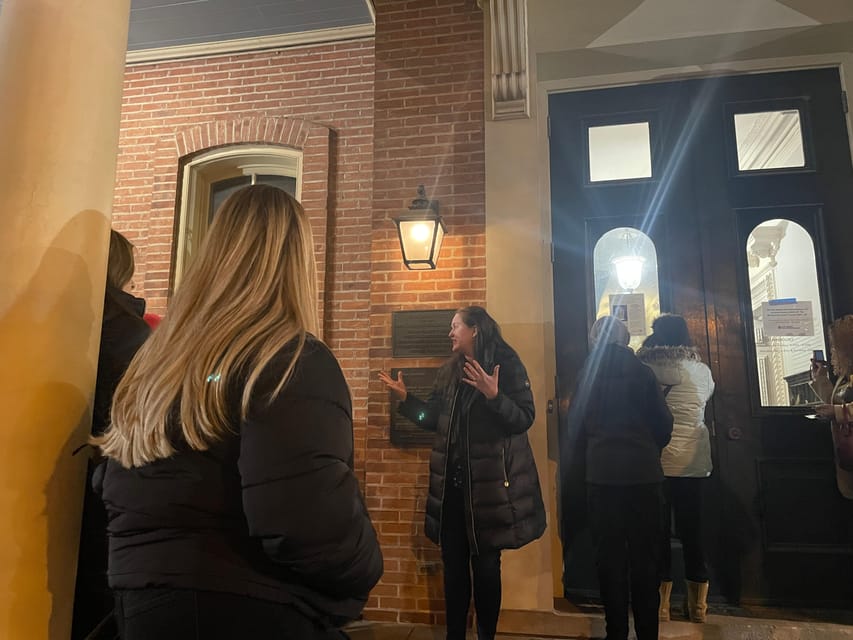
The Jane Addams Hull-House Museum is one of the more unusual stops because its ghost story grew from immigrant neighborhood folklore. The tale concerns a Devil Baby supposedly born at the settlement house, a story that drew so much attention that people came looking for the child.
You get roughly 15 minutes for sightseeing, a guided explanation, and photos. The stop works best if you are interested in how legends spread through a city. Hull House was associated with immigrant aid and social reform, so the folklore sits beside a very real story of urban poverty, migration, and community work.
The Devil Baby is also the kind of tale that shows why Chicago ghost lore is more than haunted buildings. It reflects fears and rumors from a particular time and place. I find that more interesting than a simple claim that a room is haunted.
The tour description links this story with coverage in The Atlantic, which gives the legend a wider cultural footprint. Still, expect a short exterior-focused visit rather than a long museum program.
A few more bus tours around Chicago worth a look
- Chicago Crime and Mob Bus Tour
★ 4.5 · 3,186 reviews - Big Bus Chicago: Hop-On Hop-Off Sightseeing Tour, 24/48/72hr Pass
★ 4.0 · 2,191 reviews - Chicago: Hop-on Hop-off Sightseeing Tour by Open-top Bus
★ 4.3 · 1,349 reviews - Chicago: Mob and Crime Bus Tour
★ 4.4 · 859 reviews
The John Hancock Center and architecture with a supernatural angle
The bus passes the John Hancock Center for about five minutes. There is no extended stop, so you will mainly hear the guide explain the building’s distinctive trapezoidal shape and the belief that its design may harness otherworldly forces.
This is a good example of the tour’s lighter side. Not every story centers on death or disaster. Some involve architecture, city myths, and the human habit of finding meaning in unusual shapes.
Do not expect time to explore the building or take a long set of photos. Have your camera ready as the bus passes. The brief stop also illustrates a tradeoff of the tour: you see many places, but several are quick encounters rather than full visits.
Couch Tomb and the cemetery lost to fire
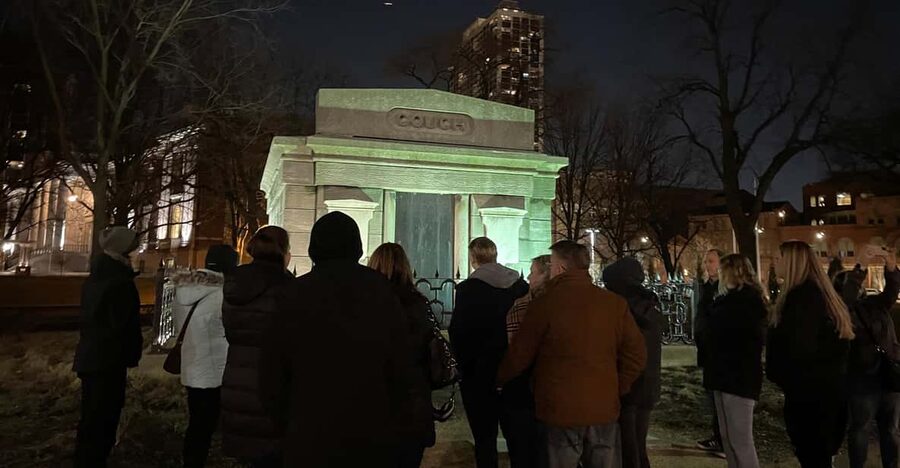
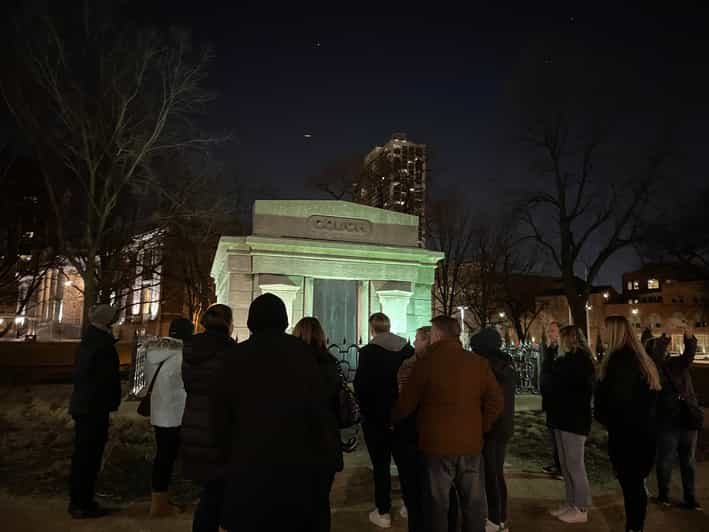
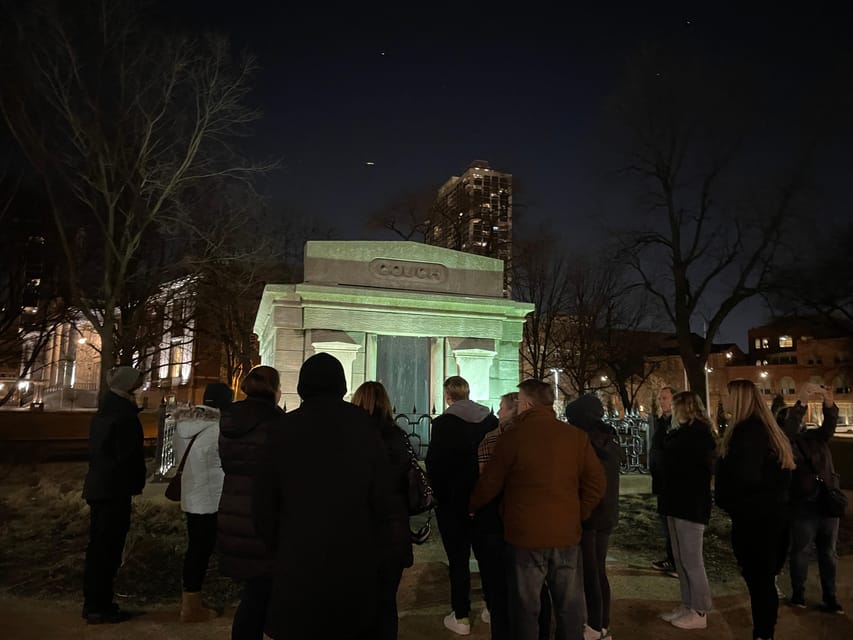
The Couch Tomb is one of the most distinctive stops on the route. It is described as the last remaining marked grave from a Chicago cemetery destroyed in the Great Chicago Fire.
You get about 15 minutes here for a guided visit and photographs. The story gives the fire a physical marker. Instead of only hearing about a city rebuilt after catastrophe, you see one surviving reminder of the people and burial grounds caught in that transformation.
This stop may appeal to you if you prefer quiet, tangible places over famous ghost claims. A tomb is not dramatic in the same way as a massacre site, but it carries a direct connection to Chicago’s lost landscape and buried past.
Stay close to the guide and keep an eye on the time. The tour continues through several locations, and the bus cannot linger if the schedule has slipped.
The Nederlander Theatre and Death Alley
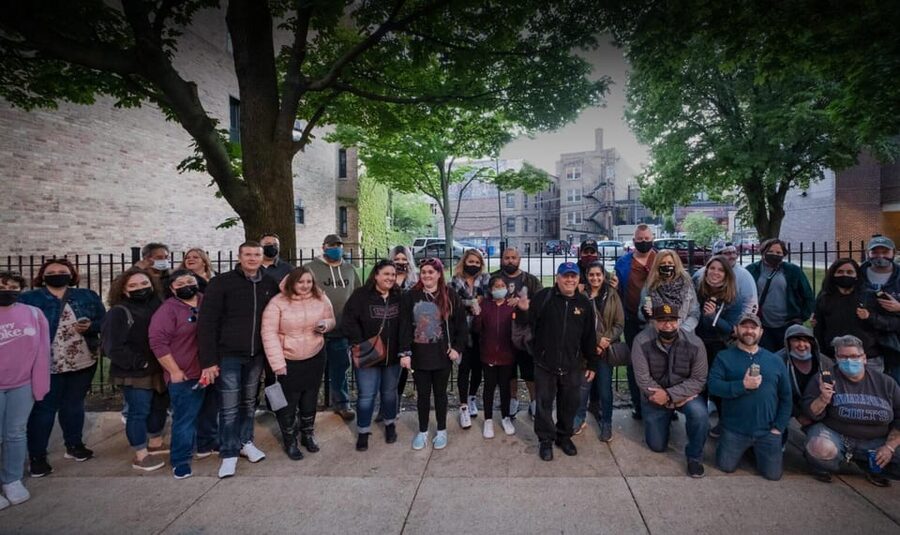
The Nederlander Theatre is associated with the Iroquois Theater fire, a disaster that killed hundreds. The surrounding area is also known as Death Alley, a grim name tied to the tragedy and the difficulty people had escaping the theater.
This is one of the tour’s strongest historical stops. The story is not just spooky. It raises questions about theater safety, crowd movement, exits, and the dangers hidden behind popular entertainment. The tour presents the place as a site of memory as well as haunting.
You get approximately 15 minutes for photos and a guided explanation. Since the visit is outdoors, you will not be taking a long theater tour. The value is in standing near the site while the guide explains what happened and why the location remains part of Chicago’s haunted folklore.
I would pay close attention here. The Iroquois fire is one of the major tragedies on the route, and the short stop can pass quickly.
The Biograph Theater and John Dillinger’s final moments
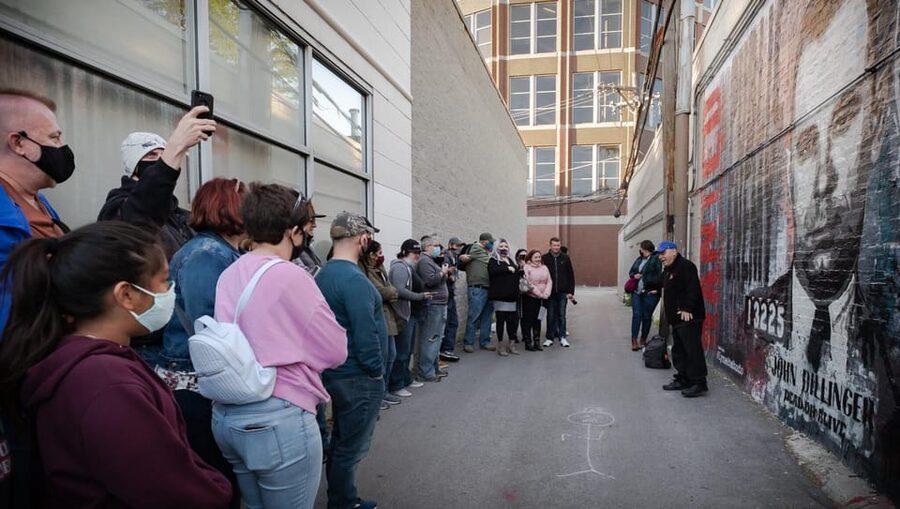
The Biograph Theater stop shifts from mass tragedy to crime history. This is where gangster John Dillinger met his end, giving the tour another link between Chicago’s streets and its darker legends.
The stop lasts about 15 minutes and includes sightseeing, photographs, and narration. You are not simply hearing about a haunted theater. You are seeing a location tied to one of America’s most famous gangsters and the dramatic end of his life.
The Biograph fits naturally into a ghost tour because places connected with violent death often attract stories of lingering spirits. The guide can draw a line between documented events and later supernatural claims. That mix is likely to appeal to you if you enjoy crime history as much as ghost lore.
2122 North Clark Street and the St. Valentine’s Day Massacre
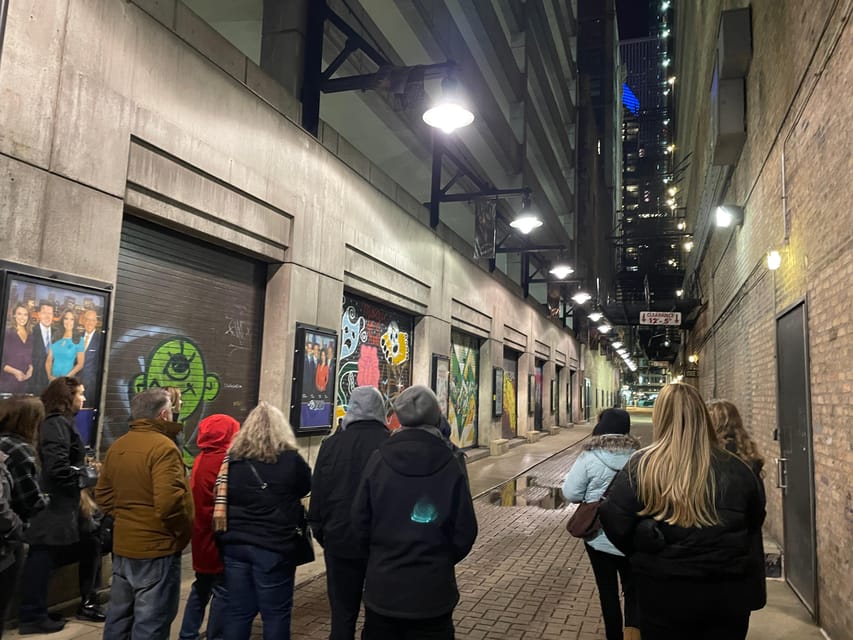
The address at 2122 North Clark Street is connected with the St. Valentine’s Day Massacre, one of America’s most notorious mob killings. This is another brief stop, listed at about 10 minutes.
The site is powerful because the event is firmly rooted in criminal history, while the tour presents the location as haunted ground. You get a compact look at how Chicago’s Prohibition-era violence became part of the city’s permanent mythology.
This may be one of the faster visits, so do not expect a long walk or a large exhibit. The guide’s narration carries most of the weight. I would treat this stop as a quick, focused history lesson rather than a standalone attraction.
The Eastland Disaster and 844 lost lives
The Eastland Disaster site is among the most serious stops on the tour. In 1915, the overloaded vessel capsized, killing 844 people. The number alone is hard to grasp, and the site gives the guide room to explain how a local outing became a mass tragedy.
You spend about 15 minutes at the Eastland Disaster Historical Society area, with time for photos and a visit. The stop broadens the tour beyond familiar Chicago legends. Many people know about the Great Chicago Fire or the St. Valentine’s Day Massacre, but fewer know the Eastland story before visiting Chicago.
This is also where the tour’s value becomes clearest. A regular city sightseeing bus might pass the river without stopping. Here, you get context for a disaster that shaped families and the city’s memory, along with the haunted stories connected to the site.
The emotional tone may change here. Some parts of the tour are playful, but the Eastland Disaster concerns a very large loss of life. You should expect a somber account rather than a simple spooky tale.
Resurrection Mary and the timing problem
Resurrection Mary is Chicago’s most famous phantom, and meeting her in the tour’s storytelling is one of the advertised highlights. The problem is that the schedule may not always allow the stop to happen as planned.
One review specifically reported that the group did not see Resurrection Mary, with traffic from a parade making the timing worse. It also suggested that even if people arrived late, the route should still have included the final stop. This is useful advice: Chicago traffic can reshape a tightly timed evening.
If Resurrection Mary is the one story you most want, ask about the route and timing before booking. Do not assume that every stop will receive equal time. The tour covers a lot of ground, and a late departure, parade, weather issue, or traffic jam can affect the final section.
This is the clearest drawback of a packed itinerary. You get variety, but the schedule has little slack. The bus must leave promptly, and late arrivals cannot be guaranteed entry.
What the three-hour format feels like
Three hours is a good length for this subject. It is long enough to reach several neighborhoods but short enough that the stories do not become exhausting.
The route includes both bus time and short outdoor visits. Some stops last 15 minutes, while the John Hancock pass takes about five minutes and 2122 North Clark Street about 10 minutes. You should expect a stop, a story, a few photos, and a quick return to the bus.
That pace suits you if you like variety. It may frustrate you if you want to linger at each location, wander through a neighborhood, or spend time inside museums and theaters.
The bus has a bathroom and is described as luxury transport. Those details matter more than they might seem. Chicago weather can be unpleasant, and the route covers enough distance that a comfortable seat and onboard restroom add real value.
Bring a phone or camera, but remember that photographs are not proof of a ghost. The tour encourages cameras and recorders because many people believe they have captured supernatural evidence. Treat that as part of the entertainment and folklore, not a promise of paranormal results.
Price, value, and who should book
At $54, I would book this for the coverage, not for a guaranteed ghost sighting. You are paying for three hours of transport, a live English-speaking paranormal guide, a bathroom-equipped bus, and access to several distant locations.
The price feels fair if you would otherwise spend money and time arranging separate visits to Lincoln Park, Hull House, the river area, the theater sites, and the Biograph Theater. It feels less attractive if you only want one famous haunted place or prefer exploring independently.
I think this tour suits:
- First-time Chicago visitors who want an unusual introduction to the city
- People who enjoy crime stories, disasters, architecture, and folklore
- Visitors who prefer riding between locations instead of walking long distances
- Adults and older children who can handle stories of death and tragedy
- Anyone with only one evening available for a darker side of Chicago
It is not suitable for children under five, with the supplied age rules listing several younger age limits. Baby strollers, baby carriages, non-folding wheelchairs, electric wheelchairs, alcohol, and drugs are not allowed. The tour is in English only.
Free cancellation is available up to 24 hours before the start, and you can reserve now and pay later. Those policies help if your Chicago plans are still shifting, but they do not solve the main practical issue: you need to reach the Congress Plaza Hotel on time.
Should you book the Chicago Ghost Bus Tour?
Book it if you want a broad, story-led look at Chicago’s grim past and do not need every ghost claim to be proven. I especially like the combination of the Eastland Disaster, Hull House, Couch Tomb, the Iroquois fire site, and Chicago mob history.
Skip it if you want a slow, atmospheric walk, a guaranteed visit with Resurrection Mary, or lots of time at each location. The bus covers ground efficiently, but traffic and short stops can trim the final part of the route.
My advice is simple: arrive early, keep your schedule open around the three-hour window, and treat the ghosts as a lively way into real Chicago history. At $54, it is a solid choice for curious visitors who value variety and narration more than a guaranteed supernatural encounter.
FAQ
How long is the Chicago Ghost Bus Tour?
The tour lasts three hours.
How much does the tour cost?
The price is $54 per person.
Where does the tour begin and end?
It begins and ends at the Congress Plaza Hotel & Convention Center.
Where should I meet the bus?
You should meet inside the bar at the Congress Plaza Hotel.
How early should I arrive?
Arrive 15 minutes before the scheduled start time. The bus leaves promptly and cannot wait for late arrivals.
Is the tour conducted in English?
Yes. The live tour guide speaks English.
Is transportation included?
Yes. The tour includes a luxury bus with a bathroom onboard.
Is Resurrection Mary included on the route?
Resurrection Mary is one of the featured haunted stories, but the available information does not guarantee that the stop will always be reached. Traffic and timing can affect the final stops.
Can I cancel for a full refund?
Yes. You can cancel up to 24 hours in advance for a full refund.
Are children and mobility equipment allowed?
The tour is not suitable for children under five. Baby strollers, baby carriages, non-folding wheelchairs, and electric wheelchairs are not allowed.
Just added around Chicago
- Chicago’s Original Gangster Tour by Bus★ 5.0 · 116 reviews
- Chicago Hauntings Original Ghost Bus Tour★ 4.0 · 147 reviews
- Chicago River Architecture Tour and Big Bus Hop-on Hop-off Tour★ 4.0 · 38 reviews
- Chicago Night Crimes Tour by Bus★ 5.0 · 478 reviews
- Chicago Craft Brewery Barrel Bus Tour★ 5.0 · 339 reviews
- Big Bus Chicago: Sunset Tour by Open-Top Bus with Live Guide★ 4.0 · 165 reviews
- Chicago: Prohibition Speakeasies Bus Tour or Walking Tour★ 4.8 · 168 reviews
- Chicago: Architecture River Tour and Hop-on Hop-off Bus Tour★ 4.3 · 49 reviews
Ghost & Mystery Bus Tours, compared.
Cemetery and Ghost BYOB Bus Tour in New Orleans
Read our review →
New Orleans Dead of Night Ghosts and Cemetery Bus Tour
Read our review →
Browse the lists this tour appears in