
Review · USA
Waikiki Trolley Red Line Heroes & Legends Hop-on Hop-off Tour
History rides shotgun here. The Waikiki Trolley Red Line gives you a useful first look at Honolulu, linking Waikiki with Chinatown, the State Capitol, Punchbowl, and Honolulu Harbor while a driver explains Hawaiʻi’s monarchy, culture, and wartime past. I love the open-air city views and the way one route reaches places that are awkward to connect on foot. I also like the friendly, entertaining guides, including highly praised drivers such as Sam, Chuck, Chico, Turk, and Big Tony. The main catch is timing: long waits, full trolleys, weak stop signs, and occasional delays can make the hop-on hop-off feature less flexible than it sounds.
This is best used as a first-day orientation, not as a tightly timed sightseeing shuttle. The listed ride takes about 1 hour 20 minutes, but a full circuit can run closer to two hours in traffic. If you get off, you may wait up to an hour for another trolley, and some departures can fill before you board.
Quick points to know before you ride
- The route covers more than Waikiki: You reach Downtown Honolulu, Chinatown, Punchbowl, Kakaʻako, Ala Moana, and the harbor.
- The commentary is a major part of the experience: Drivers explain royal history, local culture, monuments, and wartime events.
- The best use is on your first day: It helps you decide which parts of Honolulu deserve a longer visit.
- Hop-off planning takes patience: Buses may be spaced far apart, and pickup points are not always easy to spot.
- The ride can be noisy: Engine sound and wind sometimes make the narration hard to hear.
- The $35 price is fair for an orientation: It is less attractive if you need dependable transport or want long visits at each stop.
Why the Red Line works well as a first Honolulu outing
The Red Line is not just a ride around Waikiki. It links the resort district with the civic center, old Honolulu, Chinatown, the harbor, and several cultural sights. That gives you a quick sense of how the city changes from beach hotels to government buildings, historic neighborhoods, memorial grounds, and newer shopping districts.
I like this route for the first full day of an Oʻahu visit. You can sit back and hear about the people and places you will encounter later, then make notes about where to return. The tour is also a welcome change from a packed beach schedule. Several riders found it relaxing and educational, especially on a day between water activities.
The guides make a real difference. Sam was praised for an easygoing presentation, Chuck for his friendly humor, and Chico for his clear pronunciation of Hawaiian names. Turk and Big Tony also received especially warm comments for mixing useful information with personality. The quality can vary by driver, but the strongest guides turn a simple city ride into a moving history lesson.
The open-air trolley adds charm, but it has tradeoffs. Wind can blur the commentary, and the engine is loudest near the back. Wooden seats may feel hard during a longer circuit. If hearing every word matters to you, sit nearer the front and listen carefully when the trolley is moving through noisy streets.
More Hop-On Hop-Off Bus Tours in the USA
- Savannah Hop-On Hop-Off Trolley Tour
★ 4.5 · 6,527 reviews - New York: Hop-on Hop-off Sightseeing Tour by Open-top Bus
★ 4.2 · 5,863 reviews - Nashville Hop On Hop Off Trolley Tour
★ 4.5 · 5,643 reviews
Waikiki Shopping Plaza to Duke Kahanamoku
The route begins at Waikiki Shopping Plaza, a practical central point surrounded by hotels, shops, and restaurants. This is the easiest place to get your bearings before heading toward the rest of Honolulu. Confirm the exact boarding spot before you arrive, since pickup signs can be limited at some stops.
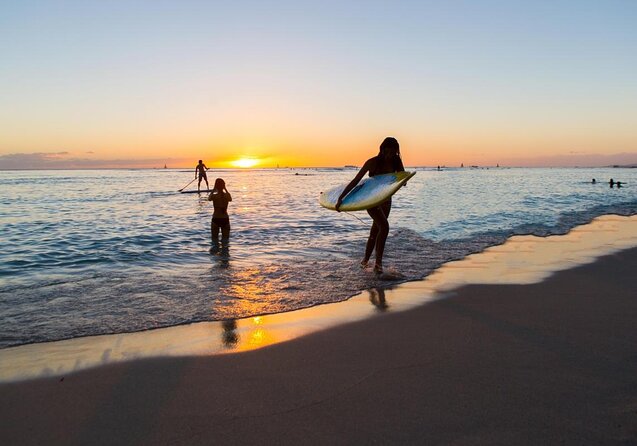
The Duke Paoa Kahanamoku Statue is an important early stop. Duke was an Olympic swimmer and a major figure in the spread of modern surfing. The statue near Waikiki Beach gives you a quick connection between the resort strip and the local sporting culture that helped make Waikiki famous.
You may also pass or stop near The Twin Fin Hotel. This part of the route keeps you close to Waikiki’s hotel zone, so it is useful for joining the trolley from a different section of the beach district. If you are trying to see the whole circuit, do not assume every hotel stop is equally obvious. Ask staff or look for a trolley representative if you are unsure.
HoMA, the State Capitol, and Punchbowl Crater
The Honolulu Museum of Art, usually called HoMA, brings a cultural stop into a route otherwise filled with public monuments and city streets. It is a sensible place to get off if you want art rather than another quick photo stop. Check its opening days before planning around it. One visitor specifically noted that the museum is closed Monday and Tuesday.
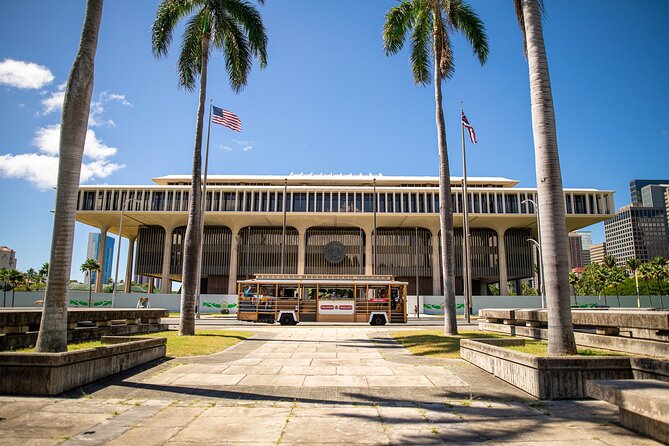
The Hawaii State Capitol gives you a look at modern island government. It is close to other important civic buildings, so this section helps explain Honolulu as the political center of Hawaiʻi, not just a beach destination. The guide’s narration is useful here because the buildings themselves may mean little without context.
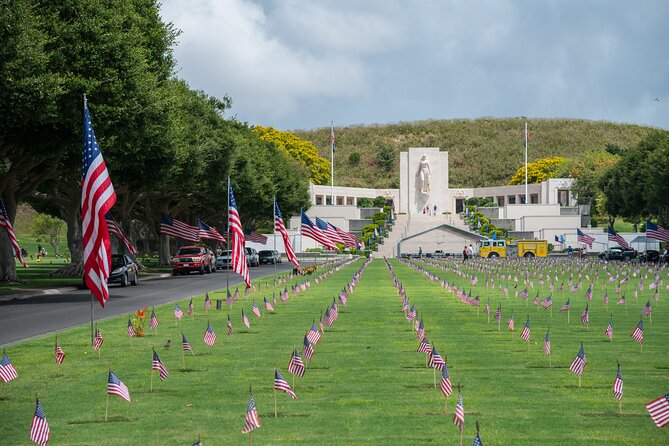
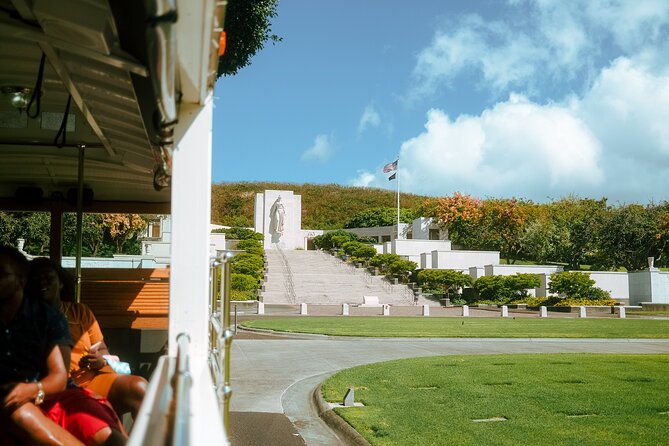
The National Memorial Cemetery of the Pacific sits inside Punchbowl Crater. This is one of the most memorable parts of the route, with broad views and a quiet, formal setting honoring people who served in the United States military. It is a place for respectful sightseeing rather than a rushed photo stop.
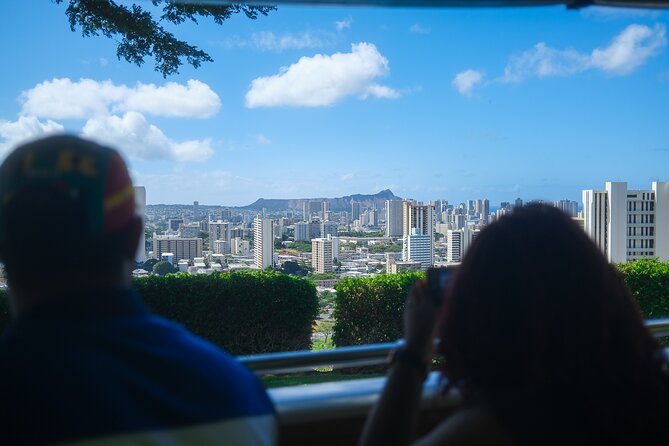
Punchbowl also helps place Honolulu geographically. From higher ground, you can see how the city spreads between the mountains and the sea. The stop may be especially meaningful if you want a break from Waikiki’s commercial energy. Allow time for the visit if you hop off, but remember that another trolley may not arrive quickly.
Downtown Honolulu, Foster Botanical Garden, and Royal Kitchen
Foster Botanical Garden offers a peaceful change of pace in the middle of the city. The stop is well suited to anyone who wants trees and garden paths instead of traffic and storefronts. The trolley gives you the option to make a short visit, but the long gaps between vehicles mean you should not get off casually unless you are prepared to wait.
The Izumo Taishakyo Mission of Hawaii adds a religious and cultural detail that many first-time visitors might miss. It is paired on the route with Royal Kitchen, giving you a glimpse of Honolulu’s varied communities and food traditions. This is one reason I prefer the Red Line to a simple drive past Waikiki landmarks. It connects famous sights with smaller, less expected stops.
Chinatown and Downtown Honolulu are among the most interesting parts of the ride. You will pass near Hawaii Theatre and see a different side of the city from the polished hotel strip. Chinatown can feel rougher and less tidy than Waikiki, and one visitor found the area uncomfortable. That does not make it a bad stop, but it does mean you should choose it for food, architecture, and atmosphere rather than expecting another resort district.
The guide’s commentary matters most here. Without explanation, Chinatown can look like a collection of streets and shops. With context about Honolulu’s communities and past, the area becomes much easier to understand.
Same place, a different way to ride:
- Grand Canyon West Bus Tour with Hoover Dam and Optional Skywalk
★ 4.0 · 7,224 reviews - Boston Hop-On Hop-Off Trolley Tour with 13 Stops
★ 4.5 · 5,576 reviews - Muir Woods and Sausalito (Return by Bus or Ferry)
★ 4.5 · 5,098 reviews - New Orleans City Sightseeing Hop-On Hop-Off Bus Tour
★ 4.5 · 4,943 reviews
King Kamehameha Statue and Honolulu Harbor
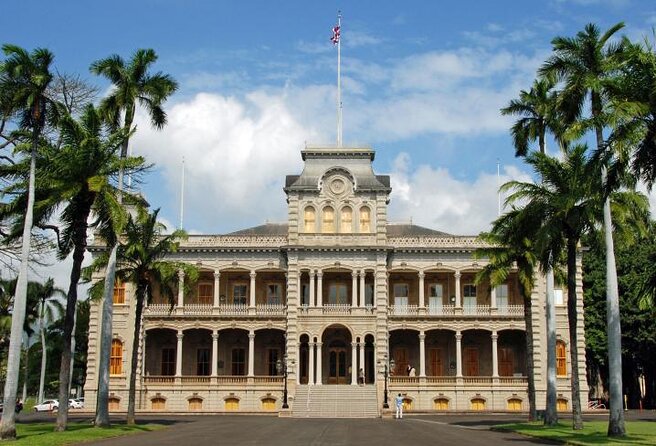
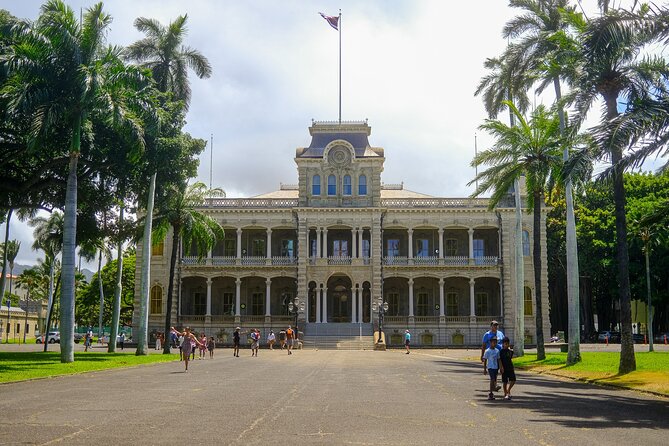
The King Kamehameha Statue is one of Honolulu’s essential photo stops. The gold-covered figure honors Kamehameha I, the ruler who united the Hawaiian Islands. It sits in front of Aliʻiōlani Hale, a grand civic building often recognized from images of Honolulu.
The narration here connects the statue to Hawaiʻi’s monarchy and gives the Red Line its Heroes & Legends character. If you are trying to absorb the island’s past without committing to a full museum visit, this is one of the most useful parts of the ride.
At Aloha Tower Marketplace, the trolley pauses for brief sightseeing near Honolulu Harbor. Aloha Tower has long served as a symbol of arrival by sea, and the harbor area gives you a different view of the city’s working and commercial side. The break is short, so it is better for a quick look than for a full meal or extended shopping stop.
Kakaʻako, Ward Centre, and Ala Moana
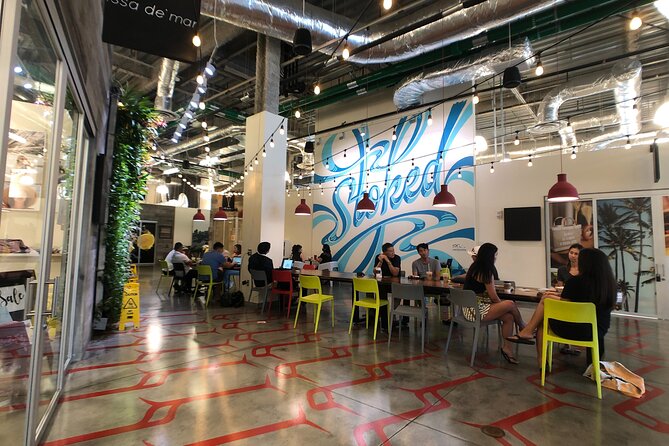
SALT at Our Kakaʻako introduces one of Honolulu’s newer districts. The area is known on the route for food, shops, and a more modern city feel. It contrasts nicely with the older buildings around Downtown and Chinatown.
Ward Centre continues that shopping and dining section before the trolley reaches Ala Moana Regional Park. This stretch is useful if you want to compare Honolulu’s different neighborhoods in one outing. It also shows why the Red Line is more than a Waikiki loop.
Ala Moana Regional Park is the final listed stop. It offers an open setting away from the tight hotel streets, though the pickup point can be hard to identify. One passenger went to the park and could not find where the trolley stopped, eventually catching it at Ala Moana Mall. Ask exactly where to wait before getting off, and keep an eye out for the next vehicle.
Timing, crowds, and the real meaning of hop-on hop-off
The advertised ride is about 1 hour 20 minutes, but you should allow closer to two hours for a complete circuit when traffic slows the route. If you remain on board, the experience works like a narrated city tour. If you hop off, it becomes a slower day of sightseeing with uncertain waits.
The biggest practical complaint is the gap between trolleys. At some stops, you may wait around an hour. A late first trolley can also make you nervous about getting off elsewhere, since the next ride may not come soon. One departure was reported as 45 minutes late, while another bus passed a stop because it was already full.
Crowding is another concern. Some rides have only standing room, and one person had to stand for the first half hour while accompanying a family member recovering from surgery. If you need a guaranteed seat, arrive early, avoid the busiest departure, and consider staying on board rather than hopping off repeatedly.
Stop signage also needs attention. You may find a representative at a main pickup point, but not every location is equally clear. This is especially important at Ala Moana and other stops away from the center of Waikiki.
Traffic and special events can cause bigger problems. A parade once forced passengers to remain on board for about two hours and leave far from the intended stop. The trolley can still offer a pleasant ride, but you should not use it for a fixed appointment.
Is $35 good value?
At $35 per person, the Red Line costs more than Honolulu’s regular city bus, but it offers a simpler introduction for someone who does not want to work out local routes. You are paying for the open-air trolley, the sightseeing route, and the driver’s commentary, not just a seat between two points.
The value is strongest if you are short on time, visiting Honolulu for the first time, or staying mainly in Waikiki. In a single ride, you can see the State Capitol, Punchbowl, Chinatown, the King Kamehameha Statue, the harbor, Kakaʻako, and Ala Moana. A taxi between all those areas would cost more, while the city bus would require more planning.
The value drops if you expect a precise timetable or plan to use the trolley as your main transportation. The local bus costs less, and one review specifically pointed out that a regular bus pass can cover the whole island with transfers. That option will not provide the same sightseeing narration, but it may work better for independent sightseeing.
The tour is non-refundable, so check your plans before paying. Mobile tickets are offered, the experience is in English, service animals are allowed, and it is near public transportation. Most people can participate, but the possibility of standing makes it a poor choice for anyone who cannot comfortably remain upright during delays.
Who should book the Red Line?
I would recommend it to first-time Honolulu visitors who want a broad introduction before choosing individual sights. It also suits couples and families looking for a gentle, educational break from the beach. The guides can make the ride fun, and the mix of monuments, neighborhoods, and city views gives you plenty to talk about afterward.
I would be more cautious if you have limited mobility, a strict schedule, or a strong need for clear audio. The trolley can be crowded, noisy, and late. If you plan to visit Pearl Harbor, some historical material may overlap, so plan your day with that in mind.
Book the Red Line if you value context and a wide city overview more than perfect transport. Stay on for the full narrated circuit first, then hop off only at the stops you truly want to explore. That approach gives you the best chance of enjoying the route without letting the long waits take over your day.
FAQ
How long does the Waikiki Trolley Red Line tour take?
The listed duration is approximately 1 hour 20 minutes. A complete ride can take about two hours depending on traffic and stop time.
Where does the Red Line begin?
The listed first stop is Waikiki Shopping Plaza. Other stops include the Duke Paoa Kahanamoku Statue, The Twin Fin Hotel, and locations across Honolulu.
Can I get on and off the trolley?
Yes. The route is designed for hop-on hop-off sightseeing, allowing you to leave the trolley at stops and board again later.
How often do the trolleys arrive?
The provided information does not give a fixed interval. In practice, waits may be long, with some passengers reporting gaps of about an hour between vehicles.
What language is the tour offered in?
The tour is offered in English, with commentary from the driver about Hawaiʻi’s history and culture.
What sights are included on the route?
Stops include HoMA, the Hawaii State Capitol, the National Memorial Cemetery of the Pacific at Punchbowl Crater, Foster Botanical Garden, Chinatown, the King Kamehameha Statue, Aloha Tower Marketplace, SALT at Our Kakaʻako, Ala Moana Regional Park, and more.
How much does the experience cost?
The listed price is $35 per person. The ticket is mobile, and the experience is non-refundable if canceled or amended.
More Trolley Tours in the USA
- Waikiki Trolley Hop-On Hop-Off Tour of Honolulu
★ 4.5 · 4,783 reviews - Waikiki Trolley Blue Line Coastline & Local Grindz Hop-on Hop-off
★ 5.0 · 4,159 reviews - St. Augustine Hop-On Hop-Off Trolley Tour
★ 4.5 · 3,799 reviews - 1 or 2 Day HOP-ON & HOP-OFF Narrated Trolley Tour of Boston
★ 4.5 · 2,849 reviews
Just added around the USA
- Viator Exclusive: 10:15PM Las Vegas Night Tour by Open-Top Bus★ 4.0 · 103 reviews
- Sin City Party Bus Club Crawl★ 4.5 · 17 reviews
- Strip Club Crawl & Open Bar Party Bus – Las Vegas★ 3.5 · 40 reviews
- Private Party Bus Up to 30 People Vegas Nightclub Tour★ 3.0 · 4 reviews
- Skip-the-Line at Vegas Clubs with a Party Bus!★ 5.0 · 39 reviews
- Rockstar Pool Party Crawl w/ VIP Entry & Party Bus Ride★ 3.5 · 9 reviews
- Las Vegas Party Bus Club Crawl★ 4.0 · 76 reviews
- Party Bus Dayclub Crawl★ 4.0 · 9 reviews
Trolley Tours, compared.
Boston Hop-On Hop-Off Trolley Tour with 13 Stops
Read our review →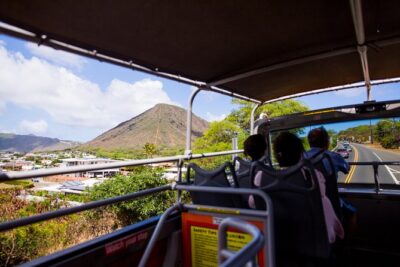
Waikiki Trolley Hop-On Hop-Off Tour of Honolulu
Read our review →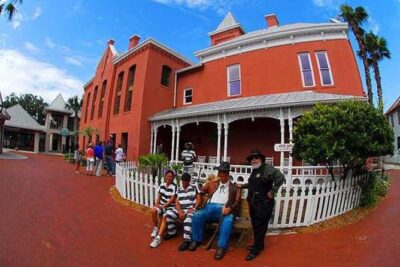
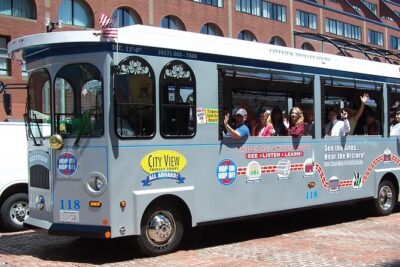
1 or 2 Day HOP-ON & HOP-OFF Narrated Trolley Tour of Boston
Read our review →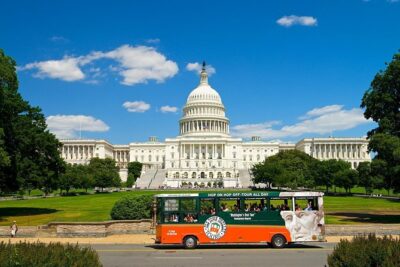
Washington DC Hop-On Hop-off Trolley Tour with 15 Stops
Read our review →
Browse the lists this tour appears in