
Review · CANADA
Quebec City Hop-On Hop-Off
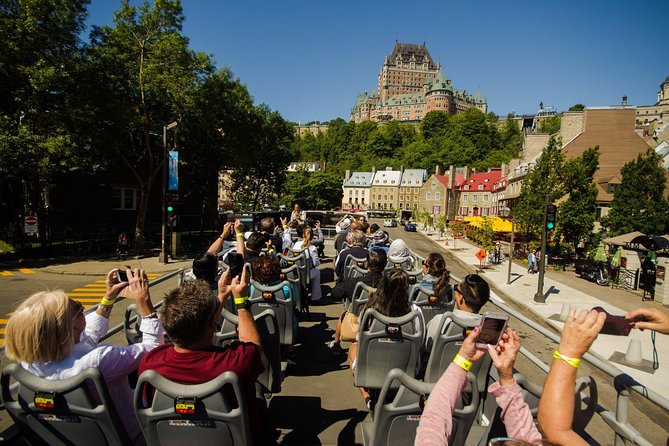
See Quebec City before choosing your stops. This red, open-top double-decker gives you a quick look at Old Québec, the Plains of Abraham, the Citadelle, and the riverfront without asking you to master the city’s hills first. I like the clear overview and the chance to hear the audio tour in 10 languages. I also like the broad route, which reaches well beyond the old town.
The main caution is bus capacity. On busy cruise-ship days, some riders waited a long time for a bus that had room. That can turn a flexible two-day pass into an expensive exercise in standing around, especially in chilly weather.
Quick facts worth knowing
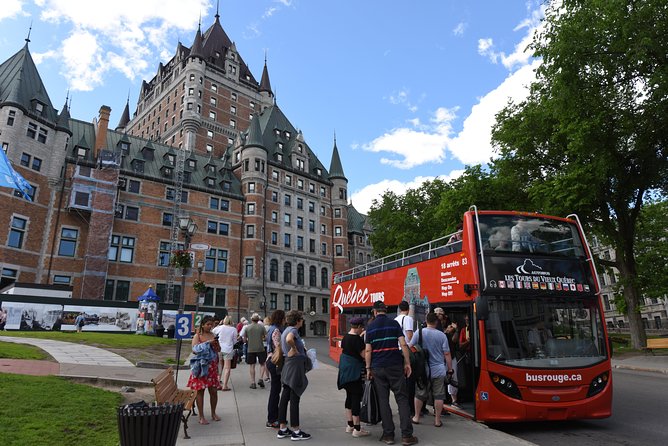
- A 2-hour city circuit: Take the full ride first, then decide where to get off.
- Fifteen useful stops: The route links Old Québec, Saint-Roch, Parliament Hill, the Plains of Abraham, the Citadelle, and the Old Port.
- Open-top views: The upper deck gives you unobstructed views, but it can be cold and exposed.
- Audio in 10 languages: Earphones provide recorded commentary about Quebec City’s past, present, and future.
- One-day or two-day tickets: The longer pass works best if buses are running reliably and you plan several stops.
- Cruise-day warning: Heavy demand has caused full buses, long waits, and missed opportunities to hop back on.
Why this bus can be a smart first look at Quebec City
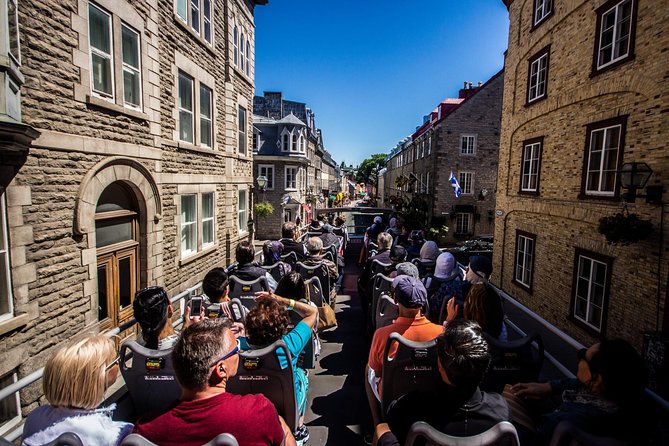
Quebec City is compact in its most famous center, but its attractions are spread across several distinct areas. The old fortified town, the riverfront, Parliament Hill, Saint-Roch, the Plains of Abraham, and the museums around Grande Allée each have a different feel. A bus helps you see how those pieces fit together.
I especially like this tour for a first morning. You can ride the route once, note the places you want to revisit, and then walk through the areas that caught your eye. That approach also prevents a common mistake: spending all your time around Château Frontenac and missing Saint-Roch, the Old Port, or the fine arts museum.
The recorded narration adds useful context while you ride. It is not a private guide, and the depth varies by subject, but it gives you a basic story of the city instead of leaving you to guess what you are seeing. Several riders found the audio clear and informative, while others reported that individual commentary units did not work. Bring your own patience, and check that your earphones work before the bus pulls away.
The upper deck is the best place for photographs. You get an open view of streets, stone walls, church towers, and the river corridor. On a cold day, though, the same open design can be uncomfortable. The lower deck offers shelter, but you lose some of the wide views.
More Hop-On Hop-Off Bus Tours in Canada
- Big Bus Vancouver Hop-On Hop-Off Sightseeing Tour
★ 3.5 · 3,028 reviews - Montreal: Hop-On Hop-Off Double-Decker Bus Tour
★ 4.1 · 2,760 reviews - Toronto: City Sightseeing Hop-On Hop-Off Bus Tour
★ 4.3 · 2,544 reviews
Reading the 15-stop route from west to east
The stop names and exact boarding points matter here. Save the route information on your phone before setting out, since a few riders found the stops hard to identify and noted that no route map was available on the bus.
Stop 1: The Fort Museum at Place d’Armes
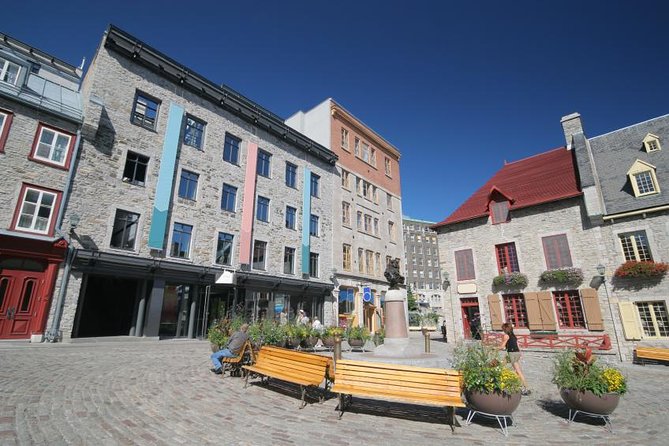
This is the strongest starting point for many visitors. Place d’Armes sits in the heart of Old Québec, close to the Fort Museum and the Musée de l’Amérique francophone. From here, you are already near the city’s most recognizable streets and buildings.
Use this stop to get oriented. You can begin with the full loop, or get off and start exploring the old town on foot. The nearby museums make this a useful stop for anyone who wants context before wandering through the fortifications and historic squares.
It is also the information point where separate tickets may be printed when several tickets were purchased together online. If your party plans to split up, ask about this before boarding. A single digital pass can be awkward when members of a group want to take different buses.
Stop 2: de la Couronne in Saint-Roch
Saint-Roch gives you a different side of Quebec City. This area is associated with shopping and trendy restaurants, and it feels less like the postcard version of the city than Place d’Armes does.
I would use this stop for a meal or a short neighborhood walk rather than treating it as a quick photo stop. It is also useful if your accommodation or plans are closer to the lower city. The bus saves you from tackling the change in elevation between areas on foot, though the wait for a return bus can make walking faster on a crowded day.
Same place, a different way to ride:
- Montreal: Guided Bus Tour
★ 4.4 · 3,064 reviews - Ottawa: Bilingual Guided City Tour by Amphibious Bus
★ 4.6 · 2,089 reviews - Vancouver: Hop-on Hop-off Sightseeing Tour with 10 Stops
★ 3.9 · 1,807 reviews - Quebec City: Hop-on Hop-off Open-Top Double Decker Bus Tour
★ 4.4 · 1,484 reviews
Stop 3: 85 Rue Dalhousie
This stop serves the Musée de la civilisation, the Place de la FAO, and the waterfront promenade. The museum is a good choice if the weather is poor or you want exhibits instead of more streets and viewpoints.
The promenade gives you a chance to slow down after the bus ride. This is one of the better stops for combining a museum visit with riverfront air. Keep in mind that the route is a sightseeing service, not a guaranteed point-to-point shuttle. If a bus arrives full, you may need to wait for the next one.
Stop 4: Trav. Québec-Lévis and Place Royale
This is one of the most rewarding stops on the route. Nearby are the Louis-Jolliet boat, the interpretation center at Place Royale, Notre-Dame-des-Victoires Church, Maison Chevalier, shops, and restaurants.
Place Royale is a natural place to get off because several sights sit close together. The church is especially notable for its position in the square, while the surrounding streets offer some of the old city’s most appealing walks. Give yourself time here rather than trying to squeeze in a ten-minute look.
Stop 5: 306 Rue Saint-Paul and the Old Port
Rue Saint-Paul puts you near the Old Port promenade, restaurants, and the Old Port Market. This area works well for a relaxed break, especially if you want to browse food stalls or walk beside the waterfront.
The Old Port also helps explain why the city developed where it did. The bus commentary may point out individual events and dates, but it does not always explain their larger effect. If you want a fuller understanding, pair this stop with the Museum of Civilization or a walking tour.
Stop 6: Place Québec parking area
This stop is near Place Québec and provides another access point for the center. It is less of a named attraction than Place Royale or the Citadelle, but it can be handy for changing your plan or getting closer to the Parliament Hill area.
Do not assume every stop has a large, obvious sign. Confirm the location before you leave the bus, especially if you plan to return later. Confusion over stop numbers can spoil the convenience of a hop-on hop-off service.
Stop 7: Observatoire de la Capitale
This stop serves the Parliament Hill area, the Hôtel du Parlement, the Fontaine de Tourny, and the Promenade des Premiers Ministres. It is a strong choice for anyone interested in Quebec’s government and grand civic buildings.
The Observatoire is also one of the best places to add a high viewpoint to your day, though admission is not included in the bus ticket. The route gets you close, but you will need to arrange and pay for any separate attraction yourself.
Stop 8: Gén.-de-Montcalm and the Plains of Abraham
Here you reach the Plains of Abraham, the Plains of Abraham Museum, restaurants, and more of Parliament Hill. The open green space offers a welcome change from dense old-town streets.
This is a good stop for a longer walk. You can combine the museum with the grounds, then continue toward Parliament Hill. Since the bus route can become crowded, I would not hop off here with only a tight schedule. Allow time for the walk and for a possible wait when you return.
Stop 9: Monument Confucius
This stop also serves the Citadelle, the Plains of Abraham, and Parliament Hill. Its value is mainly its position near several major sights rather than a single must-see attraction at the bus stop itself.
The Citadelle is one of the places that makes the route worthwhile for first-time visitors. The bus lets you reach it without sorting out the city’s slopes and streets on your own. Check opening arrangements for the Citadelle separately, since the bus pass does not include entry.
Stop 10: 1 Avenue du Cap Diamant
This stop is near the Citadelle, the remains of the Blockhaus, and the Promenade des Gouverneurs. The promenade is a fine place to appreciate the city’s position above the river.
This section can involve walking and changes in elevation, so comfortable shoes matter. The bus gets you close, but it does not remove every hill from the day. If you have limited mobility, study the stop locations and planned walks before choosing where to get off.
Stop 11: 290 Grande Allée Ouest
This stop serves the Musée national des beaux-arts du Québec, also called MNBAQ, and the Plains of Abraham. Art lovers should mark it in advance. The museum gives you a substantial indoor visit, while the nearby park offers open space afterward.
It is one of the route’s best pairings: culture indoors, then a walk outdoors. The museum is a separate attraction, so plan enough time if you want more than a quick look.
Stop 12: Cinéma Cartier and Avenue Cartier
Avenue Cartier brings shopping and restaurants. This is a practical stop for a break, particularly if your group wants food options rather than another museum or monument.
It also shows the value of the wider route. The bus is not limited to the most photographed blocks of Old Québec. You can use it to compare different parts of the city, then return to the old town for your main sightseeing.
Stop 13: 175 Rue Saint-Jean
This stop serves shopping and Saint-Jean-Baptiste Church. Rue Saint-Jean is a useful walking street, and the church adds a clear architectural point of interest.
The area can be a better place for casual browsing than the busiest old-town squares. If you get off here, keep the return stop in mind. A two-day ticket gives you more freedom, but only if you can board the next bus.
Stop 14: 931 Rue Saint-Jean
This stop is near Palais Montcalm, Le Capitole, the Faubourg Saint-Jean-Baptiste, Parc Canada, restaurants, and parking. It overlaps with the Saint-Jean area but reaches a slightly different cluster of venues.
Use it for an evening meal or a performance-related plan if your schedule fits. The route information lists the attractions nearby, but admission, event tickets, and restaurant costs are separate.
Stop 15: Édifice Thaïs-Lacoste-Frémont
The final listed stop is near City Hall, or Hôtel de Ville. From here, you are close to the central old town and can return to the area around Place d’Armes.
This is another useful orientation point. If you lose track of where you are, City Hall is an easier landmark than a numbered stop. It also gives you a final chance to walk before ending the circuit.
The two-hour loop is useful, but not always predictable
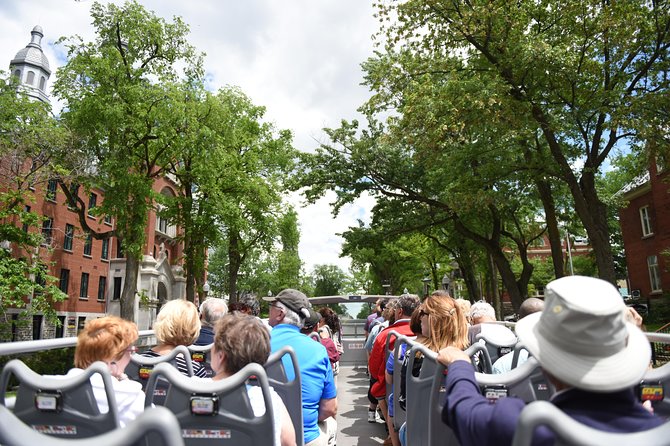
The advertised ride lasts about two hours, although some riders described a circuit of just over an hour. Delays, traffic, loading time, rerouting, and crowded buses can change the actual experience. One reported day included a long pause at Château Frontenac and another delay caused by a technical problem.
That variation matters. If you have a cruise departure, restaurant reservation, or museum entry time, do not build a tight schedule around the bus. Use it as a flexible sightseeing tool, not as a clockwork transit system.
The one-day pass is enough for a basic overview. The two-day option looks more attractive if you want several stops, but it is not automatically better value. On a quiet day, two days can give you a gentle pace. On a heavily booked day, you may spend much of that extra time waiting or watching full buses pass.
Price and value at $46.93
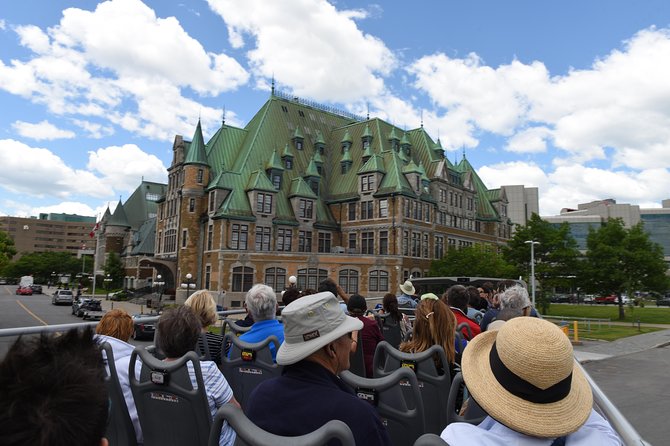
At $46.93 per person, this is not the cheapest way to move around Quebec City. The value comes from combining transportation, sightseeing, and commentary in one ticket.
I think the price is reasonable for a first visit if you complete much of the circuit and get off at several stops. It is less appealing if you only ride once, especially since many central sights can be explored on foot. The bus earns its cost by saving time and effort between separated areas.
The price also makes the capacity problem more serious. A delayed bus is annoying; a delayed bus after you have paid nearly $47 is a real loss. Cruise passengers should check how many ships are in port and avoid assuming that a pre-booked ticket guarantees a quick boarding experience.
Crowds, weather, and the practical weak spots
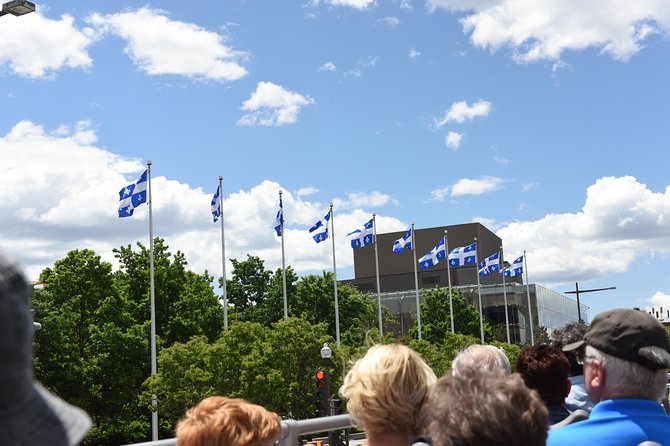
The most serious problem is not the route. It is the number of people trying to use it at once. On some cruise days, lines reached roughly 50 to 70 people, and full buses passed without taking everyone. Waits of 45 minutes, 90 minutes, and even two hours were reported.
That is a major warning for peak dates. Several people also found that a bus became standing-room only after they hopped back on. The service is designed around getting off and on again, but that feature loses its value when the next bus has no space.
A festival or road activity can make matters worse. Rerouting has occurred without clear announcements, which makes it harder to know where to wait. If you see a long queue, ask staff at the information point what is happening and keep a walking or taxi backup in mind.
The open roof is another trade-off. It gives you the best views, but Quebec City can be chilly, especially when the bus is moving. Bring a warm layer even on a bright day. Tall riders may also find the upper-deck legroom tight, with one pair reporting that two six-foot adults could not comfortably share a seat.
The buses themselves have generally been described as clean and well located. The audio is often praised, but a few units have not worked, and the live commentary can vary. The booking information says the tour is offered in English, while the recorded system provides 10 language choices.
Who should book it?
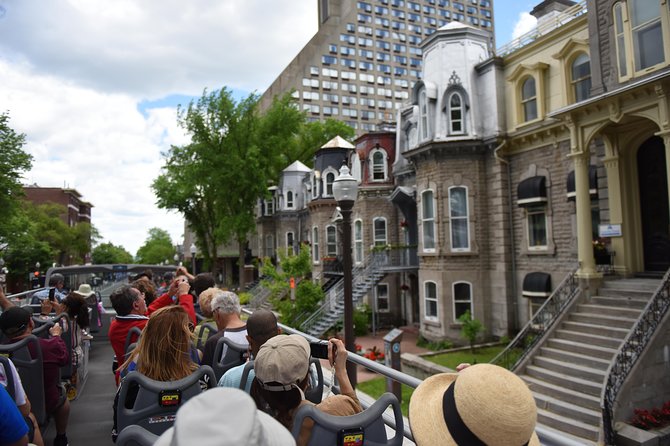
I would consider this bus for a first visit, a short stay, families who want an easy orientation, and anyone who prefers not to manage Quebec City’s hills alone. It is also useful when you want to compare Old Québec with Saint-Roch, the Plains of Abraham, the museum district, and the Old Port in one outing.
I would be more cautious if you are visiting on a major cruise day, need dependable transport at a fixed time, or dislike waiting outside. In those cases, walking, taxis, or a more carefully timed private plan may serve you better.
The best strategy is simple: ride the complete circuit first, use the second pass for your chosen stops, and keep your schedule loose. Have your mobile ticket ready before boarding, and if you bought several tickets, visit the information point at Stop 1 to ask about separate printed tickets.
Should you book the Quebec City Hop-On Hop-Off?
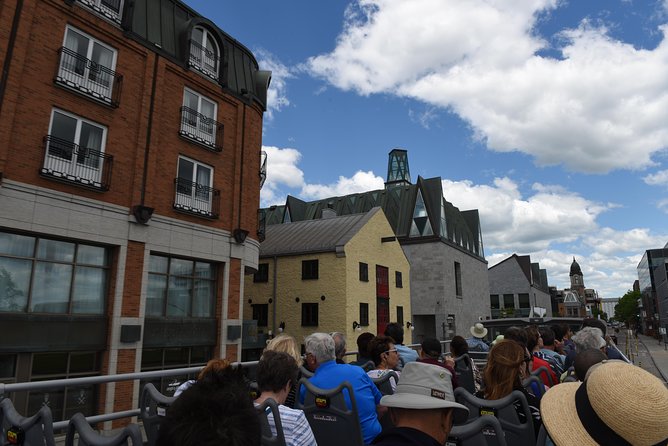
Book it if you want a broad first look and can accept a little uncertainty. The route covers the city’s major sightseeing zones, the audio gives useful background, and the open-top deck can produce excellent views.
Skip it on a crowded cruise-ship day unless the operator confirms enough capacity. A two-day ticket cannot fix a service that is too full to board. For a quiet day and a first visit, this is a practical way to get your bearings. For a packed day, it may be quicker, cheaper, and less frustrating to walk between the central sights.
FAQ
How long does the Quebec City Hop-On Hop-Off tour take?
The advertised duration is approximately two hours for the sightseeing route. Actual times can vary because of traffic, crowding, rerouting, technical issues, and long loading stops.
What ticket options are available?
You can choose a one-day or two-day hop-on hop-off pass. The included duration depends on the option selected when booking.
What languages are available for the audio tour?
The onboard audio tour is available in 10 languages. The experience is offered in English, and English commentary is part of the audio service.
Is hotel pickup included?
No. Hotel pickup and drop-off are not included. You need to reach one of the listed bus stops yourself.
What attractions does the route serve?
Stops are located near Old Québec, the Fort Museum, the Museum of Civilization, Place Royale, the Old Port Market, Parliament Hill, the Plains of Abraham, the Citadelle, the Musée national des beaux-arts du Québec, Saint-Jean-Baptiste, and City Hall.
Does the ticket include admission to museums or the Citadelle?
No admission inclusions are listed. The pass covers the bus service, audio tour, and onboard Wi-Fi, while attraction entry is separate.
Can I cancel for a full refund?
You can cancel at least 24 hours before the experience start time for a full refund. Changes or cancellations made less than 24 hours in advance are not accepted for a refund. If poor weather causes the experience to be canceled, you will be offered another date or a full refund.
Just added around Canada
- Johnston Canyon, Gondola and Banff Day★ 5.0 · 2 reviews
- Banff Lake Louise Excursion – 3-Day Calgary To Vancouver Bus Tour★ 5.0 · 6 reviews
- Western Classic – One Way Calgary To Vancouver Rockies Bus Tour★ 5.0 · 9 reviews
- Salt Spring Island “Artisan Trail” Hop On Hop Off Tour!★ 4.5 · 23 reviews
- Explore Moraine and Louise Roundtrip from Banff Shared Bus Tour★ 5.0 · 2 reviews
- Toronto City Tour: 2-Hour Open-Top Experience★ 4.4 · 64 reviews
- Toronto: Festive Lights Bus Tour★ 3.9 · 11 reviews
- Sunset Bus Tour: Stanley Park & English Bay Photostops★ 4.5 · 181 reviews
Hop-On Hop-Off Bus Tours, compared.
City Sightseeing Hop-on Hop-off Bus with Audioguide
Read our review →
Tootbus Hop-on Hop-off (Optional River Cruise)
Read our review →
Big Bus Hop-On Hop-Off Tour with Optional Cruise
Read our review →
London Big Bus Hop-On Hop-Off Tour with Optional River Cruise
Read our review →

Big Bus Hop-on, Hop-off Open-Top Sightseeing Tour
Read our review →
Browse the lists this tour appears in