Review · CHILE
Tourist bus around Santiago for a day
See Santiago from above first. This red double-decker bus gives you a useful city orientation, with easy access to Plaza de Armas, San Cristóbal Hill, Bellavista, and Costanera Center. I like the freedom to get off when a neighborhood catches your eye, and I like the cool lower deck on a hot day. The main drawback is reliability: bus-stop signs can be poor, audio equipment may fail, and some departures have reportedly run late or ended early.
At $50 per person, this is not the cheapest way to move around Santiago. I would book it for the overview, the views, and the chance to link far-flung districts in one day, not simply as city transport. Plan carefully, confirm your pickup point, and leave room for delays.
Key points to know before boarding
- The full loop takes about two hours: That is the time without getting off, although traffic can stretch it considerably.
- Service is scheduled from 9:30am to 6pm: Buses are meant to arrive about every 30 minutes, but waits of 45 minutes or more have occurred.
- San Cristóbal Hill is the strongest sightseeing stop: The cable car and funicular provide Santiago’s best city views, with the Andes often forming the backdrop.
- The route connects very different parts of Santiago: You move from the old center and government district to Bellavista, Providencia, Las Condes, and Parque Arauco.
- Stop locations need extra attention: Several stops are hard to identify, and some have little or no visible signage.
- The experience is best for first-time visitors: It helps you decide where to return on foot, by taxi, or by public transport.
What this Santiago bus tour actually gives you
The Turistik bus is designed as a one-day hop-on, hop-off service around Santiago. You can board at the designated stops, remain on for the complete circuit, or get off as often as you like during the operating period.
The buses are distinctive red double-deckers. The upper level gives you a broad view of the streets and buildings, while the lower level is air-conditioned. Onboard audio commentary is offered in several languages, and staff may provide headphones and help with the route.
The advertised circuit takes about two hours. That sounds generous, but it only works if you stay aboard. Once you add a cable-car ride, lunch, a museum, or a stroll through the old center, the day becomes much longer. Traffic is a serious factor, especially on busy afternoons.
I would treat the loop as a sightseeing framework, not a tightly timed transport network. If you have a flight, restaurant booking, or other fixed appointment, do not build your schedule around the final bus of the day.
A few more bus tours around the world worth a look
- Mt Fuji and Hakone 1-Day Bus Tour Return by Bullet Train
★ 5.0 · 26,383 reviews - Barcelona: 24 or 48-Hour Hop-On Hop-Off Bus Tour
★ 4.4 · 20,872 reviews - London: Warner Bros. Studio Harry Potter Tour & Branded Bus
★ 4.7 · 19,194 reviews
Parque Arauco and Bicentennial Park

The eastern end of the route begins at Mall Parque Arauco, at Avenida Presidente Kennedy. This is one of Chile’s major shopping centers, with international brands and an outdoor dining area. It is useful if you want shopping or a relaxed meal, but it is not the first stop I would choose for a short visit to Santiago.
The next stop serves Bicentennial Park, a large green area beside the Mapocho River. Lagoons attract swans, flamingos, and herons, and the park offers open views toward the city and mountains.
This is a good pause if you need space after several hours in traffic. It also gives you a different side of Santiago, one that is less about monuments and more about parks, walking, and modern city life. The drawback is simple: if your time is limited, the park may compete with more distinctive sights downtown.
San Cristóbal Hill by cable car or funicular
The two stops connected with San Cristóbal Hill are the most useful part of the route. One is near the Santiago Cable Car, about a five-minute walk away. Another is at Pío Nono, beside the historic funicular.
The cable car climbs San Cristóbal Hill and offers wide views over Santiago. The funicular links the Bellavista area with the hilltop and is itself a classic attraction, with a historic entrance and a short, memorable ride.
I would make this your top priority if the weather is clear. The 360-degree view gives you a quick understanding of Santiago’s size and geography. You can see the city spread through the valley, with the Andes providing the dramatic frame.
Allow more time than the bus schedule seems to suggest. The bus ride only gets you to the hill. Cable-car or funicular tickets are not included in the bus fare, and lines or delays can affect your return to the road. The itinerary says the cable-car stop includes a ticket to climb the hill, but the general inclusions state that other tickets are not included. Confirm this point before you pay for any additional ride.
The hill is also the place where the hop-on, hop-off format makes the most sense. You can see a major sight, take photographs, and then continue without arranging a separate taxi across the city.
Plaza de Armas and the old center
Plaza de Armas is Santiago’s historic center and one of the most worthwhile stops for a first visit. The square is surrounded by major civic and religious buildings, including the Metropolitan Cathedral and the Central Post Office.
Get off here if you want to walk rather than simply look through a bus window. The area gives you a clear sense of how Santiago began and how the old center still functions as a public meeting place.
The difficulty is finding the exact boarding position afterward. Plaza de Armas is large, and the pickup point may not be obvious. Give yourself extra time to locate it, and ask staff or a nearby security worker before walking away from the square.
This is also one of the places where the bus can lose time. Downtown streets can be slow, and a wait in full sun is unpleasant if there is no seating. I would avoid leaving the old center until you have checked the bus-tracking app, if it is working, and confirmed the direction of travel.
Same place, a different way to ride:
- Rome: City Sightseeing Hop-on Hop-off Bus with Audioguide
★ 4.0 · 16,045 reviews - Amsterdam: Zaanse Schans, Edam, Volendam & Marken Bus Tour
★ 4.6 · 15,034 reviews - 1-Day Tokyo Bus Tour
★ 5.0 · 14,250 reviews - From Reykjavik: Northern Lights Bus Tour with Hot Cocoa
★ 4.3 · 13,947 reviews
Palacio de La Moneda and Paseo Bulnes
The government district includes Palacio de La Moneda, the seat of Chile’s government. The building represents the institutional side of Santiago and is an important stop for anyone interested in Chilean politics and public life.
Paseo Bulnes is also listed among the route stops. It provides a broad civic setting near the palace and gives you a more formal contrast to the cafés and street life of Bellavista or Lastarria.
There is an important practical warning here. Some departures have reportedly passed near La Moneda without making the expected stop or without announcing the change clearly. If this sight matters to you, check the current route before boarding and ask the onboard staff directly.
The bus route information also presents 12 stops in one place and 10 detailed stops in another. That inconsistency makes a current map especially important. Do not assume every stop listed in promotional material will operate in exactly the same position on your date.
Cerro Santa Lucía and Barrio Lastarria

Cerro Santa Lucía is a small urban hill with terraces, fountains, paths, and viewpoints. It has a long connection with Santiago’s foundation and offers a pleasant break from the traffic below.
This stop pairs well with Barrio Lastarria, nearby. Lastarria is known for cafés, restaurants, and cultural attractions, so it is a better choice than a quick bus-window view if you want to eat or wander.
I like this stop for its scale. San Cristóbal gives you the great panorama, while Santa Lucía gives you a closer, more intimate city view. You can explore its terraces without committing to a major half-day excursion.
The timing can be awkward. A short visit is possible, but a proper walk through Santa Lucía and Lastarria may take longer than the next scheduled bus interval. If you get off, accept that you may wait for the following bus.
Bellavista, Plaza la Aviación, and Providencia
The route passes through Bellavista, Santiago’s bohemian district. The nearby stop at the Courtyard Bellavista and the Pío Nono stop make this area useful for San Cristóbal access as well as restaurants and nightlife.
Bellavista is best experienced on foot. From the upper deck, you can spot the area and get your bearings, but the neighborhood’s appeal is in its streets, murals, food, and small businesses.
Plaza la Aviación lies farther along Providencia, near the Mapocho River. Its large fountain and green surroundings make it a pleasant walking stop. Cafés and bars nearby give you more options for a break than many of the central stops.
This section of the route can be slow. Modern office towers, busy roads, and impatient traffic reduce the pleasure of a long ride, particularly on a Friday afternoon. The bus remains useful here because it connects districts that are not close together, but it is not always fast.
El Golf, Isidora Goyenechea, and Costanera Center
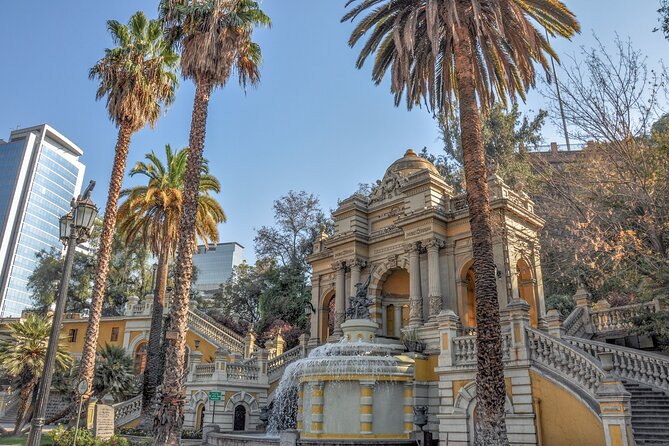
The Isidora Goyenechea stop sits in the elegant El Golf area of Las Condes. Modern buildings, restaurants, and cafés give you a look at Santiago’s wealthier business district.
The itinerary identifies an interactive museum near this stop, with audiovisual displays and activities suited to families. The museum adds an indoor option, especially when the weather is hot or poor, but entry is not included in the bus ticket.
Costanera Center is another major eastern stop. It is South America’s largest shopping center, beside the tall Gran Torre Santiago and the Sky Costanera observation deck. The observation deck offers 360-degree views and can be the eastern counterpart to San Cristóbal Hill.
The advantage of visiting both viewpoints is the contrast. From San Cristóbal, you see the city from a hill surrounded by nature. From Sky Costanera, you look out from the modern financial district. Both require separate admission, so including both can make the $50 bus ticket feel like part of a larger sightseeing day rather than a cheap ride.
Audio commentary, seating, and onboard service
The audio commentary is intended to add context as you pass Santiago’s landmarks. When it works well, it helps you identify buildings and decide which places deserve a closer visit.
The equipment is not always dependable. Static has been reported from some headphone sockets, and one bus reportedly had a digital audio system that did not work. Bring your own standard wired headphones if possible, but remember that the system still depends on a working socket and onboard equipment.
The lower deck is air-conditioned, which matters during Santiago’s hotter months. The upper deck gives you better views, but tree branches can hit the top level along parts of the route. That is more comic than dangerous, but it is another reason to move downstairs when the street becomes tight.
Staff are one of the stronger parts of the experience. Several passengers praised friendly, helpful, and multilingual employees, including assistance given to a solo passenger with limited Spanish. Helen was singled out for clear guiding and strong knowledge of the city. Staff can also help you decide where to get off, though they cannot always fix route delays or missing signage.
Timing problems and how to avoid them
The published operating window is 9:30am to 6pm, with buses intended to arrive every 30 minutes. In practice, you should not assume that a bus will appear exactly on schedule.
Some people have waited 45 minutes or longer. One reported service ended before the stated closing time, leaving passengers waiting while buses turned away from the route. Another passenger could not find the pickup point and waited more than an hour before giving up.
The best strategy is to start early and use the first full loop as an orientation ride. If you begin at 9:30am, you have the greatest chance of fitting in one or two meaningful stops before the end of service.
Download or use the operator’s tracking app if available. One passenger found it helpful for locating buses, though another used it to watch buses leave the route early. The app is useful, but it is not a guarantee.
Also, take a screenshot of your ticket and route details before leaving your hotel. A few people reported problems receiving the PDF ticket or using the original QR code onboard. Staff sometimes supplied a replacement code, but I would rather not solve that problem on a busy street.
Is $50 a fair price?
At $50 per person, the bus is expensive if you use it only as a way to get from one neighborhood to another. Santiago has public transport and taxis, and the tour does not include entry to the cable car, funicular, museums, or Sky Costanera.
The value improves if you use the bus as a city overview and make several stops. A full loop, a stop at San Cristóbal, time in the old center, and a walk through Santa Lucía can cover a lot of ground without arranging separate rides.
The price also buys flexibility, at least in theory. You can change your plan during the day instead of following a fixed group itinerary. That freedom is valuable if you are still deciding what interests you.
I would not book it for a rushed one-day schedule packed with timed attractions. Traffic and uncertain bus gaps can turn a two-hour loop into five hours once you get off. The bus is better for a relaxed day when you can tolerate waiting.
Who should book this bus?
I recommend it most for first-time visitors who want a broad view of Santiago before choosing where to spend more time. It also suits families, people who prefer not to navigate several public transport connections, and anyone who wants a guide track while riding between districts.
It can be helpful for solo visitors, since the staff have shown a willingness to assist people who need language or route support. The air-conditioned lower deck is useful for anyone who finds Santiago’s heat tiring.
I would be cautious if you have mobility concerns, a strict schedule, or little patience for unclear pickup points. Most people can participate, but the experience still involves locating stops, boarding a tall bus, waiting outdoors, and walking between some stops and attractions.
Cancellation is free when you cancel at least 24 hours before the start time. Changes or cancellations inside that period are not refunded, and poor weather may lead to a new date or a full refund.
Should you book the Santiago hop-on, hop-off bus?
Book it if you want a broad first look at Santiago, especially if San Cristóbal Hill, Plaza de Armas, Santa Lucía, and the eastern districts all interest you. Start early, confirm the stop map, save your ticket offline, and keep your schedule loose.
Skip it if you mainly need dependable transportation or want detailed guiding at every sight. The strongest parts are the citywide coverage, the views, and the friendly onboard help. The weak points are price, missing stop signs, uneven audio, traffic, and reports of late or shortened service.
Used as an easygoing orientation day, it can be worthwhile. Used as a precise timetable, it may test your patience.
FAQ
How long is the complete bus loop?
The full loop is advertised as approximately two hours without getting off the bus. Traffic and service delays can make the actual ride longer.
What time does the bus service operate?
The advertised operating period is from 9:30am to 6pm. Buses are scheduled to leave each stop about every 30 minutes.
How many stops does the route have?
The route information names 12 stops in one section, while the detailed stop list describes 10 stops. Confirm the current stop map before your trip because locations and service can change.
Can I get on and off more than once?
Yes. The ticket allows unlimited hop-on, hop-off use for one day during the operating period.
Is the cable car or funicular included?
The general inclusions say that other tickets are not included. The San Cristóbal stop description refers to a cable-car ticket, so you should confirm what is included before paying for the tour or additional attractions.
Does the bus have air conditioning?
The lower deck is air-conditioned. The upper deck is open to the outside and provides the broadest views.
Is audio commentary available?
Yes. Audio commentary is offered on the bus, with commentary in English and other languages. Some departures have had static or faulty headphone connections.
Where can I see the best views?
San Cristóbal Hill is the main viewpoint, reached near the cable car and funicular stops. Sky Costanera at Costanera Center also offers 360-degree city views, but its admission is separate.
Is the tour suitable for most people?
The experience states that most people can participate and that the route is near public transportation. You should still expect walking, outdoor waiting, and locating stops that may not be clearly marked.
Can I cancel for a refund?
You can cancel at least 24 hours before the start time for a full refund. Cancellations or changes made less than 24 hours before the start time are not accepted for a refund.
Just added around the world
- London Panoramic Open Top Bus Tour with Audio Guide★ 4.0 · 209 reviews
- Paris by Rail – Sightseeing Bus and Eiffel Tower Champagne Lunch★ 4.0 · 18 reviews
- London Vintage Bus Tour with Cream Tea at Harrods★ 4.0 · 145 reviews
- London’s Family-friendly Routemaster Bus Tour with Live Guide★ 5.0 · 18 reviews
- London Tour Hop-on Hop-off Bus with Optional Thames River cruise★ 3.5 · 39 reviews
- London Vintage Bus Tour Including River Thames Cruise with Optional Lunch★ 4.0 · 286 reviews
- Christmas Lights Open-Top Bus Tour★ 4.0 · 31 reviews
- Christmas Lights Tour by Vintage Bus in London★ 5.0 · 2 reviews
Bus Tours, compared.

Mt Fuji and Hakone 1-Day Bus Tour Return by Bullet Train
Read our review →
Warner Bros. Studio Harry Potter Tour & Branded Bus
Read our review →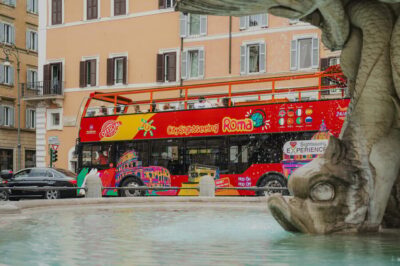
City Sightseeing Hop-on Hop-off Bus with Audioguide
Read our review →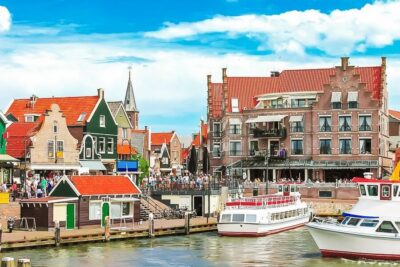
Zaanse Schans, Edam, Volendam & Marken Bus Tour
Read our review →