
Review · ITALY
Verona: Hop-on Hop-off Tour 24 or 48-Hour Ticket
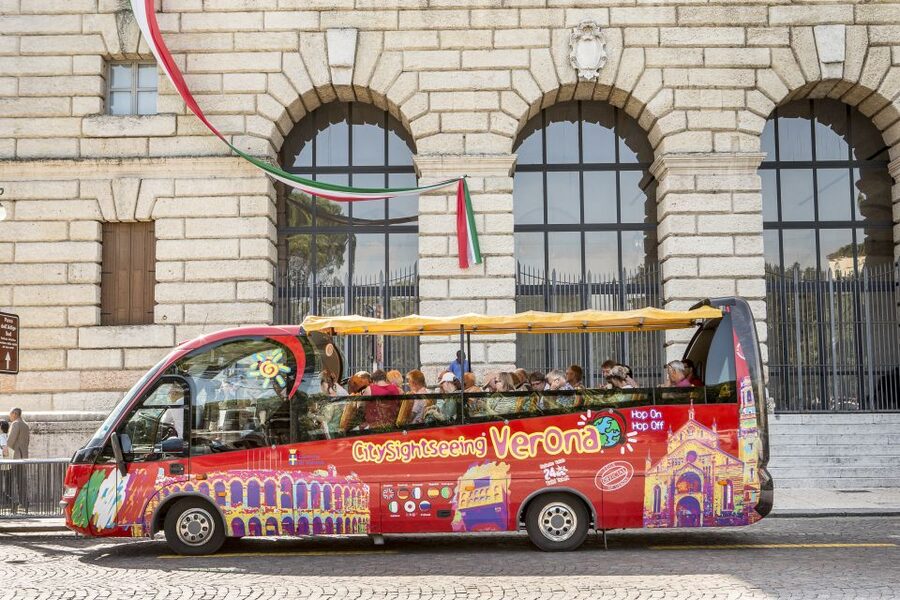
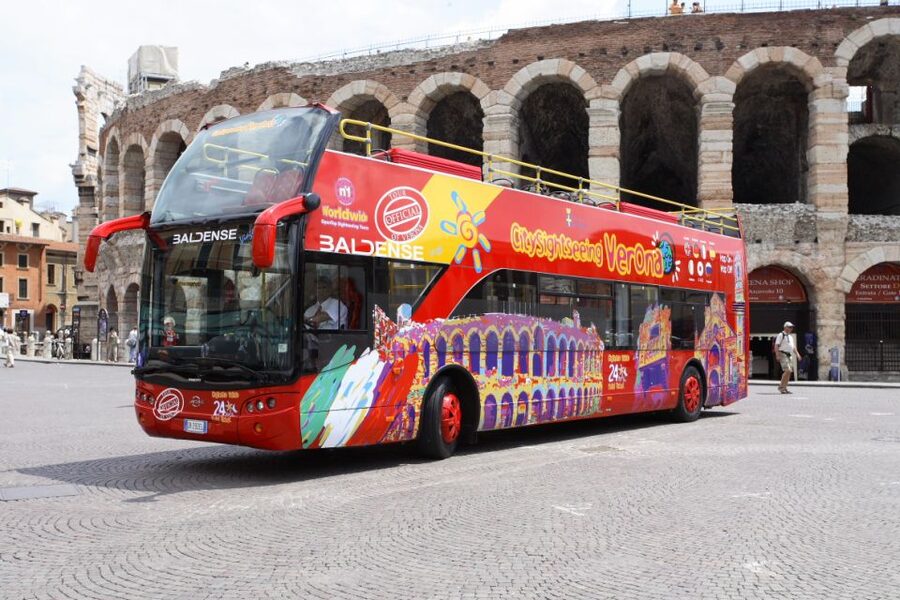
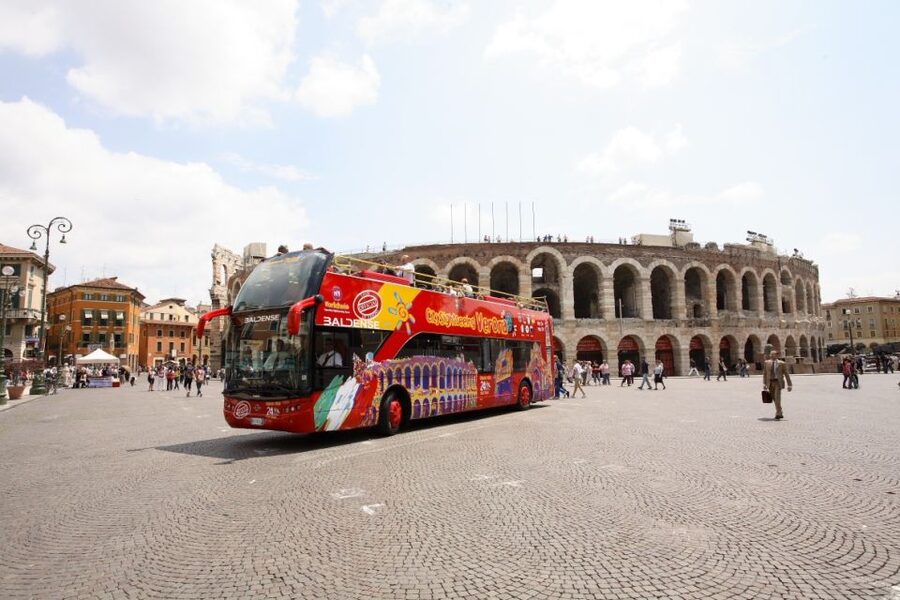
Verona rewards a good first look. This red open-top bus gives you panoramic views and a useful sense of the city’s shape, from Piazza Bra and the Arena to San Zeno and the hill above the old town. I like the choice of two routes, and I like that a 24-hour ticket can be used across parts of two days. The main drawback is the schedule: buses run about once an hour, so a quick hop-off can turn into a long wait.
The blue route’s smaller bus reaches tighter streets and climbs toward Castel San Pietro, where you get one of Verona’s best city views. The recorded commentary comes in 12 languages, which makes the ride easy to follow. Still, the audio is stronger on some buses than others, and the supplied headphones may disappoint.
Quick points before you book
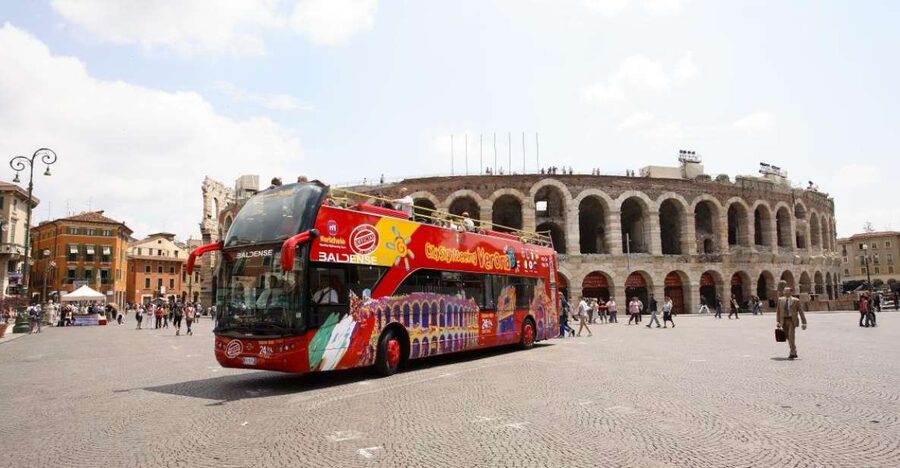
- Two routes, two different moods: The red line covers the station, San Zeno, Castelvecchio, Via Diaz, and the Roman sights. The blue line reaches the hilltop at Castel San Pietro and the cathedral area.
- Piazza Bra is the main starting point: Both routes begin beside the Arena, making this an easy first activity after arriving in Verona.
- The blue bus reaches smaller streets: This route uses a smaller vehicle because of the tighter roads and includes the climb toward the hilltop viewpoint.
- Buses run hourly: That is fine for a full sightseeing loop, but less convenient if you want to stop for only a few minutes.
- The ticket is useful for short stays: A 24-hour pass works well for a single day or parts of two days. The 48-hour option makes more sense if you want a slower pace.
- Attraction tickets cost extra: The bus takes you near Verona’s sights, but entry to the Arena, Roman Theatre, Juliet’s House, and other attractions is not included.
What this Verona bus tour is really good at
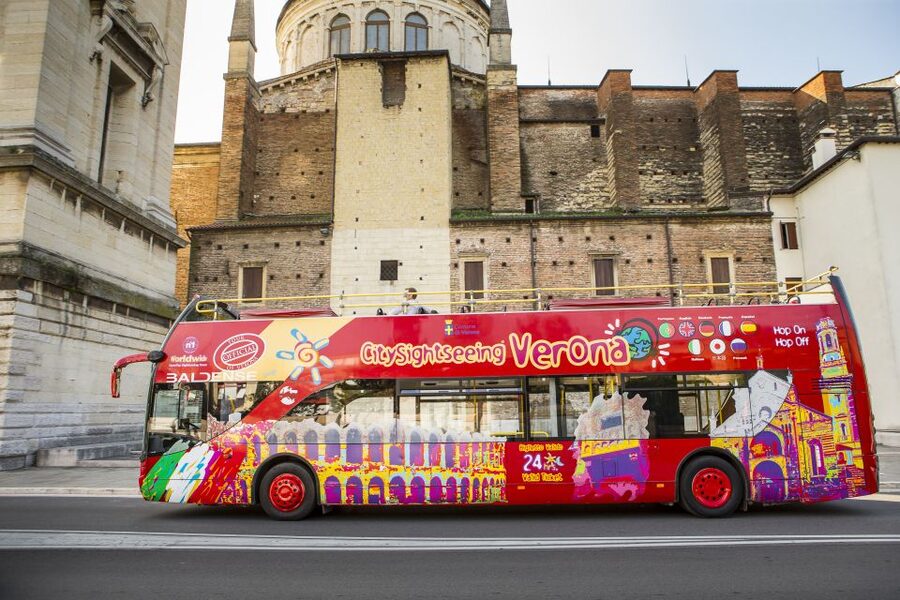
Verona is compact, but its sights are spread across several parts of the old city. You can walk much of it, yet the bus helps you connect places that sit farther apart, especially the train station, San Zeno, the Roman Theatre, and the hill above the river.
I would use it first as a city orientation ride, not as a replacement for walking. Stay on for a full loop if you have limited time, listen to the commentary, and note the places you want to return to. Then use the ticket to reach a few stops without wearing out your feet.
The open top gives you a better view of upper floors, towers, bridges, and the surrounding hills. On hot days, it also saves you from walking through the afternoon heat. On wet days, the covered section can be a practical refuge, though views are less clear.
The basic ticket costs about $29 per person. That is reasonable if you ride both routes and use the pass for transport as well as sightseeing. It is less convincing if you remain on board for only one short loop, since Verona’s central sights are close enough to explore on foot.
More Hop-On Hop-Off Bus Tours in Italy
- Rome: City Sightseeing Hop-on Hop-off Bus with Audioguide
★ 4.0 · 16,045 reviews - Rome: Big Bus Hop-on, Hop-off Open-Top Sightseeing Tour
★ 4.1 · 9,537 reviews - Florence: Hop-on Hop-off Bus Tour: 24, 48 or 72-Hour Ticket
★ 4.0 · 6,283 reviews
Starting at Piazza Bra and the Arena
Both lines begin at Piazza Bra, Verona’s grand square and the natural front door to the city. The Arena di Verona dominates the space. This Roman amphitheater is still used for opera, so the square can feel like both an ancient monument site and a modern public gathering place.
Starting here is convenient. You can look at the Arena before boarding, then return later for a proper visit if you have an admission ticket. The bus ticket does not include entry to the Arena or any other attraction.
Piazza Bra is also a good place to plan your day. The red and blue routes overlap at several points, but they do not offer exactly the same ride. I would take a full circuit of one line before hopping off, especially if this is your first time in Verona.
The first bus may not always leave as early as you expect. One recorded experience noted a 10 a.m. first departure rather than 9 a.m., so check the current schedule on the day you go. The service also ends in the late afternoon, according to one report, so do not treat a 24-hour ticket as an all-night transport pass.
The red route: station, San Zeno, and Castelvecchio
The red line is the larger city circuit and makes the most sense if you want to connect central Verona with the railway station and western sights.
From Piazza Bra, it heads along Corso Porta Nuova and stops near Giardini Pradaval. It then reaches Stazione FS Porta Nuova, Verona’s main train station. This stop is particularly useful if you arrive by rail or stay near the station. You can board there, ride into the center, and avoid a walk with luggage.
The route continues toward Piazza Pozza and the San Zeno quarter. The Basilica of San Zeno is one of Verona’s major Romanesque churches, and the surrounding district offers a quieter change from the Arena area. If you want to visit the basilica, check the bus timing carefully before getting off. With only one bus each hour, a short visit can take longer than planned.
Next comes Castelvecchio, the old castle and one of the city’s most recognizable medieval structures. The stop also puts you near the castle bridge and the western edge of the old center. You can use this area as a starting point for walking back toward the Arena.
The red route then passes through Via Diaz and Porta Borsari. Via Diaz is the place to look for upscale shopping, while Porta Borsari marks an ancient entrance into the city. The contrast is classic Verona: modern shops along a street linked to Roman walls and gateways.
The commentary gives you background on Verona’s Roman beginnings, medieval power, and connection with Shakespeare’s Romeo and Juliet. It is informative, though the content can repeat on both routes. If you want detailed interpretation of every building, you may find it a little light.
The Roman Theatre and Juliet’s House stops
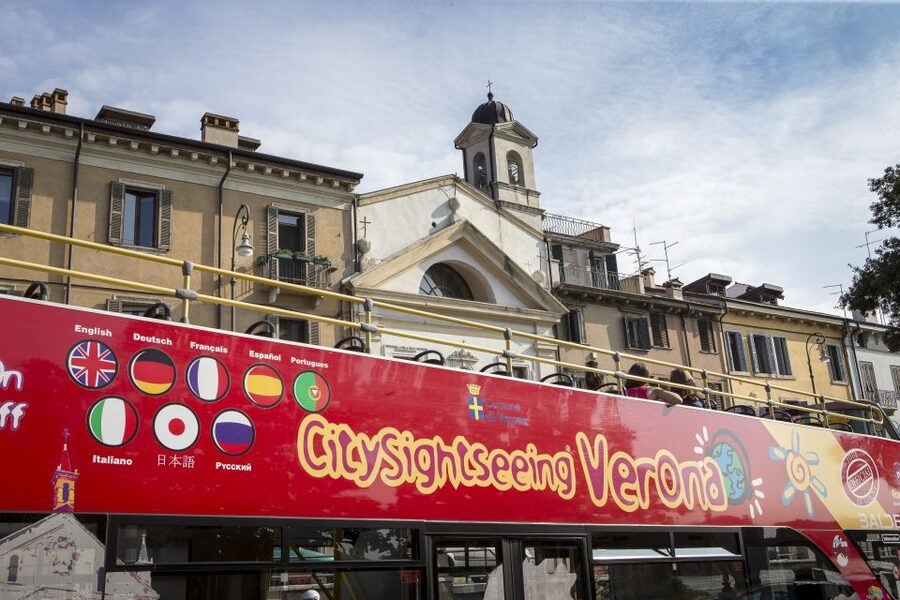
The red line continues to the Teatro Romano, the ancient Roman Theatre on the east side of the old town. This is one of the most useful stops for combining a bus ride with a major sight.
The theatre sits near the river and the route toward Castel San Pietro. You need a separate admission ticket to enter. Even if you do not go inside, the stop is valuable because this part of Verona feels different from the Arena district.
The route also includes Porta Leoni and Piazza Leoni, near Juliet’s House. The attraction is tied to Verona’s Shakespearean reputation, though the story is literary rather than a straightforward historical record. You can choose to visit the house separately, and admission is not part of the bus ticket.
This is one area where walking may be faster than waiting. The central stops are close together, and you might prefer to get off once and continue on foot through the old streets. Use the bus here mainly when you want a rest, a narrated overview, or transport back toward Piazza Bra.
Same place, a different way to ride:
- Milan: City Sightseeing Hop-On Hop-Off Bus with Audio Guide
★ 4.0 · 6,256 reviews - City Sightseeing Rome Hop-On Hop-Off Bus Tour
★ 3.5 · 5,446 reviews - Naples: Hop-on Hop-off Bus Tour 24-Hour Ticket
★ 4.3 · 5,157 reviews - Rome: Hop-on Hop-off Sightseeing Bus Tour with Audioguide
★ 4.1 · 4,801 reviews
The blue route and Verona’s hilltop view
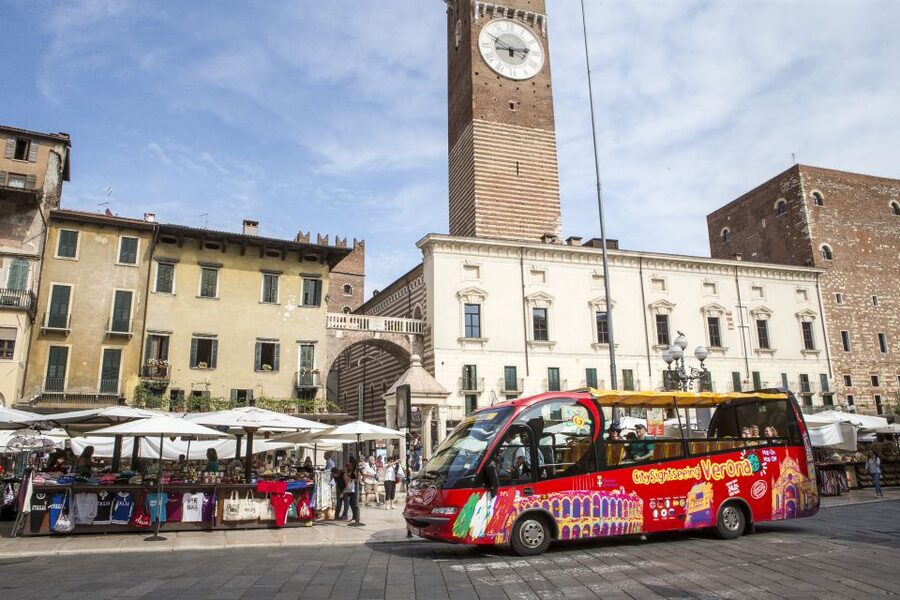
The blue route is the more distinctive ride. It follows many central stops but uses a smaller bus for narrower streets and the hill climb. Several people found this line more enjoyable than the larger red circuit because it reaches places the big bus cannot handle as easily.
From Piazza Bra, the blue route passes Via Pallone and the Tomba Giulietta area before moving toward Via G. Giusti. It then reaches San Stefano and the Roman Theatre, giving you another way to approach the eastern side of the old town.
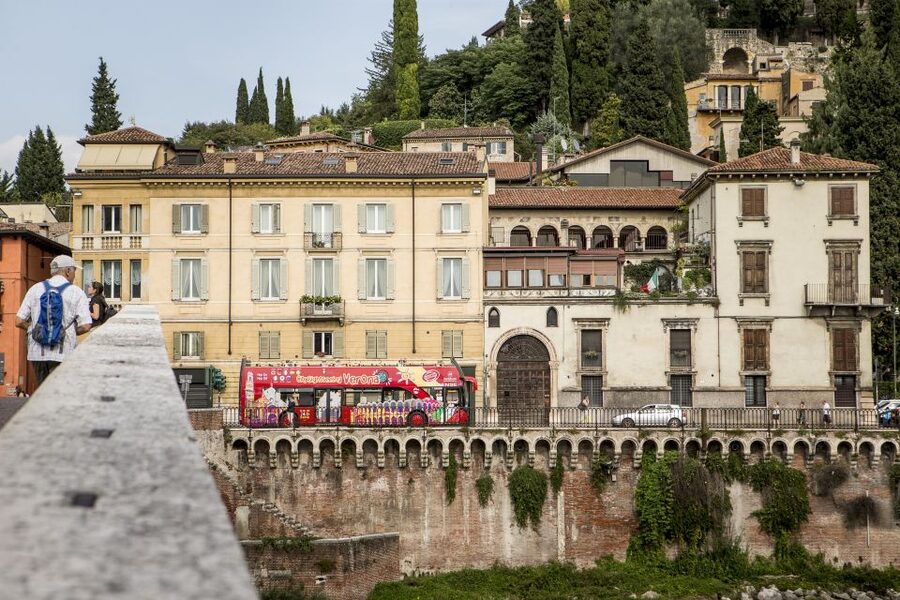
The highlight is Castel San Pietro. The bus climbs to a lookout above Verona and pauses long enough for photographs. You get a broad view over the old city, the river, rooftops, towers, and surrounding hills. This is the stop I would prioritize if you have time for only one hop-off.
The hilltop stop also explains why the smaller bus matters. The ride is not just a duplicate of the red line. It gives you a different angle on Verona and a view that is difficult to match from street level.
The bus may be crowded at popular times, and not everyone can always board the smaller vehicle. If the blue route is your priority, arrive at the stop with some patience. The hourly schedule means you may need to wait for the next departure.
The cathedral, Piazza Erbe, and the old center
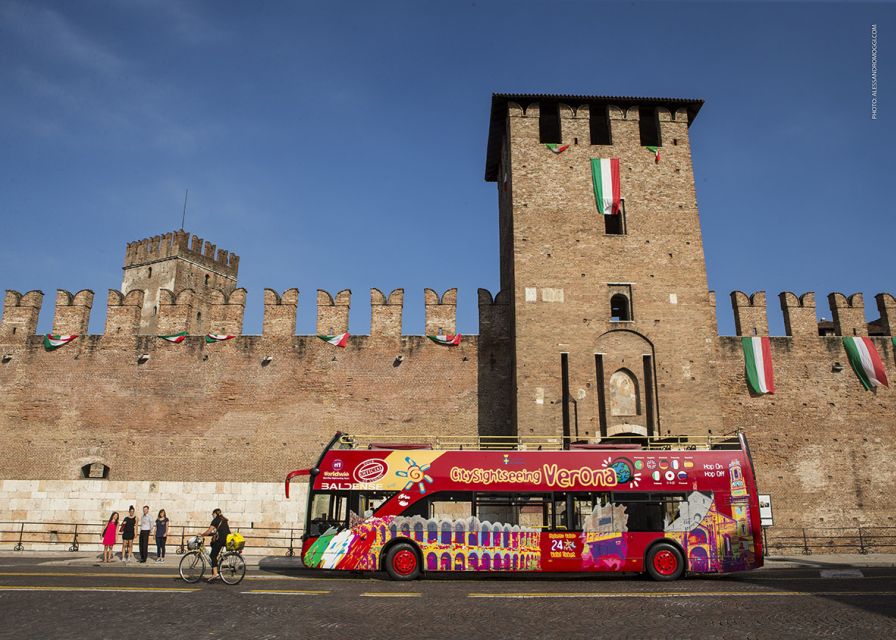
After Castel San Pietro, the blue route returns toward the cathedral and Piazza Erbe. The Duomo is Verona’s cathedral complex, while Piazza Erbe is one of the city’s best-known public squares.
This section is useful for getting your bearings before walking. From here, you are close to major central sights, shops, cafés, and the lanes around Juliet’s House. The bus provides a comfortable break, but the real pleasure is getting off and exploring on foot.
The blue route also includes Casa Giulietta, Porta Leoni, and Piazza Leoni. Because the red and blue lines overlap around these points, you do not need to visit every central stop twice. Choose the route that fits your day, then walk between nearby attractions.
The commentary follows the same broad subjects on both routes. You hear about Verona’s Roman past, its place in the early Roman Empire, its medieval walls, and its literary connection with Shakespeare. That gives you useful context, but you should not expect a different full narration for every line.
How to plan a 24-hour ticket
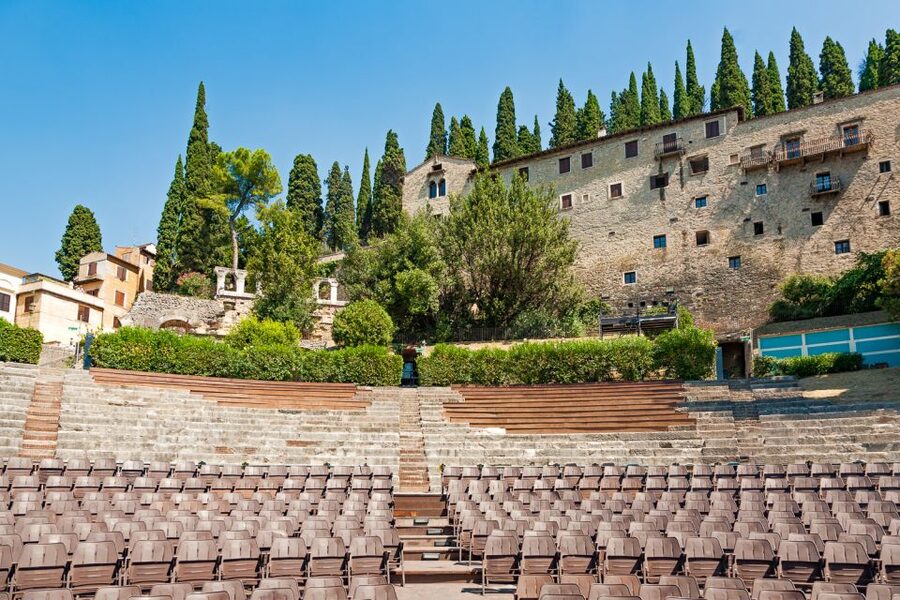
A 24-hour pass is enough for most people visiting Verona for one day. I would begin with a full red route or a full blue route, depending on whether you want a general survey or the hilltop view.
After that first circuit, get off at two or three places that interest you. Good choices include San Zeno, Castelvecchio, the Roman Theatre, Castel San Pietro, or Piazza Erbe. Leave time for the walking sections, since the bus is best used to connect areas rather than replace every short walk.
You can also use the ticket across parts of two calendar days. For example, you might ride both lines in the afternoon, then use the bus again the next morning for the Roman Theatre or the hilltop. That can make the 24-hour option better value than it first appears.
Do not wait until late afternoon to start. The ticket may be valid for 24 hours, but the buses do not operate around the clock. One of the most practical tips is to board earlier in the day, especially if you want both routes.
When the 48-hour ticket earns its price
The 48-hour ticket suits a slower visit, a hot-weather stay, or anyone who wants to combine the bus with a separate Verona sightseeing pass. You can spread the routes over two days and leave more time for churches, museums, shopping, and meals.
I would choose 48 hours if you are staying near Porta Nuova station, traveling with a young child, or prefer not to walk long distances. It can also help if you plan to stop at the Arena, San Zeno, the Roman Theatre, Juliet’s House, and Castelvecchio rather than simply viewing them from the road.
For a short visit of roughly five hours, the bus still works. You can remain on board for an overview, then get off near the Arena or central old town. But with only a few hours, do not spend the whole time waiting for buses. Verona’s core is walkable once you have seen the layout.
Audio, comfort, and practical limits
The multilingual audio guide is available in English, Italian, Spanish, French, German, Portuguese, Japanese, Russian, Arabic, Chinese, Danish, and Dutch. This is helpful if you want basic facts without joining a fixed group.
Sound quality varies. The audio has been praised as useful and informative, but some passengers found it clearer on the red line than the blue line. The complimentary headphones may also be uncomfortable or poor in quality, so bring your own if they fit the audio system.
The buses are generally clean and comfortable, with an open top for clear views. The smaller blue bus can feel crowded, especially at popular times. Staff have often been described as friendly and helpful, and the boarding point at Piazza Bra is easy to identify.
Finding a stop after you get off is less simple. Take a quick photo of the stop sign or map before walking away. This small habit can save you from searching the streets later.
The service is suspended on Wednesday, October 15, because of a cycling race. If that date affects your trip, check the operating details before booking.
Who should book this tour?
I recommend it most for first-time visitors, short-stay guests, families with children, people who tire easily, and anyone arriving by train. It is also useful in strong summer heat or on a rainy day, when sitting through a narrated circuit can be a welcome change from walking.
It is less essential if you already know Verona well or plan to spend the day only around Piazza Bra, Piazza Erbe, and Juliet’s House. Those central sights are close together, and you may get more from walking at your own pace.
The best approach is simple: use the bus to understand Verona, then use your feet to experience it. Ride both routes if possible, make Castel San Pietro a priority, and allow extra time between buses.
FAQ
Where do both Verona bus routes start?
Both lines start at Piazza Bra, beside the Arena Square.
How long is the ticket valid?
You can choose a 24-hour or 48-hour ticket.
How often do the buses run?
Buses run about once each hour on each route.
Are there two sightseeing routes?
Yes. The red route and blue route cover different parts of Verona.
Which route goes to Castel San Pietro?
The blue route goes up to Castel San Pietro and pauses for photographs at the hilltop view.
Does the ticket include attraction admission?
No. Entry tickets for attractions are not included.
Can I visit the Arena with this ticket?
The bus stops at Piazza Bra near the Arena, but admission to the Arena is separate.
Is audio commentary included?
Yes. A multilingual recorded audio guide is included.
Which languages are available for the audio guide?
The audio is available in English, Italian, Spanish, French, German, Portuguese, Japanese, Russian, Arabic, Chinese, Danish, and Dutch.
Can I cancel the booking?
You can cancel up to 24 hours in advance for a full refund. A reserve-now, pay-later option is also available.
Should you book the Verona hop-on hop-off bus?
Book it if you want a broad view of Verona, need a break from walking, or have only a day to connect the Arena, San Zeno, the Roman Theatre, the station, and the hilltop lookout. At $29, the price is fair when you ride both lines and use the ticket across much of a day.
Choose the 24-hour pass for a focused visit. Choose 48 hours if you want a gentler pace or plan several stops. Just keep the hourly timetable in mind, start early, and treat the bus as a useful sightseeing link rather than a taxi. For most first visits, especially with limited time, it is a practical and pleasant introduction to Verona.
Just added around Italy
- City Sightseeing Livorno Hop-On Hop-Off Bus Tour★ 3.0 · 33 reviews
- Two Treasures Day Trip by Bus: Florence & Pisa★ 5.0 · 25 reviews
- Florence Hop On Hop Off Shore Excursion from Livorno★ 4.0 · 28 reviews
- Borromean Islands Private Hop-On Hop-Off Boat Tour from Stresa★ 4.5 · 17 reviews
- Stresa: Isola Madre & Isola Bella Hop-on Hop-off Boat tour★ 3.0 · 3 reviews
- Stresa to Isola Bella Hop-On Hop-Off Boat Ticket★ 3.5 · 24 reviews
- Rome On Your Own Bus from Civitavecchia★ 4.0 · 72 reviews
- Stresa: Isola Pescatori and Isola Bella Hop-on Hop-off boat tour★ 4.0 · 20 reviews
Hop-On Hop-Off Bus Tours, compared.

City Sightseeing Hop-on Hop-off Bus with Audioguide
Read our review →
Tootbus Hop-on Hop-off (Optional River Cruise)
Read our review →
Big Bus Hop-On Hop-Off Tour with Optional Cruise
Read our review →
London Big Bus Hop-On Hop-Off Tour with Optional River Cruise
Read our review →

Big Bus Hop-on, Hop-off Open-Top Sightseeing Tour
Read our review →
Browse the lists this tour appears in