Review · GUATEMALA
Antigua: Villages Tour on Chicken Bus
Trade city streets for village roads. This half-day outing uses a colorful Guatemalan chicken bus to connect Antigua with nearby communities, where you can learn about chocolate, loquat products, jade, farming, and macadamia nuts. I like the way it gets beyond Antigua’s central streets, and I like the direct support for small family-run businesses.
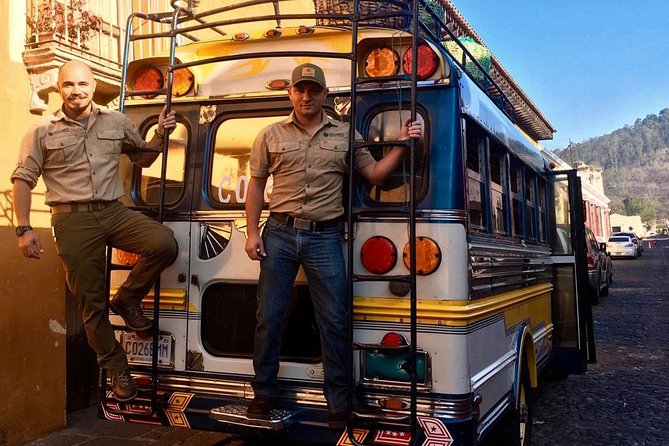
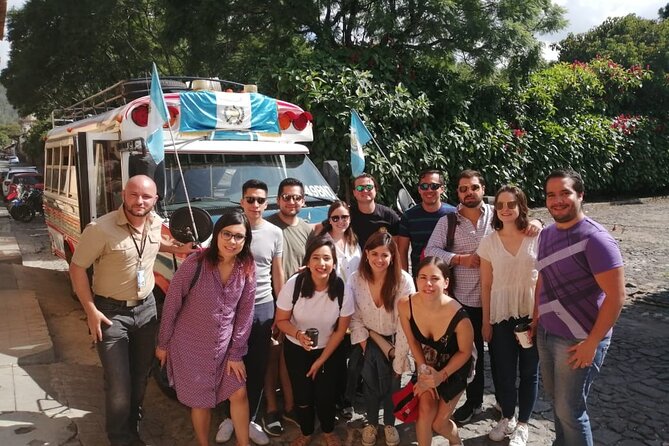
The best part may be the guides. Juan Jesus, Esteban, Felix, Diego, Katy, and others have earned praise for clear English, humor, local knowledge, and thoughtful help with food stops or family needs. One important consideration: the bus is an actual former village bus, but it is reserved for the tour, so you will not ride shoulder to shoulder with local passengers or use a public route.
Key points to know before you book
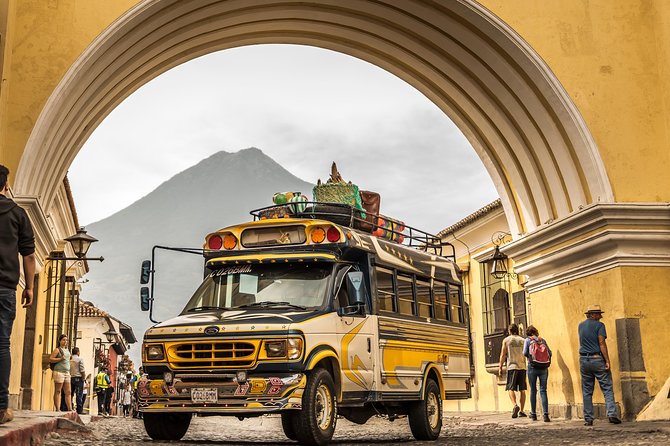
- A former public chicken bus: You get the colorful bus experience without the crowded public transport ride.
- Three main village stops: San Juan del Obispo, San Pedro Las Huertas, and the Valhalla macadamia farm form the core of the outing.
- Hands-on food tastings: Expect warm chocolate, loquat products, snacks, bottled water, and samples connected with local producers.
- Strong guide element: Guides such as Juan Jesus, Esteban, Felix, and Katy are praised for history, culture, humor, and practical help.
- Small-group format: The maximum group size is 15 people, which helps keep the visits personal.
- Good coverage in five to six hours: You see rural communities and farmland without giving up a full day in Antigua.
Why this chicken bus tour is useful in Antigua
Antigua is easy to explore on foot. Its central streets, churches, courtyards, and ruins reward slow wandering. But the city can also become a pleasant bubble. The nearby villages show how people farm, make food, work with local materials, and maintain older traditions outside the tourist center.
This tour gives you a practical way to reach those communities. You ride from Antigua to San Juan del Obispo, San Pedro Las Huertas, and a macadamia farm, with a guide explaining what you are seeing along the way. The route also passes farmland where flowers and vegetables are grown for local and international markets.
I see the tour as a bridge between sightseeing and local enterprise. You are not simply looking at a church or taking a photograph of a volcano. You are meeting the people and small businesses connected with chocolate, fruit preserves, jade, and macadamia products.
The bus itself adds character. It is colorful and genuinely from Guatemala’s public transport tradition, but the operator now uses it exclusively for this experience. That makes the ride more comfortable than an ordinary public chicken bus, though it also means the experience is staged for the group rather than a true public transit encounter.
A few more bus tours around the world worth a look
- Mt Fuji and Hakone 1-Day Bus Tour Return by Bullet Train
★ 5.0 · 26,383 reviews - Barcelona: 24 or 48-Hour Hop-On Hop-Off Bus Tour
★ 4.4 · 20,872 reviews - London: Warner Bros. Studio Harry Potter Tour & Branded Bus
★ 4.7 · 19,194 reviews
San Juan del Obispo, chocolate, and loquat
The first stop is San Juan del Obispo, a village with a plaza and broad views toward the valley. This is a good opening stop because it gives you both a sense of place and a taste of the community’s food traditions.
A family-run chocolate business has made its products by hand for more than five generations. You learn how cacao becomes Guatemala’s familiar chocolate drink, then try a warm sample. The tasting is not just a sweet break. It explains how a common beverage connects farming, family work, and local custom.
The visit is likely to interest you most if you enjoy seeing how food is made in small batches. It is also a useful reminder that chocolate begins with agricultural work long before it reaches a café or candy shop.
Just around the corner, the Loquat Museum focuses on the village’s golden fruit. Loquats become wine, jams, and preserves, and you have the chance to sample these products. This is one of the more unusual stops because loquat is not the item most people associate with Guatemala before arriving.
The time at San Juan del Obispo is about one hour. The stop includes free admission, and snacks are included in the tour. You should still expect some opportunities to buy products. The pressure to purchase appears limited, but if you like what you taste, buying directly supports the family businesses you have just met.
San Pedro Las Huertas and the volcano views
San Pedro Las Huertas is a farming village known for tomatoes, beans, and lettuce. Its streets offer a quieter look at daily life than central Antigua, with a traditional communal washing area and a plaza beside a Spanish Colonial church in the Baroque style.
The communal sink is a useful detail to notice. It shows how public spaces once served practical household needs, not just ceremonies or decoration. Your guide can put the buildings and village layout into a wider cultural setting, which is where this tour gains much of its value.
The views are another reason to keep your camera ready. On a clear day, you may see Volcán Fuego and Volcán Agua. Weather controls the view, of course, so do not treat the volcano panorama as guaranteed. Even without perfect visibility, the village offers a calm change of pace.
A jade factory may be added if everyone in the group agrees. Since this part is conditional, you should not book the tour solely for jade. Past outings have also included weaving, coffee, and other local craft or food visits, but the stated route centers on the chocolate, loquat, village, and macadamia stops.
You spend about an hour here. The pace is casual, but the day covers several places, so this is not a long, unstructured village walk. If you want hours to sit in one plaza or shop slowly, an independent visit may suit you better.
A drive through former colonial Guatemala
Between the villages, the bus passes through the site of the first capital of the Spanish Crown in the Americas. The route continues through productive farmland, with flowers and vegetables heading to both Guatemalan markets and buyers abroad.
This driving section matters because it links Antigua’s colonial past with the present-day economy around it. The former capital is not only a historic backdrop. It sits among working communities that grow food and flowers, run family enterprises, and supply markets beyond the immediate area.
You also get a sense of the distance between Antigua and its surrounding villages without having to arrange separate taxis or public buses. The tour uses its own route because no single public transport line connects all the stops efficiently. That explains why the private bus is practical, even if it is less authentic than riding with ordinary passengers.
Same place, a different way to ride:
- Rome: City Sightseeing Hop-on Hop-off Bus with Audioguide
★ 4.0 · 16,045 reviews - Amsterdam: Zaanse Schans, Edam, Volendam & Marken Bus Tour
★ 4.6 · 15,034 reviews - 1-Day Tokyo Bus Tour
★ 5.0 · 14,250 reviews - From Reykjavik: Northern Lights Bus Tour with Hot Cocoa
★ 4.3 · 13,947 reviews
Valhalla Experimental Station and macadamia trees
The Valhalla Experimental Station is the final major stop. It is an organic macadamia farm focused on sustainable production and support for Indigenous communities.
The visit explains how macadamia products can be used in skin care, food, and medicine. You also learn about the environmental effects of growing and processing the crop. The farm gives the day a different focus from the earlier tastings: instead of concentrating mainly on finished products, you see how a small nut can support farming, business, and community work.
This is often the stop that makes the strongest impression on people who enjoy gardens, agriculture, and responsible production. The tour does not ask you to admire an ornamental plantation from a distance. It presents macadamia as part of a working project with a social purpose.
Plan on about one hour here. The admission charge is included, as are taxes, bottled water, and snacks. Lunch is not included, so you should plan to eat before or after the tour. One past version of the experience included a family lunch, but that is not part of the stated inclusions and should not be assumed.
The guides make the day work
A route like this depends heavily on the guide. The stops are interesting, but the guide explains why they matter and helps the day feel like more than a series of shops.
Juan Jesus, often called JJ, has been praised for answering questions about religion, culture, and local history while keeping the mood light. His work with driver Esteban has also received strong praise. Other guides named in past experiences include Felix, Diego, Katy, and Michael. Assignments can change, so you should not expect a particular guide unless the operator confirms it.
The most useful guide behavior is practical. Guides have helped with restaurant suggestions, taken photos, adjusted the order of stops, and made small changes for families. One family with a three-year-old found the guide especially attentive to the child. Another group appreciated being helped with an early food stop when they had not eaten.
That flexibility is valuable, but you should not confuse it with a fully private tour. The group can include up to 15 people. A small group is still easier to manage than a large coach, though unanimous agreement may be needed for optional additions such as the jade factory.
How much value do you get for $95?
At $95 per person, this is not the cheapest way to see the villages around Antigua. You are paying for transportation, a bilingual guide, admission costs, bottled water, snacks, and a route that would take more planning on your own.
The value improves if you want cultural explanation. Hiring separate transport to three villages, arranging visits with small producers, and finding the macadamia farm could cost time and money. You also avoid trying to match several public buses, which may not connect the stops in a neat loop.
I would consider the price fair for a first look at the area, especially if you have only a few days in Antigua. The experience combines transport, tastings, history, countryside views, and community businesses in roughly five to six hours.
The calculation changes if you mainly want a genuine public bus ride. You will not interact with ordinary passengers in the same way you would on a public route. You are riding in a real former chicken bus, but the vehicle is reserved for the group. If that distinction matters greatly to you, the tour may feel less authentic than its name suggests.
Timing, comfort, and practical details
The listed meeting point is Casa de la Mandarina at 2a Calle Poniente 2 in Antigua Guatemala. The stated start time is 8:30 a.m., and the outing finishes back at the meeting point. The general tour description also mentions a choice of morning or afternoon departures, so confirm the available time when booking rather than assuming an afternoon option is offered on your date.
The full experience lasts about five to six hours. That is long enough to reach the villages and farm without consuming your entire day. Wear comfortable shoes for walking through plazas and village streets, and keep your schedule flexible because the route includes several stops.
The tour is open to most people, and service animals are allowed. It is near public transportation, although the activity itself begins and ends at the specified meeting point. The maximum group size is 15.
Free cancellation is available if you cancel at least 24 hours before the start time. Changes or cancellations inside that window are not accepted for a refund. The operator also requires a minimum number of participants, so if that minimum is not met, you are offered another date or experience, or a full refund.
Who should book this outing?
I would recommend it to anyone who wants to see beyond Antigua without arranging a complicated day of transport. It suits families, couples, solo visitors, and people who prefer a guide to explain customs, food, farming, religion, and local history.
It is especially useful early in your Guatemala trip. The route gives you a wider sense of the area, and the guides often provide restaurant suggestions and ideas for other activities. Families may appreciate the manageable half-day length and the friendly approach reported by past participants.
I would hesitate if your main goal is unplanned contact with local passengers. I would also hesitate if you dislike product visits. Chocolate, loquat preserves, jade, and macadamias are not side details here. They are central to the way the tour connects you with local businesses.
Should you book the Chicken Bus Villages Tour?
Book it if you want an efficient, friendly introduction to the communities around Antigua, with food samples, countryside views, and clear cultural explanation. The strongest reasons are the guides, the variety of stops, and the direct link to family-run producers.
Think twice if you expect a completely independent village day or a crowded public-bus ride with local passengers. The bus is authentic in origin but private in use. For most people, that tradeoff brings a more comfortable and organized day, while still offering a genuine look at village life beyond Antigua.
FAQ
How long does the Antigua Chicken Bus Villages Tour last?
The tour lasts approximately five to six hours.
What time does the tour begin?
The listed start time is 8:30 a.m. The general description also refers to morning or afternoon start choices, so confirm the available departure when booking.
Where does the tour meet?
You meet at Casa de la Mandarina, 2a Calle Poniente 2, Antigua Guatemala 03001, Guatemala.
Where does the tour finish?
The activity ends back at the meeting point.
What villages does the tour visit?
The main village stops are San Juan del Obispo and San Pedro Las Huertas. The route also includes a drive through the area of the first capital of the Spanish Crown in the Americas and a visit to Valhalla Experimental Station.
Is lunch included?
No. Lunch is not included, although bottled water and snacks are included.
Is the chicken bus a public bus?
The bus is a real former Guatemalan chicken bus, but it is used exclusively for tour participants. You will not share the ride with ordinary public passengers.
What is the cancellation policy?
You can cancel at least 24 hours before the start time for a full refund. Cancellations or changes made less than 24 hours before the start time are not accepted for a refund.
Just added around the world
- London Panoramic Open Top Bus Tour with Audio Guide★ 4.0 · 209 reviews
- Paris by Rail – Sightseeing Bus and Eiffel Tower Champagne Lunch★ 4.0 · 18 reviews
- London Vintage Bus Tour with Cream Tea at Harrods★ 4.0 · 145 reviews
- London’s Family-friendly Routemaster Bus Tour with Live Guide★ 5.0 · 18 reviews
- London Tour Hop-on Hop-off Bus with Optional Thames River cruise★ 3.5 · 39 reviews
- London Vintage Bus Tour Including River Thames Cruise with Optional Lunch★ 4.0 · 286 reviews
- Christmas Lights Open-Top Bus Tour★ 4.0 · 31 reviews
- Christmas Lights Tour by Vintage Bus in London★ 5.0 · 2 reviews
Tours, compared.
Mt Fuji and Hakone 1-Day Bus Tour Return by Bullet Train
Read our review →
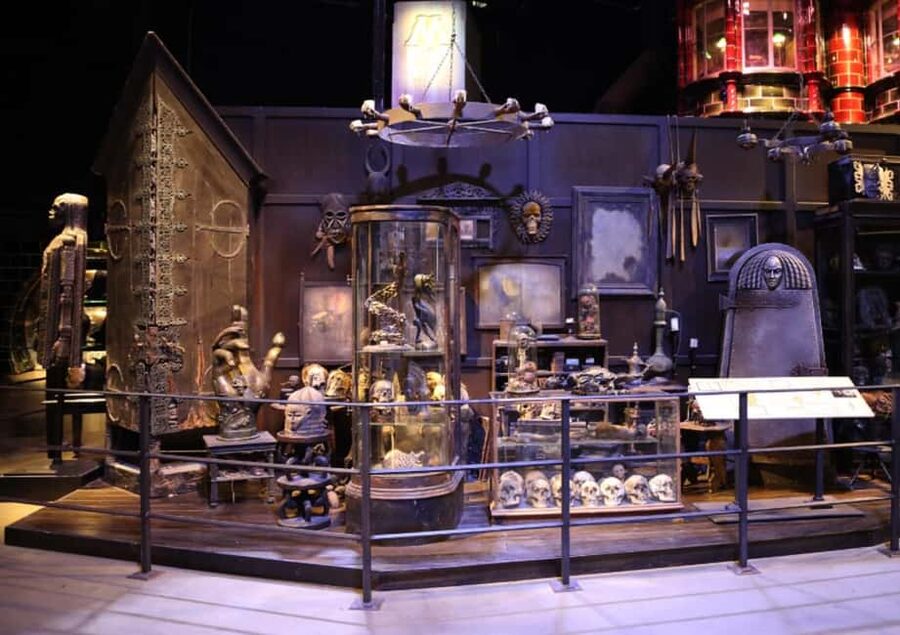
Warner Bros. Studio Harry Potter Tour & Branded Bus
Read our review →
Zaanse Schans, Edam, Volendam & Marken Bus Tour
Read our review →