
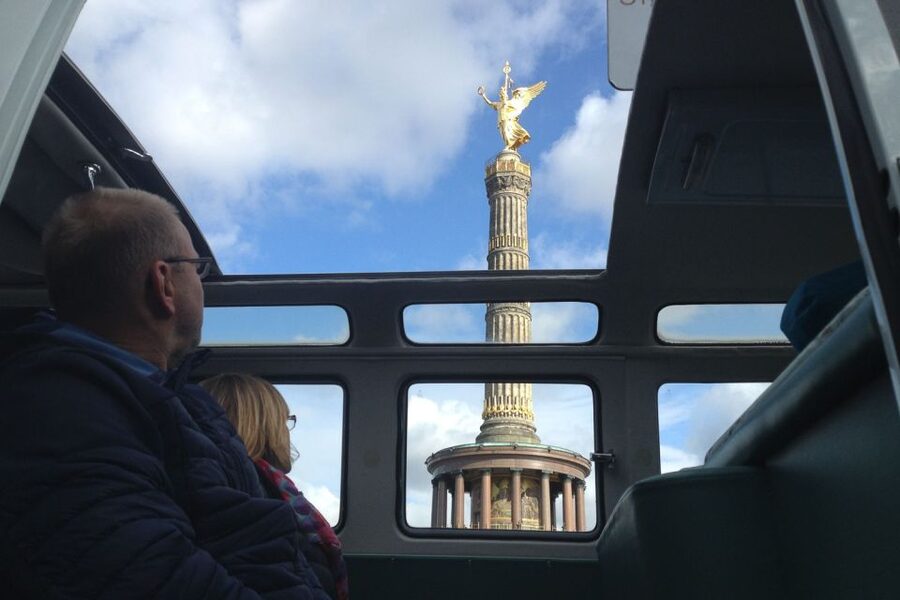
Review · GERMANY
Berlin: Sightseeing Tour in Classic Volkswagen T1 Samba Bus
Berlin looks good from a classic bus. This two-hour ride in a beautifully restored 1965 Volkswagen T1 Samba combines the city’s major sights with quieter streets, old photographs, and a guide who gives Berlin’s complicated past a human voice. I like the intimate seven-person group, and I like how the route covers both central Berlin and the former West Berlin in one sitting.
The bus itself is a major part of the fun. Its 21 windows give nearly everyone a good view, and the vehicle attracts smiles as it rolls through town. The main caution is pace: you pass almost 50 places but do not stop to explore them. Commentary may also be given in both English and German, which can add a little time between explanations.
The tour costs about $51 per person for two hours. That is more than a standard public bus ride, of course, but you are paying for a small group, a private driver-guide, live storytelling, a carefully planned route, and a memorable vintage vehicle. For a first look at Berlin, I think the price is fair.
Key points to know before you go

- The 1965 VW Samba is part of the attraction: The lovingly maintained bus is clean, comfortable, and a photo subject wherever it goes.
- You see nearly 50 sights in two hours: The route includes Museum Island, Brandenburg Gate, the Reichstag, the Berlin Wall, Checkpoint Charlie, and much more.
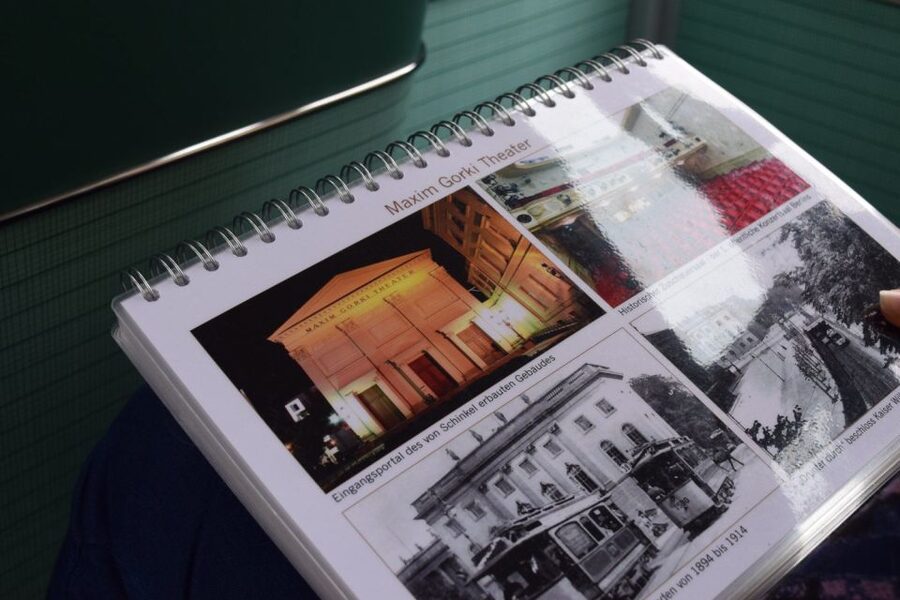
- The photo booklet adds useful context: Old images help you picture damaged buildings, former interiors, and streets as they looked in earlier eras.
- Small groups change the feel: With space for up to seven people, the ride feels more personal than a large sightseeing coach.
- The route includes both East and West Berlin: You move from the royal center and Museum Island to Kurfürstendamm, KaDeWe, Potsdamer Platz, and the Wall.
- Book it early in your stay if possible: The route helps you understand Berlin’s layout and shows places you may want to revisit later.
Why the old Volkswagen matters
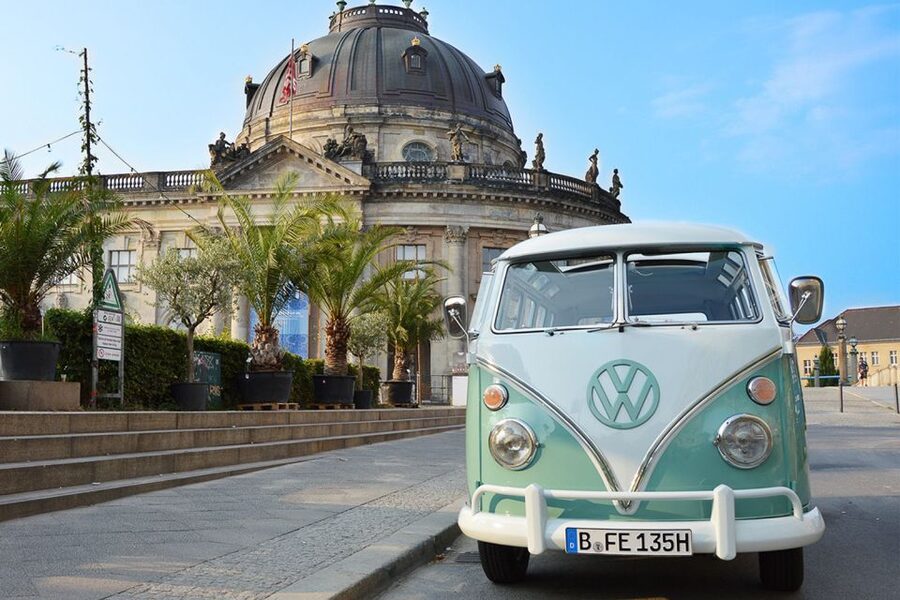
A normal sightseeing bus gets you from one landmark to the next. This one gives the ride its own character. The T1 Samba, with its split-window design and rows of small windows, feels closer to a moving museum piece than city transport.
The bus is described as a 1965 model, and its condition matters. Several details make the experience more pleasant than you might expect from a vintage vehicle: the interior is well kept, the seats are comfortable, and heating is available when needed. In winter, that is not a minor benefit. Berlin can be cold, wet, and gray, yet the covered bus lets you keep sightseeing without standing on a windy pavement.
The windows are another strength. With 21 windows, you can watch the city pass from several angles rather than peering through one large pane. You will still need to turn your head and pay attention, especially when the bus moves through busy streets, but the design gives the ride an open, friendly feel.
This is not a luxury vehicle. The charm comes from its age, not from modern fittings. A very tall or broad passenger may find the space less forgiving, and the tour is not suitable for anyone over 275 pounds, or 125 kilograms. Non-folding wheelchairs cannot be accommodated.
More Sightseeing Bus Tours in Berlin
- Berlin: Big Bus Hop-On Hop-Off Sightseeing Tour & Currywurst
★ 4.4 · 4,638 reviews - Berlin: City Sightseeing Hop-On Hop-Off Bus Tour
★ 4.1 · 4,233 reviews - City Sightseeing Berlin Hop-On Hop-Off Bus Tour
★ 3.0 · 981 reviews
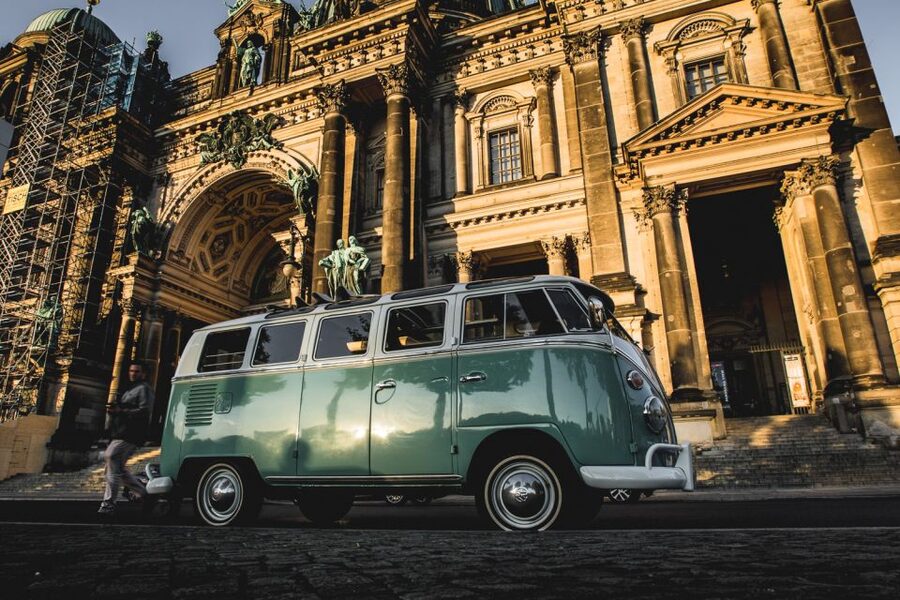
Starting at Berlin Cathedral and Museum Island
The tour begins beside Berlin Cathedral, a useful meeting point in the heart of the city. From here, the bus passes through Lustgarten and Museum Island, where several of Berlin’s grand cultural buildings sit close together.
You will see the Alte Nationalgalerie, Neues Museum, Pergamon Museum, and Bode Museum from the road, along with the German Historical Museum and other major institutions. This section works best as an orientation rather than a museum visit. You will not go inside, but the guide can explain how the buildings fit into Berlin’s royal and cultural center.
The photo booklet is especially useful here. It shows how locations and interiors looked in earlier periods, giving you something concrete to compare with the buildings outside. Berlin has changed repeatedly through war, division, reconstruction, and reunification. A present-day facade does not always reveal what stood there before.
The route then follows Unter den Linden, Berlin’s famous tree-lined boulevard. Along the way are Neue Wache, the Crown Prince’s Palace, Humboldt University, Berlin State Opera, Bebelplatz, and several former royal buildings.
Bebelplatz carries a darker memory. It is linked to the Nazi book burning of 1933, and a good guide can place that event within the wider story of the city. The tour’s value here is not simply seeing a handsome square. It is hearing how power, culture, and political violence overlapped in the same small area.
Brandenburg Gate, the Reichstag, and the government center
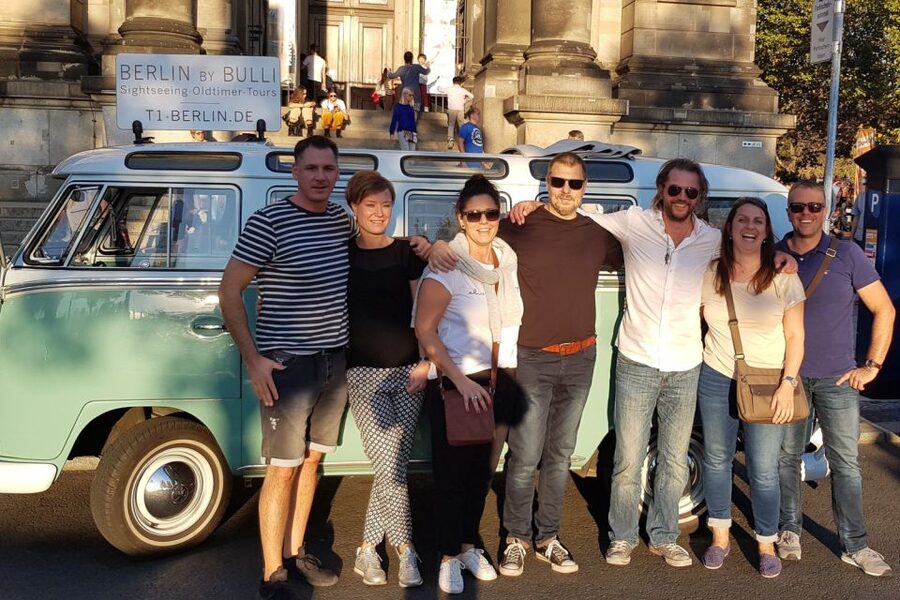
Pariser Platz leads to Brandenburg Gate, perhaps Berlin’s most recognizable landmark. The bus gives you a quick, close look at the gate before continuing toward the Reichstag and the government district.
You will also pass the Federal Chancellery, Berlin Central Station, Moltke Bridge, and nearby government buildings. This part of the route shows modern Berlin working alongside its older ceremonial center. The wide streets and formal buildings feel different from the compact squares around Museum Island.
The bus does not stop at each place, so keep your camera ready and listen closely. A two-hour route covering this much ground cannot provide long photo breaks. That is the tradeoff for seeing so much in a short period.
The route continues toward Bellevue Palace and the Victory Column, then moves west to Zoologischer Garten, Theater des Westens, Savignyplatz, and Kurfürstendamm. These places introduce a different Berlin, one shaped by the former West German capital and its postwar commercial life.
West Berlin through Kurfürstendamm and KaDeWe
Kurfürstendamm, often shortened to Ku’damm, is one of West Berlin’s best-known avenues. The bus passes the Kaiser Wilhelm Memorial Church, whose damaged tower remains a powerful reminder of wartime destruction, and continues toward Tauentzienstraße and KaDeWe.
The contrast with Museum Island is one of the tour’s best features. In the morning or afternoon, you may move from royal Prussian buildings and state museums to department stores, theaters, embassies, and the busy streets of western Berlin. The city is not one tidy historical story. It is a collection of different periods placed side by side.
The route also includes the Scandinavian embassies, Berlin Zoo, Savignyplatz, and the Theater des Westens. You will not have time to explore these areas on foot, but you get a useful sense of their position and character. If you are staying longer, this can help you choose where to return for a meal, museum visit, or longer walk.
The Berliner Philharmonie and Kulturforum come next. Together with Potsdamer Platz, they show Berlin’s postwar and modern architectural side. Potsdamer Platz was once divided by the Wall and later rebuilt as a major business and entertainment district. From the bus, you can see how quickly Berlin’s center shifts from historic stonework to contemporary city design.
More Sightseeing Bus Tours in Germany
- Big Bus Berlin Hop-On Hop-Off Sightseeing Tour & Currywurst
★ 4.0 · 856 reviews - Berlin: Live-Guided Evening Sightseeing Tour by Open-top Bus
★ 4.1 · 783 reviews - Berlin: Private Sightseeing Tour in Iconic Oldtimer VW Bus
★ 4.9 · 184 reviews - Big Bus Berlin Panoramic Night Tour by Open-Top Bus
★ 3.5 · 10 reviews
The Wall, Checkpoint Charlie, and Berlin’s hardest history
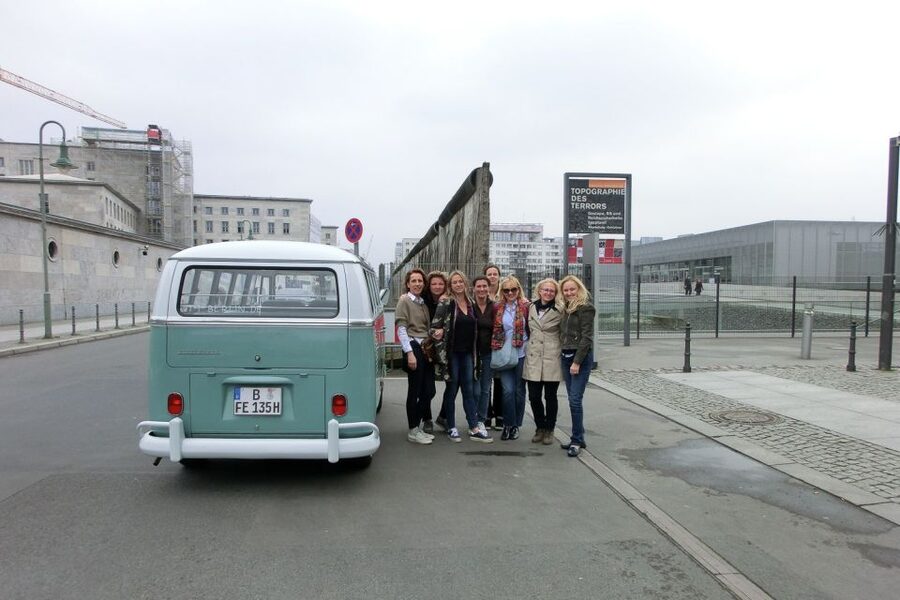
The middle and later sections of the tour turn toward the Berlin Wall and the places linked to Nazi Germany and the Cold War. You pass Niederkirchner Straße, Anhalter Bahnhof, the Holocaust Memorial, the former Führer Bunker site, the Reich Chancellery area, Friedrichstraße, and Checkpoint Charlie.
This is a serious stretch of the route. The sights are not just old buildings or photo opportunities. They point to dictatorship, war, division, surveillance, and the destruction of much of Berlin’s population and urban fabric.
The photo booklet helps most here because many locations look ordinary today. A modern street can conceal a vanished station, a demolished government complex, or a border crossing that once divided families and neighborhoods. Old photographs make those absences easier to understand.
Checkpoint Charlie is one of Berlin’s most visited Cold War sites, but it can feel theatrical and commercial around the crossing. A guide who can explain the larger setting helps you see beyond the checkpoint booth and souvenir shops. You also pass along Friedrichstraße, a major street that cuts through several eras of Berlin’s story.
The Holocaust Memorial is another place where the tour can only offer an introduction. You will see the field of concrete blocks from the road, but a separate visit is worthwhile if you want time to walk through it and think about the memorial’s design.
Gendarmenmarkt, the Palace district, and old Berlin
The final part returns toward the historic center. The bus passes Gendarmenmarkt, Berlin Palace, the Jungfern Bridge, Galgenhaus, the Red Town Hall, Neptune Fountain, and St. Mary’s Church.
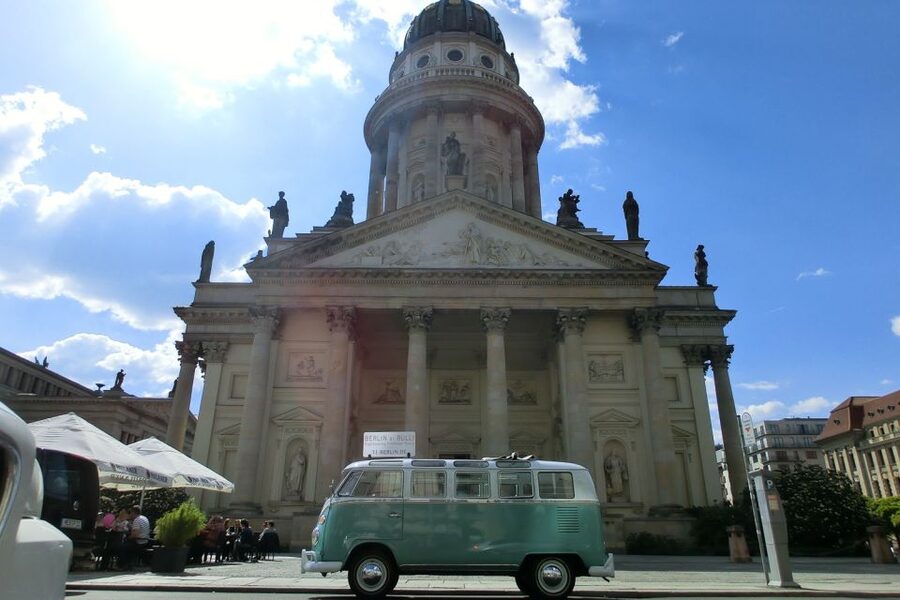
Gendarmenmarkt is one of the city’s most elegant squares, framed by the French Cathedral, German Cathedral, and Konzerthaus. From the bus, you get the layout and a quick look at the surrounding architecture. You may want to return on foot because the details are easy to miss from a moving vehicle.
Berlin Palace, now associated with the Humboldt Forum, brings the route back to the city’s royal past and its reconstruction debates. The nearby Jungfern Bridge is one of the oldest surviving bridges in Berlin, while Galgenhaus offers a smaller and less obvious piece of the city’s past.
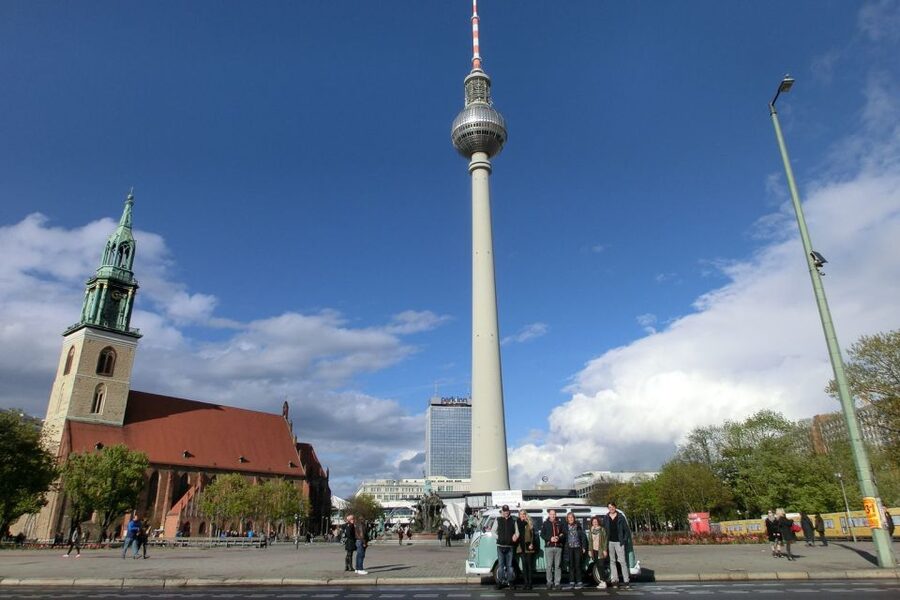
The Red Town Hall and TV Tower then make the former East Berlin setting clear. The TV Tower rises above Alexanderplatz and remains one of the city’s most recognizable modern landmarks. Neptune Fountain and St. Mary’s Church complete the view before the bus returns to Berlin Cathedral.
This ending works neatly. You begin among the cathedral and museums, travel through Berlin’s royal, Nazi, Cold War, divided, and reunited chapters, and finish close to where you started.
The guide and the photo booklet
The guide makes or breaks a history tour, and this one has earned strong praise for its warm delivery and personal approach. Rajko and Michael are among the guides associated with the experience. Both are described as friendly, well prepared, and able to explain Berlin’s past in an engaging way.
The best part is the extra detail. You are not limited to dates printed on a plaque. The guide can point out overlooked streets, explain why a building matters, and use personal knowledge to connect one location with another. That makes the city easier to read.
The tour is offered in English and German. If your group includes both languages, the guide may switch between them. One practical result is that some commentary takes longer, but this is handled by the guide and can be useful if you speak either language.
The small photo booklet, described as an analogue iPad, is a clever tool. It lets you compare past and present at the exact place you are seeing. I would pay attention to it rather than treating it as a simple souvenir. It gives the ride an extra layer and helps you remember the city after the tour ends.
Is two hours enough?
Two hours is enough for an overview, not a full visit to Berlin’s sights. You will pass almost 50 locations, but most will receive a short explanation rather than a stop.
That makes the tour particularly good at the start of a stay. You can learn the city’s basic layout, note places that interest you, and return later with more time. Several people also find it useful near the end of a trip because the guide connects sights they have already seen and adds background they missed.
The route moves at a relaxed pace, but traffic and bilingual commentary can affect how much information you receive at each point. If your main goal is to spend an hour inside a single museum or memorial, choose a walking tour or dedicated visit instead.
Who will enjoy this Berlin tour?

I would recommend it to first-time visitors who want a broad introduction without the scale of a large coach. Families can also benefit from the vintage bus and the constant change of scenery. One family of six had the bus to themselves, which shows how personal the experience can feel when your group fills most of the seats.
It suits anyone interested in Berlin’s twentieth-century story, architecture, cars, or urban change. The bus is also a good choice in poor weather because heating is available when necessary.
You should think twice if you dislike vehicle tours, need frequent stops, or want long time at each landmark. The ride is not suitable for people with epilepsy, people with a cold, anyone over 125 kilograms, or anyone bringing a non-folding wheelchair. Glass objects and intoxication are not allowed.
Is $51 a fair price?
At $51, this is not the cheapest way to see Berlin. Public transport costs much less, and a walking route can offer more time at individual sights.
Still, the comparison is not quite equal. Here you get a two-hour guided route, a maximum group of seven, live commentary, the photo booklet, and transportation in a restored historic vehicle. The bus itself is an unusual attraction, and the route reaches places that are not always included together on a standard central walking tour.
I see the strongest value if you are short on time, visiting in winter, traveling with family, or want an introduction before exploring independently. If you are mainly paying for entry into museums or memorials, this tour will not replace those tickets because the sights are viewed from outside.
Should you book the VW Samba tour?
Book it if you want Berlin explained as a connected city rather than a checklist of famous buildings. The guide, small group, old photographs, and wonderfully distinctive bus make the experience more personal than a standard hop-on, hop-off ride.
I would schedule it early in your visit when possible. Use the route to get your bearings, then return to Museum Island, the Wall sites, the Holocaust Memorial, or Kurfürstendamm on foot. If you prefer slow sightseeing with plenty of stops, choose another format. For a compact, comfortable, and memorable first look at Berlin, this is a very good use of two hours.
FAQ
Where does the Berlin VW Samba bus tour start and finish?
The tour starts at Berlin Cathedral and returns to Berlin Cathedral after the route.
How long does the tour last?
The tour lasts two hours.
How many people can join the group?
The tour is limited to seven participants.
What languages are available?
The tour is offered in English and German. The guide may conduct the tour in more than one language.
Is a driver-guide included?
Yes. Transportation in the Volkswagen T1 Samba bus, a driver-guide, live commentary, and the photo booklet are included.
Does the bus have heating?
Yes. Heating is provided when necessary.
Is the tour wheelchair accessible?
The activity is listed as wheelchair accessible, but non-folding wheelchairs are not allowed.
Can I cancel for a full refund?
Yes. You can cancel up to 24 hours in advance for a full refund. You can also reserve now and pay later.
Just added around Berlin
- Big Bus Berlin Panoramic Night Tour by Open-Top Bus★ 3.5 · 10 reviews
- Sachsenhausen Concentration Camp Bus Tour★ 4.0 · 3 reviews
- Berlin Combo: Hop-On-Hop-Off Bus and Icebar Ticket★ 3.0 · 20 reviews
- Hop-on Hop-off Berlin Tour with Audio Guide★ 3.0 · 11 reviews
- Dresden: 10-Hour-Tour from Berlin by VW-Bus★ 5.0 · 5 reviews
- Berlin: Hop-On Hop-Off City Tour by Bus and Boat★ 4.4 · 488 reviews
- Potsdam: 5-Hour-Tour “Parks & Palaces” from Berlin by VW-Bus★ 5.0 · 17 reviews
- Christmas market lights tour bus through Berlin, free mulled wine (2.5 hours)★ 4.8 · 6 reviews
Sightseeing Bus Tours, compared.
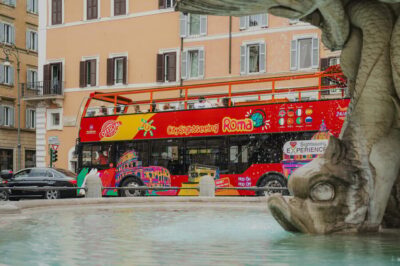
City Sightseeing Hop-on Hop-off Bus with Audioguide
Read our review →
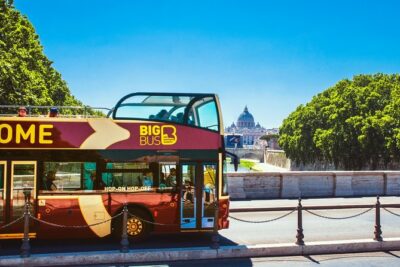
Big Bus Hop-on, Hop-off Open-Top Sightseeing Tour
Read our review →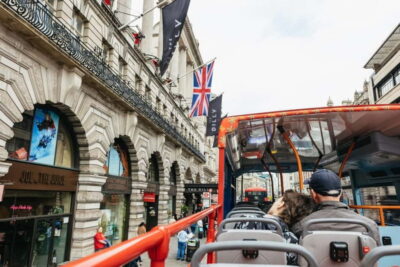
City Sightseeing London Hop-On Hop-Off Bus & Bookable Extras
Read our review →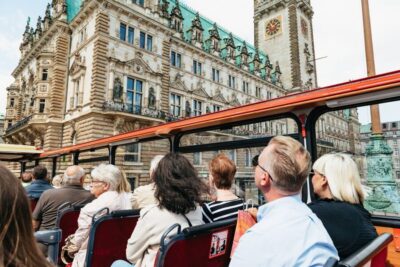
City Sightseeing HOHO Bus Tour + Sunset & Night Tour
Read our review →
City Sightseeing Hop-On Hop-Off Bus with Audio Guide
Read our review →Browse the lists this tour appears in