
Review · AUSTRIA
Big Bus Vienna Hop-On Hop-Off Sightseeing Tour
Vienna rewards a good first look. The Big Bus tour gives you two routes through the imperial center, palace district, Danube area, and modern northern Vienna, so you can get your bearings without wearing out your shoes. I like the flexible hop-on, hop-off format, and I like that the buses cover both famous sights and less central places such as Hundertwasser House and the Danube Tower.
The onboard audio commentary, free WiFi, and mobile ticket make the day easy to manage. The main catch is traffic: a loop advertised at about 1 hour 50 minutes can take much longer, especially at busy times. Some passengers also find the commentary too thin for a city with so much to explain.
Key points to know before you board
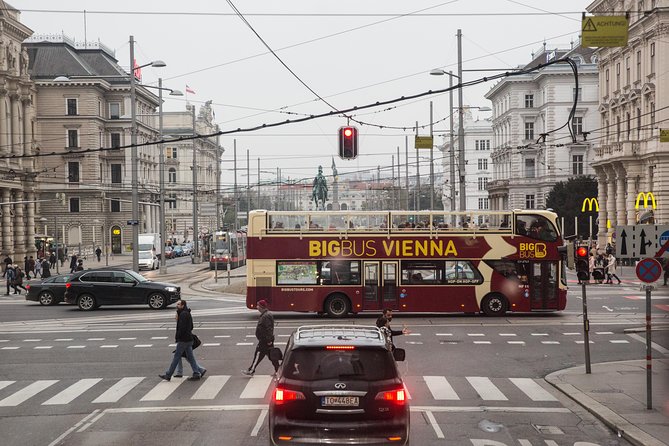
- Two routes cover very different sides of Vienna: One focuses on the central sights and Danube area, while the other reaches Schönbrunn Palace, the Technical Museum, the main station, and Belvedere.
- A full loop takes about 1 hour 50 minutes in ideal conditions: Allow extra time for traffic, red lights, roadworks, and one-way routing.
- The 48-hour ticket offers the best breathing room: It is more useful if you want to visit several museums, palaces, or Christmas markets.
- Audio commentary is available in eight languages: Bring patience, since several passengers found the content uneven or too general.
- The included walking tour is a real plus on selected tickets: The English tour leaves Stop 1 at the Opera daily at 11:30 a.m. and lasts 90 minutes.
- The Viennese sausage plate is an optional bonus: The 48-hour ticket with walking tour includes it at Zum Kaiser, one minute from Stop 1.
Why this bus works well for a first day in Vienna
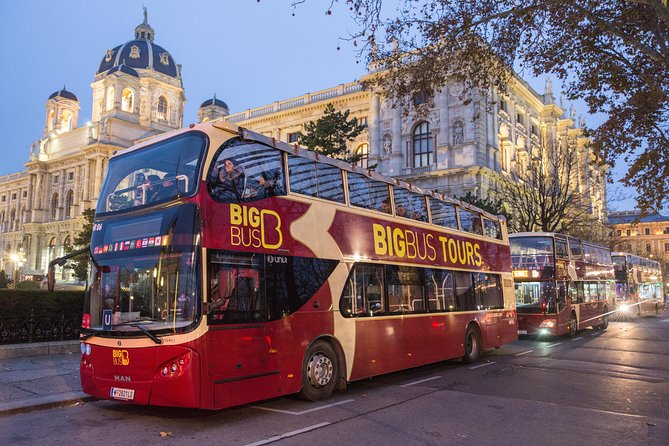
I see this tour as a moving orientation rather than a substitute for exploring Vienna on foot. You get a broad view of the city’s grand avenues, palaces, museums, churches, parks, and river districts before deciding where to spend your limited time.
That matters in Vienna because the sights are spread across several districts. Hofburg, the Opera, and St. Stephen’s Cathedral sit close enough for walking, but Schönbrunn, the Belvedere complex, Prater, and the Danube Tower require more planning.
At $36.67 per person, the price is reasonable if you use the bus several times over 24 or 48 hours. It is less attractive if you ride only one loop and spend most of your visit in the compact historic center, where trams, the U-Bahn, and your own feet may do the job more cheaply.
The 24-hour ticket suits a short stay with one planned day of sightseeing. I would choose 48 hours if you want to combine bus rides with palace visits, museum stops, a walking tour, and a slower café break.
More Hop-On Hop-Off Bus Tours in the world:
- Barcelona: 24 or 48-Hour Hop-On Hop-Off Bus Tour
★ 4.4 · 20,872 reviews - Rome: City Sightseeing Hop-on Hop-off Bus with Audioguide
★ 4.0 · 16,045 reviews - Paris: Big Bus Hop-On Hop-Off Tour with Optional Cruise
★ 4.4 · 13,279 reviews
Start at the Opera and get your bearings
Stop 1 is at the Vienna State Opera, with an additional listing near Albertina and Walfischgasse. This is the most practical starting point because the Opera sits at the edge of Vienna’s historic core and close to the Albertina museum, Kärntner Straße, Hofburg, and St. Stephen’s Cathedral.
From here, you can stay aboard for the full loop or begin your sightseeing right away. The mobile ticket is confirmed at booking, but the voucher may need to be exchanged for the actual bus ticket at a stop. Do not assume the QR code alone is the final boarding pass.
The app can help you find stops and track buses. That is worth using, since stop signs can be easy to miss, especially when names appear in German or Austrian German.
House of Music, Hofburg, and the museum quarter
The House of Music is Stop 2 on the central route. This interactive museum explores sound and music, making it a sensible place to hop off if you want something more hands-on than another grand facade.
The route then reaches Babenbergerstraße, near MuseumsQuartier and Mariahilferstrasse. This is one of Vienna’s best areas for combining museums, shopping, cafés, and a little wandering without committing to a long cross-city ride.
Stop 4 at Burgring brings you to the Museums and Hofburg area. The Hofburg was the former residence of the Habsburg dynasty, and its courtyards and monumental buildings help explain how Vienna became the center of a large European empire.
You can also use this stop for the Spanish Riding School area, though the bus ticket itself does not include palace or museum admission. This is a good place to get off, walk through the imperial center, and later rejoin the route.
City Hall, Votive Church, and Schwedenplatz
City Hall, or Rathaus, is another worthwhile stop. Its Gothic facade and broad square make it especially useful during seasonal events, including Vienna’s Christmas markets.
The Votive Church follows on the route. Its tall twin spires are easy to spot, and the surrounding university district gives you a change from palace architecture.
Schwedenplatz brings the bus to the Danube Canal and a possible river cruise connection. Cruise departures can change because of heavy rain, high water, or other conditions, so ask Big Bus staff before building your day around the boat.
The one-way route needs careful thought here. If you board at a stop that sits before your intended destination, you may need to remain on the bus for much of the loop. One passenger described riding through all 16 stops before reaching the preferred stop. This is not a fault you can solve with enthusiasm, so check the route direction first.
More Sightseeing Bus Tours in the world:
- Barcelona: City Sightseeing Hop-On Hop-Off Bus Tour
★ 4.4 · 10,061 reviews - Rome: Big Bus Hop-on, Hop-off Open-Top Sightseeing Tour
★ 4.1 · 9,537 reviews - City Sightseeing London Hop-On Hop-Off Bus & Bookable Extras
★ 4.4 · 7,374 reviews - Hamburg: Line A Sightseeing Hop-On Hop-Off Bus Tour
★ 4.6 · 6,958 reviews
Prater and Vienna’s giant Ferris wheel

Stop 8 serves Prater and the Viennese Giant Ferris Wheel. The wheel is one of Vienna’s best-known symbols, while Prater offers a lighter, more playful side of the city after all those imperial buildings.
This stop is useful if you want photographs, amusement rides, or a break from museums. It is also a good example of why the bus can save energy. Prater is not the sort of place you want to reach after a long day of crossing Vienna on foot.
Traffic can slow the approach, though. The city has many traffic lights, and peak hours can turn a short transfer into a long wait. If your schedule is tight, use the live tracking feature and allow more time than the printed estimate suggests.
The Danube, Donauturm, and modern Vienna
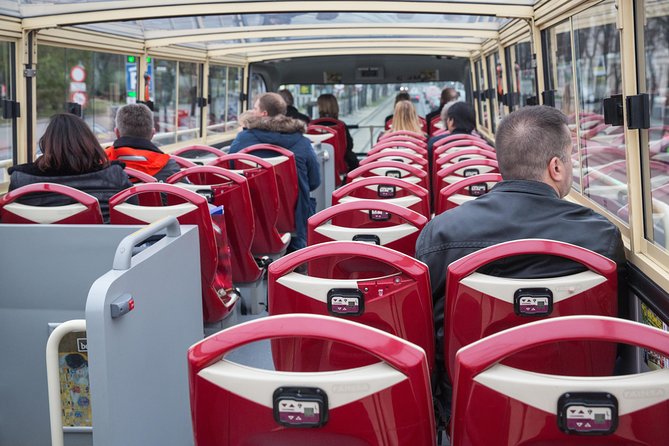
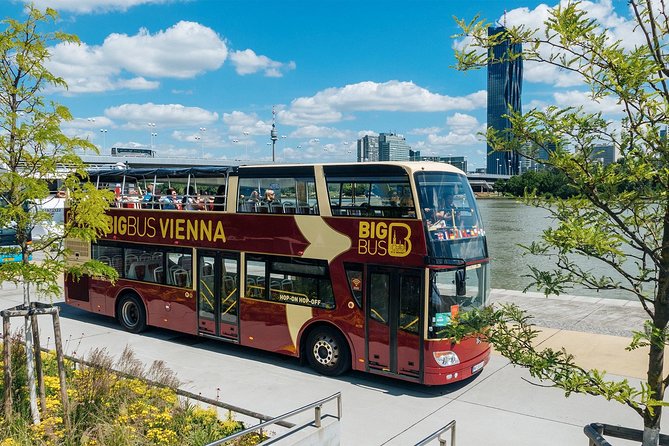
The route continues through the Danube district, with stops for Blue Danube river cruises, the Danube Tower, Alte Donau, the Vienna International Centre, and Reichsbrücke on Danube Island.
This section shows a different Vienna. The historic center is all stone facades and imperial ceremony. North of the river, you see modern offices, international institutions, high-rise buildings, open water, and large recreational areas.
The Danube Tower is the main sightseeing draw in this part of the route. Alte Donau offers a quieter waterside setting, while the Vienna International Centre and DC Tower point to Vienna’s role as an international city.
I would not choose this section merely to tick off stops. It works best if you want a broad view of the city or have a specific reason to visit the Danube district. The long ride can feel slow if your main goal is Hofburg or the Opera.
Hundertwasser House and Stadtpark
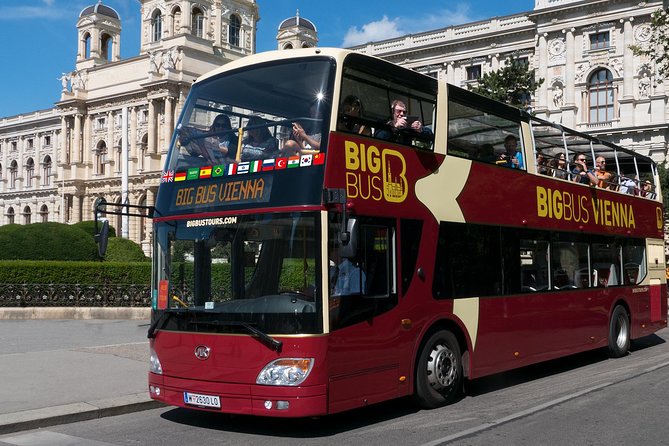
Stop 15 at Kegelgasse serves Hundertwasser House, one of Vienna’s most unusual architectural sights. The building’s irregular forms and colorful surfaces make it a welcome break from the city’s formal Baroque and Neoclassical style.
You may find the stop especially worthwhile if you enjoy architecture and photography. Check the exact walking direction when you leave the bus, since the attraction and stop names do not always make the route on foot obvious.
The final central stop is Stadtpark. This green space is known for its monuments and the golden statue of Johann Strauss. It also provides a pleasant pause before returning to the Opera area.
The palace route to Schönbrunn
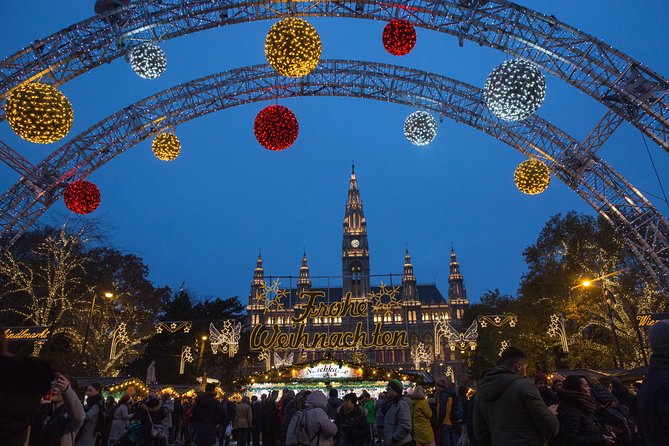
The second route reaches Mariahilfer Straße, the Vienna Museum of Science and Technology, Schönbrunn Palace and Zoo, the main train station, Upper Belvedere, and Lower Belvedere.
Schönbrunn is the major reason to choose this route. The former imperial summer residence gives you a sense of the Habsburg court outside the crowded central district, and the palace grounds offer more room to walk than the Hofburg area.
The stop also serves the zoo. If you plan to visit both palace and zoo, give yourself plenty of time and consider the 48-hour ticket. Trying to squeeze both into a rushed bus day may leave you seeing neither properly.
The Technical Museum offers a useful alternative if you prefer machines, science, and industry to palace rooms. It is a good family option, though the bus ride to this outer section can take longer than expected in traffic.
Belvedere, the main station, and route planning
The route’s stops at Vienna Central Station, Upper Belvedere, and Lower Belvedere make this line useful for art lovers. Upper Belvedere is closely associated with Gustav Klimt’s The Kiss, while Lower Belvedere adds another historic palace setting.
Do not confuse the two Belvedere stops when planning your day. They are related but not interchangeable, and your visit may involve more walking than the stop names suggest.
The main station stop is practical for anyone arriving or leaving by train, though hotel pickup and drop-off are not included. You are responsible for reaching a bus stop and making your own way back afterward.
The palace route is also the reason I would avoid buying only a central loop if Schönbrunn or Belvedere is on your list. The routes serve different priorities, and the outer attractions are not convenient additions once you are already sightseeing downtown.
Audio commentary and the walking tour
The audio commentary is available in eight languages, with free headphones and WiFi on board. It can add useful context while you look at buildings from the upper deck, and several people found the narration informative and well timed.
The quality may vary from bus to bus. Reports include a headset working in only one ear, music repeating in a short loop, and gaps where major buildings receive little explanation. Vienna deserves more detail than a few broad facts, so I would treat the audio as an introduction, not a full history lesson.
The English guided walking tour is more promising for visitors who want human explanation. It leaves from Stop 1 at the Opera daily at 11:30 a.m. and lasts 90 minutes, but it is included only with selected tickets.
The 48-hour ticket with the walking tour also includes a Viennese sausage plate at Zum Kaiser, about one minute from Stop 1. That small food stop adds real local flavor and improves the value of the longer package.
Comfort, accessibility, and the practical drawbacks
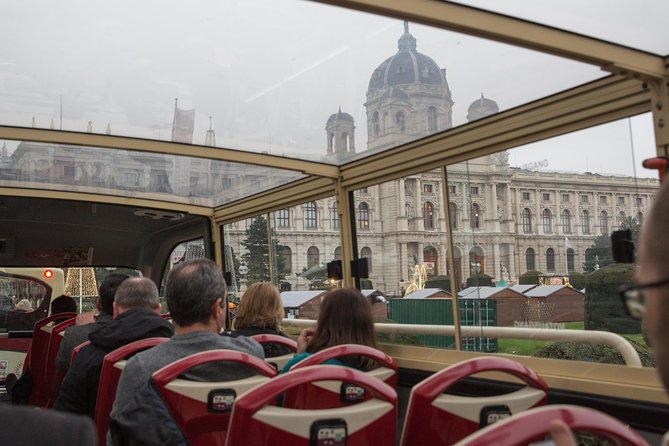
A covered upper deck is available in winter, which helps if you want a higher view without sitting in freezing air. On rainy days, the glass roof can still give you a clear look outside.
The bus is a useful choice if you have limited mobility or simply want to reduce walking. One passenger used it successfully with an 83-year-old parent who could not manage long distances. You can remain on board and still see many of the main sights.
Service animals are allowed, and the stops are near public transportation. Hotel pickup and drop-off are not included, so you need to reach the route yourself.
The main weakness is timing. Buses may wait longer than expected, fill up at popular stops, or move slowly through traffic. One person found a bus so full that standing made it hard to listen to the commentary. If you need a seat, board at an earlier stop or avoid the busiest parts of the day.
How to get better value from your ticket
I would begin with one full loop if this is your first morning in Vienna. Keep the audio running, note the places you want to revisit, and resist hopping off at every attractive building.
On the second pass, use the bus as transportation. Get off at Hofburg, Schönbrunn, Belvedere, Prater, or Hundertwasser House, then walk and explore before rejoining the route.
The 24-hour ticket is enough for a quick overview and a few well-chosen stops. The 48-hour ticket makes more sense if you want the walking tour, the sausage plate, both routes, and time for delays.
Do not plan a tight connection to a train, cruise, or timed admission. Vienna traffic can turn the advertised loop into two or three hours, and route direction may force you to stay aboard longer than expected.
Should you book the Big Bus Vienna tour?
Book it if you want an easy city overview, need to limit walking, or plan to visit sights spread across Vienna. It is especially useful on a first day, in poor weather, or for a mixed-age group with different energy levels.
Choose the 48-hour option if you want Schönbrunn, Belvedere, the central museums, Prater, and the walking tour. Choose 24 hours if you mainly need orientation and transportation between a few major sights.
Skip it if you have only a short time in Vienna and plan to stay around the Opera, Hofburg, and St. Stephen’s Cathedral. In that compact area, walking and public transportation may be faster.
The tour does its best work as a practical overview. Use it to see the shape of Vienna, then get off and spend time where the city becomes more than a view through a bus window.
FAQ
How long is the Big Bus Vienna tour?
A complete loop takes approximately 1 hour and 50 minutes, although traffic, roadworks, traffic lights, and busy periods can make the ride much longer.
Can I choose between a 24-hour and 48-hour ticket?
Yes. The experience offers both 24-hour and 48-hour ticket options, allowing you to match the pass to your schedule.
How many routes are available?
You can choose between two routes. One includes central Vienna, the Danube area, Prater, the Danube Tower, Hundertwasser House, and Stadtpark. The other reaches Schönbrunn, the Technical Museum, the main station, Upper Belvedere, and Lower Belvedere.
Is an audio guide included?
Yes. Audio commentary is available in eight languages, along with free WiFi and a free VOX digital walking tour download.
Is a walking tour included?
A live guided city walking tour is included with selected tickets. The English tour begins at Stop 1, Opera, daily at 11:30 a.m. and lasts 90 minutes.
Does the ticket include a Viennese sausage plate?
The 48-hour ticket with the walking tour includes a free Viennese sausage plate at Zum Kaiser Sausage Stand, located about one minute from Stop 1.
Can I cancel for a full refund?
Yes, if you cancel at least 24 hours before the experience start time. Cancellations within 24 hours are not refunded, and changes during that period are not accepted.
Just added around the world
- London Panoramic Open Top Bus Tour with Audio Guide★ 4.0 · 209 reviews
- Paris by Rail – Sightseeing Bus and Eiffel Tower Champagne Lunch★ 4.0 · 18 reviews
- London Vintage Bus Tour with Cream Tea at Harrods★ 4.0 · 145 reviews
- London’s Family-friendly Routemaster Bus Tour with Live Guide★ 5.0 · 18 reviews
- London Tour Hop-on Hop-off Bus with Optional Thames River cruise★ 3.5 · 39 reviews
- London Vintage Bus Tour Including River Thames Cruise with Optional Lunch★ 4.0 · 286 reviews
- Christmas Lights Open-Top Bus Tour★ 4.0 · 31 reviews
- Christmas Lights Tour by Vintage Bus in London★ 5.0 · 2 reviews
Hop-On Hop-Off Bus Tours, compared.
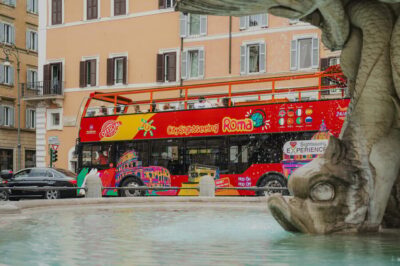
City Sightseeing Hop-on Hop-off Bus with Audioguide
Read our review →
Tootbus Hop-on Hop-off (Optional River Cruise)
Read our review →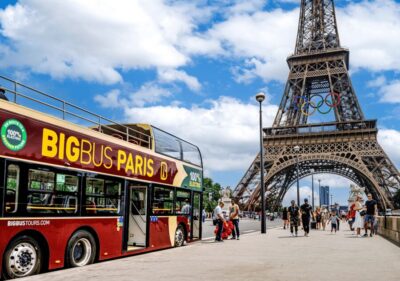
Big Bus Hop-On Hop-Off Tour with Optional Cruise
Read our review →
London Big Bus Hop-On Hop-Off Tour with Optional River Cruise
Read our review →
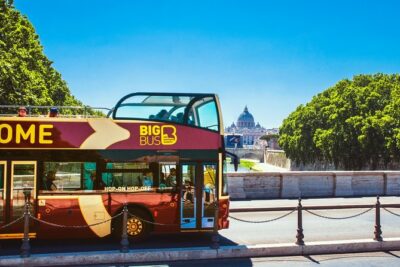
Big Bus Hop-on, Hop-off Open-Top Sightseeing Tour
Read our review →
Browse the lists this tour appears in