
Review · CHINA
Coach Tour: Hong Kong Heritage Discovery
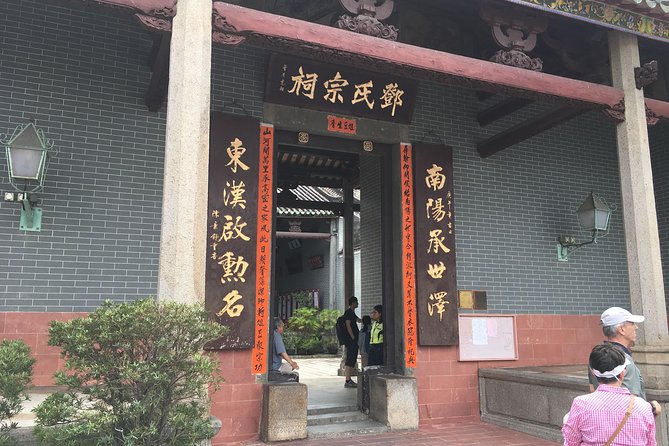
Hong Kong has an older face. This five-hour coach tour takes you beyond the skyscrapers into the New Territories, where ancestral halls, a 15th-century pagoda, a walled village, and traditional markets tell a quieter story of Chinese life. I especially like the small maximum group of six and the chance to see places that are easy to miss without local transport. The included tasting at Tai Po Market adds a useful food stop, too.
I also like the door-to-door transfer option from selected Kowloon and Hong Kong Island hotels. It removes the hassle of finding village sites on your own. The main caution is that pickup is tightly controlled. If your hotel is not on the list, or you fail to provide its name and address, you may be assigned a nearby meeting point instead.
Past departures have included guides such as Jo-elle, praised for clear English and humor, and Andy, who led a very small group with just five participants. That personal scale can make a big difference on a history-focused outing. Still, you should expect an early start, several short sightseeing stops, and a full morning without lunch included.
Key points to know before booking
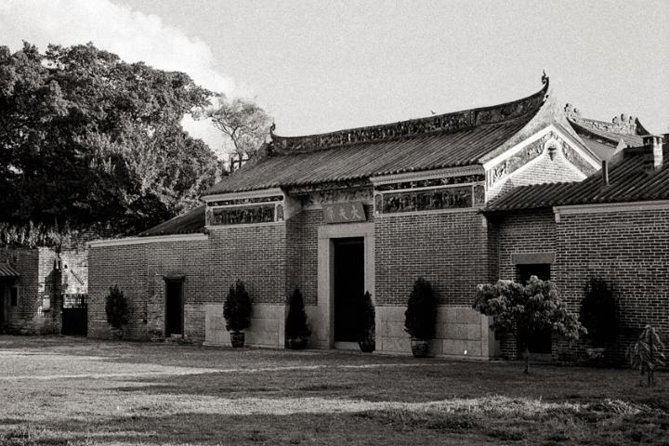
- The oldest pagoda in Hong Kong: Tsui Sing Lau Pagoda dates from about 1486 and rises three stories above the Ping Shan area.
- A real walled village: Sheung Cheung Wai retains its gatehouse, shrines, old houses, and part of its green-brick wall.
- Small-group format: The tour has a maximum of six participants, although some people first gather at a central transfer point.
- Traditional market tasting: Tai Po Market provides local snack samples and time to see vegetables, cured meats, dried seafood, and sweets.
- Hotel pickup has limits: Service covers major hotels on Hong Kong Island and in Kowloon, not the airport, cruise terminal, railway station, New Territories, or Lantau Island.
- A good history-to-effort ratio: For $144.32 per person, you get a guide, transport between sites, hotel transfers where available, and a five-hour introduction to rural Hong Kong.
Why the New Territories make a better history lesson
Hong Kong is often presented through its harbor, towers, shopping streets, and polished transport system. Those are real parts of the city, but they do not explain how powerful clans, village communities, scholars, merchants, and farmers shaped the territory.
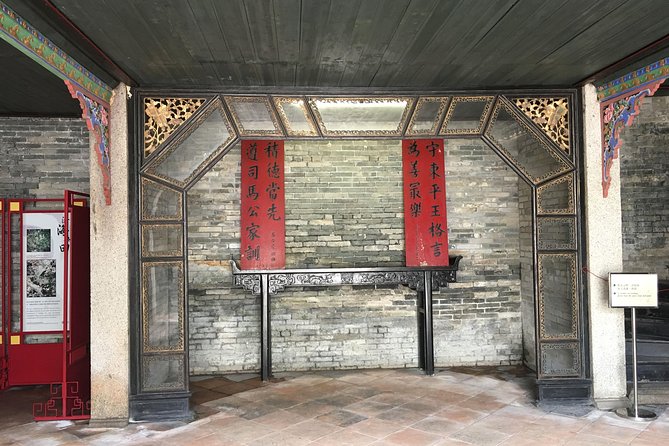
The New Territories offer that missing chapter. The Yuen Long Ping Shan Heritage Trail links several historic buildings connected with the Tang clan, one of the most important traditional families in the area. Instead of seeing one isolated monument, you move between pagoda, ancestral halls, study buildings, shrines, and village lanes.
That sequence matters. A guide can explain how architecture reflected rank, education, family structure, and religious belief. You are not simply photographing old brick walls. You are seeing how a community organized itself.
The coach format is useful here because these sites are spread across the New Territories. Public transport can get you into the area, but connecting several small heritage locations would take planning, walking, and careful timing. The tour handles the transfers, leaving you free to listen and look around.
More History Tours in China:
- Prague: Historic City Center Bus Tour with Top Sights
★ 4.4 · 2,360 reviews - 2-Hour Gettysburg Battlefield Guided History Bus Tour with a National Park Guide
★ 4.5 · 2,201 reviews - Prague: Hop-on Hop-Off Historical Tram Ticket for Line 42
★ 4.1 · 1,702 reviews
The early pickup and small-group setup
Pickup takes place between about 7:50am and 8:35am from selected hotels on Hong Kong Island or in Kowloon. Your exact time comes from the local operator, so do not treat the general time window as your personal schedule.
You must actively provide your hotel name. Seeing a hotel listed as eligible does not automatically place you on the pickup list. If you stay in a private home or a hotel outside the standard list, give the full address when booking. The operator can then assign a nearby hotel meeting point and confirm the arrangement with you.
The service does not cover airport hotels, railway stations, cruise terminals, hotels in the New Territories, or Lantau Island. A taxi to the assigned departure point is your responsibility if your accommodation is not included.
The advertised maximum is six people. That is a major advantage for a history tour, since a small group makes it easier to hear the guide and ask questions. One past departure began at a location where larger groups were sorted onto different buses, but the heritage vehicle itself had only five participants plus the guide and driver. That is a useful distinction: the first transfer point may feel busy, while the actual tour can be quite personal.
Tsui Sing Lau Pagoda and the Ping Shan trail
The first major heritage stop is Tsui Sing Lau Pagoda, believed to have been built in 1486. It is described as Hong Kong’s oldest pagoda, a three-story hexagonal building made of green brick and rising about 13 meters.
This is not a huge monument. Its appeal comes from age, setting, and purpose. The top floor is linked with Fui Shing, the deity associated with success or failure in examinations. In a society where official examinations could shape a family’s future, that connection gives the pagoda more meaning than its modest size suggests.
Look for the auspicious Chinese sayings inscribed on the different levels. The guide can help explain the symbols and the connection between religious practice and education.
The pagoda is part of the Yuen Long Ping Shan Heritage Trail, so the visit works best as an introduction to the area rather than a stand-alone photo stop. Expect to walk between some of the historic buildings. The tour is not described as a strenuous hike, but comfortable shoes make sense because the route includes village streets and heritage grounds.
Tang Chung Ling Ancestral Hall and the power of family
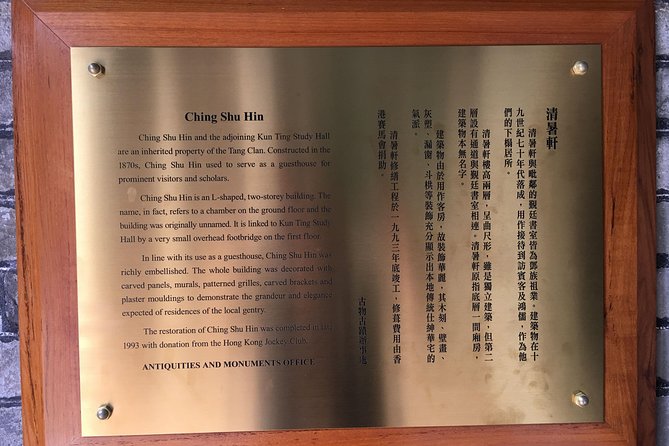
The Tang Chung Ling Ancestral Hall dates from 1273 and is one of the finest examples of a traditional three-hall ancestral building in Hong Kong. It has two internal courtyards, which give the structure a clear rhythm as you move through it.
Ancestral halls were not just religious spaces. They helped powerful families preserve identity, honor ancestors, organize community life, and display social position. The Tang clan connection gives this stop particular weight, since the Ping Shan area was shaped by the family over many generations.
One detail deserves special attention: the path through the courtyard is raised unusually high. This indicates that one of the Tang clansmen held a high-ranking position in the imperial government. It is a small architectural clue, but it turns the building into a kind of social record.
This is where a good guide earns the cost of the tour. Without explanation, you may notice courtyards, wooden features, and tiled roofs. With context, you can read those details as signs of rank and family authority.
A few more bus tours around China worth a look
- Mubus: Mutianyu Great Wall Bus Tour with Summer Palace Options
★ 5.0 · 1,272 reviews - Beijing: Mutianyu Gt Wall Trip, Depart 8-10am Bus w/ Tickets
★ 4.9 · 1,256 reviews - Big Bus Hong Kong Open Top Hop-On Hop-Off Sightseeing Tour
★ 4.0 · 1,077 reviews - Hong Kong: Big Bus Hop-On Hop-Off Tour & Optional Peak Tram
★ 4.4 · 982 reviews
Kungting Study Hall and the value of looking closely
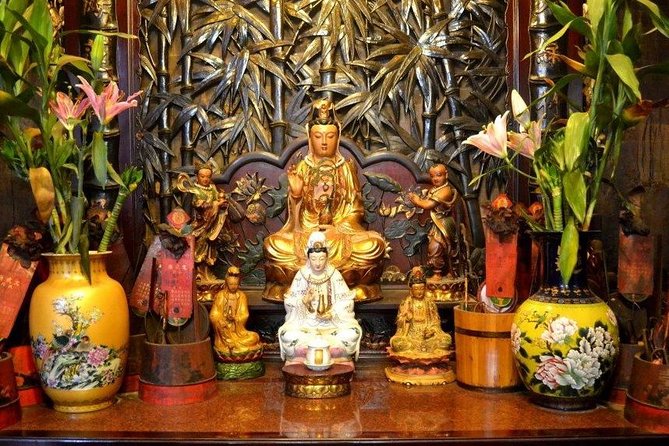
Kungting Study Hall was built in the 1870s and served both as an ancestral hall and a place of study. Its two-hall layout and enclosed courtyard show how education and family tradition overlapped.
The building is especially noted for its carved granite columns and the granite base along the front. The interior design reflects the skill of the craftsmen who built it. These are details worth seeing at close range, not just from the coach window.
I like this stop because it adds balance to the ancestral halls. The earlier buildings emphasize clan structure and lineage. Kungting Study Hall brings in the role of schooling, ambition, and cultural achievement.
Do not expect a long independent exploration period at every site. Five hours covers several locations, so the guide must keep the group moving. If you prefer spending an hour inside one building, a self-guided visit may suit you better. If you want several connected examples in one morning, the pace is useful.
Sheung Cheung Wai, a surviving walled village
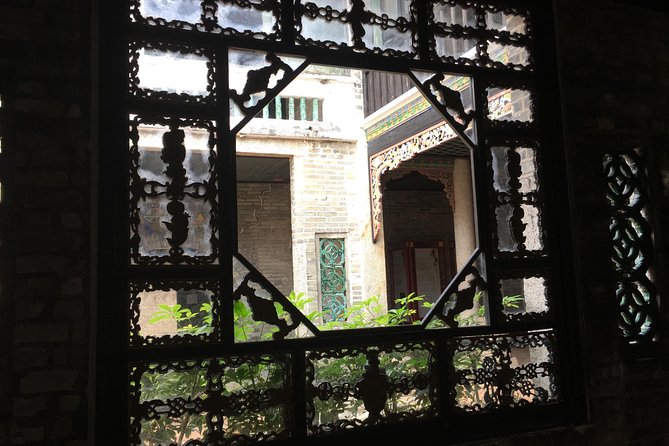
Sheung Cheung Wai is a 200-year-old walled village made up of symmetrical rows of houses enclosed by a green-brick wall. The gatehouse, shrines, and some original houses remain, although part of the wall is missing.
That missing section is worth keeping in mind. This is not a fully preserved historical village presented as it looked two centuries ago. It is a living remnant, with enough of the original plan to show how a traditional Chinese walled settlement worked.
The symmetry tells you something about community organization. The wall provided a clear boundary, while the gatehouse controlled entry. Shrines connected daily life with religious practice. The surviving houses help you picture the village as a shared family setting rather than a collection of unrelated buildings.
This may be one of the most atmospheric stops on the route because the scale is human. You can see how homes, lanes, walls, and shrines fitted together. At the same time, be respectful. This is a village, not simply an open-air museum.
Tai Fu Tai Mansion and the scholar-gentry ideal
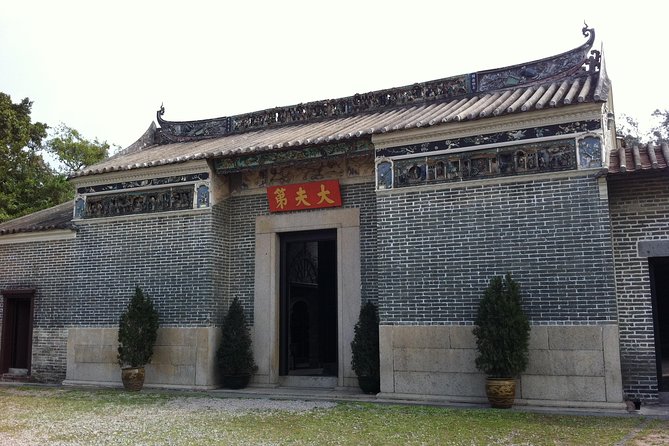
Tai Fu Tai Mansion was probably built in the 1870s by Man Chung-Luen, a successful merchant and philanthropist. The house is described as an elegant example of a traditional Chinese residence for the scholar-gentry class.
Its location is in Sha Tin, east of Mai Po, and it was declared a historic building in 1987. Restoration work was completed in 1988. That restoration is important when setting expectations. You are seeing a carefully repaired historic residence, not an untouched private home.
The mansion gives the tour a different architectural angle. The ancestral halls and study hall focus on collective family life and learning. Tai Fu Tai Mansion shows how wealth, education, and social standing could shape a grand private residence.
Pay attention to the relationship between practical living space and formal presentation. The building reflects a social world in which a successful merchant could express status through architecture, scholarship, and philanthropy.
Because the tour includes several locations, your time here may be limited. I would listen closely to the guide rather than trying to inspect every feature on your own. The value is in understanding how the mansion fits into the wider story of local society.
Tai Po Market and the food stop
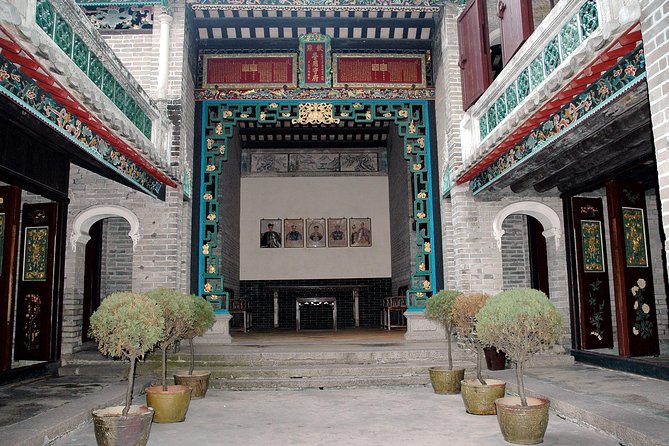
Tai Po Market began as a trading place for food and goods from across the New Territories. Today it remains a working food market, with vendors selling fresh vegetables, cured meats, dried seafood, and locally made candies.
The included traditional snack tasting gives you a direct connection to the area’s food culture. It is not a full lunch, and lunch and dinner are not included, so plan accordingly. You may want to eat before pickup or arrange a later meal after the tour.
This stop is less formal than the heritage buildings. That is part of its value. The market shows how local commerce continues alongside historic sites. You can look at everyday products, compare unfamiliar foods, and see a side of Hong Kong that is easy to miss in central districts.
You may also be able to leave the group at Tai Po Market and spend the rest of the day there, but you must ask the guide for approval in advance. If allowed, get the guide’s cellphone number before separating and return to your hotel by MTR on your own. That option gives you more time in Tai Po, but it also ends the guided portion of your day.
What $144.32 gets you
At $144.32 per person, this is not a bargain-priced sightseeing bus. The value depends on how much you would otherwise spend arranging transport and finding the heritage sites yourself.
The price includes an English-speaking guide during transfers and sightseeing, transport between attractions, the traditional snack tasting, and round-trip hotel transfers when your hotel qualifies. The small group size is another strong point. A private guide and vehicle would cost much more, while a large coach tour would likely provide less personal attention.
The price is easier to justify if you have only a few days in Hong Kong and want a structured morning outside the central districts. It is less appealing if you are comfortable using public transport, reading historical information independently, and spending a full day exploring Tai Po at your own pace.
Remember that the price does not include meals beyond the snack tasting, taxi fares to an assigned pickup point, or transport back to your hotel if you leave the group early.
Who will enjoy this tour most
I would recommend the tour to you if you:
- Want Hong Kong history beyond modern architecture and shopping
- Prefer a guide to explain family systems, religious customs, and building details
- Value a very small group
- Are staying in a qualifying hotel on Hong Kong Island or in Kowloon
- Want transport handled for you
- Enjoy markets and traditional food products
- Have a morning available for a steady sequence of short stops
It may not suit you if you want a relaxed schedule with long free periods. It is also a poor fit if you are staying at the airport, on Lantau Island, in the New Territories, or at an accommodation without a confirmed pickup arrangement.
Most people can participate, but you should be ready for walking between heritage sites and for an early morning departure. The itinerary involves historic buildings, village lanes, and a market rather than a single accessible attraction with all facilities in one place.
Booking, weather, and cancellation details
Confirmation is normally sent within 48 hours, subject to availability. For bookings made less than 24 hours before departure, telephone the local supplier immediately after booking. Otherwise, the vehicle may not be sent to your hotel.
The final voucher gives your pickup time and meeting point. The local office is open from 7:00am to 9:00pm Hong Kong time. If you cannot reach anyone after hours, call again at 7:00am the next day.
Free cancellation is available up to 24 hours before the start time. Changes or cancellations inside that window are not refunded. The tour also depends on good weather. If poor weather causes cancellation, you can choose another date or receive a full refund.
Should you book the Hong Kong Heritage Discovery tour?
Book it if you want a guided introduction to the New Territories and prefer a small group with transport arranged. The combination of Tsui Sing Lau Pagoda, Tang clan buildings, Sheung Cheung Wai, Tai Fu Tai Mansion, and Tai Po Market gives you a fuller picture of Hong Kong than a standard city tour.
The strongest reasons to go are the small maximum group, the careful route through related heritage sites, and the guides who can turn architectural details into understandable stories. Jo-elle’s clear English and humor, along with Andy’s experience leading a group of only five, suggest the personal style this tour can offer.
Skip it if you want a cheap independent outing, a substantial meal, or lots of unscheduled time. Also confirm your pickup arrangement before paying. For the right person, this is a practical way to see old Hong Kong without spending the day solving transport puzzles.
FAQ
How long is the Hong Kong Heritage Discovery tour?
The tour lasts approximately five hours.
What time does pickup take place?
Pickup is scheduled between about 7:50am and 8:35am. Your exact time is confirmed by the local tour operator.
Where is hotel pickup available?
Pickup is available from major centrally located hotels on Hong Kong Island and in Kowloon.
Is pickup available from the airport or cruise terminal?
No. Pickup is not available from the airport, railway station, cruise terminal, or hotels in the New Territories and Lantau Island.
What if my hotel is not on the pickup list?
Provide the hotel or home address when booking. The operator may assign you a nearby pickup hotel and meeting time. You must approve that arrangement.
What is the maximum group size?
The tour has a maximum of six participants.
Is food included?
A traditional local snack tasting at Tai Po Market is included. Lunch and dinner are not included.
Can I leave the tour at Tai Po Market?
You may be able to leave the group there, but you must ask the guide for approval in advance. You would then return to your hotel by MTR on your own.
What happens if the tour is canceled because of bad weather?
You will be offered another date or a full refund.
How late can I cancel for a full refund?
You must cancel at least 24 hours before the experience start time for a full refund.
Just added around China
- Ocean Park Full-Day Coach Tour with Hotel Pickup in Kowloon Area from Hong Kong★ 3.5 · 7 reviews
- Afternoon City Coach Tour Plus Dinner Cruise with Hotel Pickup in Hong Kong Island★ 4.0 · 20 reviews
- Private Guangzhou High-Tech Tour AI Robot Auto Drive Bus and More★ 5.0 · 36 reviews
- BusDa:Ancient Great Wall &Badaling Great Wall Full-day Bus Tour★ 4.5 · 6 reviews
- Return Bus to Badaling Great Wall★ 3.0 · 3 reviews
- Beijing Group Coach Tour to Mutianyu Great Wall Without Lunch★ 4.5 · 6 reviews
- Small-Group Coach Tour: City Highlights of Beijing Including Lunch★ 4.5 · 4 reviews
- Mutianyu Great Wall Mini Bus Tour★ 4.0 · 2 reviews
Historical Tours, compared.

Historic City Center Bus Tour with Top Sights
Read our review →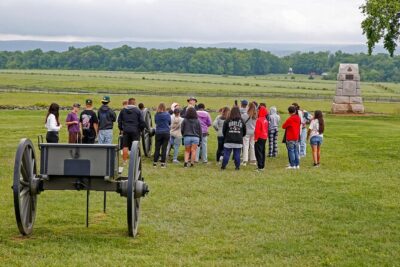
2-Hour Gettysburg Battlefield Guided History Bus Tour with a National Park Guide
Read our review →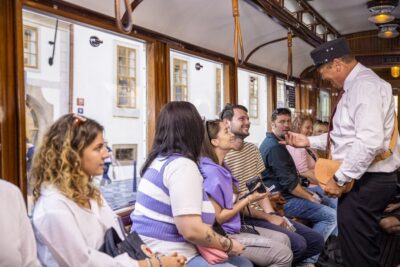
Hop-on Hop-Off Historical Tram Ticket for Line 42
Read our review →

Top Rated Brooklyn Half-Day Food, History & Culture Tour via bus
Read our review →
Charleston: Historic City Highlights Guided Bus Tour
Read our review →

Memphis: Big Mojo Sun Studio + Music History 3-Hour Bus Tour
Read our review →Browse the lists this tour appears in