
Review · SWITZERLAND
Geneva: Hop-on Hop-Off Bus & Scenic Mini-Train Tour
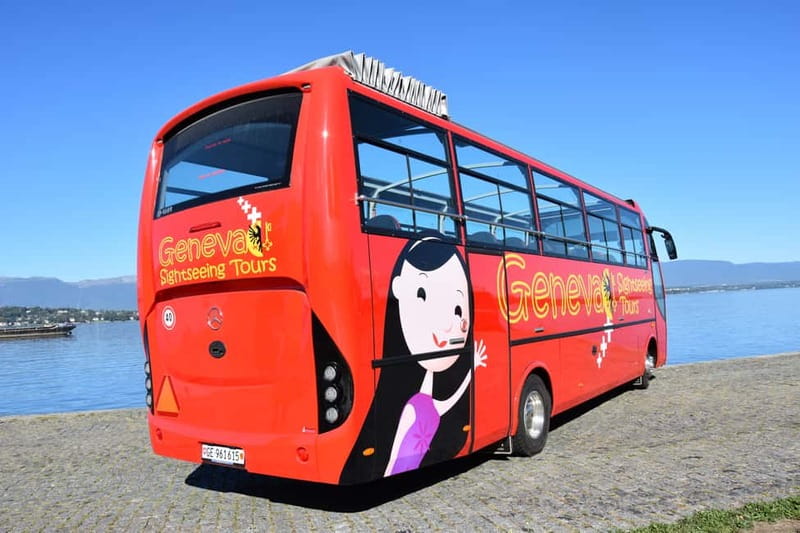
Geneva reveals itself in layers. This $43 ticket combines an open-top bus with two mini-train routes, giving you a quick look at the United Nations, Old Town, Lake Geneva, parks, gardens, and major monuments. I especially like the Old Town mini-train, which reaches streets and landmarks that are easier to appreciate without walking uphill, and the parks route, where clear weather can bring views toward Mont-Blanc.
The ticket is also useful for getting your bearings on a first day in Geneva. You receive commentary in English, French, Spanish, German, and Italian, plus short photo stops. The main catch is important: this is not a classic hop-on, hop-off service with frequent buses circling the city. Much of the experience is a ride with limited stops, so check the timetable and operating days before you count on using it as transport.
Key points to know before you book
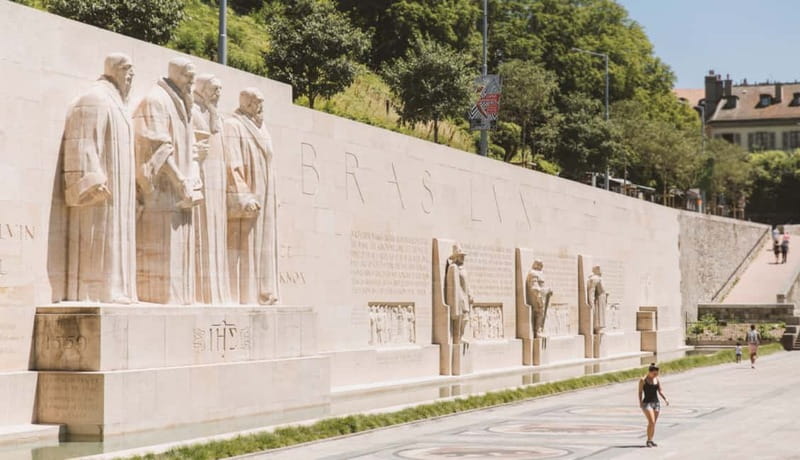
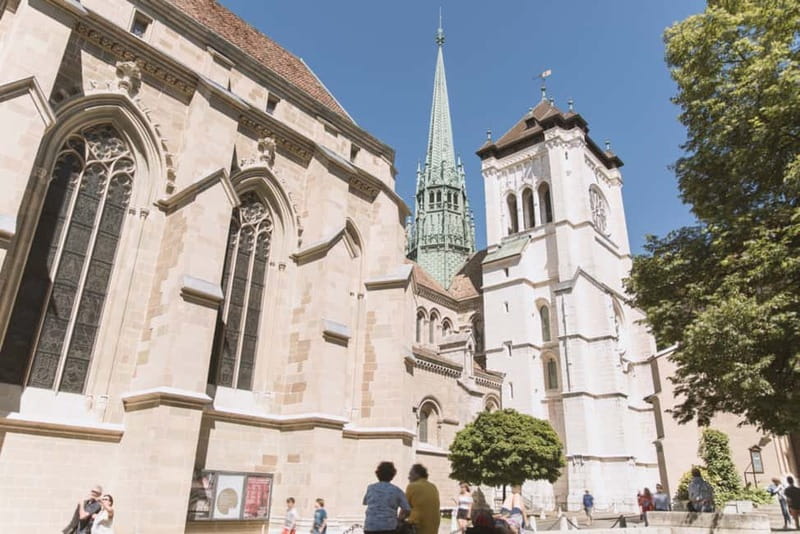
- The Old Town train is the star: It passes St. Pierre Cathedral, the Reformation Wall, City Hall, the Arsenal, and other central landmarks without requiring a long walk.
- The parks route is seasonal: The mini-train to parks and residences operates only from June to mid-September.
- The bus offers a city overview, not unlimited sightseeing transport: Most rides continue along a set route, with photo stops rather than regular hop-on access.
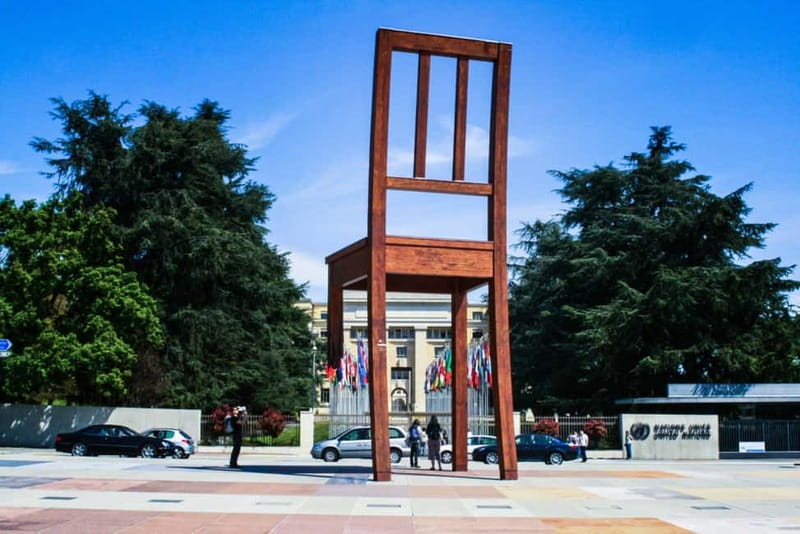
- The UN district stop is useful for photos: You can see the Broken Chair, Place des Nations, and the district’s major international organizations.
- The full three-route program takes about 2 hours and 30 minutes: A 24-hour ticket lets you spread the routes across two calendar periods within its validity.
- Weather affects comfort: The bus is open and operates in rain, so sunglasses, a camera, and suitable clothing are sensible.
What the $43 ticket really gives you
At $43 per person, this tour is best viewed as a compact orientation to Geneva rather than a full transport pass. You are paying for three sightseeing routes, multilingual audio, the convenience of covered city highlights, and a chance to rest while someone else handles the route.
The value improves if you take all three lines. The full program lasts around 2 hours and 30 minutes, and the 24-hour validity lets you split it up. You could take two routes on one afternoon and the remaining route the next morning, provided the schedule and seasonal operation allow it.
I would be less enthusiastic about the price if you plan to take only one short ride. Geneva’s central sights are close enough to explore on foot, and the bus does not offer the constant, flexible stop pattern that many people expect from a standard hop-on, hop-off operation.
The strongest value comes from seeing three different sides of the city in one booking. The Old Town route supplies history, the parks route supplies lake views and gardens, and the bus connects those central sights with the International District.
More Hop-On Hop-Off Bus Tours in Switzerland:
- Basel City Sightseeing Bus Tour
★ 3.5 · 104 reviews - Barcelona: 24 or 48-Hour Hop-On Hop-Off Bus Tour
★ 4.4 · 20,872 reviews - Rome: City Sightseeing Hop-on Hop-off Bus with Audioguide
★ 4.0 · 16,045 reviews
Start with the Old Town mini-train at Place des Bergues
Line 1 leaves from Place des Bergues and takes you through Geneva’s historic center. This is the route I would prioritize if your time is limited, especially if you want an introduction before walking around on your own.
The train passes through narrow cobblestone streets and squares, then points out the grand St. Pierre Cathedral. It also includes the equestrian statue of General Dufour, the University of Geneva, the Reformation Wall, Palais Eynard, Palais de l’Athénée, the Palais de Justice, the Arsenal, and Hôtel de Ville.
These are not random photo stops. Together, they show how Geneva shifts from religious center to university city, political capital, and international meeting place. The train gives you a useful map in your head, which makes a later walk through the Old Town easier.
One particularly useful feature is the chance to get off near the cathedral for photographs and further exploring. The exact stop arrangements can vary, so listen for instructions and confirm where the train departs again. The train is fun for families and anyone who would rather not tackle the Old Town’s slopes and uneven streets on foot.
Do not expect a long guided walking tour. You will see the buildings from the road, hear recorded commentary, and get a broad introduction. For detailed stories about the Reformation or Geneva’s politics, you will need extra time in the Old Town.
Follow the right bank parks route in summer
Line 2 leaves from Rotonde du Mont Blanc and follows the right bank of Lake Geneva. This route runs only from June to mid-September, so it is the first line to check when you choose a date.
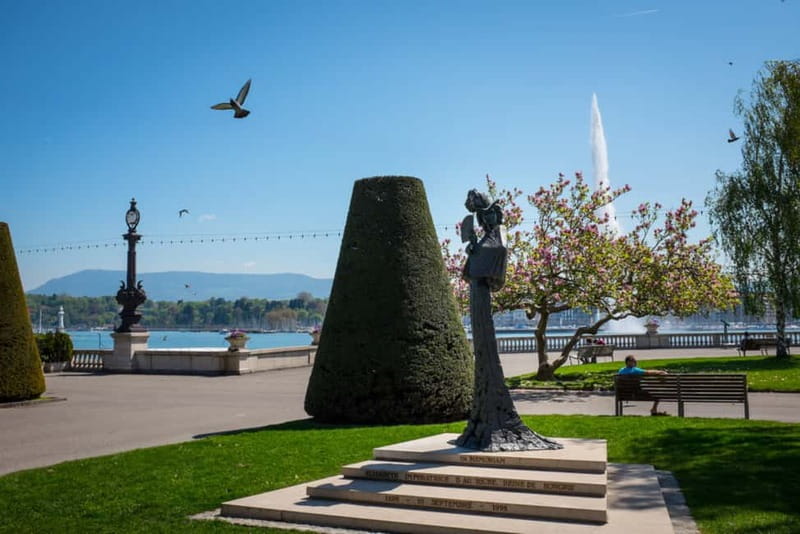
The scenery is the main reason to take it. You pass parks and gardens, historic residences, lakefront views, and buildings framed by flowers. On a clear day, the distant peaks of Mont-Blanc add a dramatic backdrop. Cloud or rain can change the effect, but the lakeside setting remains pleasant even when the mountain view disappears.
The route includes the Brunswick Monument, Lac Léman, the Jet d’Eau, Villa Mon-Repos, and La Perle du Lac. These sights help you see Geneva beyond its old center. You get a sense of how the city uses its waterfront for gardens, promenades, monuments, and public views.
This is also the line most affected by the seasons. In summer, the parks and gardens are a major attraction. Outside the operating period, you may need to rely on the bus and Old Town train instead. In the quieter months, departures can be less frequent, and one reported delay reached about an hour, so do not build a tight connection around this ride.
Use the open-top bus for the International District
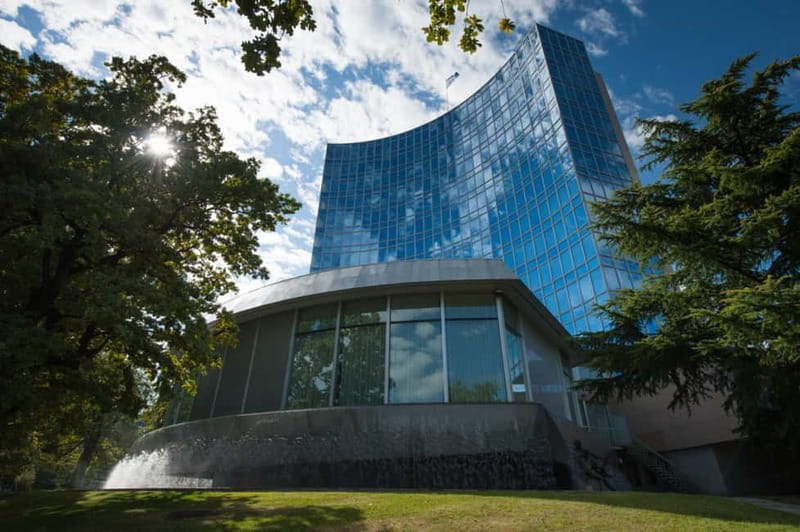
The bus departs from Place Dorcière, the Geneva bus station, for line 3. This is the route that carries you through Geneva’s International District, including the United Nations area and organizations connected with global cooperation.
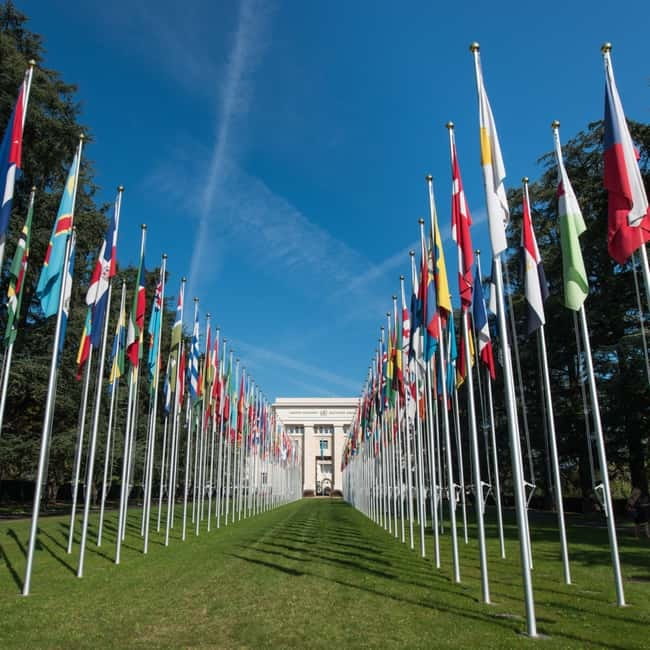
You pass the headquarters of the United Nations, the Haut Commissariat des Nations Unies pour les Réfugiés, the Union Internationale des Télécommunications, and Place des Nations. The Broken Chair Monument is a key photo stop. Its huge broken leg is hard to miss and gives the stop more meaning than a quick picture of another office building.
The International District can feel spread out when you walk between its institutions. The bus makes the area easier to understand, especially if you want to see the UN setting without spending half a day exploring office complexes and broad plazas.
Expect a short photo opportunity rather than a long visit. Several comments describe stops of roughly five to ten minutes, which is enough for the Broken Chair and the flags at Place des Nations, but not enough for an unhurried look around. Keep your camera ready and listen for the driver’s instructions.
The open top is excellent for photographs when the sky is clear. It is less comfortable in rain or cool wind, and the tour continues in wet weather. Pack a light waterproof layer and protect your electronics. Sunglasses are also useful because there is little shade on a bright day.
More Train Rides in Switzerland:
- Swiss Travel Pass: Unlimited Travel on Train, Bus & Boat
★ 4.8 · 1,631 reviews - Switzerland: Train, Bus, Boat Travel Pass Flex
★ 4.5 · 74 reviews - From Milan: Bernina Express Train and St. Moritz Tour by Bus
★ 4.6 · 29 reviews - Mt Fuji and Hakone 1-Day Bus Tour Return by Bullet Train
★ 5.0 · 26,383 reviews
See the left bank, Jet d’Eau, and Flower Clock
The bus also takes you along Geneva’s left bank, where the city’s lakefront becomes more recreational and decorative. You see the famous Jet d’Eau, Eaux-Vives Park, and the Flower Clock.
The Jet d’Eau is Geneva’s familiar landmark, but viewing it from a moving bus gives you a quick city-scale perspective rather than the close-up experience you get on foot. If you want photographs, use the stop time well and remember that the fountain can look very different depending on wind and light.
The Flower Clock reflects two things Geneva is proud of: watchmaking and gardening. It is a small sight, but it works well as part of a wider city introduction. You see it in the context of the lakefront, parks, and central streets rather than as an isolated stop.
The bus route is also a practical way to compare the two sides of the lake. The right bank feels more tied to parks, international institutions, and lakeside residences, while the left bank brings you closer to central public spaces and familiar city symbols.
The main catch: limited hop-on, hop-off flexibility
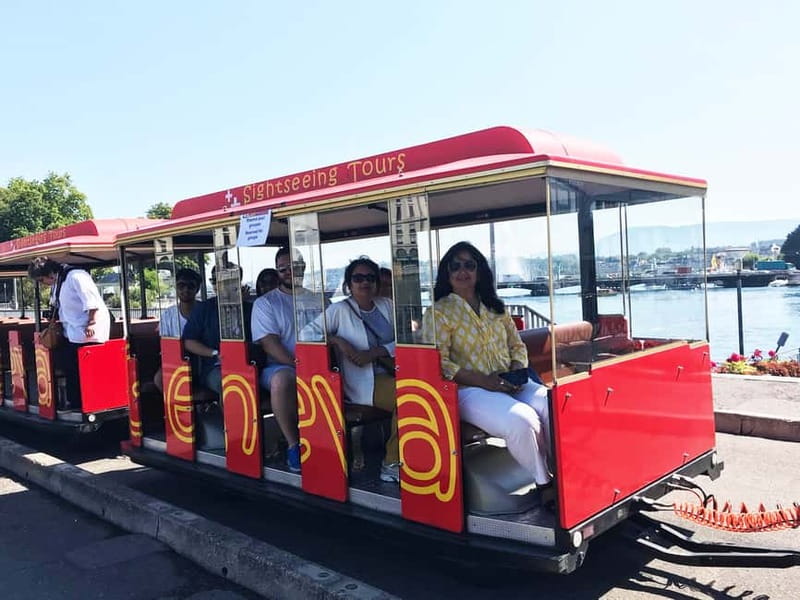
The title may lead you to expect a bus you can leave at every major attraction and catch again later. That is not how this experience generally works. The bus follows a set sightseeing route, and the mini-trains also operate as scheduled rides rather than a frequent shuttle network.
There are photo stops, including the UN area and a park, but you should not plan to get off at every landmark. The trains do not simply drop you at each attraction either. One useful tip is to confirm the connection between the bus and the train routes before setting off. The departure points are separate, and the train from one of the main bridges may require a walk of about five minutes.
Signage has caused confusion at some departure points. Place Dorcière is the bus station location for line 3, Place des Bergues serves the Old Town train, and Rotonde du Mont Blanc is used for the parks and residences train. Give yourself extra time to find the correct place, particularly at the first departure.
The 24-hour ticket does provide some flexibility. If a departure is full, you can take the next available one. If one line is unavailable on the day of your ticket, the operating terms allow you to take it the following day. Still, if at least two of the three lines operate, no refund is available, so check the calendar before booking.
Audio commentary, drivers, and small comfort issues
The audio guide is available in English, French, Spanish, German, and Italian. This is helpful on a multilingual tour because you can listen at your own pace instead of waiting for a guide to repeat every explanation in several languages.
The commentary is generally useful for identifying landmarks, though it may not fill every quiet stretch between sights. On some departures, the audio has been hard to hear or out of sync with the bus location. The headphones can also be awkward, with short wires reported as a nuisance.
The drivers receive much of the praise for this experience. Several are described as friendly, helpful, cheerful, and willing to allow time for pictures. That personal touch matters on a short city tour, particularly when you are unsure where to stand or when the next route leaves.
The service is not the same as having a full-time historian beside you. Much of the information comes through the headphones, with the driver handling the vehicle and practical details. That arrangement works well if you want a relaxed overview, but less well if you expect an in-depth live tour.
How to plan the day without rushing
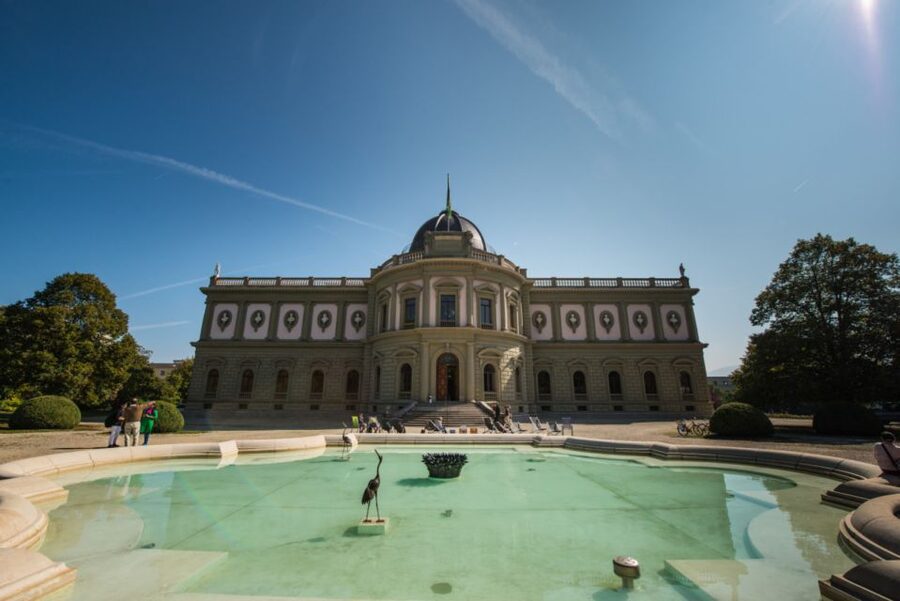
Start by checking whether line 2 is running. Its June to mid-September schedule is the biggest planning issue. If it operates, I would take the parks route when the weather is clearest, since lake and mountain views are central to its appeal.
Next, choose the Old Town train or the International District bus based on your priorities. The Old Town route is the best first ride for history and central landmarks. The bus is the better choice if the UN, Broken Chair, and Geneva’s international role are high on your list.
Allow time between departure points. The three lines do not all leave from one place, and the bus station can be confusing without clear signs. Keep the ticket’s 24-hour validity in mind rather than trying to force every route into one tight block.
If a line is full, board the next available departure. If you have a fixed train or flight later that day, avoid relying on the final departure. Traffic, weather, cultural events, and seasonal scheduling can change timings.
Who will enjoy this tour most?
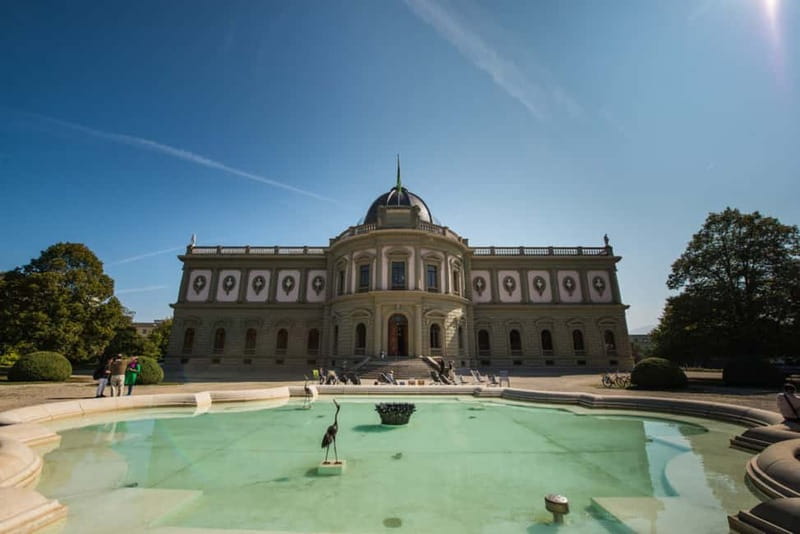
I would recommend it to first-time visitors who want a broad introduction before exploring Geneva independently. It also suits families, older visitors, and anyone who wants to reduce walking through the Old Town or between distant parts of the city.
The mini-trains are likely to appeal to children, though very young children may lose interest if they are not curious about buildings and city history. The bus offers a comfortable way to see more in a short visit, especially when rain makes a long walk less attractive.
I would choose another plan if you need wheelchair access, since the experience is not suitable for wheelchair users. I would also skip it if your main goal is a fully flexible transport service with constant hop-on and hop-off stops.
Food and drinks are not included, so plan your café or lunch stop separately. The ticket gives you sightseeing transport and commentary, not a meal package.
Should you book the Geneva bus and mini-train tour?
Book it if you want a structured first look at Geneva, value the Old Town train, and can work around seasonal schedules. The strongest combination is the historic center, the UN district, and the lakeside parks, with the 24-hour validity giving you room to spread the rides out.
Do not book it expecting a standard hop-on, hop-off bus network. Think of it as three guided sightseeing circuits with a few photo stops. At $43, it is fair value when you use all three lines, less convincing if you take only one.
Check line 2 before paying, arrive early at the right departure point, bring weather protection, and keep your expectations realistic. Follow that plan, and this is a pleasant way to get your bearings fast before returning to Geneva’s streets on foot.
FAQ
How long does the complete Geneva tour take?
Taking all three lines takes approximately 2 hours and 30 minutes.
How long is the ticket valid?
The ticket is valid for 24 hours.
Is this a true hop-on, hop-off tour?
Not in the usual sense. The routes are scheduled sightseeing rides with limited photo stops, rather than buses that stop frequently at every attraction.
Where does the International District bus depart?
Line 3 departs from Place Dorcière at the Geneva bus station.
Where does the Old Town mini-train depart?
Line 1 departs from Place des Bergues.
Where does the parks and residences mini-train depart?
Line 2 departs from Rotonde du Mont Blanc.
Does the parks mini-train operate all year?
No. The parks and residences mini-train operates from June to mid-September.
What languages are available for the audio guide?
The audio guide is available in English, French, Spanish, German, and Italian.
Is the tour suitable for wheelchair users?
No. The experience is not suitable for wheelchair users.
Just added around Switzerland
- (KTL361) – Interlaken day trip by bus from Lausanne★ 4.5 · 9 reviews
- Private Tour to Chamonix Mont-Blanc Scenic Glass-Roof Bus★ 4.5 · 23 reviews
- Chamonix & Mont Blanc Guided Day Trip with SkyView Panoramic bus★ 4.5 · 310 reviews
- (KTG361) – Interlaken day trip by bus from Geneva★ 4.5 · 35 reviews
- Basel City Sightseeing Bus Tour★ 3.5 · 104 reviews
- Switzerland: Train, Bus, Boat Travel Pass Flex★ 4.5 · 74 reviews
- Rhine fall Visit and Zurich Open Top City Tour★ 4.7 · 6 reviews
- From Milan: Bernina Express Train and St. Moritz Tour by Bus★ 4.6 · 29 reviews
Hop-On Hop-Off Bus Tours, compared.
City Sightseeing Hop-on Hop-off Bus with Audioguide
Read our review →
Tootbus Hop-on Hop-off (Optional River Cruise)
Read our review →
Big Bus Hop-On Hop-Off Tour with Optional Cruise
Read our review →
London Big Bus Hop-On Hop-Off Tour with Optional River Cruise
Read our review →
Big Bus Hop-on, Hop-off Open-Top Sightseeing Tour
Read our review →
Browse the lists this tour appears in