
Review · SPAIN
La Palma: San Antonio and Teneguia Volcanos Tour by 4×4 Bus
Volcanoes, salt, and new land await in La Palma’s south. This eight-hour trip combines San Antonio and Teneguía volcanoes, the traditional salt works near the coast, and the striking remains of the Tajogaite eruption. I like the way the route mixes famous viewpoints with rougher roads that would be awkward in a rental car. I also like the clear focus on how eruptions have changed the island, not just on taking pretty photos.
The main drawback is the vehicle. The 4×4 bus can feel old, with firm suspension and weak air conditioning toward the back. You should also plan around limited toilet stops and bring your own food and drinks, since neither is included.
Key points to know before you go
- The tour covers La Palma’s volcanic south and west in about eight hours, making it a full-day outing rather than a quick sightseeing trip.
- San Antonio and Teneguía show two different volcanic stories, from an older volcanic cone to the dramatic southern eruption zone.
- Fuencaliente’s lighthouse and salt works are among the prettiest stops, with traditional salt production still taking place beside the Atlantic.
- Tajogaite is the newest major change to the island, and the route lets you see its broad volcanic cone and the lava delta formed at the coast.
- The 4×4 bus reaches rough and less accessible roads, but the ride may be bumpy and uncomfortable for some people.
- Hotel pickup, transport, and a live guide are included, with tours offered in Spanish, German, and English.
Why this full-day volcanic route works
La Palma is not a one-sight island. Its appeal comes from the way volcanic ground, steep mountain slopes, pine-covered highlands, black coastal rock, and working rural areas fit together. This tour gives you a useful view of that story in one long day.
You start with pickup from your selected location, with the optional pickup listed for 9:00 AM. From there, the bus heads toward Fuencaliente at the southern end of the island. The route then continues through volcanic sites and coastal viewpoints before turning toward Las Manchas and the Tajogaite eruption area.
The route ends with views toward the Caldera de Taburiente National Park from La Cumbrecita. That final change of scenery matters. You do not spend eight hours looking only at lava. Instead, you see how the island shifts from young volcanic ground to high mountain country.
At $68 per person, the value is strongest if you want transport, a guide, and access to roads you would not feel comfortable driving yourself. The price is less attractive if you mainly want a short visit to one volcano or prefer to stop for meals and toilets whenever you choose.
A few more bus tours around Spain worth a look
- Barcelona: 24 or 48-Hour Hop-On Hop-Off Bus Tour
★ 4.4 · 20,872 reviews - Barcelona: City Sightseeing Hop-On Hop-Off Bus Tour
★ 4.4 · 10,061 reviews - From Madrid: Guided Day Trip to Toledo by Bus
★ 4.1 · 5,280 reviews
Fuencaliente puts the volcanoes in context
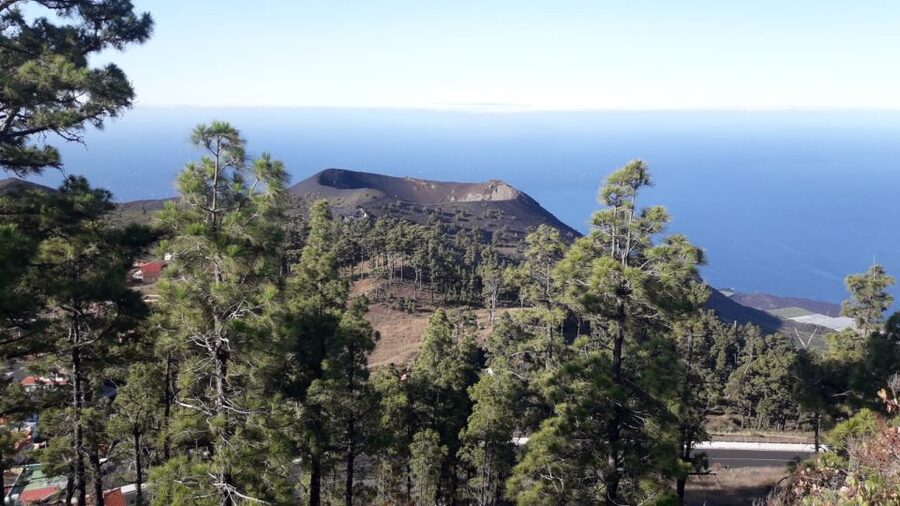
Fuencaliente is the natural starting point for the southern volcanic story. The area is marked by eruptions, and your guide explains how those events shaped the local terrain and communities.
The two main volcanoes here are San Antonio and Teneguía. They are not simply photo stops. Together, they help you see that volcanic activity on La Palma is part of an ongoing process, not an event confined to the distant past.
San Antonio gives the route its older volcanic reference point. Teneguía, by contrast, is closely tied to the island’s more recent eruption history. Seeing both in one outing helps you compare volcanic forms and understand why the southern end of La Palma looks so different from other parts of the island.
The guide-led format is useful here. A cone of dark rock can look simple at first glance, but an explanation of its formation gives the stop more meaning. You can ask questions as you go, and the tour is offered in Spanish, German, and English.
San Antonio and Teneguía bring the geology close
The 4×4 bus is a practical choice for this part of the island. Some of the route uses side roads and rougher access roads, and a standard rental car may not be the best tool for them. The vehicle gives you the chance to reach places that would otherwise require more planning or a cautious decision about road conditions.
There is a tradeoff. A rough road is part of the appeal, but the ride can be hard on your back. A recent description of the vehicle noted very poor suspension, and the rear rows may not receive enough air conditioning. I would choose a seat near the front if you are prone to motion sickness or discomfort, though seat selection is not guaranteed by the information provided.
At each stop, the goal is not speed. The route includes photo opportunities and time to take in the views. Still, this is a structured day with a fixed itinerary, so you should not expect the freedom to linger for as long as you might on a private drive.
The lighthouse and salt mines are a coastal highlight
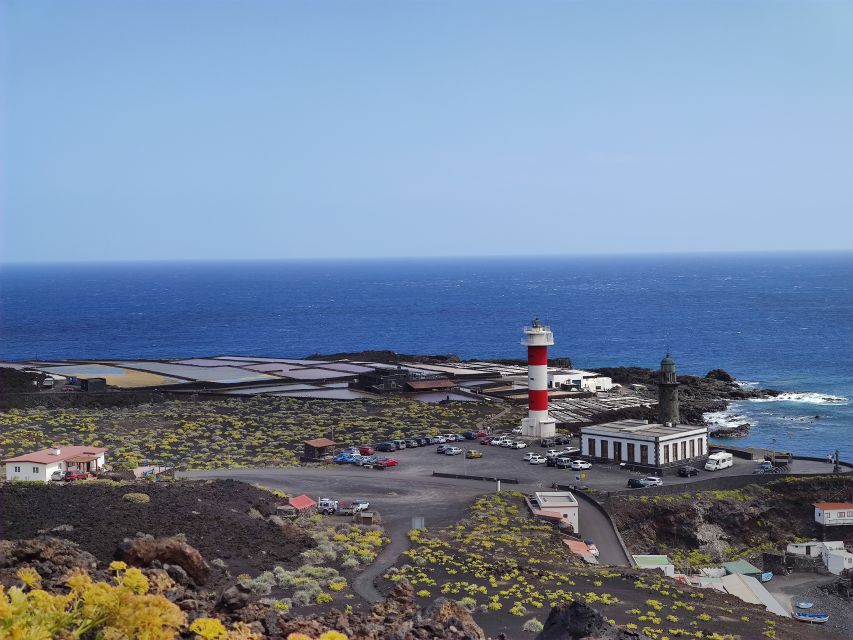
One of the most rewarding parts of the tour is the southern coast near the lighthouse and salt works. The contrast is striking: dark volcanic ground, bright coastal light, the ocean, and carefully arranged salt pans.
Salt is still produced here by traditional methods. The site is described as the last salt complex in the Canary Islands and the only one on La Palma, which gives the stop real local importance. It is not just a scenic overlook. It is a working piece of island life connected to the sea.
I like this stop because it broadens the tour beyond volcanoes. You see how people use volcanic coastal land instead of simply treating it as a natural monument. The lighthouse also gives the area a strong visual anchor, making this one of the better places for photographs.
Do not assume every stop has a nearby café or toilet. Toilet access is limited at several points on the route, so use facilities when they are available and carry water and a snack. Food and drinks are not included.
Same place, a different way to ride:
- City Sightseeing Barcelona Hop-On Hop-Off Bus Tour: 24 or 48-Hour
★ 4.0 · 5,250 reviews - Seville: City Sightseeing Hop-On Hop-Off Bus Tour
★ 4.0 · 4,633 reviews - Palma de Mallorca: City Sightseeing Hop-On Hop-Off Bus Tour
★ 4.1 · 4,450 reviews - Granada City Train 1 or 2-Day Hop-On Hop-Off Ticket
★ 3.5 · 3,128 reviews
Las Manchas and the arrival of Tajogaite
The tour then turns toward Las Manchas, where the Tajogaite volcano was born. The recent eruption changed the area on a huge scale, and the size of the volcanic cone is the first thing likely to catch your eye.
Tajogaite is important because it gives you a direct view of an event that reshaped the island in recent memory. Instead of looking at a textbook diagram, you see a new volcanic structure and the ground created around it.
The route also shows how lava flows affected roads, buildings, and connections across the Aridane Valley. This is where the tour’s guided format becomes especially valuable. The physical evidence is visible, but the explanation helps you understand what changed and why the new roads matter.
The scenery here can feel stark. Expect dark lava, rough surfaces, and broad areas that still look newly formed. That raw quality is part of the point, but it may not match what you imagine when you picture a green Canary Island.
Mirador de Las Hoyas and the new lava delta
From the Mirador de Las Hoyas, you look toward the new extension of La Palma created when lava reached the sea. This added ground is known as a lava delta.
The viewpoint lets you see the scale of the change from a safer distance. Lava did not simply cover a field. It reached the coast and created a new section of island. That makes this one of the most memorable stops for anyone interested in geology, natural forces, or the way a community responds to a changed coastline.
I would pay close attention to the guide here and take a moment without the camera. The lava delta is easy to reduce to a dark patch in a photograph, but its importance becomes clearer when you understand that the coastline itself was altered.
The view also gives you a good sense of the relationship between the volcano and the sea. You can see how the eruption moved downhill and how the island’s shape changed at the edge of the Atlantic.
The new road through the Aridane Valley
A particularly useful part of the day is the drive across the new access route connecting the northern and southern sections of the Aridane Valley. This is not just a scenic road. It shows how transport links had to change after the eruption.
For you, the road makes the tour more than a series of isolated viewpoints. You are moving through an area where the volcanic event affected daily movement and access. The guide can connect what you see outside the window with the practical effects on the valley.
This section may feel less dramatic than the volcano stops, especially if you are waiting for another photo viewpoint. I would still treat it as an important part of the itinerary. It gives the eruption a human and practical dimension.
The 4×4 bus also makes sense here because the day includes roads selected for access and views, not merely the fastest route between major attractions.
La Cumbrecita changes the final view
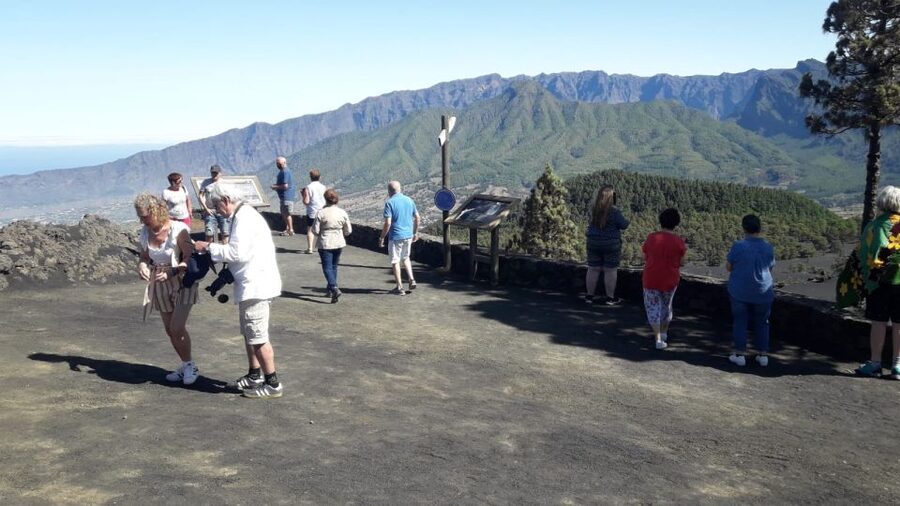
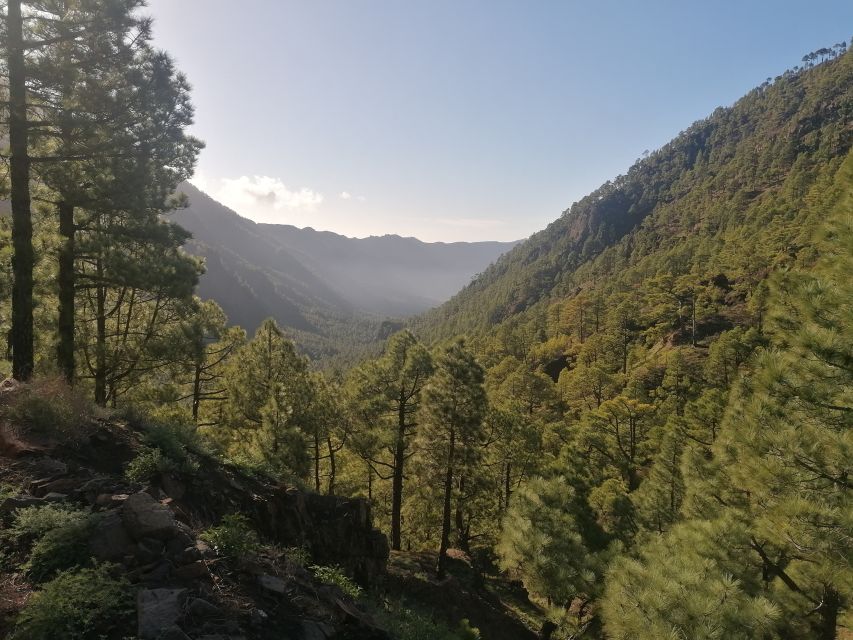
The final major viewpoint is La Cumbrecita, where you get views toward La Caldera de Taburiente National Park. After a day of dark volcanic cones and young lava, the mountain scenery provides a clear change of pace.
This viewpoint helps you understand La Palma as a whole. The island is not only about eruptions and black rock. It also has major highland scenery shaped by enormous volcanic forces over a much longer period.
The view is a fitting way to end the trip because it puts the southern eruption zones into a larger island setting. You have spent the day seeing new ground, old volcanoes, working salt pans, and altered roads. At La Cumbrecita, the scale opens up again.
Weather and visibility can affect any mountain viewpoint, and the supplied tour details do not promise a particular level of visibility. Even so, the stop adds useful variety and keeps the day from becoming repetitive.
What the 4×4 bus is really like
The vehicle is both the tour’s strength and its main weakness. It can handle rougher access roads and take you to viewpoints that may not suit a normal hire car. That saves you the worry of navigating unfamiliar roads while still giving you a sense of the island beyond the main routes.
Comfort is another matter. The bus has been described as old, with very poor suspension. If you sit in the back, the ride may feel more abrupt, and air conditioning may not work as well as you would like.
I would bring water, wear practical shoes, and avoid carrying a large amount of loose luggage. A light jacket may also be useful because conditions can vary between coastal and higher viewpoints, although the provided information does not specify the weather on any particular departure.
This is not a luxury sightseeing coach. Think of it as a working vehicle chosen for access. If you value hard-to-reach roads and guided transport more than a smooth ride, the compromise should make sense.
Who will get the most from this tour
I would recommend this outing to you if you want a broad introduction to La Palma’s volcanic south without renting a car. It works especially well for people who want the major volcanic sites, the Tajogaite area, salt works, coastal views, and a mountain viewpoint in one day.
It also suits anyone interested in recent volcanic activity. Tajogaite is not presented as an abstract geological feature. You see the cone, the altered ground, the lava delta, and the new access road that reflects the eruption’s practical effects.
The tour may be less suitable if you need frequent toilet breaks, dislike bumpy roads, or want a relaxed day with long meals. It is also not the best choice if you prefer to explore one site in depth rather than cover several parts of the island.
Families and older visitors should think about comfort carefully. The provided information does not give details about accessibility, vehicle size, or seating arrangements, so you should ask the operator before booking if those points matter to you.
Timing, language, and what to bring
The activity lasts eight hours, so treat it as a full day. Pickup and drop-off at your chosen location are included, and an optional pickup time of 9:00 AM is provided. Check the available departure details before you book because the start time can depend on the selected date.
A live guide is available in Spanish, German, and English. That is important on this route because the volcanic sites make more sense when you understand the sequence of eruptions and the changes to roads and coastline.
Bring:
- Water and food, since neither is included
- Comfortable shoes for viewpoint stops
- Sun protection suited to the day
- A camera, especially for the salt pans, lighthouse, lava delta, and La Cumbrecita
The tour allows cancellation up to 24 hours before departure for a full refund, and you can reserve now and pay later. Those terms are useful if your island plans are still shifting, but the main booking decision should be the vehicle comfort and the full-day pace.
Is the $68 price good value?
At $68, the tour offers solid value if you would otherwise need to arrange a rental car, plan the route, and research access to the volcanic sites yourself. Hotel transport, the vehicle, and a guide are included, and the route covers several areas that are spread across the island.
The value is also in the interpretation. You are not only paying to look at volcanoes. You are paying for someone to connect San Antonio and Teneguía with Tajogaite, the new lava delta, the changed valley roads, and the island’s continuing volcanic story.
The price is less compelling if you already have a car and want complete control over your schedule. You will have less freedom to stop for lunch, take a long break, or leave a viewpoint early. The bus comfort also means this is not a premium transport experience.
The overall rating of 4.8 from 120 reviews suggests the tour delivers strongly for most people, while the recurring practical concerns are clear: the guide and driver are praised, the scenery is excellent, and the old bus can be uncomfortable.
Should you book this La Palma volcano tour?
Book it if you want to see a large section of southern La Palma in one day, especially the Tajogaite volcano and lava delta, and you would rather leave the driving to someone else. The guide, scenic variety, and access to rougher roads give the tour real value.
Skip it if a smooth vehicle, regular toilets, or flexible meal stops are essential. For everyone else, this is a strong practical choice for understanding how La Palma has been built and rebuilt by volcanic activity, with enough coastal and mountain scenery to keep the day varied.
FAQ
How long does the La Palma volcano tour last?
The tour lasts eight hours, making it a full-day experience.
What volcanoes are included?
The route includes the San Antonio and Teneguía volcanoes, along with the newer Tajogaite volcano area.
Does the tour visit the Tajogaite volcano?
Yes. The route goes to Las Manchas, where the Tajogaite volcano was formed, and shows the changed ground and volcanic cone.
What is the lava delta?
The lava delta is the new section of land created when lava from the Tajogaite eruption reached the sea. You can view it from the Mirador de Las Hoyas viewpoint.
Are hotel transfers included?
Yes. Hotel pickup and drop-off are included, with pickup available from your chosen location. An optional pickup time of 9:00 AM is provided.
Are food and drinks included?
No. Food and drinks are not included, so you should bring your own provisions for the eight-hour outing.
What languages are available?
The live guide is available in Spanish, German, and English.
Can I cancel the booking?
Yes. You can cancel up to 24 hours in advance for a full refund. The tour also offers a reserve-now, pay-later option.
Just added around Spain
- Ibiza Tour Island Bus Tour with Hippie Market Visit★ 3.0 · 6 reviews
- Bus to the local market of Puerto de Mogan★ 4.5 · 25 reviews
- Guided tour of Medina Azahara in Spanish with Bus. Official Guides★ 5.0 · 51 reviews
- Tourist Bus Velez Malaga to Torre del Mar★ 3.0 · 2 reviews
- Guided tour of Medina Azahara in Spanish without Bus. Official Guides★ 5.0 · 27 reviews
- City Sightseeing Cordoba Hop-On Hop-Off Bus Tour★ 4.0 · 213 reviews
- City Sightseeing Cadiz Hop-On Hop-Off Bus Tour★ 3.5 · 163 reviews
- Cadiz Shore Excursion: City Sightseeing Cadiz Hop-On Hop-Off Bus Tour★ 4.0 · 124 reviews
Spain Bus Tours, compared.


City Sightseeing Barcelona Hop-On Hop-Off Bus Tour: 24 or 48-Hour
Read our review →
Palma de Mallorca: City Sightseeing Hop-On Hop-Off Bus Tour
Read our review →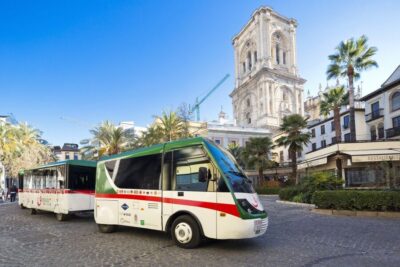
Granada City Train 1 or 2-Day Hop-On Hop-Off Ticket
Read our review →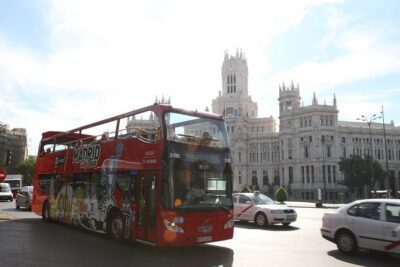

Barcelona City Tour Hop-On Hop-Off with Optional Boat
Read our review →Browse the lists this tour appears in