
Review · GREECE
Naxos: Highlights Full-Day Tour by Bus
Ancient temples meet marble villages. This eight-hour Naxos tour gives you a useful look beyond Chora, linking the island’s inland villages, archaeological sites, food traditions, and northeastern coast in one day. At $41 per person, it is a strong value if you do not have a rental car.
I especially like the pottery and olive press visit in Damalas, plus the chance to swim or relax beside the sea at Apollonas. Guides such as Jacob and Vicky have earned warm praise for mixing Greek myths, local stories, and practical help without making the bus rides dull.
The tradeoff is a full schedule. The Temple of Demeter can feel rushed, and you will spend plenty of time on winding mountain roads. This is not a quiet, slow village tour, but it is an efficient introduction to much of Naxos.
Key points at a glance
- Demeter Temple: See a carefully restored sixth-century BC temple and its small archaeological museum. Bring cash for the separate entrance fee.
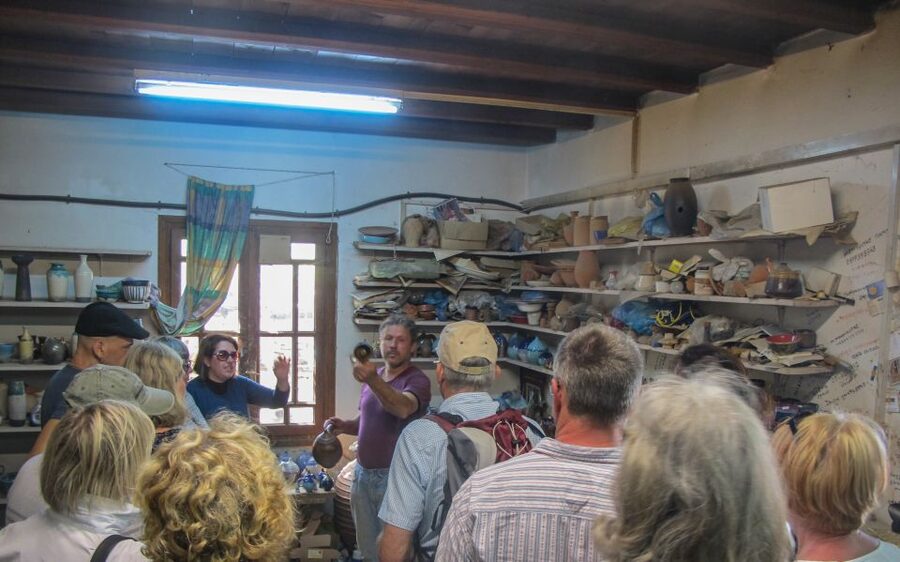
- Damalas traditions: Watch pottery being made and visit a restored olive press in the Tragea Valley.
- Chalkio and citron: Wander a neoclassical village, browse galleries, and taste or learn about Naxos citron liquor.
- Apeiranthos lunch stop: Spend 90 minutes in the famous marble village, with time for lunch and a short walk.
- Apollonas by the sea: Take a swimming or café break at this northeastern coastal village.
- Skilled bus driving: The route includes tight bends and narrow mountain roads, so a capable driver is part of the value.
Why this tour works for a first look at Naxos
Naxos is larger and more varied than its waterfront capital suggests. Chora gives you whitewashed lanes, the port, and the famous Portara, but the island’s character also lives in stone mountain villages, old farming valleys, marble quarries, small workshops, and quiet coastal settlements.
This tour covers that wider picture without asking you to navigate unfamiliar roads. You are picked up from one of many locations around Chora and the beach areas, then taken inland by coach. The guide fills the driving time with information about Naxian history, mythology, villages, plants, and local customs.
I like this format for a first visit, especially if you have only a few days. You will not see every corner of the island, and you will not have the freedom to stop whenever you wish. But you will reach places that are awkward to connect by public transport, while leaving the driving to someone used to Naxos’s steep and twisting roads.
The tour is conducted in English and Greek. Jacob, Vicky, Joseph, and other guides have been praised for their humor and enthusiasm. Guide quality can vary from one departure to another, but the strongest guides clearly add a lot: Jacob is often singled out for his myths and jokes, while Vicky is praised for her warmth, helpfulness, and ability to keep the group engaged.
More Bus Day Trips in Greece
- From Zakynthos: Kefalonia Island Full Day Tour by Bus & Boat
★ 4.2 · 238 reviews - From Rethymno & Chania: Elafonisi Island Day Tour by Bus
★ 4.3 · 202 reviews - Santorini 2-Day Combo: Volcano Boat Cruise & Island Bus Tour
★ 4.3 · 146 reviews
Temple of Demeter, a small site with a big story
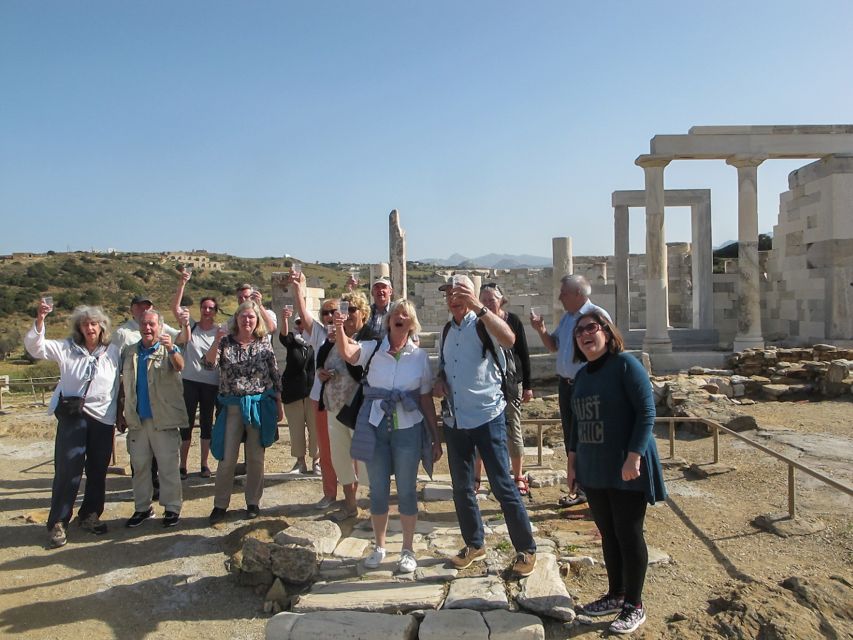
The first major stop is the Temple of Demeter, about a 35-minute bus ride from the pickup area. The temple dates from around 530 BC and has undergone careful restoration, making it easier to understand than a pile of scattered ruins.
Demeter was linked to agriculture and fertility, so this site fits Naxos particularly well. The island has long depended on farming, olives, grain, vineyards, and livestock. Your guide can help connect the monument to the land and to ancient Greek beliefs rather than treating it as an isolated block of stone.
A small archaeological museum is located in the same area. It contains finds from the site and gives useful context before or after you walk around the temple.
The main caution is time. The official stop is listed as 35 minutes, while one detailed account described only about 25 minutes at the monument. That may not leave enough time for both the ruins and museum, especially if the group is moving together. If the temple matters most to you, keep your visit focused and listen for the guide’s instructions about meeting back at the bus.
The entrance fee is not included. The information supplied for the tour gives both €4 and €5 in different places, so bring at least €5 in cash and confirm the current amount before you go. Tuesday is another important exception: the temple site is closed, and the tour visits Belonia Tower, dating from the 16th century, and Panagia Drosiani, one of the island’s oldest Byzantine churches, instead.
Damalas, where local craft still feels personal
A short drive brings you to Damalas, a small village in the Tragea Valley. This is one of the more distinctive stops because it focuses on working traditions rather than only scenery.
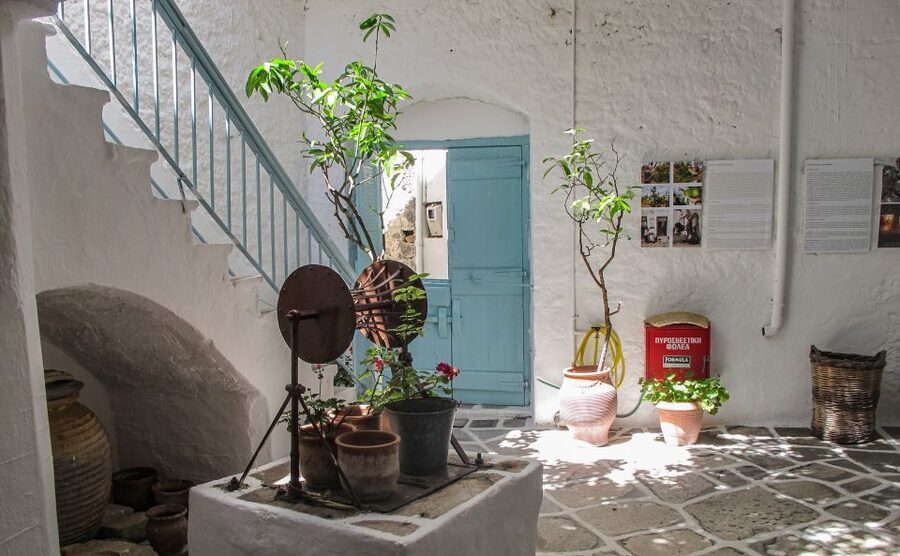
At the remaining traditional pottery workshop, you watch a demonstration of the craft. The stop is scheduled for about 45 minutes, enough for an explanation and a look at how pottery has been made on Naxos. It is also a chance to buy something connected to the island’s daily life, though purchases are your responsibility.
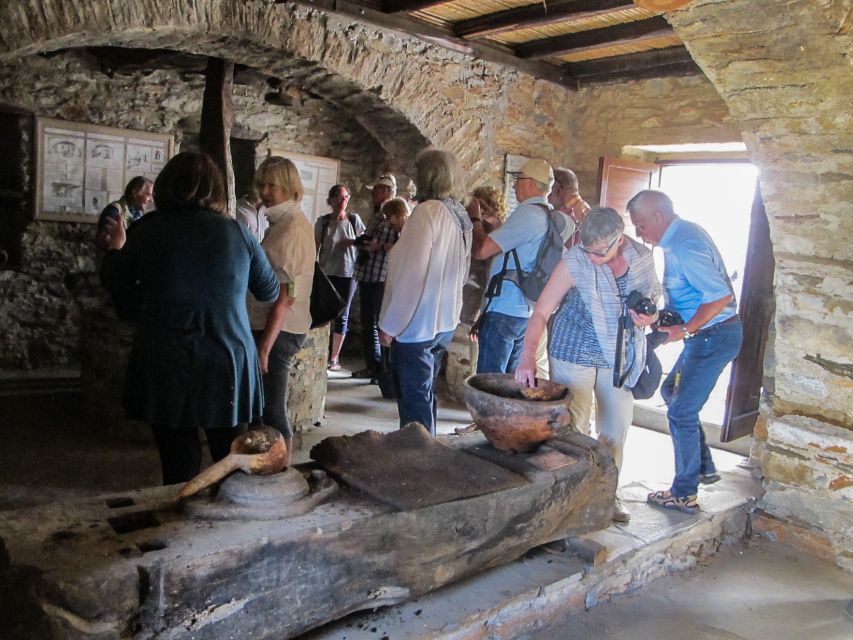
You also visit a restored traditional olive press. Olive oil production is central to Naxian food culture, and the old equipment helps explain the work behind a product you will see everywhere in Greek cooking. This stop gives the day a welcome practical side: you are not just photographing old buildings, you are learning how island households used local resources.
The pottery workshop and olive press are frequently praised as highlights. I can see why. They are compact visits, but they offer a more direct connection to Naxos than another scenic viewpoint would.
Chalkio, citron, and a polished village atmosphere
The next stop is Chalkio, also written as Halki or Chalki, a neoclassical village in the island’s interior. You have roughly 40 minutes to stroll through the lanes, look at galleries, and stop for an espresso.
Chalkio feels different from the rougher mountain villages. Its architecture and quiet streets give it a more refined mood, and the village makes a pleasant break after the temple and workshop. You can walk without a formal group activity, which gives you some freedom to choose between photographs, coffee, shops, or the citron visit.
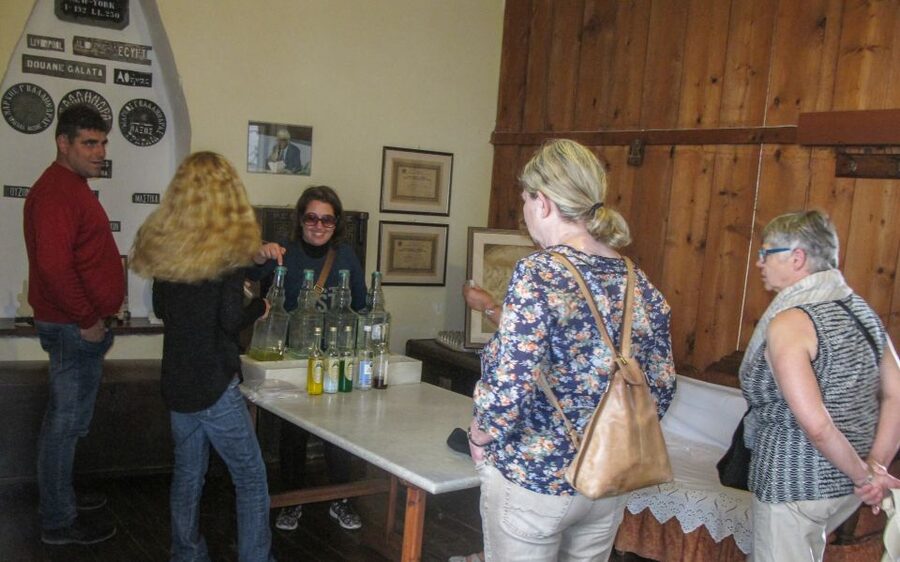
Naxos citron is a local liqueur made from the leaves of the citron tree. The traditional distillery and museum explains the product and offers a tasting or purchase opportunity, with a separate entrance fee of €3 per person. That cost is not included, so carry cash if you want to go inside.
The stop is brief, so do not expect a long museum visit and a leisurely café hour. You will need to choose how to use the time. I would prioritize the distillery if you want a distinctly Naxian food experience, then leave a few minutes for the lanes.
Same place, a different way to ride:
- Athens, Piraeus, and Coastline: Blue Hop-On Hop-Off Bus
★ 3.9 · 4,849 reviews - Athens: City Sightseeing Hop-On Hop-Off Bus Tour
★ 4.3 · 4,520 reviews - Thessaloniki: Full-Day Bus Trip to Meteora
★ 4.8 · 3,471 reviews - Santorini: Traditional Sightseeing Bus Tour with Oia Sunset
★ 4.6 · 2,306 reviews
Apeiranthos, marble streets and the main lunch break
From Chalkio, the coach continues toward Apeiranthos, one of Naxos’s best-known mountain villages. The road takes about 25 minutes, and the village stop lasts 90 minutes, including lunch.
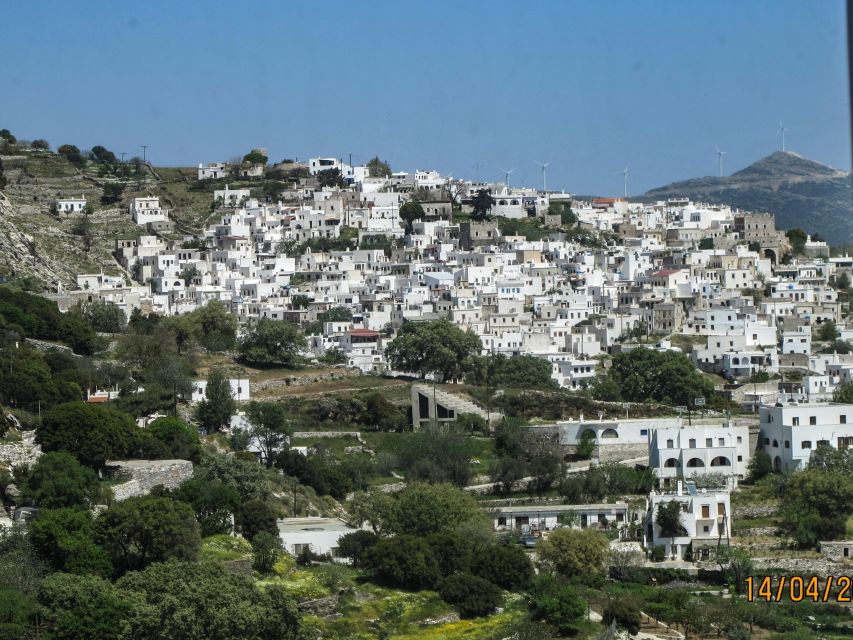
Apeiranthos is often called the marble village because marble appears in its buildings, paving, steps, and narrow alleys. The stone gives the village a strong visual identity, and it photographs well from nearly every turn. You will have time to walk the marble lanes, take pictures, and find a meal with a valley view.
The 90-minute break sounds generous, but lunch uses much of it. Service during the busy midday period can reduce the time available for exploring, so do not sit down too late. If your priority is the village rather than a long meal, ask the guide for a clear meeting time and keep your lunch simple.
Lunch, drinks, and personal purchases are not included. The guides may suggest restaurants, and several people have praised the setting and food recommendations, but you should budget separately. The stop is also the tour’s best chance to eat a proper meal, so it is wise not to skip lunch entirely.
On Saturdays, the schedule may change. You may get about 60 minutes in Apeiranthos and around 75 minutes at Apollonas, instead of the usual 90 minutes in Apeiranthos and 50 minutes at Apollonas. That change gives you more coastal time but less freedom in the marble village.
The long ride north to Apollonas
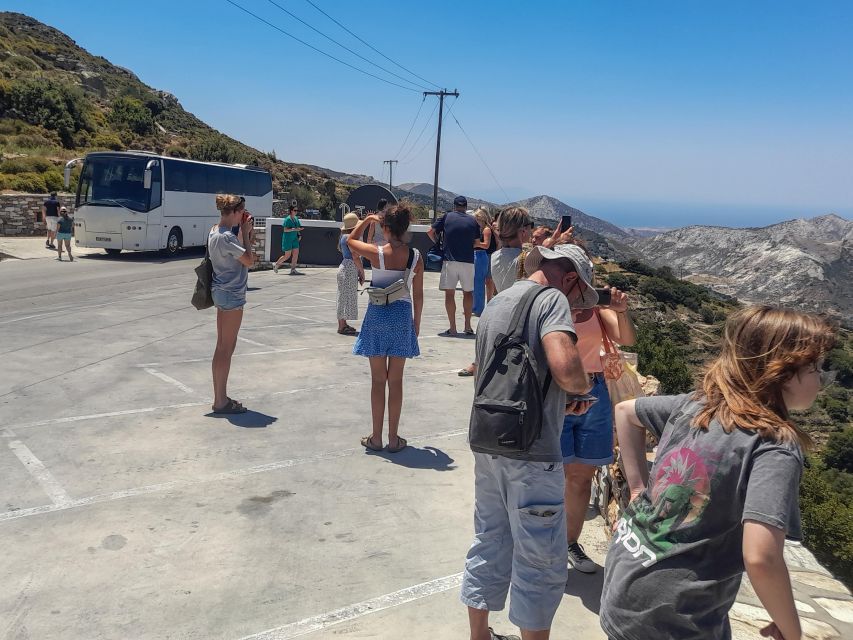
The drive from Apeiranthos to Apollonas takes about 50 minutes. This is one of the longer stretches of the day, but the route provides broad views of Naxos and the coast. The road is curvy, and some sections feel tight, particularly for anyone unused to Greek mountain driving.
Many guides use the bus time well with stories and explanations. That matters here because the ride is not simply dead time between attractions. Still, if you get motion sick, sit where you can see ahead and bring any personal medication you need. Comfortable shoes, sunscreen, a hat, and water are sensible choices for the entire day.
Apollonas is a small seaside village on the northeastern edge of Naxos. The stop lasts about 50 minutes and is intended for swimming or relaxing at a café. If the weather is warm and the sea appeals to you, this can be the most refreshing part of the tour.
Bring swimwear under your clothes or pack it where you can reach it easily. Do not count on a long beach afternoon. Fifty minutes goes quickly once you walk from the bus, change, and settle by the water. If you prefer not to swim, a drink or coffee beside the sea still gives the day a pleasant change of pace.
One point to consider is the balance of time. Some people would prefer more time at the temple or in Apeiranthos, while others appreciate the swimming break. The schedule tries to please both types, but it cannot provide a full visit at every stop.
The Apollonas Kouros and a final ancient surprise
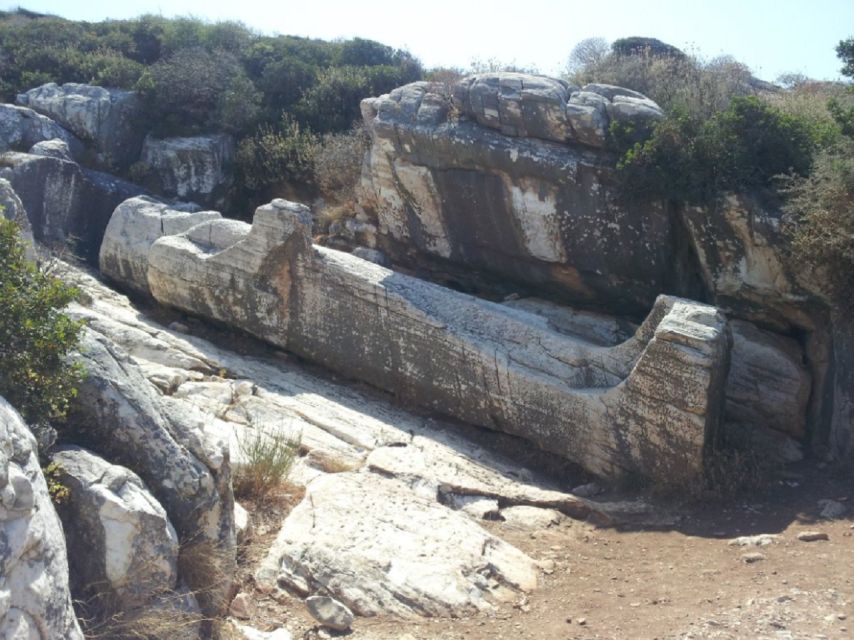
The route includes the Apollonas Kouros, a colossal unfinished statue from the sixth century BC. The statue was left in the marble quarry before it could be completed, giving you a rare look at the scale and process of ancient sculpture.
The schedule separates the Apollonas break from the Kouros visit. After the coastal stop, the bus makes a short eight-minute transfer, followed by about 15 minutes for a guided visit and photographs. You may also have a short walk along a narrow path to reach the statue.
Wear proper walking shoes. The route can be hot, and climbing to the Kouros after swimming or lunch may feel more strenuous than the schedule suggests. The stop is short, but the unfinished statue makes a memorable final sight before the return drive.
The drive back to the drop-off points takes about 55 minutes. You return to many of the same areas served in the morning, including Chora, Agios Prokopios, and nearby hotels and restaurants.
What the $41 price really includes
At $41 per person, the tour offers strong value for anyone without a car. Bus transport, an English and Greek-speaking guide, several villages, two ancient sites, a workshop, an olive press, a distillery option, a coastal break, and a full day of island scenery would be costly and difficult to arrange independently.
The price does not cover the Demeter entrance fee, which is listed as €4 or €5 depending on the supplied information, or the €3 citron distillery fee. Lunch, drinks, and personal spending are also extra. In practical terms, bring cash in euros and allow room in your budget for food and optional entrances.
The coach itself may not be luxurious. One account described an older vehicle and air conditioning that worked unevenly, while another praised the driver’s ability to manage steep bends and narrow roads. The main value is access and convenience, not premium transport.
The day also includes a great deal of coach time. You will travel for roughly three hours between stops and return to Chora. That is reasonable for the amount of island covered, but it may not suit you if you dislike long rides or prefer slow travel.
Who should book it?
I would choose this tour if you are visiting Naxos for the first time, do not want to rent a car, or want a quick sense of the island beyond the port. It is especially good for solo visitors, families, and anyone who values a guide’s stories as much as the sights.
You should also be comfortable with walking on uneven marble streets, standing in the sun, managing steps, and riding winding roads. The tour is not suitable for wheelchair users, people with mobility impairments, people with low fitness, or those with certain pre-existing medical conditions.
Book it if you want variety: ancient stone in the morning, village lanes before lunch, and a swim beside the Aegean later in the day. Skip it if you want a private pace, a long beach stop, or detailed time at every archaeological site.
FAQ
How long does the Naxos highlights tour last?
The tour lasts eight hours, including pickup, sightseeing, meal time, swimming time, and the return trip.
What languages are used during the tour?
The tour is conducted in English and Greek, with a live guide.
Is pickup included?
Yes. Pickup is available from numerous hotels, restaurants, banks, rental car locations, and other points around Naxos. You should wait at your pickup station at least 10 minutes before the scheduled time.
Is lunch included in the price?
No. Lunch, drinks, and personal expenses are not included. The main lunch break takes place in Apeiranthos and lasts about 90 minutes on most days.
Are entrance fees included?
No. The Demeter Temple entrance fee is listed as €4 or €5 per person in the supplied information, and payment is cash only. The citron distillery costs €3 per person. Bring cash and confirm the current temple fee.
What happens on Tuesdays when the Temple of Demeter is closed?
On Tuesdays, the tour visits Belonia Tower, dating from the 16th century, and Panagia Drosiani, an old Byzantine church, instead of the Temple of Demeter.
Can I swim at Apollonas?
Yes. The tour includes about 50 minutes at Apollonas for swimming or relaxing at a seaside café. On some Saturdays, the Apollonas break may last about 75 minutes.
More Full-Day Trips in Greece
- Georgioupolis Area: Full-Day Bus Trip to Elafonisi Island
★ 4.5 · 148 reviews - From Kefalonia: Ithaca Island Full-Day Bus Tour
★ 4.6 · 111 reviews - Thessaloniki : Meteora Full-Day Bus Trip with Local Guide
★ 4.7 · 75 reviews - From Heraklion : Full-Day Bus Trip to Chania city , Kournas lake & Rethymno city
★ 4.0 · 61 reviews
Just added around Greece
- Shore Excursion: Katakolo Sightseeing hop on hop off bus tour★ 3.0 · 36 reviews
- KNOSSOS & HERAKLION CRETE, day professional guided coach tour★ 3.5 · 6 reviews
- CHANIA RETHYMNON KOURNAS, full day professional guided coach tour★ 3.5 · 8 reviews
- LASSITHI & KNOSSOS CRETE, full day professional guided coach tour★ 3.5 · 5 reviews
- From Heraklion : Full-Day Bus Trip to Chania city , Kournas lake & Rethymno city★ 4.0 · 61 reviews
- Hop-On Hop-Off Sightseeing Bus Tour in Heraklion★ 4.0 · 151 reviews
- Bus Trip with Swim to Paleokastritsa and Olive Oil Museum★ 5.0 · 3 reviews
- Heraklion Hop-On Hop-Off Bus Tour★ 3.0 · 295 reviews
Bus Day Trips, compared.

Mt Fuji and Hakone 1-Day Bus Tour Return by Bullet Train
Read our review →




Day Trip to Grindelwald, Interlaken & Lauterbrunnen
Read our review →
Munich Hop-On Hop-Off Tour: 1-Day or 2-Day Ticket
Read our review →
From NYC: Guided Day Trip to Washington DC by Van or Bus
Read our review →Browse the lists this tour appears in