
Review · NEPAL
Pokhara: Full-Day Sharing Bus Tour on 7 Iconic Destination
Pokhara’s best sights are spread widely. This $12 shared bus tour packs caves, temples, waterfalls, river views, and mountain scenery into one busy day, making it a smart choice if you have little time or no scooter. I especially like the mix of major sights and local transport, plus the chance to meet people from Nepal, India, and farther afield. The main catch is that this is largely self-guided, with fixed stop times and extra entry fees.
You get hotel pickup within the Lakeside area, transport between the sights, and a return toward Fewa Lake. The bus has sometimes been upgraded to air-conditioning during hot weather, but you should be prepared for a basic local-style bus. The day is efficient and friendly, though the advertised six hours can stretch closer to eight depending on traffic and the stops.
Key points before you book
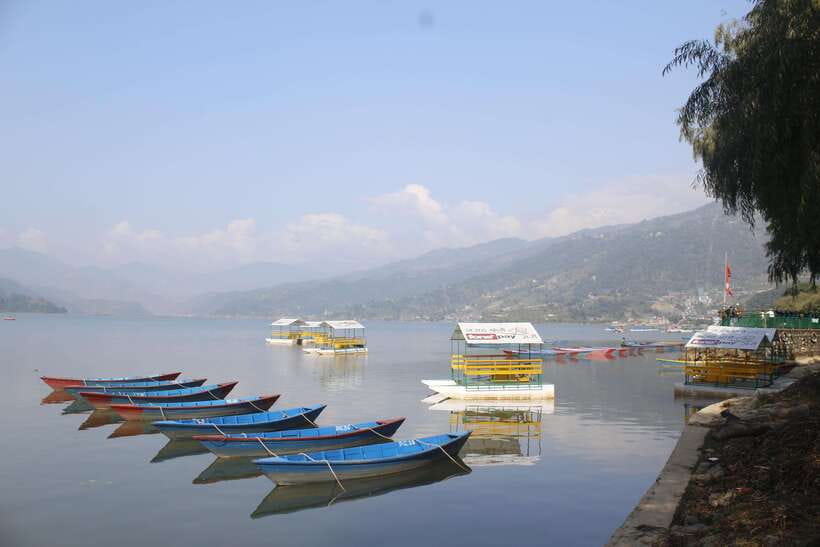
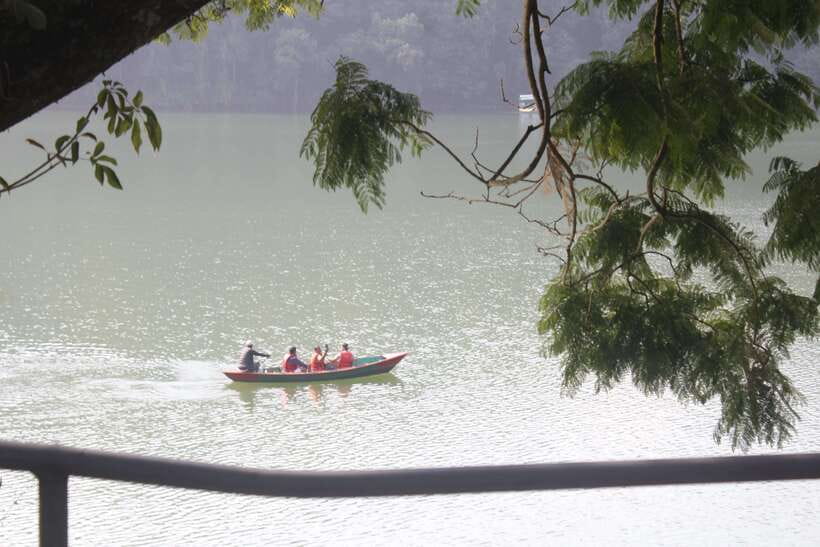
- Nine sightseeing stops in one day: The route covers Pumdikot’s Shiva Idol, World Peace Stupa, Devi’s Water Fall, Gupteswor or Mahadev Cave, Mahendra Cave, Bat Cave, the Seti River, Bindabasini Temple, and the Fewa Lake area.
- Best for independent sightseers: You are taken to each place, given time to explore, and expected back at the bus on schedule. Do not book this expecting a detailed guided talk at every monument.
- Strong value at $12: The price covers hotel pickup in Lakeside and shared transportation. Monument entry fees, about $4, and food are extra.
- A social local experience: The bus attracts a mix of Nepali, Indian, and international passengers, which adds a cheerful, informal feel.
- Some stops involve uneven ground and narrow caves: Comfortable shoes, water, sunscreen, and a camera are useful. Claustrophobia, back problems, and wheelchair use are reasons to choose another outing.
- Timing can vary: The stated duration is six hours, but a full day may run seven or eight hours, especially with traffic or a longer lunch break.
Why this Pokhara day tour works so well
I like this trip because it solves a common Pokhara problem: the sights are not all close together. Pumdikot and the World Peace Stupa are on the hills, the caves are farther north, and the temples and waterfalls sit in different parts of the city. You could arrange separate rides, but the cost and coordination would quickly rise above $12.
The tour also gives you a useful first look at Pokhara beyond the Lakeside strip. You see sacred sites, natural attractions, city streets, and local passengers sharing the same bus. It is not polished luxury, but it can feel more connected to ordinary life than a private car with tinted windows.
The main thing to understand is the format. Although the experience is described with a guide, the practical setup is closer to organized transport with a coordinator or driver. At most stops, you get off, explore independently, and return at the agreed time. That suits me when I want freedom, but you should read a little about each place beforehand if you want context.
More Full-Day Trips in Nepal:
- Kathmandu : City Highlights Bus Tour Full Day
★ 5.0 · 2 reviews - Water Taxi All Day hop-on hop-off Venice of America Boat Tour
★ 4.5 · 3,932 reviews - Thessaloniki: Full-Day Bus Trip to Meteora
★ 4.8 · 3,471 reviews
Hotel pickup and the shared bus
Pickup is available from hotels within Pokhara’s Lakeside area, using your name on a card. A coordinator may contact you through WhatsApp before the trip to confirm the pickup time, and that is worth watching for because the exact departure time can vary.
The pickup service has generally been convenient, but it is not wise to stand outside indefinitely without checking. One passenger had to call after the vehicle did not appear at the expected time. Keep the company’s phone or WhatsApp contact handy, and allow a little flexibility at the start.
The bus itself is described as a simple local tourist bus. Air-conditioning is not guaranteed. In hot weather, the operator has upgraded the vehicle for some departures, which is a welcome touch, but you should still bring water and sunscreen.
You will spend a fair amount of time riding between stops. A skilled driver makes a real difference on Pokhara’s busy roads and hill routes, and the driver received particularly warm praise for safe, professional handling. Still, do not expect a quiet coach with large reclining seats. This is budget transport, and the value comes from the route rather than comfort.
Pumdikot’s Shiva Idol and the first mountain views
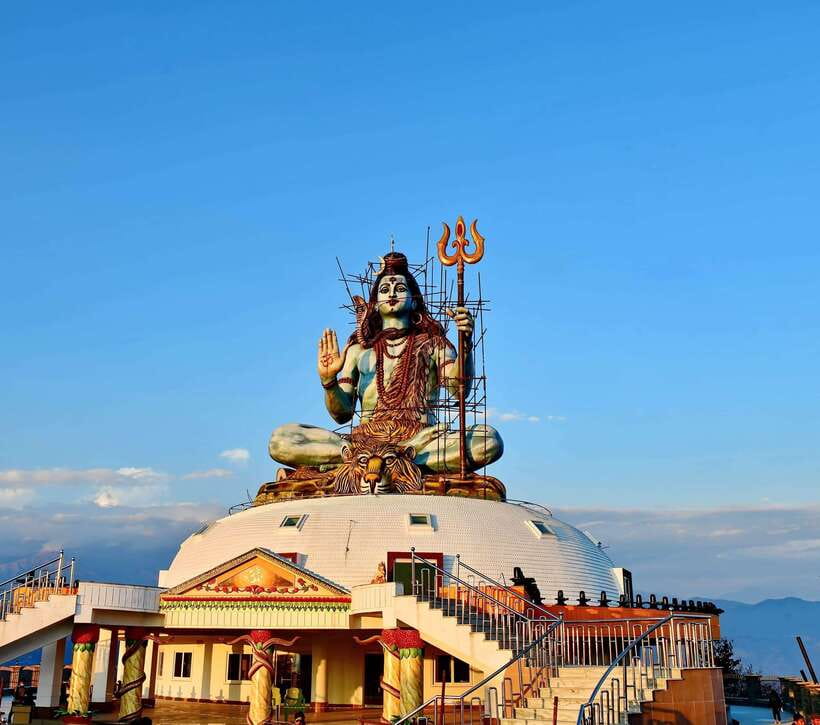
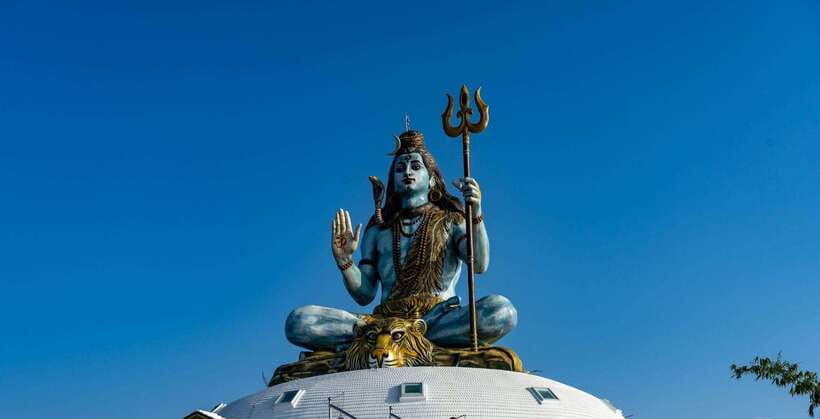
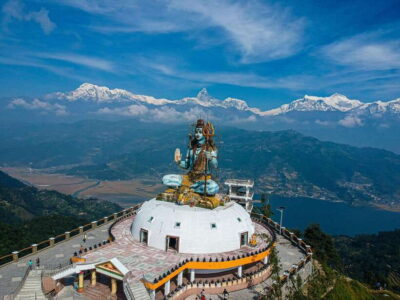
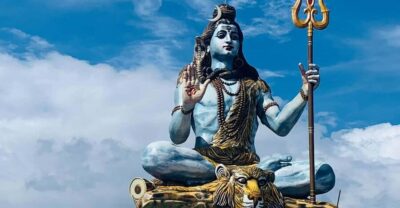
The first major stop is the Shiva Idol at Pumdikot, a hilltop religious site with broad views toward the Annapurna range when the weather is clear. The large statue gives the day an immediate sense of scale, while the elevated setting helps you understand Pokhara’s position between the city and the Himalayas.
This is one of the stops that can make the whole outing worthwhile, especially if you have not arranged a separate mountain-view excursion. The views depend heavily on clouds and rain. During the monsoon or on a hazy day, you may see much less than expected, so treat the setting as the attraction even if the peaks stay hidden.
Wear shoes with a secure sole. Religious sites may include steps and uneven surfaces, and you will want time to look around rather than rush back to the bus.
World Peace Stupa above Phewa Lake
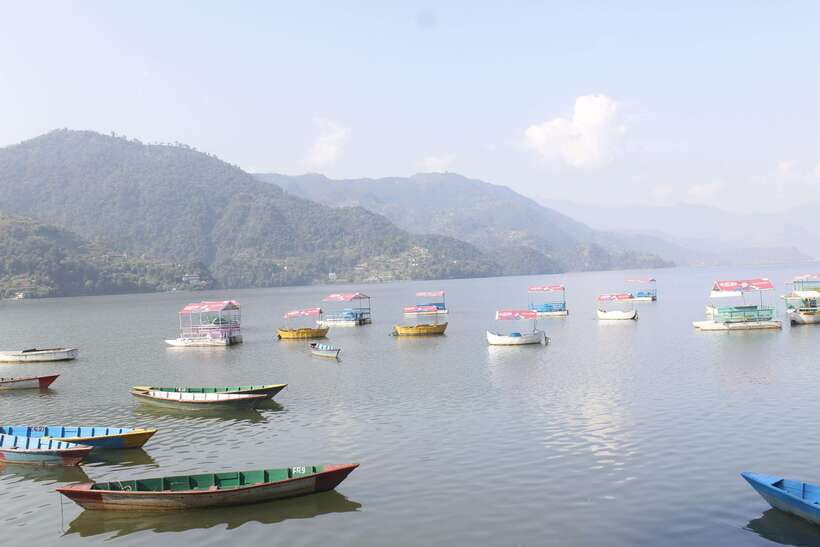
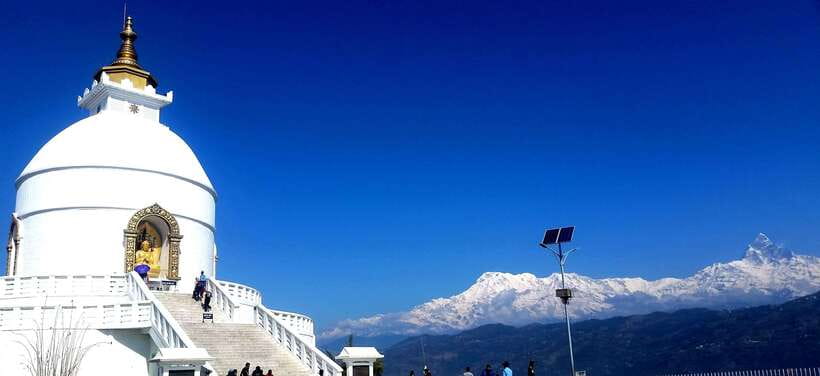
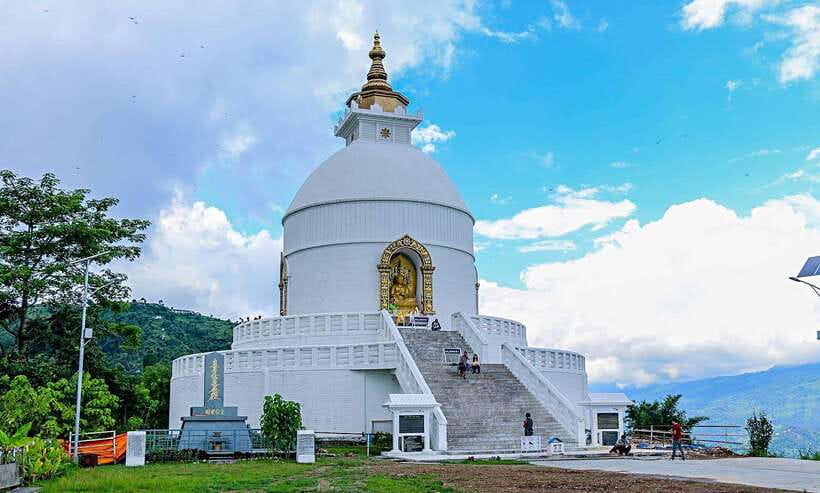
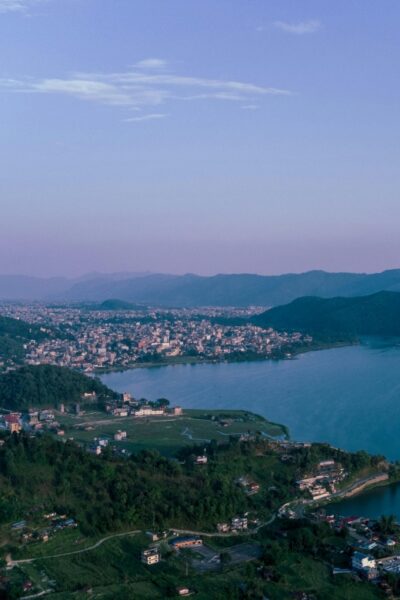
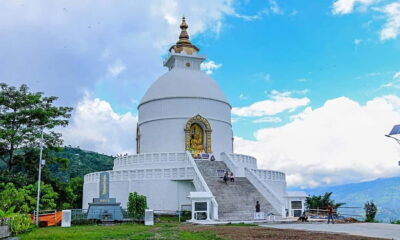
From Pumdikot, the bus continues to the World Peace Stupa. The white monument is a calm contrast to the road-heavy parts of the day, and its hilltop position gives you another view over Pokhara and Phewa Lake.
I like having both Pumdikot and the stupa in the same itinerary because they provide two different types of hilltop experience. Pumdikot feels more connected to Hindu worship and the Shiva statue, while the stupa offers a quieter Buddhist setting and a broad outlook.
The limitation is time. You will have a set window rather than an open-ended visit, so take your photos early and leave room to walk back to the bus. If clouds cover the mountains, the lake and city views still give you plenty to see.
A few more bus tours around Nepal worth a look
- Pokhara: City Sightseeing Group Bus Tour
★ 4.1 · 37 reviews - Kathmandu City Sightseeing Bus tour (5 Sights)
★ 4.2 · 15 reviews - Pokhara: Visit Best Seven Tourist Destination by Sharing Bus
★ 3.4 · 10 reviews - Pokhara: Sightseeing tour (Unguided) in Sharing Bus
★ 4.5 · 10 reviews
Devi’s Water Fall and the cave below
The route then heads toward Devi’s Water Fall, also known as Patale Chhango. The water disappears into a rock channel, making this more than a simple viewpoint beside a stream. Water levels can change with the season, and heavy rain may alter the look of the falls or affect access.
The connected cave visit adds a more enclosed, unusual element. The itinerary refers to Gupteswor Cave and Mahadev Cave, names that are often used for the sacred cave complex near the waterfall. Inside, you may see dark passages, rock formations, and religious features linked with Shiva worship.
This is one of the places where the schedule matters. The cave can feel tight and slippery, and it is not a good match for anyone with claustrophobia. Bring shoes that can cope with damp or uneven ground, and do not count on spending a long time examining every passage.
One practical warning: access to a waterfall or cave can change. A stop may be less impressive if water levels are low, maintenance is underway, or part of the site is closed. That is an occasional risk on any tightly packed sightseeing route.
Mahendra Cave and the Bat Cave
The northern cave section is the most atmospheric part of the day. Mahendra Cave is known for its stalactites and stalagmites, and the darkness and rock formations provide a sharp change from the open hilltops earlier in the morning.
Next comes Bat Cave, also called Chamere Cave. The name suggests its main attraction, but do not assume you will see bats. At times there may be few or none visible, and that does not mean the stop has failed. The cave itself is the experience, with a darker, narrower feel than the outdoor sights.
These visits require a little physical confidence. The surfaces can be uneven, and narrow spaces are not comfortable for everyone. A camera can be useful, but low light makes photographs difficult, so bring it mainly for the overall day rather than expecting perfect cave pictures.
The caves also show why this tour is useful for people without their own transport. They are not natural add-ons to a walk around Lakeside. The bus makes it possible to see them without negotiating separate fares and drivers.
The Seti River through Pokhara
After the caves, the day returns toward the city and the Seti River. The river cuts through Pokhara in a striking way, with pale water and steep channels in places. This stop is less about a grand monument and more about seeing how the city is shaped by the river.
I appreciate this pause because it breaks up the caves and temples. You get a brief outdoor walk, a chance to stretch your legs, and a reminder that Pokhara’s character comes from natural forces as much as from its formal attractions.
Do not expect a long riverside walk. This is a short sightseeing stop within a packed schedule. Think of it as a useful city perspective rather than a separate river excursion.
Bindabasini Temple and a quieter finish
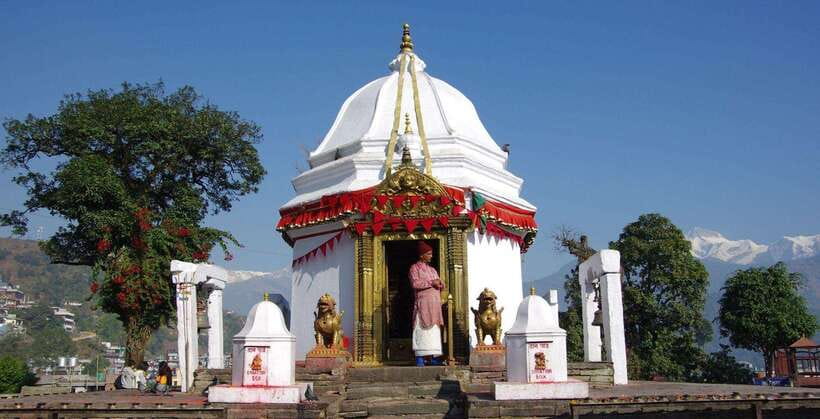
Bindabasini Temple is one of Pokhara’s important Hindu temples and gives the final sightseeing section a calm, devotional tone. The design is intricate, and the setting feels more peaceful than the traffic outside.
You should dress and behave respectfully at religious sites. The tour provides a visit, not a private ceremony or religious lesson, so your experience will depend on how much time you spend looking carefully and how busy the temple is that day.
This stop is especially useful for people who want more than natural scenery. Along with Pumdikot and the cave shrine, it helps show the religious side of Pokhara. If your main interest is only waterfalls and mountains, it may feel less exciting, but it gives the itinerary balance.
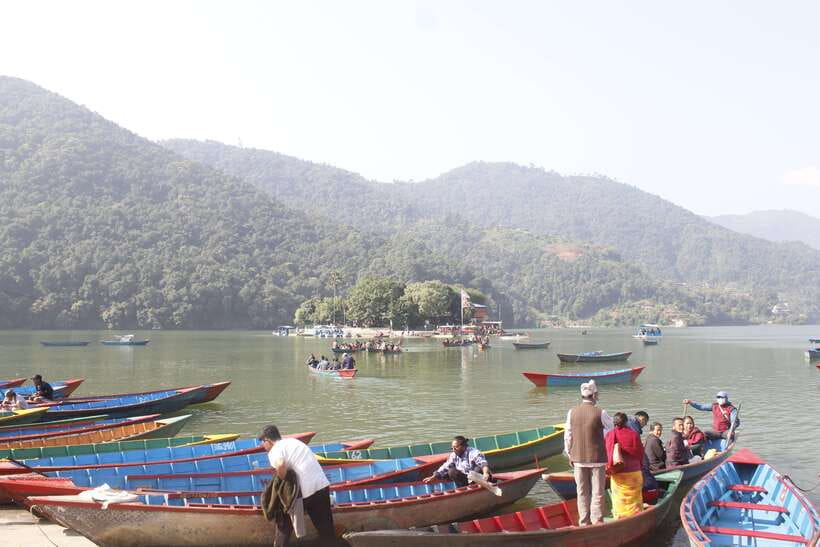
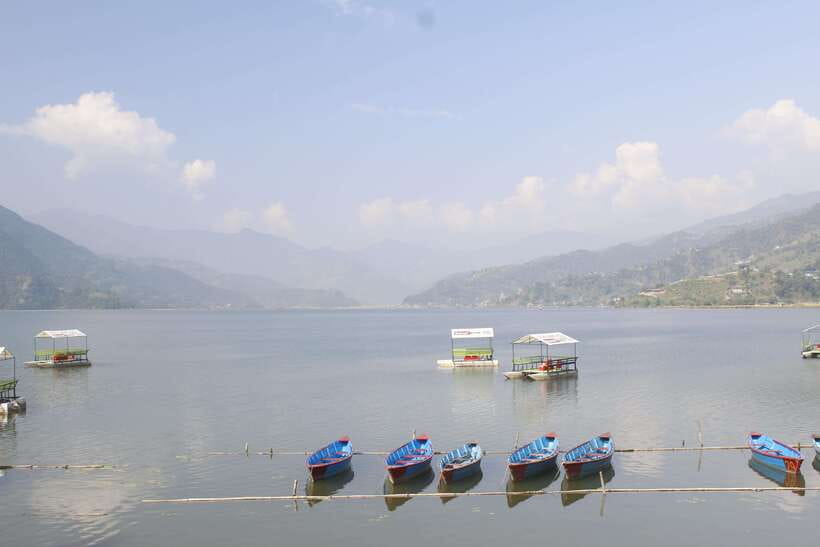
At the end, the bus returns toward Fewa Lake. You may get off near the lake and continue exploring on your own, which is convenient if you want dinner or a walk along the Lakeside area. You can also return to your hotel on the same bus at that point.
What $12 really gets you
At $12 per person, this is one of the more economical ways to cover Pokhara’s main sights in one day. The price includes hotel pickup and drop-off within Lakeside and shared sightseeing transport. It does not include food, drinks, or monument admission.
The extra entry cost is approximately $4, though exact charges can vary by site. Budget for that separately, because discovering fees only after arrival can be annoying. You may also want money for lunch, since food is not included.
The value is strongest if you are traveling alone, as a couple on a budget, or without a motorbike. A private vehicle gives you more control, but it will cost much more. This bus also lets you meet other people, and solo passengers have found it easy to make companions during the day.
The tradeoff is control. You cannot linger for an hour at the stupa, skip an uninteresting stop, or change the route to suit the weather. You pay very little because the day follows a shared plan.
How the day feels in practice
The atmosphere is informal and social. The bus can include local and regional passengers as well as people from abroad, and that mix gives the day a more genuine local feel. You may find yourself sharing snacks, comparing plans, or helping one another keep track of the departure time.
The staff are often described as friendly and helpful, and a thoughtful cup of tea has even been offered on some departures. Small gestures matter on a long, budget day. The staff may also help translate basic information into English.
The schedule can feel fast, but many passengers have found the time at each stop adequate. I would still keep an eye on your watch. The bus will not wait indefinitely for a late return, and the route has several stops to fit in.
The stated duration is six hours, but actual outings have lasted around eight hours. Traffic, weather, lunch, and pickup delays can all affect the finish. Do not book a flight, trek departure, or important appointment immediately afterward.
What to bring and who should skip it
Bring comfortable shoes, water, sunscreen, and a camera. Light clothing helps on a warm day, but carry something suitable for visiting temples and be ready for cooler or wet conditions in the caves.
The tour is not suitable for wheelchair users, people with back problems, or people with claustrophobia. The cave visits are the clearest concern, but the full day also involves repeated boarding, walking, and standing.
Smoking, alcohol, and drugs are not allowed. This is also not the right outing if you want a private, slow-paced day or a detailed lecture at every stop.
It suits you best if you:
- Have only one spare day in Pokhara
- Want to see many major sights without arranging transport
- Enjoy independent exploration
- Are comfortable with a simple shared bus
- Want an affordable social outing
- Do not mind fixed stop times
Should you book this Pokhara bus tour?
I would book it if your priority is coverage and price. For $12 plus about $4 in entry fees, you can reach hilltop viewpoints, caves, a waterfall, the Seti River, and major temples without arranging several separate rides. It is particularly useful for solo visitors and anyone staying around Lakeside.
I would skip it if you want a polished guided experience, guaranteed air-conditioning, or complete freedom at each attraction. You should also skip it if caves, uneven ground, or a long day on a basic bus will make you uncomfortable.
The best preparation is simple: confirm your pickup time, read a little about the stops, carry water, and return to the bus promptly. Approach the outing as an efficient local sightseeing circuit rather than a luxury tour, and it offers a lot for very little money.
FAQ
How much does the Pokhara shared bus tour cost?
The tour costs $12 per person. Monument entry fees, estimated at about $4, are not included.
How long does the tour last?
The stated duration is six hours, but the complete outing may last seven or eight hours depending on traffic, weather, and the schedule.
Is hotel pickup included?
Yes. Pickup and drop-off are included for hotels within the Lakeside area of Pokhara.
Is this a guided tour at every attraction?
No. You are taken to the sights and given a set amount of time to explore, but the experience is mainly self-guided at each stop.
Which places does the tour visit?
The route includes Pumdikot’s Shiva Idol, World Peace Stupa, Devi’s Water Fall, Gupteswor or Mahadev Cave, Mahendra Cave, Bat Cave, the Seti River, Bindabasini Temple, and the Fewa Lake area.
Are food and drinks included?
No. Food and drinks are not included. Bring water and budget separately for meals.
Is the bus air-conditioned?
Air-conditioning is not guaranteed. The operator has upgraded transportation to an air-conditioned bus on some hot-weather departures.
Can I get off near Fewa Lake instead of returning to my hotel?
Yes. At the final return toward Fewa Lake, you can choose to continue exploring the lake area on your own or return to your hotel on the same bus.
Who should avoid this tour?
It is not suitable for people with back problems, claustrophobia, or wheelchair users. The cave visits and repeated walking can be difficult for those with these concerns.
Just added around Nepal
- Luxury Sofa Bus from Kathmandu to Pokhara★ 5.0 · 3 reviews
- Kathmandu City Sightseeing Bus Tour★ 4.5 · 2 reviews
- Kathmandu City Tour in Sharing Bus★ 3.5 · 2 reviews
- Elegant Kathmandu to Pokhara Tour by Deluxe Tourist Bus★ 5.0 · 2 reviews
- Pokhara Sightseeing By Bus – Day Trip★ 3.2 · 8 reviews
- Pokhara: City Sightseeing Group Budget Bus Tour★ 4.7 · 6 reviews
- Pokhara Sightseeing By Bus: Day Trip★ 4.6 · 7 reviews
- Kathmandu City Sightseeing Bus tour (5 Sights)★ 4.2 · 15 reviews
Pokhara Bus Tours, compared.
Visit Best Seven Tourist Destination by Sharing Bus
Read our review →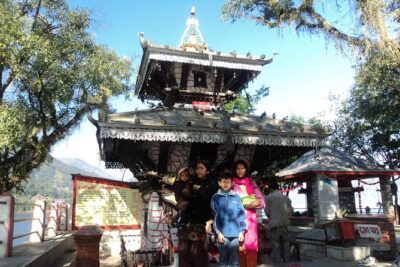
Browse the lists this tour appears in