
Review · USA
Salt Lake City Guided Bus Tour
Salt Lake City rewards a local introduction. This 2.5-hour bus tour packs Temple Square, the Utah State Capitol, pioneer landmarks, Olympic sites, and grand old buildings into one easy circuit. I like the live storytelling, especially when guides such as Ann, Todd, Mark, Matthew, Kristin, and Grant add local detail instead of simply naming the sights. I also like the short walks and photo stops, which keep you from spending the whole tour behind glass.
The tour works best as a first look at the city, especially if you have only half a day or are taking a break from skiing. The main drawback is pace: many stops last only one to five minutes, and a smaller winter van can limit views from a middle seat. At $69 per person, this is a fair deal for an organized overview, but not a substitute for spending a full day exploring Temple Square or the Capitol on your own.
Key points to know before you go
- The Tabernacle organ recital is often the highlight: The famous organ and remarkable acoustics give the tour a memorable finish.
- You see far more than downtown: The route reaches Capitol Hill, Fort Douglas, This Is the Place Heritage Park, Olympic sites, Trolley Square, and several historic neighborhoods.
- Your guide gets off with you: At the main stops, the guide adds context and answers questions instead of leaving you to wander alone.
- The schedule is compact: Expect a fast-moving overview with several brief photo stops, not long visits at every landmark.
- Winter may mean a smaller minibus: This creates a more personal setting, but window views can be harder from the middle seats.
- It is built for first-time visitors: You finish with a useful sense of what deserves a longer visit later.
A fast, useful introduction to Salt Lake City
The tour begins at the Radisson Hotel Salt Lake City Downtown on West South Temple Street and returns there at the end. Morning and afternoon departures make it easy to fit around a flight, a ski day, or a longer visit to Temple Square.
You ride through the city while the guide explains its pioneer beginnings, the Church of Jesus Christ of Latter-day Saints, Utah’s path to statehood, and the city’s Olympic chapter. The route is broad rather than deep. You get the outline of Salt Lake City, along with enough stories to help you choose where to return.
That is the central value. Driving yourself between these places would take more planning than you might expect. The sights are spread from downtown to Capitol Hill and the foothills, and parking can interrupt the day. Here, someone else handles the route while you watch the city change outside the windows.
The group is limited to 29 people. That is small enough for a guide to respond to questions, though the feel depends on the vehicle used. A large coach gives you better sightlines while moving. A winter minibus feels more intimate, but sitting on the wrong side can make passing buildings harder to see.
A few more bus tours around the USA worth a look
- From NYC: Guided Day Trip to Washington DC by Van or Bus
★ 4.7 · 3,418 reviews - 2-Hour Gettysburg Battlefield Guided History Bus Tour with a National Park Guide
★ 4.5 · 2,201 reviews - Los Angeles: Hop-On Hop-Off Bus Tour with Audio Guide
★ 3.7 · 2,030 reviews
Temple Square and the Tabernacle organ
Temple Square is the emotional center of the experience. You have time to see the gardens, the Salt Lake Temple exterior, the Assembly Hall, and the Tabernacle area. The grounds cover a large downtown block and combine carefully kept gardens with some of Utah’s most recognizable buildings.
The Salt Lake Temple is the main visual prize. Its granite was quarried and cut by pioneer workers over 40 years, from 1853 to 1893. Six spires rise above the building, with the tallest reaching 210 feet. You cannot enter the temple interior, which is reserved for Church members, but the exterior offers plenty to discuss and photograph.
The guide explains the temple’s symbolic design, the Angel Moroni statue, and the effort required to build such a massive structure in the nineteenth century. This is much better than simply stopping for a quick picture because the construction story gives the building human scale.
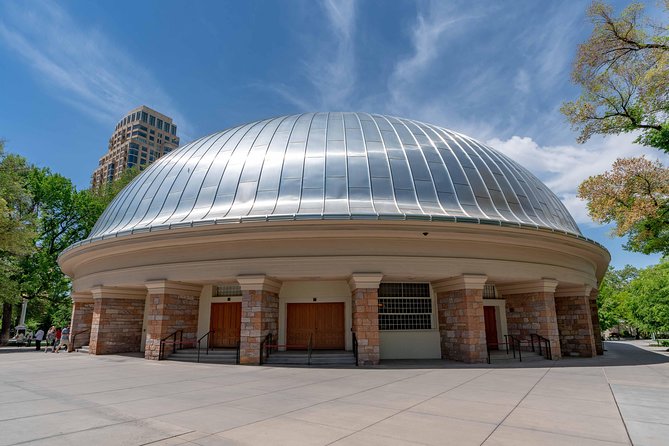
The Tabernacle brings a different kind of experience. The building was completed in 1867 and is famous for its acoustics. The rounded roof and open interior were designed so sound carries across the hall with unusual clarity. The organ has 11,632 pipes, according to the tour information, and a short recital can be a striking moment in an otherwise busy sightseeing circuit.
Several people singled out the organ music as the best part of the tour. I can understand why. Architecture and pioneer stories require attention, but music changes the mood of the whole group. If the recital is operating during your visit, be ready for this to become the most memorable 15 minutes of the outing.
You also see the Assembly Hall, a smaller Gothic-style church built in 1882 with leftover granite from the temple. The building’s stained glass and delicate spires offer a pleasant contrast to the temple’s heavy stonework.
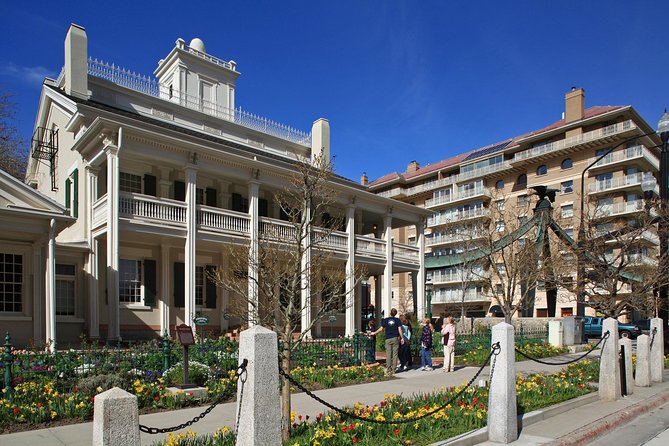
The itinerary also includes views of the Beehive House, Brigham Young’s former residence, the Joseph Smith Memorial Building, the Church Office Building, the FamilySearch Library, the FamilySearch Center, and the Brigham Young Monument. Most of these are brief exterior views, so think of them as a guided orientation rather than a series of interior tours.
The Utah State Capitol and Capitol Hill
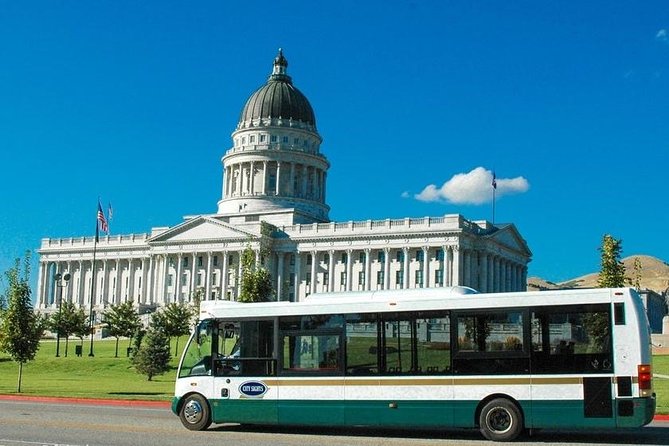
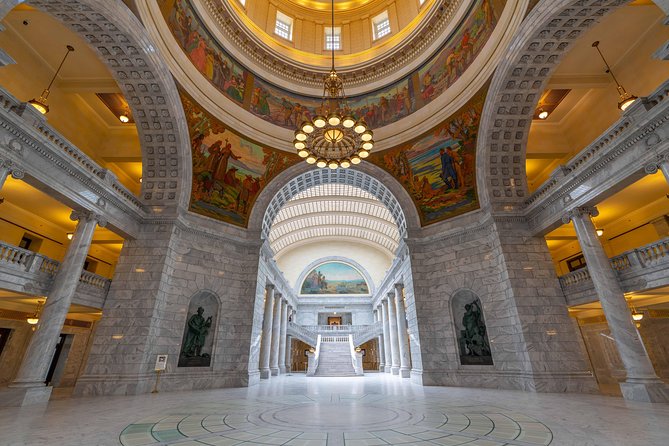
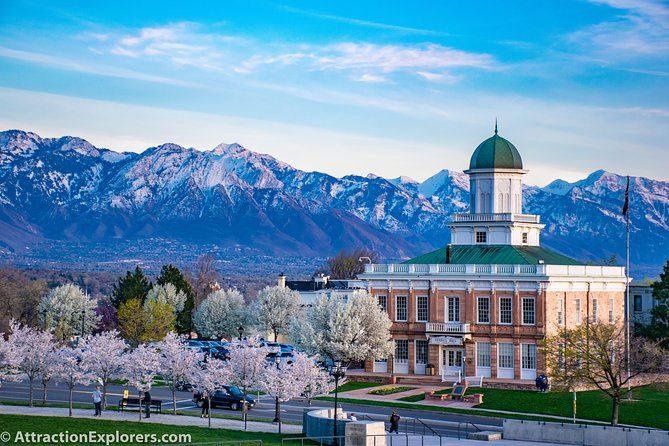
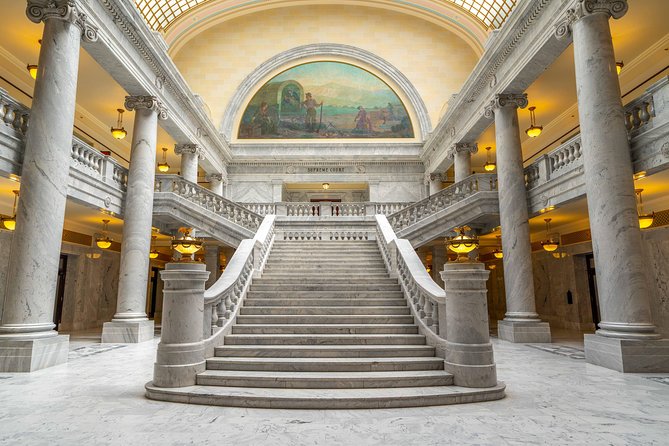
The Utah State Capitol is one of the tour’s strongest stops. Completed in 1916, the Neoclassical building has a copper dome rising 285 feet and a grand interior with marble columns, murals, and a large chandelier.
You have about 20 minutes here, enough to walk around, take pictures, and absorb the building’s scale. The Capitol also gives you some of the finest views of Salt Lake City, with the Wasatch Mountains rising beyond the city and the valley spreading below.
This is one place where the guide’s explanation adds real value. Utah’s statehood story involved a long territorial period and difficult political questions, including debates over governance and polygamy. The building makes those subjects feel less abstract. You are looking at the place where the modern state took shape.
Nearby, the tour passes Council Hall, which served as Utah’s territorial capitol from 1866 to 1896. Its history is especially interesting because the building was moved brick by brick to save it from demolition. You also see the City and County Building at Washington Square, a Romanesque Revival landmark completed in 1894, with a 256-foot clock tower and ornate sandstone details.
The brief view of the Governor’s Mansion adds another piece of Utah’s political story. It began as a private home in 1902 and became the official governor’s residence in 1937. The Salt Lake Masonic Temple and McCune Mansion add architectural variety, showing the wealth and civic ambition that followed the pioneer period.
Pioneer stories at This Is the Place
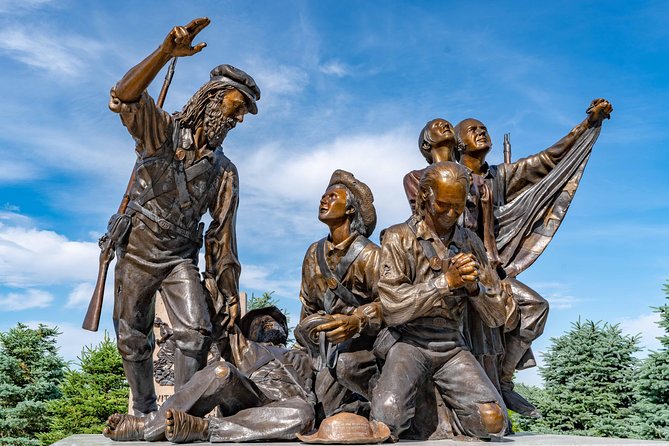
The tour heads toward This Is the Place Heritage Park, where Brigham Young reportedly identified the Salt Lake Valley as the destination of the Mormon migration in 1847. The site recalls the 1,300-mile journey from Illinois and the arrival of 148 pioneers who first viewed the valley from this direction.
You get about 15 minutes here, one of the longer stops. The views are a major reason to pay attention. From the hillside, you can look over the Salt Lake Valley toward the Wasatch Mountains and, in the distance, the Great Salt Lake.
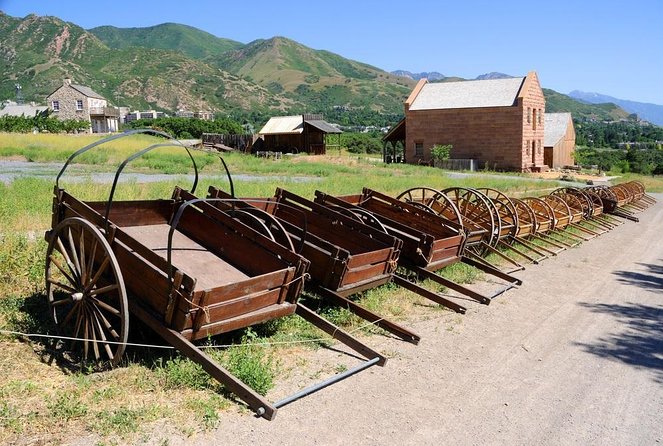
The guide also connects the viewpoint with the Mormon Pioneer National Historic Trail. More than 70,000 Latter-day Saint pioneers followed this route between 1846 and 1869. Stories of handcarts, wagons, harsh weather, scarce supplies, and difficult crossings help explain why Salt Lake City’s founding story remains so important here.
The Mormon Battalion Monument adds a less familiar chapter. About 500 Latter-day Saint volunteers marched roughly 2,000 miles from Iowa to San Diego during the Mexican-American War. Their pay helped support the early settlement, while their families continued west. This stop gives the tour a broader American context and avoids presenting pioneer history as only a local religious story.
Fort Douglas offers another useful counterpoint. Established in 1862, the military post represented federal power in a territory dominated by Mormon settlers. The red-brick buildings and parade grounds recall a period of tension, negotiation, and changing relations between the U.S. Army and the local population.
Same place, a different way to ride:
- Grand Canyon West Bus Tour with Hoover Dam and Optional Skywalk
★ 4.0 · 7,224 reviews - Savannah Hop-On Hop-Off Trolley Tour
★ 4.5 · 6,527 reviews - New York: Hop-on Hop-off Sightseeing Tour by Open-top Bus
★ 4.2 · 5,863 reviews - Nashville Hop On Hop Off Trolley Tour
★ 4.5 · 5,643 reviews
Olympic sites and Salt Lake City’s modern identity
Salt Lake City’s 2002 Winter Olympics still shape the city’s public image, and the bus route brings you past several related sites. You see the Olympic Cauldron Park, Rice-Eccles Stadium, the Delta Center, and The Gateway.
The Olympic Cauldron is 72 feet tall and made of glass and steel. It is a quick stop, but the guide uses it to explain how Utah hosted athletes from 77 nations and how the Games changed local facilities and civic confidence.
Rice-Eccles Stadium hosted the Opening and Closing Ceremonies. The Delta Center, home of the Utah Jazz, adds the city’s sports identity, while The Gateway recalls the Olympic gathering area built on former rail yards. Today it includes shopping, dining, fountains, public art, and the restored depot.
The Olympic portion is useful because it shows Salt Lake City as more than a pioneer and religious center. The city has a modern cultural and sporting side, too. Abravanel Hall, home of the Utah Symphony, and Kingsbury Hall at the University of Utah add music and theater to that picture.
Historic churches, libraries, and city architecture
One of the most appealing parts of this tour is the mix of faith traditions and building styles. At the Cathedral of the Madeleine, you see Utah’s only Catholic cathedral, completed in 1909. Its Gothic Revival design, twin spires, stained glass, and Spanish Gothic details offer a clear contrast to Temple Square.
You do not spend long inside or around every building, but the sequence makes the point well. Salt Lake City grew into a city with several religious communities, grand civic buildings, university institutions, and private mansions. The Cathedral of the Madeleine is particularly worth noting if you later have time for a longer visit.
The Salt Lake City Public Library brings the route into the present. Opened in 2003, its six-story curved glass design and rooftop garden show a more experimental side of the city. City Creek Center, opened in 2012, adds modern retail architecture, a retractable glass roof, landscaped public space, and a creek running through the development.
Trolley Square provides another change of mood. Its brick streetcar barns and ironwork recall the era when electric trolleys connected Salt Lake City neighborhoods. Today the complex is used for shopping and dining, but the old transport buildings remain the attraction.
You also pass the Deuel Pioneer Log Home, built in 1847. This small cabin is easy to overlook beside larger landmarks, yet it may be one of the clearest reminders of how modest the first homes were. The contrast between that cabin and the McCune Mansion or the Church Office Building tells the city’s growth story in a single route.
What the timing feels like in practice
The official duration is about two hours and 30 minutes, though one account put the outing closer to two hours and 45 minutes. The difference is not important, but you should allow a little flexibility afterward.
The tour includes many named stops, yet most are not full visits. Several last one minute and function as drive-by introductions. The main walking opportunities are Temple Square, the Tabernacle, the State Capitol, and This Is the Place Heritage Park.
That pace is both the strength and the limitation. You can cover a surprising amount of ground without getting tired or worrying about directions. But you will need to keep your camera ready, listen while moving, and accept that some buildings deserve a return visit.
The guides are a major part of the experience. Ann is praised for patience and warmth. Todd is especially good for detailed historical explanations and questions. Mark brings energy and local suggestions, while Matthew is noted for smooth driving and strong storytelling. Kristin and Grant also receive praise for combining facts with humor and personal local detail.
The tone is not a silent sightseeing ride. Guides typically continue the explanation at the stops, which helps you understand why a building matters instead of collecting disconnected photographs.
Is $69 a good value?
At $69 per person, the price is reasonable if you want a broad introduction without renting a car or arranging several separate visits. You are paying for transport, route planning, live commentary, short guided walks, and access to a recital when available.
The value is strongest for first-time visitors, solo travelers, couples, and families with limited time. It also makes sense on a non-ski day when you want to see more than the hotel and slopes.
The price is less attractive if you already know the city and plan to spend the whole day walking around Temple Square and the Capitol. In that case, you may prefer a slower self-guided visit. The tour gives you breadth, not long museum time.
Bookings are often made well ahead, with an average lead time of about 17 days. Free cancellation is available until 24 hours before departure. The tour requires a minimum number of participants, and service animals are allowed.
Who should book this Salt Lake City bus tour?
I would book it early in a Salt Lake City visit if I wanted a city overview before choosing where to spend more time. It is particularly helpful if you are staying downtown, have only one day, or do not want to navigate a spread-out route.
You should also consider it if local history interests you but you do not want a formal lecture. The best guides make the pioneer era, the Church’s role, the Army’s arrival, statehood, and the Olympics part of one connected story.
I would hesitate only if you dislike short stops, bus sightseeing, or a brisk schedule. If clear outside views matter greatly, ask about the vehicle and arrive early enough to request a window seat. The smaller winter van can be comfortable and personal, but a middle seat may not offer the best view while the vehicle is moving.
Final verdict: book it for orientation, not depth
I recommend the Salt Lake City Guided Bus Tour for a first visit, a short stay, or a spare afternoon between outdoor activities. The Tabernacle organ, Utah State Capitol, Temple Square, and This Is the Place viewpoint give the outing several genuine highlights, while the broad route helps you understand how the city fits together.
Book it if you want efficient sightseeing with an informed local guide and a little less driving stress. Skip it if you prefer to linger at each site, enter every building, and set your own pace. For most first-time visitors, it is a sensible opening chapter, followed by a return to the places that caught your attention.
FAQ
Where does the Salt Lake City Guided Bus Tour begin?
The tour begins at the Radisson Hotel Salt Lake City Downtown, located at 215 W S Temple Street in Salt Lake City.
Where does the tour end?
The experience ends back at the same downtown meeting point.
How long does the tour last?
The tour lasts approximately two hours and 30 minutes. Some departures may run closer to two hours and 45 minutes.
How much does the tour cost?
The listed price is $69 per person.
Is the tour offered in English?
Yes. Live onboard commentary is provided in English.
How large is the tour group?
The tour has a maximum of 29 participants.
Can I cancel for a refund?
Yes. You can cancel at least 24 hours before the start time for a full refund. Cancellations or changes made within 24 hours are not refunded or accepted.
Just added around the USA
- Viator Exclusive: 10:15PM Las Vegas Night Tour by Open-Top Bus★ 4.0 · 103 reviews
- Sin City Party Bus Club Crawl★ 4.5 · 17 reviews
- Strip Club Crawl & Open Bar Party Bus – Las Vegas★ 3.5 · 40 reviews
- Private Party Bus Up to 30 People Vegas Nightclub Tour★ 3.0 · 4 reviews
- Skip-the-Line at Vegas Clubs with a Party Bus!★ 5.0 · 39 reviews
- Rockstar Pool Party Crawl w/ VIP Entry & Party Bus Ride★ 3.5 · 9 reviews
- Private Party Bus Tour of the Las Vegas Strip Champagne Toast★ 4.5 · 16 reviews
- Las Vegas Party Bus Club Crawl★ 4.0 · 76 reviews
Salt Lake City Bus Tours, compared.
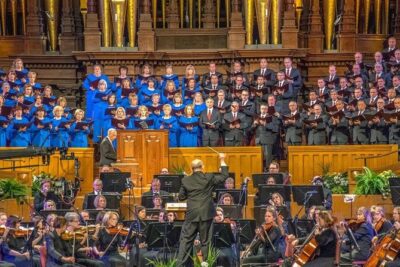
Tabernacle Choir Performance + Salt Lake City Guided Bus Tour
Read our review →
Great Salt Lake Guided Bus Tour from Salt Lake City
Read our review →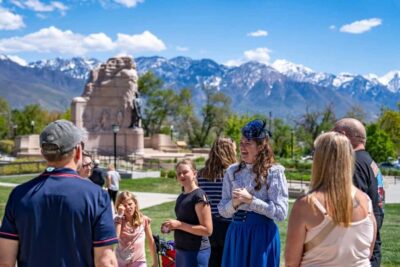
Salt Lake City: Ultimate Guided Sightseeing Tour by Bus
Read our review →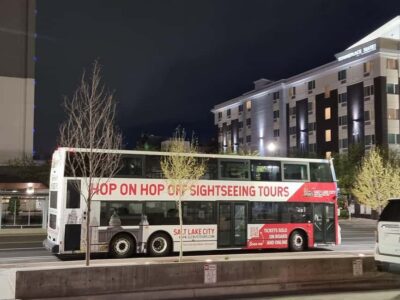
SLC Bus Tours Evening Tour on a Double-Decker Bus
Read our review →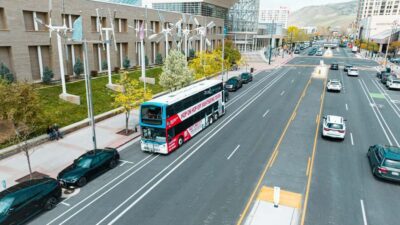
Browse the lists this tour appears in