

Review · SWEDEN
Stockholm: Hop On-Hop Off Bus or Boat
See Stockholm from two useful angles. This flexible hop-on hop-off pass lets you circle the city by bus, cruise between islands by boat, or combine both for 24 or 72 hours. I like the freedom to build your own day, and I like that the route links major sights such as the Royal Palace, Vasa Museum, Skansen, and City Hall.
The main catch is seasonal operation. The bus runs from April through November, but the boat operates only from late May into September, with reduced service at the edges of the season. The ticket can also feel costly if you only ride once or twice, so you need to use it as transport, not just as a short sightseeing loop.
Key points at a glance
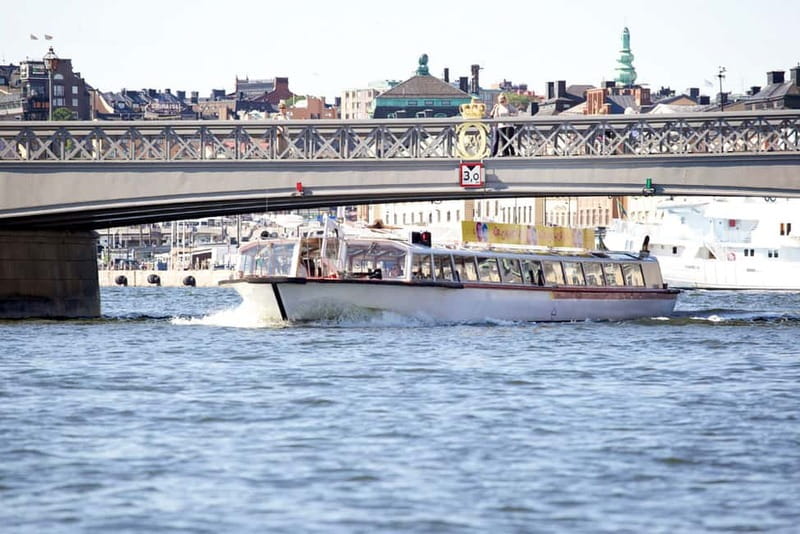
- Best for flexible sightseeing: Use the buses, boats, or combined ticket to shape your own Stockholm route.
- Strong central coverage: Stops connect Gamla stan, Djurgården, the Royal Palace, City Hall, Södermalm, and the main museum district.
- Boat service is highly seasonal: The water route runs from May 28 to September 13 in 2026, with the most frequent service from June 22 through August 30.
- Bus service is more dependable: Buses operate from April 1 through November 1, with departures every 15 to 30 minutes in the busiest summer period.
- Audio guide uses your own phone: Bring headphones, and expect commentary in a broad range of languages.
- Accessibility differs: Buses are wheelchair accessible, while boats are not.
Why this pass works well in Stockholm
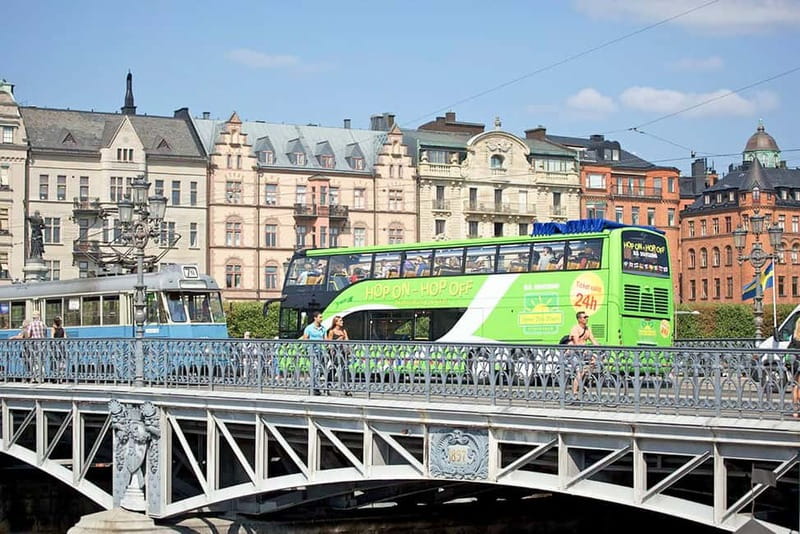
Stockholm is spread across islands, waterways, parks, and connected mainland districts. Walking works beautifully in the center, but the distances between the Royal Palace, Djurgården museums, Södermalm, and City Hall can consume much of your day.
That is where this pass earns its keep. You can ride through the city while getting a basic introduction to the sights, then get off when something catches your eye. You can also use it as a simple connection between districts, saving your feet for museums and old streets.
I especially like the combined option. The bus reaches more inland stops, while the boat gives you a calmer view of Stockholm from the water. The two routes overlap around the Royal Palace, Skeppsholmen, Djurgården, and Slussen, but they do different jobs.
The pass is sold for 24 or 72 hours. A 24-hour ticket suits a tightly planned visit or a first look at the city. The 72-hour version makes more sense if you want to spread several museums and neighborhoods across multiple days.
At about $27 per person, the value depends on your habits. If you ride several times and use the pass to move between attractions, it can be practical. If you stay mostly around Gamla stan and walk to nearby sights, it may not pay off.
More Hop-On Hop-Off Bus Tours in the world:
- Barcelona: 24 or 48-Hour Hop-On Hop-Off Bus Tour
★ 4.4 · 20,872 reviews - Rome: City Sightseeing Hop-on Hop-off Bus with Audioguide
★ 4.0 · 16,045 reviews - Paris: Big Bus Hop-On Hop-Off Tour with Optional Cruise
★ 4.4 · 13,279 reviews
Starting at the Royal Opera and Royal Palace
The bus route begins at Strömgatan beside the Royal Swedish Opera. This is a convenient starting point because it places you near the Royal Palace, waterfront viewpoints, Kungsträdgården, and the center of Stockholm.
The Royal Palace is also a boat stop, listed as Kungliga slottet. That makes this area a useful place to switch between land and water, although you should check the departure board before planning a quick transfer.
From the opening stop, the bus passes through central Stockholm and returns to the Royal Opera. You can ride the full circuit first to get your bearings, but remember that the ride only has value if you later get off. A full loop without stops gives you a city overview, not a full Stockholm experience.
The multilingual audio guide adds context as you ride. Commentary is available through your own phone and headphones. The listed language choices include Chinese, English, Estonian, Finnish, French, German, Italian, Japanese, Russian, Spanish, and Swedish. Bring charged headphones, since the system depends on your phone.
Free Wi-Fi is available on the buses and boats. That is useful for checking opening times, maps, and connections, though I would not depend on it as your only way to access important tickets or directions.
Gamla stan, Slussen, and Södermalm

The bus stops at the Royal Palace, then continues toward Slussen and Katarinavägen. This is one of the more useful parts of the route because it links the old center with Södermalm.
Gamla stan, or the Old Town, is best explored on foot. Its narrow lanes, old buildings, small squares, and historic churches are not sights you want to view through a bus window. Get off near the Royal Palace and allow time to walk without a schedule.
Slussen is a major transport area between Gamla stan and Södermalm. The stop is useful for reaching viewpoints and southern Stockholm, though the surrounding area can feel more like a transport interchange than a finished sightseeing square.
Katarinavägen offers a different view toward the water and central islands. The stop at Medborgarplatsen takes you farther into Södermalm, an area with a more local city feel than the palace district. The route does not replace a walking tour, but it can save you a long uphill or cross-town walk.
This section is especially helpful during a short visit. You can see the Old Town in the morning, ride south, and then continue toward Djurgården without arranging separate public transport. Just leave extra time at the stops if you are traveling with someone who walks slowly.
Djurgården: Vasa Museum, Skansen, and Gröna Lund
Djurgården is the strongest sightseeing section of the route. The bus stops near the Vasa Museum and Nordic Museum, then continues to ABBA The Museum, Gröna Lund, and Skansen.
The Vasa Museum holds Stockholm’s famous seventeenth-century warship, recovered after centuries underwater. The museum is one of the city’s major sights, and it deserves more time than a quick hop off and back on. If it is high on your list, check its opening hours and plan your bus connection around the visit.
The Nordic Museum sits nearby and offers a broader look at Swedish life and culture. You can choose one museum or spend much of a day in this part of Djurgården.
ABBA The Museum and Gröna Lund share a stop. ABBA The Museum is a music-focused attraction with interactive elements, while Gröna Lund is the city’s amusement park. Their shared stop is convenient, but the two attractions call for very different kinds of visits.
Skansen is another key stop. It is an open-air museum showing Swedish buildings, traditions, and rural life. It is also a good reason to use the pass over a full day, since a visit can take several hours.
Notice that the bus list repeats the Djurgården stops. That reflects the route serving these attractions from more than one direction. Check the direction of the arriving bus so you do not board a vehicle that takes you on a longer circuit than expected.
The boat also serves Djurgården at Allmänna gränd and stops at the Vasa Museum. For many people, this is the most enjoyable way to approach the museum district. It avoids the feeling of simply moving from one road stop to another and gives you a look at Stockholm’s island setting along the way.
A few more bus tours around the world worth a look
- Mt Fuji and Hakone 1-Day Bus Tour Return by Bullet Train
★ 5.0 · 26,383 reviews - London: Warner Bros. Studio Harry Potter Tour & Branded Bus
★ 4.7 · 19,194 reviews - Amsterdam: Zaanse Schans, Edam, Volendam & Marken Bus Tour
★ 4.6 · 15,034 reviews - 1-Day Tokyo Bus Tour
★ 5.0 · 14,250 reviews
City Hall, Kungsträdgården, and central Stockholm
The bus route returns through Karlaplan, Stureplan, Hötorget, Kungsgatan, and City Hall. These stops broaden the experience beyond the palace and museum circuit.
City Hall is one of Stockholm’s best-known buildings and the setting for the Nobel Prize banquet. The bus stop gives you access to the building and nearby waterfront, but entrance to attractions is not included. You will need to arrange any museum or building admission separately.
Kungsträdgården is close to the central starting area and works well as a break between rides. Stureplan and Hötorget put you closer to shopping streets and central city life. These are useful stops if you want to combine sightseeing with a meal or a short walk through modern Stockholm.
The route’s central stops also give you fallback options. If weather turns poor, you can ride for a while and decide where to get off later. If a museum is full or your energy drops, you are not locked into a fixed group schedule.
The boat route through Stockholm’s waterways
The boat route starts at the Royal Palace and runs to Nybroplan, the Vasa Museum, Skeppsholmen, Djurgården, Masthamnen, Fotografiska, and Slussen before returning to the palace.
This is not simply a bus ride moved onto water. The boat gives you a different understanding of Stockholm, where bridges and waterways help define the city. The ride is particularly useful for linking the palace area with Djurgården and Fotografiska.
Nybroplan is a central waterfront stop near theaters, restaurants, and the route toward the museum district. Skeppsholmen provides access to island museums and quieter waterfront views. The Vasa Museum and Djurgården stops are the most useful for major attractions.
Fotografiska is Stockholm’s well-known photography museum at the edge of Södermalm. The stop at Masthamnen and Fotografiska broadens the boat route beyond the traditional center. Slussen then brings you back toward Gamla stan and the southern side of the city.
Boat departures are much less frequent outside peak summer. From May 28 to June 21, boats run about once an hour. From June 22 to August 30, service improves to roughly every 30 minutes. From September 1 to 13, it returns to an hourly schedule.
That timing matters. Missing a boat in July may cost you 30 minutes. Missing one in early June or September may cost an hour. The timetable is subject to change, so check it on the day and avoid building a tight museum reservation around the next boat.
The boats are not wheelchair accessible. This is the clearest practical limitation of the combined ticket. The buses are wheelchair accessible, so you can still use the land route, but you should not assume the water portion will work for every member of your group.
Bus timing from April through November
The bus is the more useful year-round choice. In 2026, service begins April 1 and runs through November 1.
From April 1 to May 31, buses operate from 10:00 to 16:00 about every 30 minutes. In June, service continues from 10:00 to 17:00 every 20 minutes. From July 1 to August 9, departures become more frequent, about every 15 minutes between 10:00 and 17:00.
From August 10 through August 31, the interval returns to about 20 minutes. From September 1 through November 1, buses run every 30 minutes, generally from 10:00 to 16:00.
The first departure is listed at 10:00. The last departure is at either 16:00 or 17:00, depending on the date. This is not an evening sightseeing service. If you plan a late museum visit or a long dinner, do not count on the bus as your ride home.
Some practical problems can arise when buses fill up or when you need to change vehicles. One recorded experience involved a group with an elderly passenger who had trouble with the steps during a bus change. The group also found the replacement bus crowded, with seats split up and some facing backward.
That does not make the route unusable, but it is a reminder to board early when seating matters. If someone in your party has limited mobility, ask staff for help before changing buses and favor the accessible bus service over assumptions about the next vehicle.
There have also been occasional reports of audio connections not working on every bus. The boat audio worked well for one passenger using a phone. Bring your own headphones and treat the commentary as a useful bonus, not the sole reason to buy the pass.
How to plan a 24-hour Stockholm route
For a one-day ticket, I would keep the plan simple. Begin near the Royal Opera or Royal Palace and ride toward Djurgården. Get off for the Vasa Museum, Skansen, or another attraction, but do not try to visit all of them in one morning.
After lunch, use the boat if it is operating and the schedule fits. Ride from Djurgården toward Fotografiska or Slussen, then walk through Gamla stan. Finish near the Royal Palace or central Stockholm.
This plan uses the pass for both sightseeing and transportation. It also avoids wasting the entire day on a single full loop.
If the boat is not running, use the bus between Djurgården, the center, City Hall, and Södermalm. You will lose the water views but still have a practical route between the major districts.
How to use the 72-hour ticket well
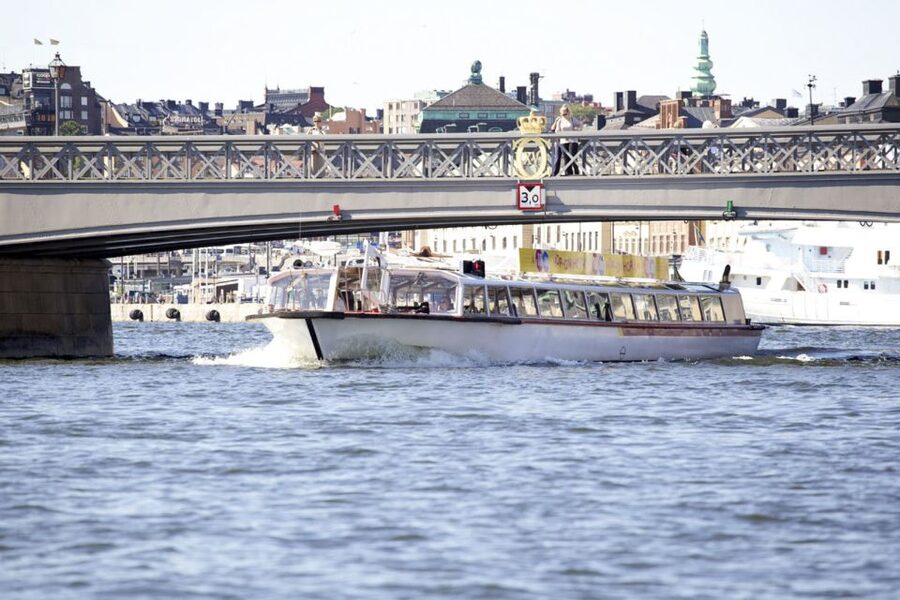
The 72-hour pass rewards a slower plan. On the first day, use the bus for an overview and visit one major attraction. On the second day, concentrate on Djurgården and its museums. On the third, use the boat and explore Gamla stan, Skeppsholmen, Fotografiska, or Södermalm.
Do not activate the pass on a late arrival day unless you plan to ride soon. The ticket is time-based, so a short evening ride can waste much of a 24-hour period.
The 72-hour option is also safer for changeable weather. You can choose the boat on a clear day and save indoor museums or the bus for less pleasant weather. The tradeoff is price. If your sightseeing is limited to the Old Town and one nearby museum, walking and regular public transport may cost less.
Price, comfort, and overall value
At $27 per person, this is not an automatic bargain. Its value comes from repeated use, not from one scenic ride.
I would consider it good value if you plan to visit several districts, use the boat at least once, or want an easy way to connect the Royal Palace, Djurgården, City Hall, and Södermalm. It is also useful when you want commentary without joining a fixed walking group.
I would be more cautious if you have only a few hours, are staying in central Stockholm, or mainly want to reach one museum. Stockholm’s center is walkable, and a short ride can make the per-use cost high.
The staff handling boarding are generally friendly, and the operation is usually straightforward. The main frustrations are crowded replacement buses, occasional audio faults, and the seasonal boat schedule. Those are manageable if you check times and avoid planning around the final departure.
Cancellation is flexible up to 24 hours before the experience for a full refund, and you can reserve now and pay later. That is useful when your Stockholm plans may change, but the key decision remains how much riding you will actually do.
Should you book the Stockholm hop-on hop-off pass?
Book it if you want a simple overview, plan to visit several separated sights, or like having both bus and boat available. The combined ticket is the most appealing choice during the summer boat season, especially for a 72-hour stay.
Choose the bus-only option if you visit before late May or after mid-September, since boat service is unavailable or limited then. If you use a wheelchair, the bus is the practical choice because the boats are not wheelchair accessible.
Skip it if you prefer walking, will stay mainly in Gamla stan, or need evening transport. For everyone else, this is a useful, flexible introduction to Stockholm, provided you check the seasonal timetable and treat the pass as a transport tool rather than a single sightseeing ride.
FAQ
How long is the Stockholm hop-on hop-off ticket valid?
You can choose a ticket valid for 24 hours or 72 hours.
Can I use both the bus and boat?
Yes, if you select the combined pass. Other options provide bus-only or boat-only access, depending on the ticket selected.
What languages are available for the audio guide?
The listed audio guide languages are Chinese, English, Estonian, Finnish, French, German, Italian, Japanese, Russian, Spanish, and Swedish.
Are museum and attraction entrance fees included?
No. The ticket covers transportation on the selected bus, boat, or combined service. Entrance to museums and other attractions is separate.
Are the buses and boats wheelchair accessible?
The buses are wheelchair accessible. The boats are not wheelchair accessible.
Does the boat run all year?
No. In 2026, boat service is scheduled from May 28 through September 13, with different departure intervals during that period. Timetables can change, so check the current schedule before setting out.
Just added around the world
- London Panoramic Open Top Bus Tour with Audio Guide★ 4.0 · 209 reviews
- Paris by Rail – Sightseeing Bus and Eiffel Tower Champagne Lunch★ 4.0 · 18 reviews
- London Vintage Bus Tour with Cream Tea at Harrods★ 4.0 · 145 reviews
- London’s Family-friendly Routemaster Bus Tour with Live Guide★ 5.0 · 18 reviews
- London Vintage Bus Tour Including River Thames Cruise with Optional Lunch★ 4.0 · 286 reviews
- London Tour Hop-on Hop-off Bus with Optional Thames River cruise★ 3.5 · 39 reviews
- Christmas Lights Open-Top Bus Tour★ 4.0 · 31 reviews
- Christmas Lights Tour by Vintage Bus in London★ 5.0 · 2 reviews
Hop-On Hop-Off Bus Tours, compared.

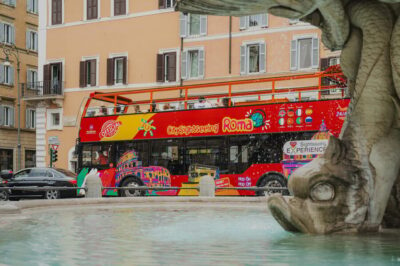
City Sightseeing Hop-on Hop-off Bus with Audioguide
Read our review →
Tootbus Hop-on Hop-off (Optional River Cruise)
Read our review →
Big Bus Hop-On Hop-Off Tour with Optional Cruise
Read our review →
London Big Bus Hop-On Hop-Off Tour with Optional River Cruise
Read our review →

Big Bus Hop-on, Hop-off Open-Top Sightseeing Tour
Read our review →
Browse the lists this tour appears in