
Review · UNITED STATES
The Birthplace of Hip Hop Bus Tour
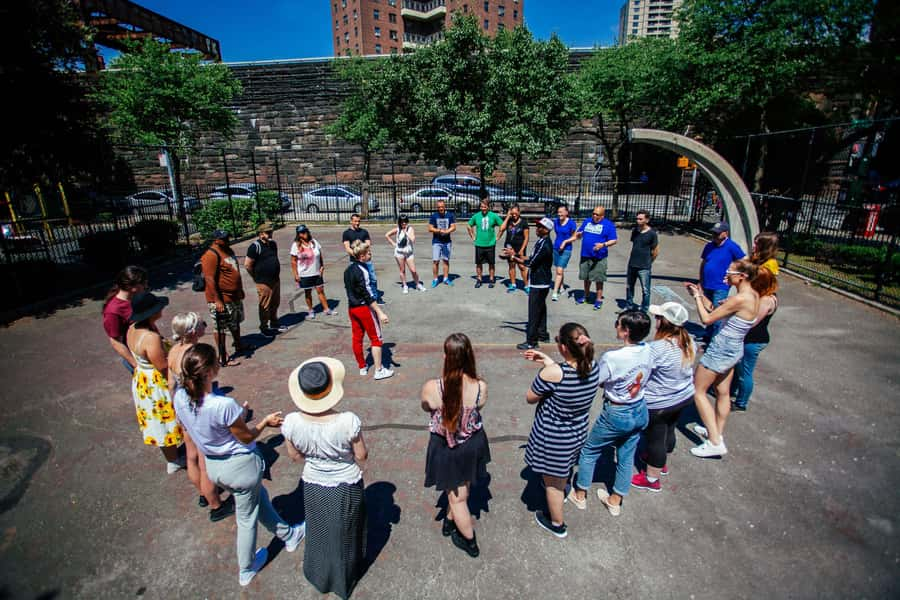
Hip-hop began on New York streets, not in a museum display. This three-hour bus tour connects Manhattan and the Bronx with live stories from hip-hop musicians, stops at key landmarks, and an on-board performance. I like the personal angle, especially when guides such as Rayza, Razor, or Mighty Mike C bring their own memories and MC skills into the ride.
I also like the clear mix of music, place, and history: you see the Apollo Theater, the Graffiti Hall of Fame, 1520 Sedgwick Avenue, and the Bronx Walk of Fame in one outing. The main drawback is that this is a moving, tightly timed bus experience, not a slow walking tour, and there is no lunch stop.
Key points to know before booking

- 1520 Sedgwick Avenue is the central stop: This Bronx address is closely linked with the early development of hip-hop and gives the tour a powerful sense of place.
- The guide is part of the show: Hip-hop performers and respected practitioners lead the ride, with live performance and personal stories included.
- The Apollo Theater is a photo stop: You can take a picture outside one of Harlem’s best-known cultural landmarks.
- The tour links Manhattan and the Bronx: You cover several important areas without arranging separate subway trips or local transport.
- The $95 price buys more than a bus ride: You are paying for a specialist guide, a live performance, transport, and access to a very specific New York story.
- Pack light and eat beforehand: Food, drinks, luggage, large bags, strollers, and several mobility devices are not allowed in the vehicle.
Why this bus tour tells New York’s hip-hop story well
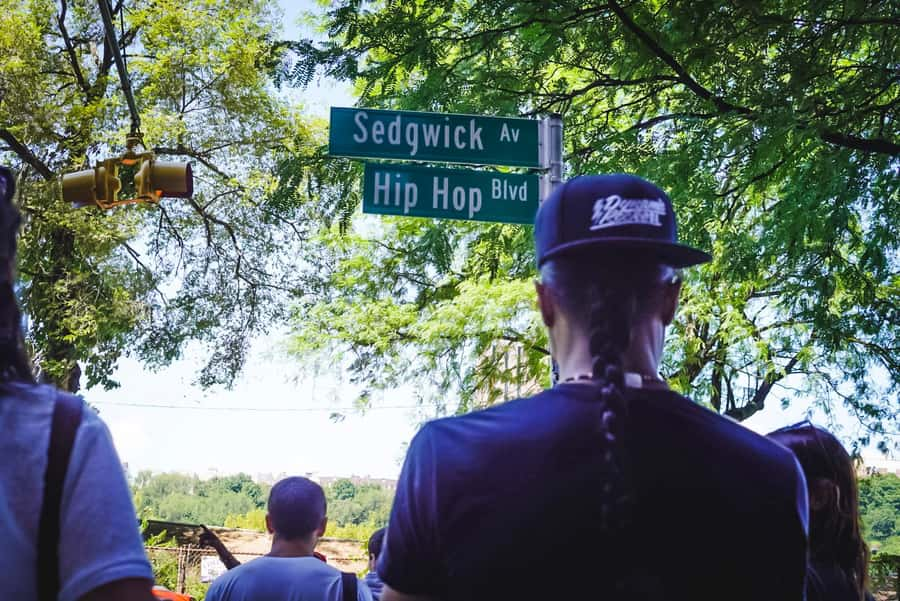
I like tours that explain a city through the people who made it. This one uses the bus as a moving classroom, but it does not rely only on a recorded soundtrack or a standard sightseeing script. The guide is a musician or experienced hip-hop practitioner, so the commentary comes with performance skill and personal connection.
That matters because hip-hop is not just a list of famous names and songs. It grew from neighborhoods, clubs, street corners, visual art, dance, rhythm, and community. The tour presents those connected parts through stories about the places where the culture took shape.
You may be guided by Rayza, also called Razor in some tour settings, or by Mighty Mike C of the Fearless Four. The feedback around these guides repeatedly points to energy, humor, strong MC ability, and useful context. Rayza is praised for making the ride lively and informative, while Mighty Mike C and driver John are credited with creating an organized and entertaining trip.
I would book this for the human element. A guide who can explain a place and perform is offering something you cannot get from a regular hop-on, hop-off route.
A few more bus tours around New York City worth a look
- New York: Hop-on Hop-off Sightseeing Tour by Open-top Bus
★ 4.2 · 5,863 reviews - Big Bus NYC: Hop-On Hop-Off Sightseeing Tour by Open-top Bus
★ 3.5 · 4,762 reviews - NYC Bus Tour of Brooklyn, Bronx, Queens: Art, Food & Sports
★ 5.0 · 3,805 reviews
Starting at the Museum of the City of New York
The meeting point is 1220 Fifth Avenue, at the entrance to the Museum of the City of New York. This places you at the upper edge of Museum Mile, a useful location for pairing the tour with other Harlem or Upper East Side plans.
You should arrive ready for a bus departure rather than a museum visit. The tour is conducted in English, and handouts may be available in German, Italian, French, Japanese, Korean, and Spanish if you ask at check-in. The guide language remains English, so the handouts are best seen as extra support rather than a translated tour.
The meeting point also hints at the tour’s broader purpose. You are not beginning in a nightclub or music venue. You are starting beside a city museum, then moving into the neighborhoods and landmarks that help explain New York’s cultural life from the ground up.
The bus format is useful here. New York distances can be tiring when you try to connect Harlem and the Bronx on foot, especially if you are also sightseeing elsewhere that day. The bus lets you cover more ground while the guide keeps the story moving.
Harlem and the Apollo Theater photo stop
The Apollo Theater is one of the tour’s most recognizable stops. Even if you know little about hip-hop, you will likely recognize the building as a major Harlem performance venue and a symbol of Black entertainment in New York.
The stop is described as photo-friendly, so plan on a picture outside rather than a full theater visit. That distinction matters. You are seeing the Apollo as part of a wider cultural route, not buying admission to a show or taking a backstage tour.
I like this kind of stop because it gives the music a visible landmark. A name in a song or a story can feel distant. A theater facade gives you a place to point to, photograph, and remember when the guide explains Harlem’s role in the development of popular music.
You should also expect a short visit rather than a long pause. The tour has several locations to cover in three hours, and the Apollo is one part of a larger route. If you want to study the building at length, leave time to return independently.
The Graffiti Hall of Fame and hip-hop’s visual side
The Graffiti Hall of Fame adds an important piece to the story. Hip-hop is often reduced to rapping, but the tour presents the culture through several forms, including visual art. This stop helps show how walls and public spaces became part of the movement’s identity.
It is also a useful change of pace from theater history. The Apollo connects you with a formal performance venue. The Graffiti Hall of Fame points you toward public art and the creative use of city space.
Do not expect a long workshop or a chance to paint. The stated experience is a stop at the site, with the guide providing context and time for looking and photographs. The value comes from seeing how the culture appeared in the city around you, not from taking home an art project.
The route’s mix of locations is one of its strongest features. You are not simply driven past famous buildings. You are shown different settings tied to music, performance, art, and neighborhood life.
Same place, a different way to ride:
- From NYC: Guided Day Trip to Washington DC by Van or Bus
★ 4.7 · 3,418 reviews - New York Night Tour: Open Top Bus Tour by TopView®
★ 4.5 · 2,783 reviews - From Manhattan: 4-Hour Dyker Heights Holiday Lights Bus Tour
★ 4.6 · 2,426 reviews - Half-Day Bus Tour of NYC Top Highlights
★ 5.0 · 1,764 reviews
1520 Sedgwick Avenue in the Bronx
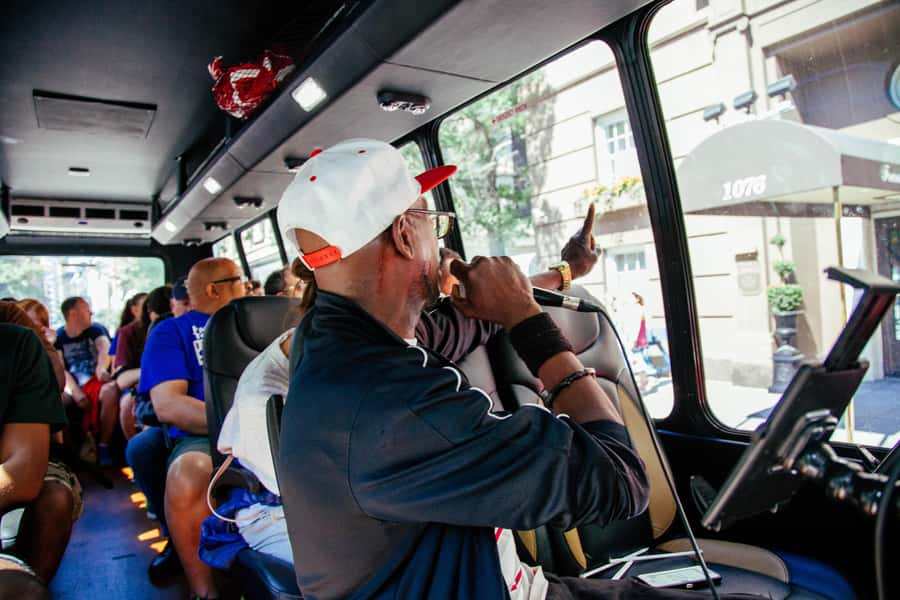
The visit to 1520 Sedgwick Avenue is likely the most important stop for anyone interested in hip-hop’s beginnings. This Bronx address is associated with the early formation of the movement and gives the tour a specific point of focus.
There is a big difference between hearing that hip-hop started in the Bronx and seeing an actual address connected with that story. The location helps turn a broad cultural claim into something concrete. You can stand there, take in the setting, and understand that this music grew from an ordinary residential place rather than a purpose-built national institution.
The guide’s role is especially important here. The address itself will not explain its significance. The value comes from the stories, timing, and cultural background provided by the musician leading the bus.
I would pay close attention during this part of the route, even if you are mainly joining for the music. This is where the tour most clearly connects geography with social history. The Bronx is not being used as a backdrop. It is presented as a source of ideas, sound, and community.
The Bronx Walk of Fame and overlooked city landmarks
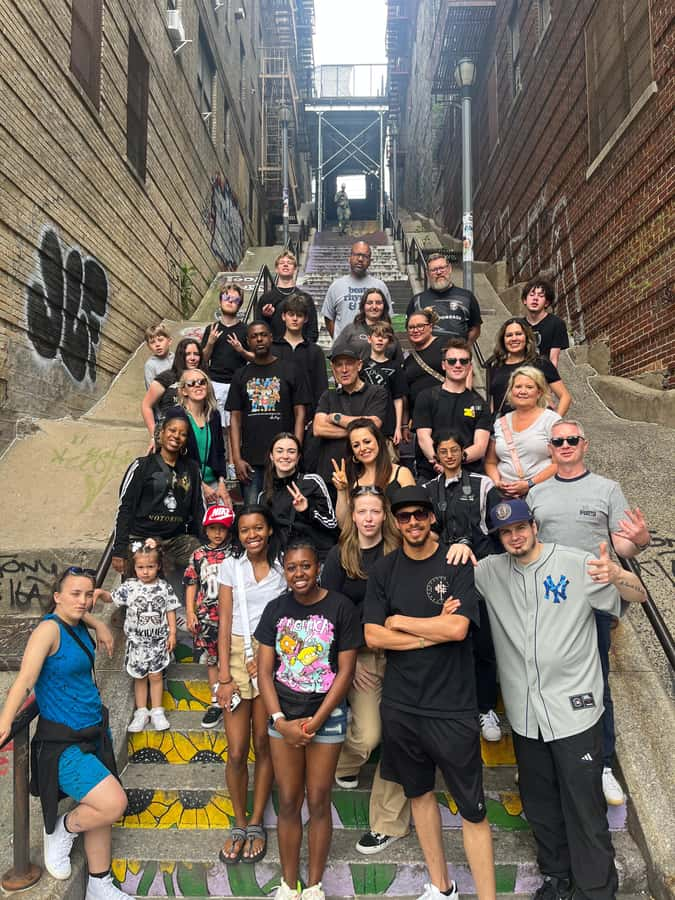
The Bronx Walk of Fame adds another layer to the route by honoring people connected with the borough. It helps you see the Bronx as a place with its own cultural heroes and public memory.
This is one reason the tour can work for people who are new to hip-hop. You do not need a long list of artists memorized before you arrive. The landmarks give the guide a structure, and the stories explain why each place matters.
The tour also calls at historic clubs and other less noticed hubs, though the exact order and length of each stop can vary. That makes the experience less predictable than a fixed museum circuit, but it also means you should not expect every location to receive equal time.
I appreciate that the route does not focus only on the most famous Manhattan names. The Bronx receives real attention, and the bus helps show how much of New York’s music story sits outside the usual visitor circuit.
Live performance from a hip-hop guide
The included live performance changes the feel of the tour. You are not only hearing a guide explain old neighborhoods. You are also seeing the skills that make the subject come alive.
The performers leading the tours are praised for energy and MC ability. Rayza is repeatedly singled out for enthusiasm, insight, and entertainment, while Mighty Mike C brings experience connected with the Fearless Four. These details matter because a live performance depends heavily on the person in front of the group.
The performance also helps bridge generations. One family group with children aged 13 and 19 enjoyed the experience, and the comments suggest it worked for both younger and older participants. You can come as a longtime fan, a curious first-timer, or a parent trying to share something more meaningful than a standard sightseeing ride.
Still, a live guide means the tone may vary from one departure to another. Some people will love an energetic MC at the microphone. If you prefer quiet, academic commentary, this may feel more animated than you want.
What three hours feels like on the bus
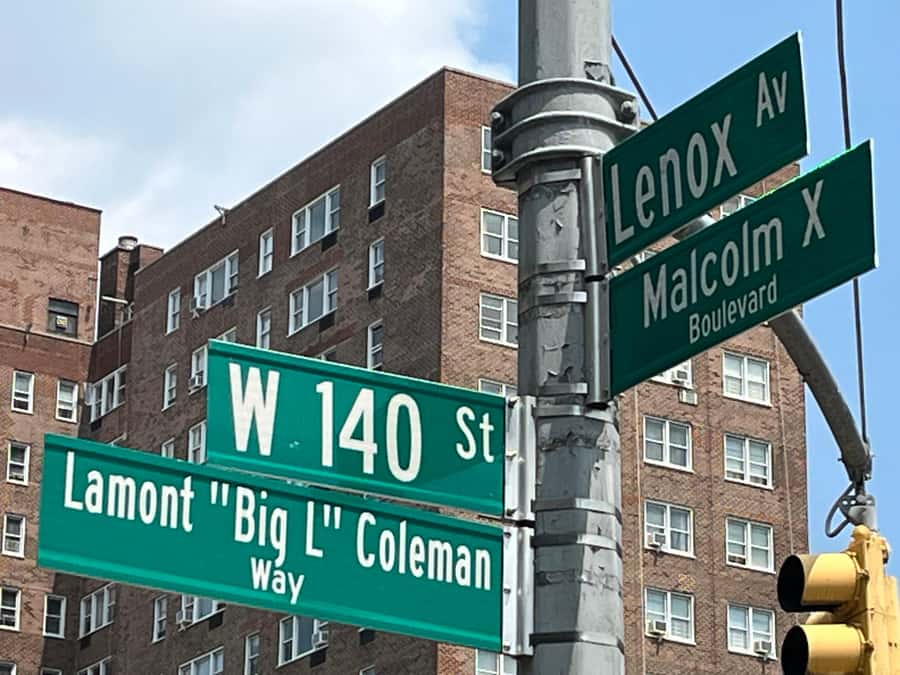
Three hours is a sensible length for this route. It gives you time to move between Manhattan and the Bronx, hear explanations, enjoy the performance, and stop for photographs without turning the outing into a full-day commitment.
The bus is both the practical strength and the main limitation. You can reach multiple locations without planning transfers, but you will spend much of the experience seated and moving between stops. This is not a walking tour with long stretches to explore each neighborhood independently.
There is no lunch stop, so eat before you arrive. Food and drinks are not allowed in the vehicle, and the rules also prohibit smoking, alcohol, drugs, aerosols, glass objects, flash photography, audio recording, and video recording.
The restrictions may feel strict, but they help protect the vehicle and keep the live commentary focused. You should also leave large bags, luggage, bikes, and non-folding strollers at your accommodation. Space for infant strollers, carriages, or baby buggies is not included.
Is $95 a fair price?
At $95 per person, this is not a cheap way to get around New York. The price makes more sense when you count the elements together: a three-hour bus route, an English-speaking hip-hop musician guide, a live performance, guided stops, and transport between Manhattan and Bronx locations.
You are paying for a specialist experience rather than general city sightseeing. If you already know the hip-hop landmarks and can comfortably reach them on your own, you may prefer a cheaper self-guided day. But arranging the same route independently would not provide the performer guide, personal stories, or live show.
The strongest value comes from the combination of access and interpretation. 1520 Sedgwick Avenue and the Apollo Theater are easy to name, but their importance is harder to understand without context. The guide supplies the connection between place, people, and music.
The 4.9 rating from 25 reviews also suggests a strong level of satisfaction, with praise focused mainly on guide energy, organization, safety, and the amount learned. I would consider the fare reasonable for fans who want a focused cultural experience rather than a general bus loop.
Who should book, and who should think twice?
I would recommend this to hip-hop fans, music students, families with older children, and anyone who wants a New York tour built around culture rather than famous skyline views. It suits you especially well if you enjoy meeting a performer and hearing stories that are difficult to get from a guidebook.
It can also work for newcomers. You do not need to identify every artist or know the history beforehand. The tour is designed to explain the origins and development of hip-hop while showing related forms such as music, performance, and visual art.
I would think twice if you want a flexible day with long stops, food breaks, shopping, or plenty of time outside the bus. You should also reconsider if your group includes an unaccompanied minor, someone who needs a non-folding wheelchair or walking frame, or a baby with a stroller, since these are not permitted.
Book with a light bag, eat first, and keep your camera ready for the Apollo, Graffiti Hall of Fame, 1520 Sedgwick Avenue, and Bronx Walk of Fame. Audio and video recording are not allowed, so the best souvenir may be the story you remember rather than a complete recording of the ride.
Should you book the Birthplace of Hip Hop Bus Tour?
I would book it if you want the Bronx and Harlem explained through the voices of people connected to hip-hop. The tour’s best qualities are specific: musician guides, live performance, meaningful addresses, and a route that joins major landmarks with less familiar cultural sites.
The $95 fare is easiest to justify when you value interpretation and entertainment as much as transport. If that sounds right for you, this is a focused and memorable way to spend three hours in New York. If you want independent wandering or a quiet museum-style lesson, choose another outing.
FAQ
How long is the Birthplace of Hip Hop Bus Tour?
The tour lasts three hours.
How much does the tour cost?
The price is $95 per person.
Where does the tour meet?
The meeting point is 1220 Fifth Avenue, New York, NY 10029, at the entrance to the Museum of the City of New York.
What language is the tour conducted in?
The live tour guide speaks English. Handouts may be available in German, Italian, French, Japanese, Korean, and Spanish if requested at check-in.
Which landmarks are included?
The route includes the Graffiti Hall of Fame, the Apollo Theater in Harlem, 1520 Sedgwick Avenue in the Bronx, and the Bronx Walk of Fame. It also visits other historic clubs and locations connected with hip-hop.
Is food provided during the tour?
No. There is no lunch stop, and food and drinks are not allowed in the vehicle.
Can I bring a stroller or large bag?
No. Baby strollers, non-folding strollers, baby carriages, luggage, and large bags are not allowed. Storage space for infant strollers or buggies is not included.
Can I cancel the booking?
Yes. You can cancel up to 24 hours in advance for a full refund. Reserve now and pay later is also available.
Just added around New York City
- NYC The Sopranos Iconic Filming Locations Bus Tour★ 4.7 · 281 reviews
- NYC: Tea Around Town Bus Tour with Live Entertainment★ 4.2 · 42 reviews
- NYC: Half-Day Luxury Bus Tour with Empire State Access★ 5.0 · 4 reviews
- NYC: Holiday Lights Guided Bus Tour★ 4.3 · 6 reviews
- NYC: Skyline Night Tour on Double-Decker Bus★ 3.2 · 35 reviews
- NYC: Gossip Girl Sites Bus Tour★ 4.6 · 443 reviews
- NYC: Holiday Lights and Dyker Heights Luxury Bus Tour★ 4.0 · 3 reviews
- NYC: Half-Day Luxury Bus Tour with One World Access★ 5.0 · 3 reviews
New York City Bus Tours, compared.

Hop-on Hop-off Sightseeing Tour by Open-top Bus
Read our review →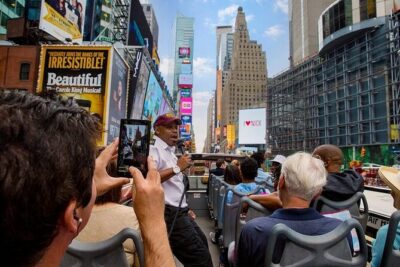
Big Bus NYC: Hop-On Hop-Off Sightseeing Tour by Open-top Bus
Read our review →
NYC Bus Tour of Brooklyn, Bronx, Queens: Art, Food & Sports
Read our review →
From NYC: Guided Day Trip to Washington DC by Van or Bus
Read our review →
New York Night Tour: Open Top Bus Tour by TopView®
Read our review →
From Manhattan: 4-Hour Dyker Heights Holiday Lights Bus Tour
Read our review →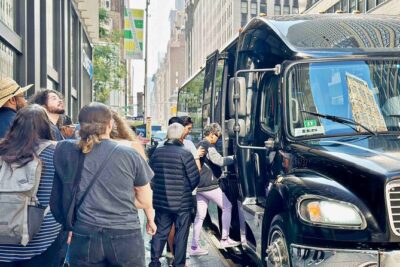
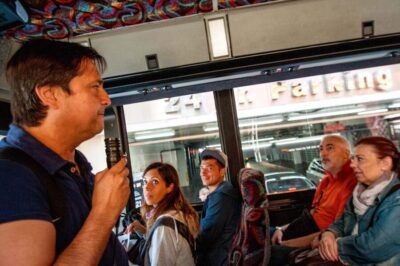
Browse the lists this tour appears in