
Review · POLAND
Warsaw: 2.5-Hour Dark Side – Praga District by a Retro Bus
Look beyond Warsaw’s postcard center. This 2.5-hour ride takes you across the Vistula into Praga, a district known for rough edges, old courtyards, prewar buildings, street art, and stories that rarely appear on a first visit. I especially like the 1980s retro bus and the live commentary, which gives the outing a sense of place rather than making it a simple drive-by tour.
The stop for E. Wedel hot chocolate is another smart touch, and the guides, especially Maks, Max, and Konrad, receive repeated praise for clear English, humor, and strong storytelling. The main drawback is that the pickup point can be hard to spot, and the experience involves some walking over uneven city streets. The group may also be larger than expected, with a smaller Nysa minibus used for eight passengers or fewer.
Key points to know before booking
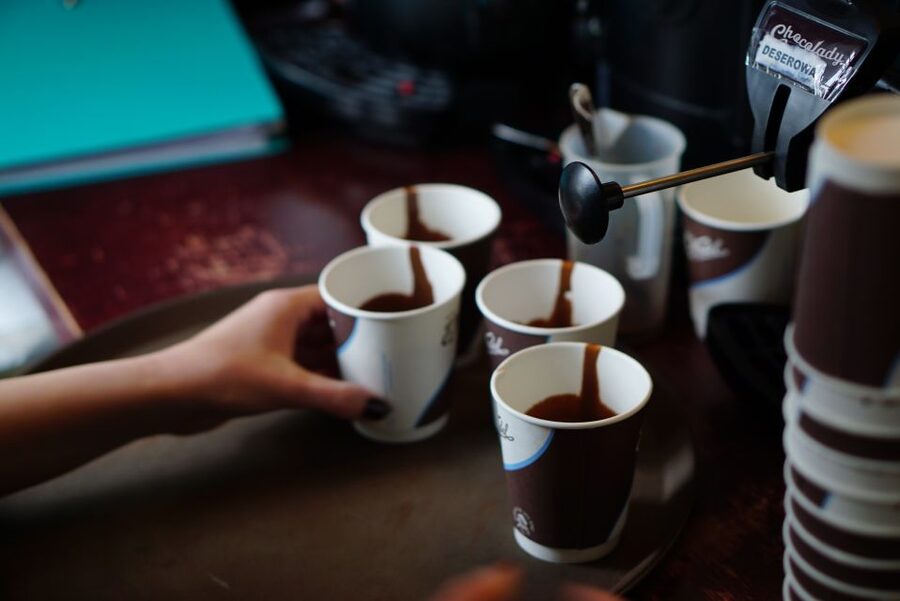
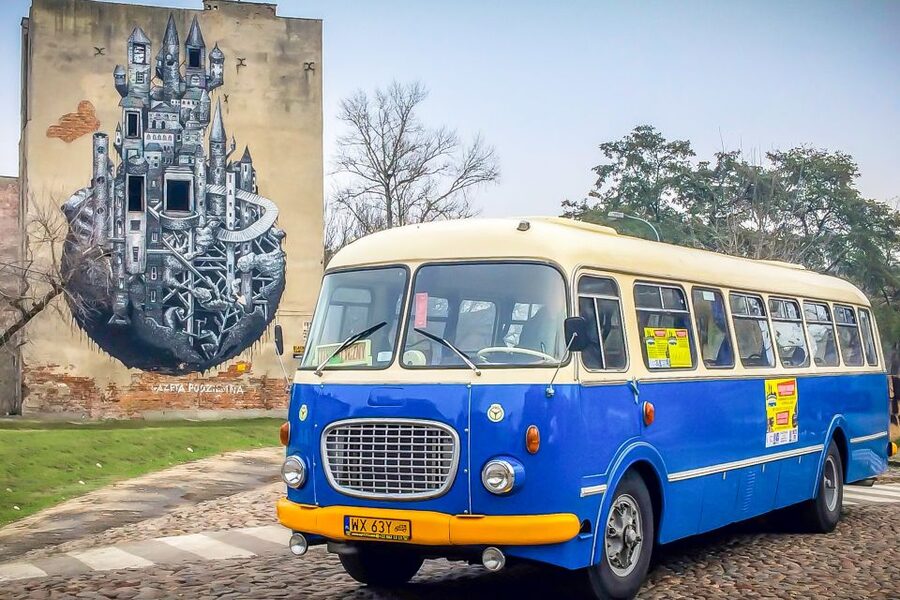
- Ride a piece of Polish transport history: A Jelcz bus, nicknamed the Cucumber, is used when more than eight people join. Smaller groups travel in a Nysa mini retro bus.
- Praga gets context, not just scenery: Your guide explains why the district gained a dangerous reputation and how it has changed.
- Hot chocolate is included: You stop at the famous E. Wedel chocolate company for a cup of hot chocolate and a short look at its Warsaw story.
- Expect real neighborhood streets: Ząbkowska, Brzeska, and Stalowa offer old facades, courtyards, shrines, and street art rather than polished tourist sights.
- The guide makes the difference: Maks, Max, Konrad, and Conrad are singled out for humor, fluent English, and personal commentary.
- Plan for a little walking: This is not a sit-down bus ride from start to finish, and it is not suitable for wheelchair users.
Starting at the Palace of Culture and Science
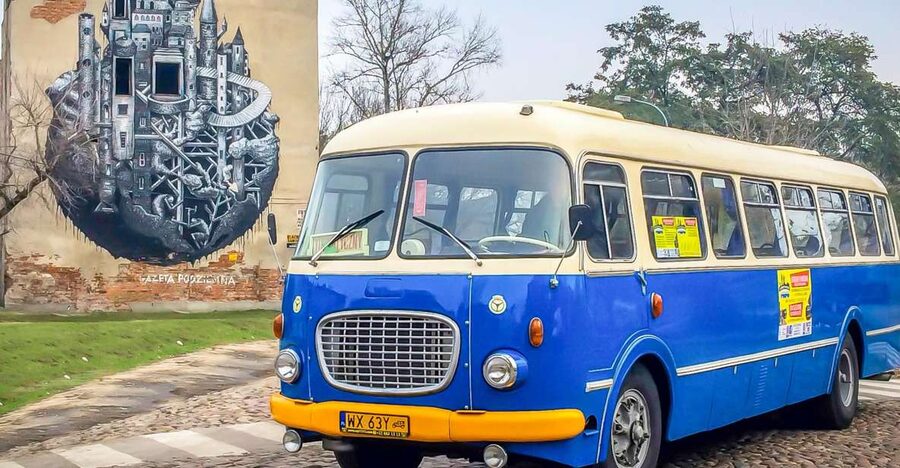
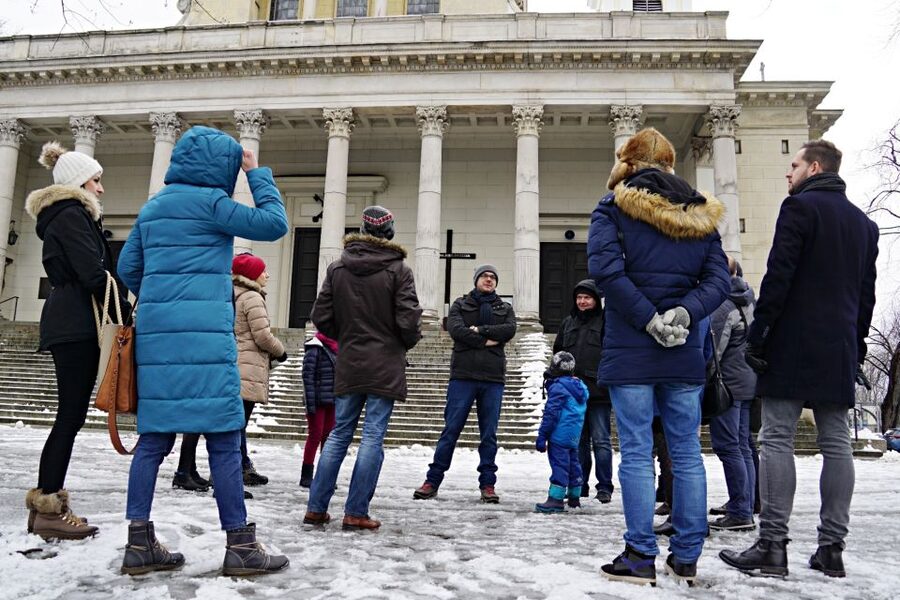
The meeting point is by the Tourist Information office at the Palace of Culture and Science. That sounds simple, but several people have found the exact pickup spot unclear. The bus may be waiting in the nearby car park rather than directly at the front of the building, so arrive early and look for the retro vehicle or ask at the information point.
The tour begins at 11:00 AM on Saturday. That weekend timing works well if you want to use the rest of the day for Warsaw’s central sights, museums, or a return visit to Praga. It also means you should not plan a late breakfast that leaves you racing across town.
The Palace of Culture and Science gives you an easy central reference point, but do not rely only on GPS. One previous passenger reported that the map location was not clear, so a few spare minutes can save an unnecessarily frantic start.
More Vintage Bus Tours in the world:
- London: Guided Sightseeing Tour on a Vintage Open-Top Bus
★ 4.6 · 2,890 reviews - Dublin: Afternoon Tea Vintage Bus Tour
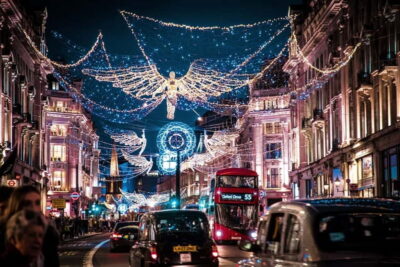
★ 4.8 · 1,664 reviews - London Christmas Lights Tour by Vintage Bus Open Top
★ 4.0 · 1,132 reviews
Crossing the Vistula into Praga
The ride across the Vistula provides a useful change of mood. Warsaw’s central districts are often presented through rebuilt Old Town streets, grand avenues, and major monuments. Praga offers a different story, one shaped by working-class neighborhoods, surviving prewar buildings, religious landmarks, factories, markets, and postwar neglect.
The tour’s title refers to Praga’s former reputation as Warsaw’s dangerous side. The guide explains where that reputation came from, while also showing why the district cannot be reduced to crime stories. You get a look at a part of Warsaw that has long had its own identity, humor, and local traditions.
This is where the live guide matters. A recorded commentary could point out a building, but it would struggle to explain how a district changes over time or answer an unexpected question. Guides such as Maks and Konrad are praised for making the history easy to follow, mixing facts with funny stories and contemporary observations.
The bus itself adds to the mood. The Jelcz Cucumber is a recognizable Polish vehicle from the communist era, and riding in one makes the transfer between stops part of the experience. It is not a luxury coach, but passengers have found it more comfortable than expected. If the English group has eight people or fewer, the operator uses a smaller Nysa mini retro bus instead. That changes the atmosphere, but not the main route or commentary.
E. Wedel hot chocolate and Warsaw’s sweet side
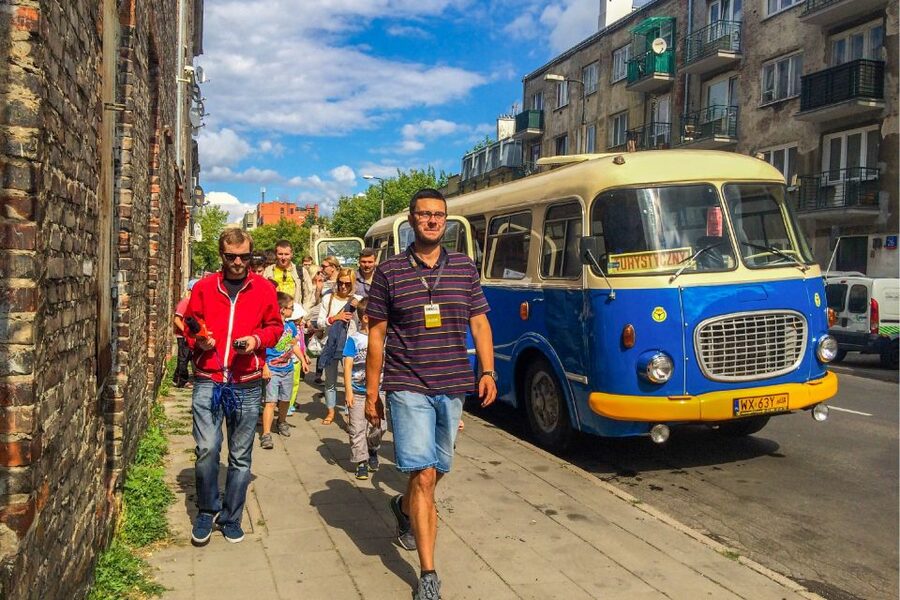
The first stop after crossing the river is a chocolate factory connected with E. Wedel, a company that has produced sweets in Warsaw since the mid-19th century. You hear the company’s story and receive a cup of hot chocolate.
This is a welcome pause after the initial drive, especially in cold weather. It also adds a pleasant contrast to the tour’s darker stories. Praga is introduced through old reputations, black-market tales, and rougher corners, then softened with one of Warsaw’s best-known treats.
Keep your expectations in check. The stop includes hot chocolate, not a full factory tour. One passenger felt that an actual walk through the production area would have made this part stronger. If you are hoping to see chocolate being made, this is not that kind of visit.
Still, the stop earns its place because it gives you a recognizable local connection and a short break from the bus. At $41 per person, an included drink helps the price feel more reasonable, though the main value remains the guide and access to Praga rather than the beverage itself.
Basilica of the Sacred Heart of Jesus
The next stop is the Basilica of the Sacred Heart of Jesus, one of the area’s major religious buildings. Its design was inspired by the Basilica of Saint Paul in Rome, giving it a scale and appearance that may surprise you in this part of Warsaw.
The basilica broadens the tour beyond streets and urban legends. You see how religious architecture shaped the district and how Praga’s identity includes more than its rougher stories. The guide provides the context, so you are not left to admire the facade without understanding why it matters.
The tour is not presented as a long formal church visit. Instead, the basilica is one part of a wider route, and the time available at each stop can depend on the group and the day. If you want a detailed architectural study, you would need a separate visit. For a city tour, the stop gives you a useful landmark and a change of pace.
A few more bus tours around the world worth a look
- Mt Fuji and Hakone 1-Day Bus Tour Return by Bullet Train
★ 5.0 · 26,383 reviews - Barcelona: 24 or 48-Hour Hop-On Hop-Off Bus Tour
★ 4.4 · 20,872 reviews - London: Warner Bros. Studio Harry Potter Tour & Branded Bus
★ 4.7 · 19,194 reviews - Rome: City Sightseeing Hop-on Hop-off Bus with Audioguide
★ 4.0 · 16,045 reviews
Koneser, the former vodka factory
Koneser is one of Praga’s most interesting contrasts. The complex began as a vodka factory, and the guide explains what was produced there and what occupies the site now.
This stop helps you see how old industrial places can acquire new roles. Rather than presenting Praga as frozen in its past, the tour shows a district where former factory buildings form part of a newer urban setting. That shift is central to understanding contemporary Praga.
The exact amount of time spent at Koneser is not specified, so treat it as a guided stop rather than a full independent visit. You will hear the site’s story and see the complex, but you may want to return later if you want more time to explore it on your own.
The area is also useful for visitors who want to plan a second Praga outing. One passenger returned to the streets around the vodka factory on later days after seeing them on the tour. That is a good sign that the route can serve as an introduction, not just a one-time bus excursion.
The Praga Bermuda Triangle
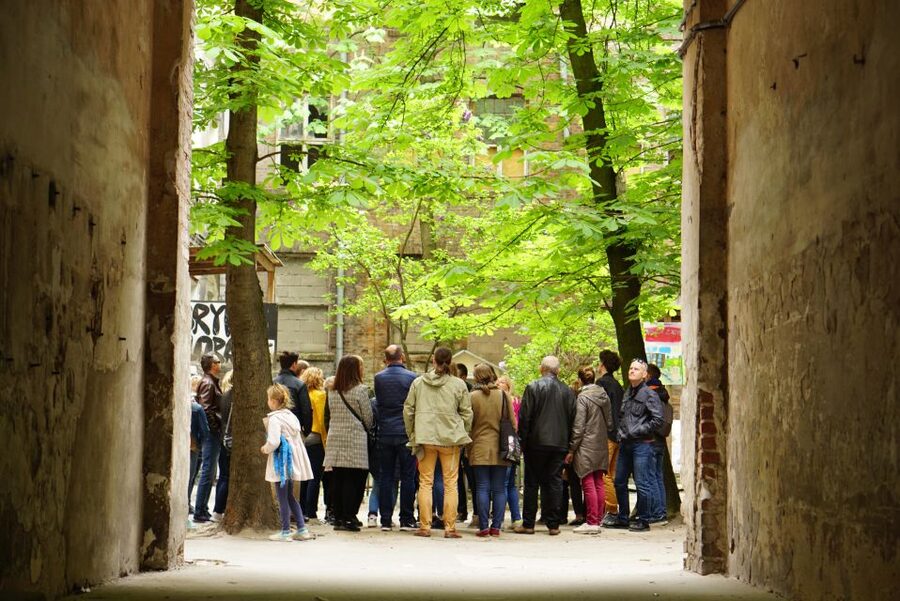
The so-called Praga Bermuda Triangle brings the tour closer to the district’s most atmospheric streets. The guide explains how the nickname began and takes you through an area with surviving prewar architecture, scenic courtyards, and small colorful shrines.
This is likely to be the most rewarding section if you enjoy urban details. Look past the larger facades. The courtyards and religious shrines provide small clues about the lives of residents who shaped the neighborhood over generations.
The streets named along the route include Ząbkowska, Brzeska, and Stalowa. They offer a less polished view of Warsaw, with old surfaces, layered architecture, graffiti, and street art. That roughness is part of the appeal, but it also means you should wear comfortable shoes and expect some uneven walking.
The nickname should not lead you to expect a staged danger experience. The tour uses Praga’s reputation as a way into its past, but the actual outing is a guided look at architecture, culture, and change. You are not being sent into an unsafe area alone, and the guide remains with the group.
Street art, film locations, and old Warsaw
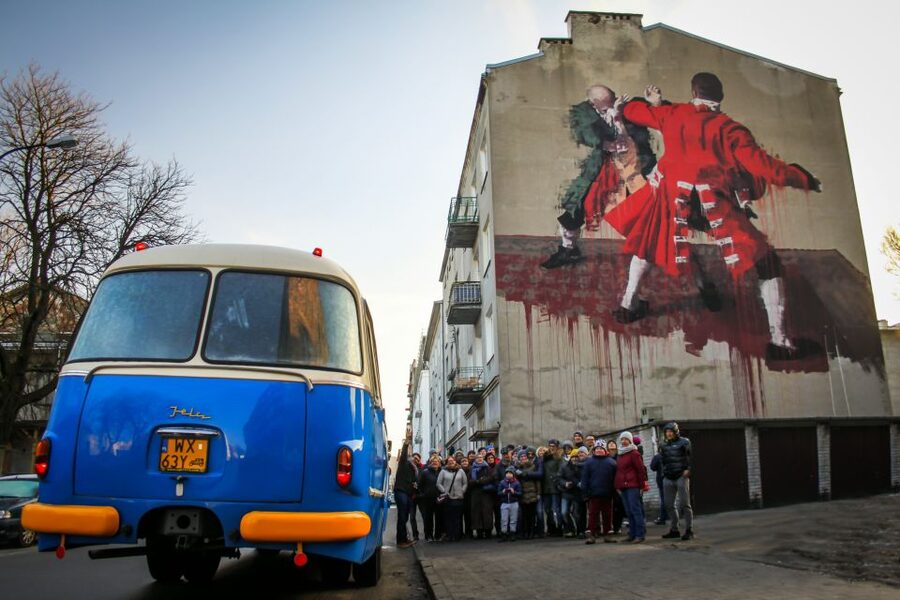
Street art is one of the tour’s advertised highlights, and it fits naturally with Praga’s mix of old and new. The murals and painted walls add color to streets that might otherwise seem worn, while the guide connects what you see to the neighborhood’s current cultural life.
Praga has also attracted filmmakers. Roman Polański filmed parts of The Pianist here, and the guide points out film connections and other productions. This gives the streets another layer of meaning, particularly if you know the film or enjoy seeing how real locations appear on screen.
The movie references are not the whole point. The stronger benefit is that they help you notice details you might otherwise pass without a second glance. A worn wall, a courtyard, or an old street can become a clue to the district’s past rather than just background scenery.
You should also expect commentary on Warsaw beyond the basic sightseeing script. The best guides on this route combine city history with cultural context and current observations. Max and Maks are repeatedly praised for being funny and easy to listen to, while Konrad is noted for answering questions and adjusting his explanations to the group.
How much walking and bus time to expect
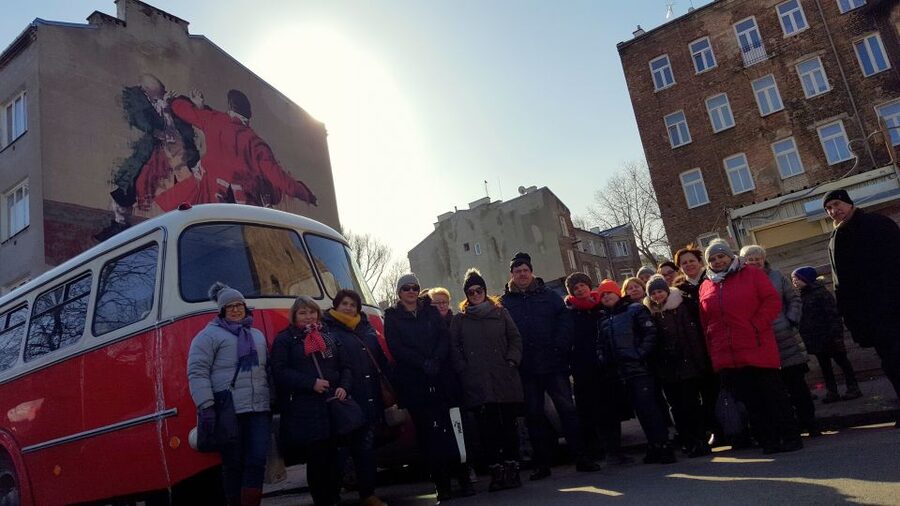
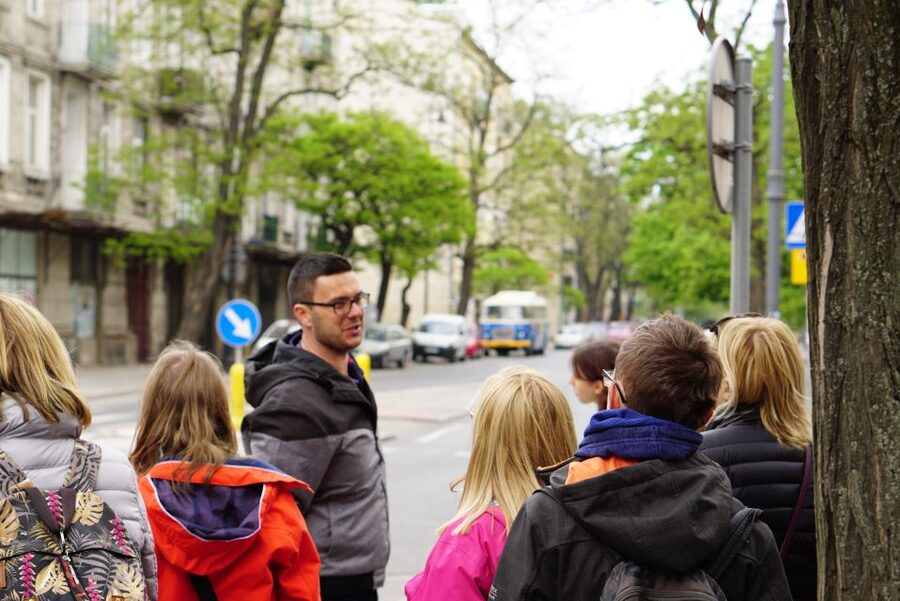
The experience lasts 150 minutes and combines driving with short walks at several stops. It is not a hop-on, hop-off service, and you do not spend the entire time seated.
The walking is described as limited, but it can feel more noticeable in hot weather. One passenger enjoyed the tour but found the walking tiring during a Warsaw summer. Comfortable shoes are essential, and water is sensible even though it is not specifically listed as required.
The retro bus is part of the appeal, but it may not suit everyone. Older buses can have a different ride and sound level from a modern coach. One passenger sitting at the back missed some commentary because other people were talking and the sound system could be improved. If hearing every word matters to you, try to sit nearer the guide or front of the bus.
Group size also affects the feel of the tour. Eight passengers or fewer means a Nysa mini retro bus, which can feel more intimate. Larger groups use the Jelcz Cucumber. The product information does not promise a fixed group size, so do not book assuming you will automatically receive a private or tiny-group tour.
The value of $41 per person
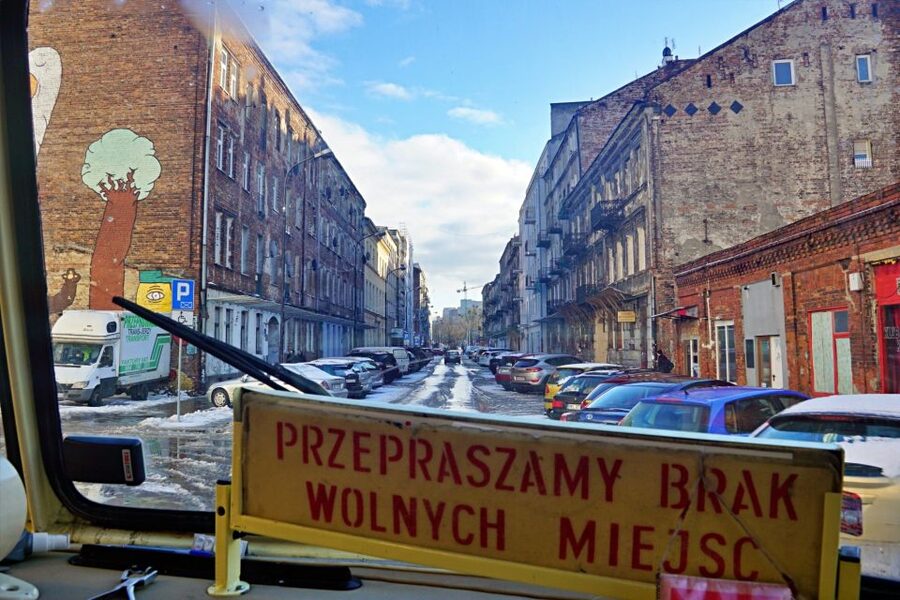
At $41, this is not the cheapest way to see Praga. You are paying for a 2.5-hour route, an English-speaking guide, transport in a historic vehicle, live commentary, and hot chocolate.
The value is strongest if you would not feel comfortable finding the district’s less obvious streets on your own. A standard taxi or public transport ride could get you across the Vistula, but it would not explain the former market where almost anything was said to be available, from jeans and diplomas to Kalashnikov rifles. Nor would it connect the old vodka factory, the basilica, the courtyards, and the film locations into one clear story.
The tour is also a good choice if you have already covered Warsaw’s main sights. It adds texture rather than repeating the Royal Route or Old Town. Several people who took it said they would not have visited these parts of Praga without a guide.
The price is less compelling if you want a detailed chocolate factory visit, a long stop inside Koneser, or a private group. It is also not the right purchase for anyone who dislikes walking or wants a purely comfortable sightseeing drive.
Free cancellation up to 24 hours before departure and a reserve-now, pay-later option make it easier to fit into a changing Warsaw schedule. The tour is in English, and pets are not allowed.
Who will enjoy this Praga tour most?
I would recommend it to you if you:
- Have already seen Warsaw’s main central attractions.
- Enjoy local history, city change, and slightly rougher neighborhoods.
- Prefer a guide who tells stories instead of reading a list of dates.
- Like unusual transport and historic vehicles.
- Want help finding Praga’s courtyards, shrines, street art, and old industrial sites.
- Are comfortable with a modest amount of walking.
It suits couples, adult families, solo visitors, and small groups looking for a different Saturday morning. It could also work well for a bachelor party or another casual group outing, provided everyone is ready to keep time and listen to the guide.
I would hesitate if you use a wheelchair, since the tour is not suitable for wheelchair users. I would also think twice if you need a quiet vehicle with perfect sound throughout or if you want every stop to be a long, independent visit.
Should you book the Dark Side of Praga tour?
Book it if you want Warsaw to feel like a real city rather than a collection of famous monuments. The strongest parts are the guide’s storytelling, the retro bus, the old streets, and the chance to see how Praga’s difficult past sits beside its creative present.
Do not book it expecting danger, a factory tour, or a private vehicle by default. Instead, expect a friendly English-language introduction to a complicated district, with a warm drink, a few short walks, and plenty of useful context.
The 4.5 rating from 248 bookings reflects a consistently positive experience, and the praise centers on the guides. If you can find an English departure led by Maks, Max, or Konrad, you are likely to get the lively, personal commentary that makes this tour worth the $41.
FAQ
Where does the tour meet?
The meeting point is at the Palace of Culture and Science, by the Tourist Information office. The bus may be in the nearby car park, so arrive early and check the exact position before departure.
When does the tour depart?
The tour takes place every Saturday morning at 11:00 AM.
How long does the experience last?
The tour lasts 150 minutes, or 2.5 hours.
Which bus will be used?
For groups of more than eight passengers, the operator uses a Jelcz Cucumber retro bus. For groups of up to eight passengers, a Nysa mini retro bus is provided.
Is hot chocolate included?
Yes. The tour includes a cup of hot chocolate at the E. Wedel chocolate stop.
Is the tour suitable for wheelchair users?
No. The experience is not suitable for wheelchair users and includes a small amount of walking. Comfortable shoes are recommended.
Just added around the world
- London Panoramic Open Top Bus Tour with Audio Guide★ 4.0 · 209 reviews
- Paris by Rail – Sightseeing Bus and Eiffel Tower Champagne Lunch★ 4.0 · 18 reviews
- London Vintage Bus Tour with Cream Tea at Harrods★ 4.0 · 145 reviews
- London’s Family-friendly Routemaster Bus Tour with Live Guide★ 5.0 · 18 reviews
- London Tour Hop-on Hop-off Bus with Optional Thames River cruise★ 3.5 · 39 reviews
- London Vintage Bus Tour Including River Thames Cruise with Optional Lunch★ 4.0 · 286 reviews
- Christmas Lights Open-Top Bus Tour★ 4.0 · 31 reviews
- London: Guided Sightseeing Tour on a Vintage Open-Top Bus★ 4.5 · 17 reviews
Vintage & Classic Bus Tours, compared.
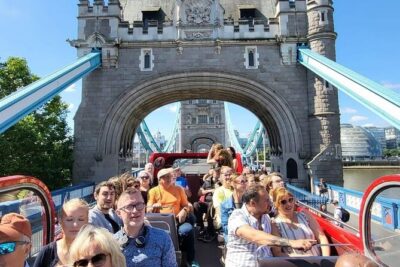
Guided Sightseeing Tour on a Vintage Open-Top Bus
Read our review →
London Christmas Lights Tour by Vintage Bus Open Top
Read our review →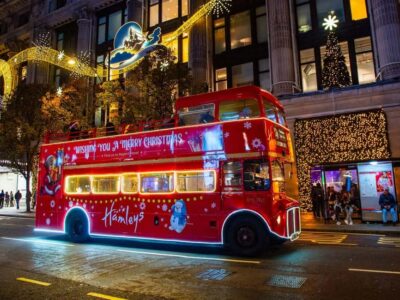
Christchurch: Hop-On Hop-Off Tour by Vintage Tram
Read our review →
Vintage London Bus Tour Including Cruise with London Eye Option
Read our review →
Browse the lists this tour appears in