

Review · VIETNAM
Saigon: City Sightseeing Hop-On Hop-Off Bus Tour
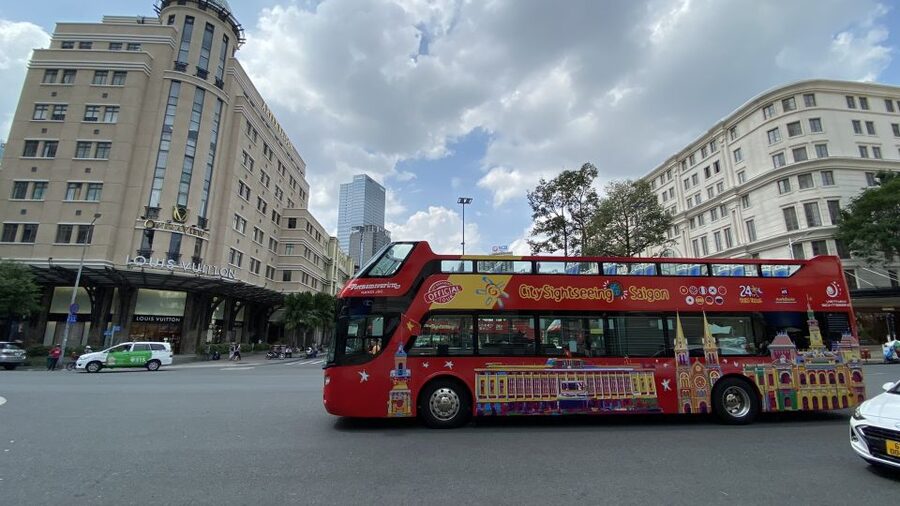
See Saigon from above, then choose your stops. I like the two daytime routes and the freedom to pause at museums, markets, temples, and colonial landmarks. The free Wi-Fi and nine-language audio guide are useful bonuses, though the commentary can fall out of sync or become hard to hear above the city noise.
This is a good first look at Ho Chi Minh City, especially if you have only a day or two. I also like the friendly ground staff, who have handed out ponchos in the rain and rice hats during hot afternoons. The main catch is timing: buses come every 30 to 45 minutes, so one missed bus can eat into your sightseeing time.
Key points before you book
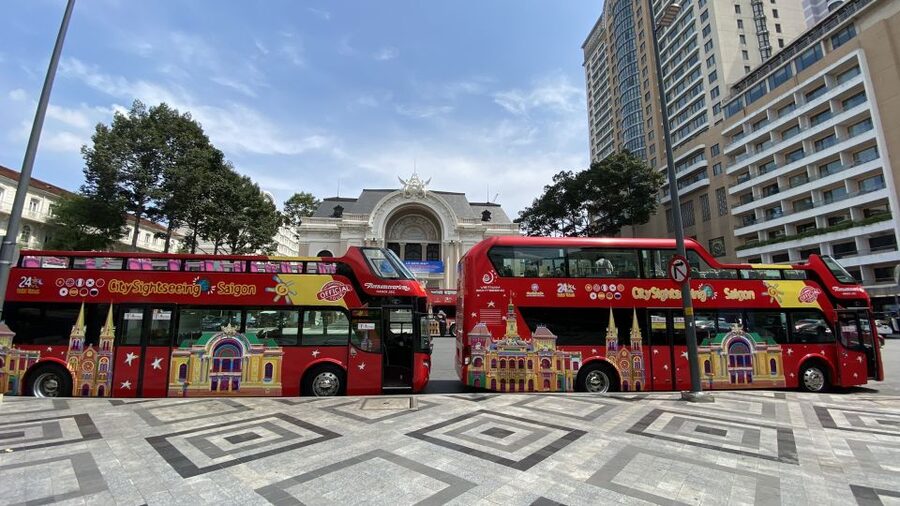
- Two routes cover very different sides of Saigon: The red route focuses on central landmarks, while the blue route reaches District 5 and several pagodas and markets.
- A full red loop takes 75 minutes: The blue loop takes 80 minutes, giving you a useful overview before you decide where to get off.
- The best first ride is usually a complete loop: You can learn the city layout before choosing stops for a second circuit.
- The open top deck gives the best views: Sit downstairs in air conditioning when the heat, rain, or traffic noise becomes too much.
- The audio guide comes in nine languages: English, Spanish, German, French, Chinese, Japanese, Korean, Vietnamese, and Russian are available.
- The $21 price works best over two days: It is less convincing if you only ride once or use it simply as a point-to-point transfer.
What this bus tour is really good for

Ho Chi Minh City can feel like a lot on arrival. Motorbikes stream through every gap, major roads are hard to cross, and the city’s districts do not always make sense from street level. A bus ride gives you a useful overview without asking you to solve the traffic puzzle immediately.
I would use this tour as a first-day orientation, not as a replacement for every taxi or ride-hailing trip. The bus covers major sights, but the timetable is fixed and some stops are not perfectly marked. If you want to move directly from one attraction to another, Grab may cost less and save time.
At $21 per person, the pass becomes more attractive if you use both routes, hop off several times, or spread the ride over two days. It is also a practical choice for families, older visitors, and anyone who wants a break from walking in Saigon’s heat. You can sit upstairs for the view, then retreat to the air-conditioned lower level.
The pass is valid for either one or two days. The one-day option suits a quick introduction. I would choose two days if you want to visit museums and markets without rushing, since the bus intervals make a packed single day harder to manage.
More Hop-On Hop-Off Bus Tours in Vietnam
- City Sightseeing Saigon Bus Tour
★ 3.5 · 18 reviews - Ho Chi Minh City: Hop-On Hop-Off Bus Tour by Vistra
★ 4.2 · 17 reviews - Ho Chi Minh City Hop-On Hop-Off Bus Tour | Vietnam
★ 3.5 · 9 reviews
Starting beside the Saigon Opera House
Ticket exchange takes place at the counter beside the Saigon Opera House, facing the Continental Hotel. You can show either a mobile voucher or a paper voucher, but bring your passport or ID card as requested.
Stop 1 is a useful starting point because the Opera House places you near central Saigon. The first red-route bus leaves at 9am, with the final departure from Stop 1 at 4pm. Red buses run about every 30 minutes, and the full circuit takes 75 minutes.
Before getting off, I suggest taking the entire red loop once. The audio commentary helps you connect the buildings and streets, while the high seats give you a quick sense of how the center fits together. After that, you can make better choices about where to spend your limited time.
The stop signs are not always obvious. At some points, you may need help from the staff or a driver to confirm where the bus will pick you up. This matters because waiting in the wrong place for 30 minutes is not a small mistake when you have only one day.
Red Route: Saigon’s central sights
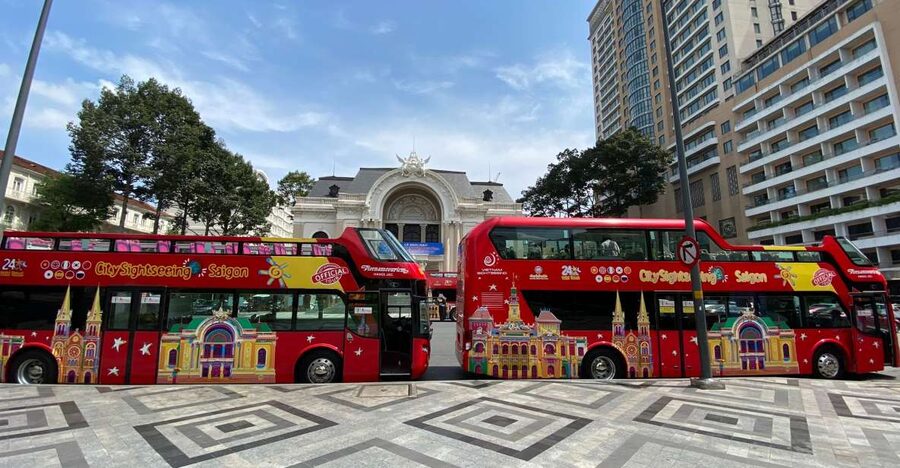
The red route is the easiest place to begin. It links central landmarks, museums, markets, and the main historic sights in a fairly compact circuit.
1. Saigon Opera House
The Opera House is the route’s main ticket exchange point and a convenient place to begin. From the bus, you get an early view of the French colonial architecture that gives central Saigon much of its character.
You can also use this stop as a simple reference point when planning your day. If you get turned around later, returning to the Opera House area gives you a clear place to ask for assistance.
More Sightseeing Bus Tours in Vietnam
- Ho Chi Minh City: Panoramic City Bus Tour
★ 3.9 · 285 reviews - From HCM: City Highlights & Chinatown Trips – Water Bus Tour
★ 5.0 · 7 reviews - Saigon Sightseeing Double – Decker Bus | Ho Chi Minh City
★ 3.5 · 2 reviews - Hanoi: City Sightseeing Hop-On Hop-Off Bus Tour
★ 4.0 · 611 reviews
2. Nguyen Hue Street
Nguyen Hue Street offers a broad look at central city life. From the upper deck, the open view is more useful than it would be from a car, since you can see the street activity and surrounding buildings without needing to navigate it yourself.
This is a good stop for a first walk through the center. Keep in mind that the bus route only gives you a short look unless you get off and explore.
3. Nha Rong Wharf
Nha Rong Wharf adds a riverside stop to the central route. It breaks up the architecture and museum visits with a different part of the city.
The stop is also a reminder that this tour is not limited to the most obvious downtown streets. I like this kind of variety because it gives you a wider picture of Saigon in one circuit.
4. Tran Hung Dao Statue
This stop provides another central reference point and connects the route toward the city’s museums and historic attractions. The value here is less about spending a long time at the stop and more about seeing how the city’s main roads connect.
If you are using the bus mainly to get around, check the next departure before walking away. A 30-minute wait can turn a short stop into a much longer one.
5. Museum of Vietnamese History
This is one of the more useful stops for visitors who want context beyond the city streets. The bus brings you close to the Museum of Vietnamese History, where you can choose to get off and spend more time indoors.
The museum is not included in the $21 fare, so admission is extra. Still, the stop makes it easier to combine sightseeing and transport in one plan.
6. War Remnants Museum
The War Remnants Museum is one of the route’s most important stops. It gives you a serious historical focus after the lighter sightseeing offered by the bus ride.
Plan your time carefully here. The museum is not an attraction to squeeze into a ten-minute pause, and the bus will not wait while you finish. Check the next departure as soon as you get off.
This is also one of the recommended points for changing to the blue route. The suggested red-route transfer points are Stops 6, 7, and 8, which match blue Stops 1, 2, and 3.
7. Pham Ngu Lao Street
Pham Ngu Lao Street is lively, central, and useful for food, drinks, and accommodation. It is also the first blue-route stop, making it one of the simplest places to switch lines.
If you have a short stay, this area can be a practical base for combining the red and blue routes. Just remember that the feel of the street is very different from the quieter museum and colonial stops.
8. Ben Thanh Market
Ben Thanh Market is one of the best stops for browsing souvenirs and trying local food. You can use the visit for shopping, a quick meal, or simply a look at one of Saigon’s famous market areas.
Give yourself more time than a quick photograph if you want to browse properly. Market visits tend to expand, especially when you stop for snacks or gifts. This is another suggested transfer point to the blue route.
9. Independence Palace
Independence Palace is a major central sight and an obvious place to hop off. The stop is useful, but its position has not always been clearly marked, so ask staff to confirm the exact pickup point before entering.
That small bit of planning matters. You do not want to finish at the palace and then waste time searching for the next bus.
10. Saigon Notre Dame Cathedral and Central Post Office
The cathedral and Central Post Office are paired at the final red-route stop. Together, they make one of the clearest examples of Saigon’s French colonial architectural character.
This is a strong place for photographs and a pleasant walking stop. Depending on the day, you may want to spend more time around the buildings than the bus schedule allows, so check the next departure before leaving the stop.
Blue Route: District 5, markets, and pagodas
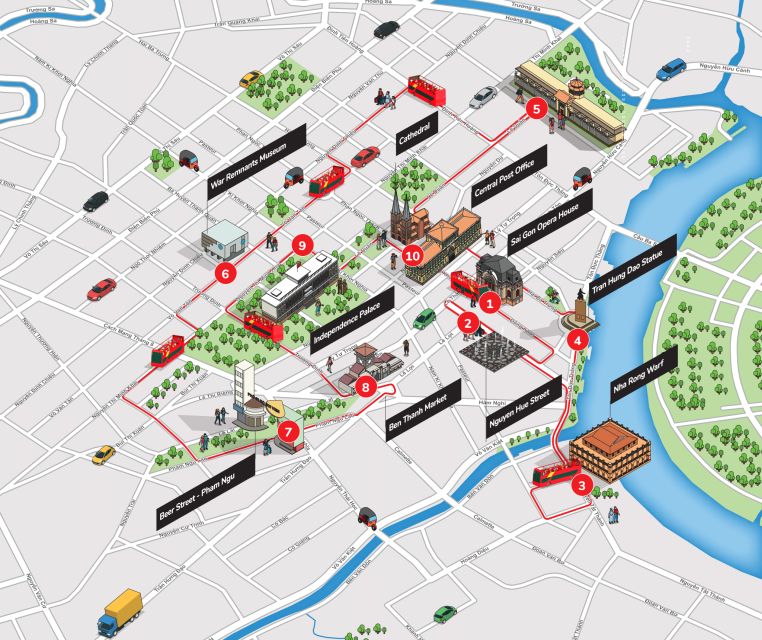
The blue route is the part I would not skip. It reaches beyond the most familiar central sights and gives you a look at areas that many short city visits miss.
Blue buses leave their first stop at 9am, with the last departure at 3:45pm. They run about every 45 minutes, and a full circuit takes 80 minutes. That longer gap makes planning more important than on the red route.
1. Beer Street and Pham Ngu Lao Street
The blue route begins at Beer Street and Pham Ngu Lao Street. This is also the main connection with the red route’s Pham Ngu Lao stop.
You can switch here if you have already seen the central landmarks and want to spend the rest of the day on the city’s less central side. Confirm the bus color before boarding, since several buses may be nearby.
2. Ben Thanh Market
The blue route then returns to Ben Thanh Market. This gives you another practical connection point if you are moving between the routes.
If you are carrying shopping bags, remember that the bus is most useful when you can still move easily between stops. A quick market visit works well; a long shopping session may make the timetable less convenient.
3. War Remnants Museum
The blue route also stops near the War Remnants Museum. This shared area lets you combine a museum visit with the wider blue-route circuit without returning to the Opera House.
For a two-day pass, I would consider doing the museum and the red route on one day, then using the blue route for the markets and pagodas on the next.
4. Ho Thi Ky Flower Market
Ho Thi Ky Flower Market adds a more local market stop to the route. It is a different experience from Ben Thanh, and it helps explain why the blue circuit is worth the extra time.
The bus does not turn every stop into a guided visit. You will need to decide how long to spend at the market and keep an eye on the 45-minute service interval.
5. Phuoc An Society’s Premises
This stop gives the blue route another cultural point beyond the central tourist core. The value is in seeing a broader mix of Saigon rather than repeating only the city-center landmarks.
The audio commentary can help, but keep your eyes on the surroundings too. Several riders have found that the recorded explanation does not always line up perfectly with the buildings outside.
6. Ong Bon Pagoda
Ong Bon Pagoda adds a religious and architectural stop to the District 5 portion of the route. It is one reason I would save time for the blue line instead of treating it as an optional extra.
As with the other stops, attraction entry is not included. The route gets you near the sight, but you choose whether to get off and explore.
7. Binh Tay Market
Binh Tay Market is another major market stop and one of the blue route’s strongest reasons to exist. It takes you farther from the central streets and gives you a useful contrast with Ben Thanh Market.
You may find this part of the route more rewarding if you want to see how the city changes outside the main downtown zone. Allow extra time if you plan to browse rather than simply look around.
8. Thien Hau Pagoda
Thien Hau Pagoda gives the blue route another cultural focus. It pairs well with Binh Tay Market and the other pagoda stops, creating a full half-day circuit if you get off more than once.
Check the timetable before entering the pagoda. The 45-minute interval is manageable, but it does not leave much room for an unplanned long visit.
9. Van Phat Pagoda
Van Phat Pagoda completes the blue route’s series of religious sites. Taken as a whole, this circuit gives you a broader view of Saigon than the red route alone.
If you only have time for one blue-route stop, I would choose based on your interests: markets for food and local shopping, or pagodas for architecture and cultural sights. The full loop is the better choice if your goal is simply to see more of the city.
The upper deck, audio, and weather
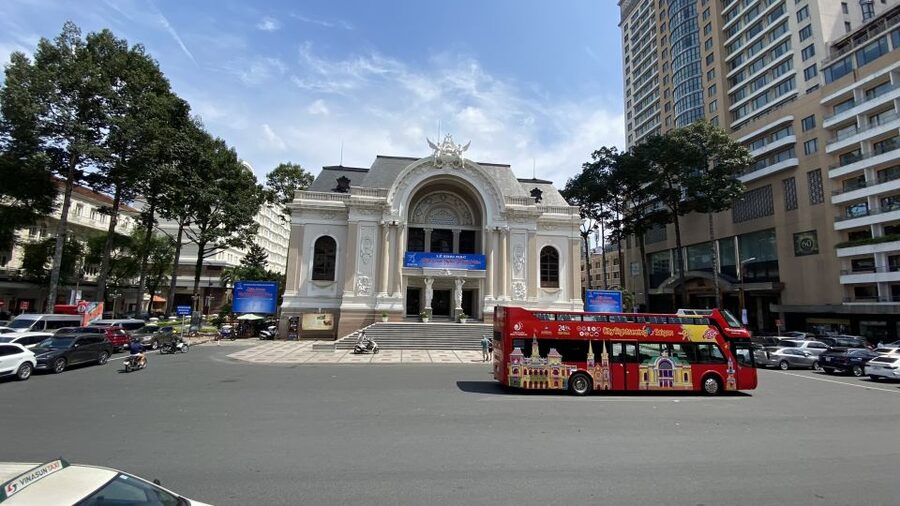
The open top deck gives you the best chance to photograph buildings and watch the traffic. Several riders have especially liked sitting high up at sunset or in the evening, when the city lights change the feel of the streets.
The trade-off is sun, rain, and noise. Staff have supplied hats or rice hats in hot weather and ponchos when rain arrived, but you should still bring water and protect yourself from the weather.
The lower deck has air conditioning and is the sensible choice during the hottest part of the day. It is also easier for anyone who finds the traffic noise or sun tiring.
The recorded commentary is available in nine languages and comes with headphones. It provides useful facts and helps turn a simple ride into a guided introduction, but it is not the same as having a live guide beside you.
Sound quality can vary. Some rides have had weak or faulty audio, and the city noise can make the volume difficult to hear. On the blue route, the recording has also been reported to fall out of sync with the sights. I would treat the commentary as a helpful extra, not the sole reason to ride.
Is the evening ride worth considering?

An evening city ride has been particularly popular because Saigon looks very different after dark. Illuminated buildings, busy streets, and the city skyline give you a good reason to repeat part of the route after your daytime sightseeing.
The evening ride described by riders is around 45 to 50 minutes, but the daytime pass details do not clearly define it as a standard inclusion. Ask the ticket staff what is running on your date before counting on it.
If an evening departure is available, it is a good choice for a relaxed first night. You get the city view without spending the evening walking through the heat, though the audio may not identify every sight clearly after dark.
Who gets the most value from $21?

I think the price is fair for a first visit if you use the bus as a sightseeing tool rather than only as transport. The strongest value comes from a two-day pass, two full loops, several hop-offs, and the chance to use both routes.
It is less good value if you plan to ride once and then take taxis between every attraction. Grab may be cheaper for direct journeys, and the bus can be slow when traffic builds.
This tour suits:
- First-time visitors who want a quick city orientation
- Families who need regular breaks from walking
- Visitors who enjoy views from an open top deck
- People who want museums, markets, and pagodas in one plan
- Anyone staying only one or two days
- Visitors who prefer recorded commentary in their own language
It may not suit you if you want a live guide, exact door-to-door transport, or a tightly timed sightseeing schedule. The route is flexible, but the bus cannot match a private car for speed.
My booking advice
Book this tour if you want to understand Saigon’s shape before exploring it on foot. Start with one complete red loop, then use the stops near the War Remnants Museum, Pham Ngu Lao Street, or Ben Thanh Market to change to blue.
Choose two days if your schedule allows. Use the first day for the red route, the central museums, Independence Palace, and the cathedral and post office. Use the second for the blue route, Binh Tay Market, Ho Thi Ky Flower Market, and the pagodas.
I would skip it only if you already know the city well or want the cheapest possible way between attractions. For a first visit, the bus offers a comfortable overview, helpful staff, free Wi-Fi, and a useful sense of place for $21. Just allow for traffic, watch the timetable, and do not rely on every audio announcement to match the building outside.
FAQ

How much does the Saigon hop-on hop-off bus cost?
The listed price is $21 per person. You can choose a one-day or two-day pass.
How long does the full red route take?
The red route takes about 75 minutes for a complete circuit.
How long does the full blue route take?
The blue route takes about 80 minutes for a complete circuit.
How often do the red buses run?
The red route runs about every 30 minutes. The first departure from Stop 1 is at 9am, and the last departure is at 4pm.
How often do the blue buses run?
The blue route runs about every 45 minutes. The first departure is at 9am, and the last departure from Stop 1 is at 3:45pm.
Which languages are available for the audio guide?
The audio guide is available in English, Spanish, German, French, Chinese, Japanese, Korean, Vietnamese, and Russian.
Where can I exchange my ticket?
You can exchange your ticket at the counter beside the Saigon Opera House, facing the Continental Hotel.
Can I use a mobile voucher?
Yes. Both mobile and paper vouchers are accepted.
Is hotel pickup included?
No. Hotel pickup and drop-off are not included. Food, drinks, and attraction admission are also separate.
More Sightseeing Bus Tours in Ho Chi Minh City
- Barcelona: City Sightseeing Hop-On Hop-Off Bus Tour
★ 4.4 · 10,061 reviews - Rome: Big Bus Hop-on, Hop-off Open-Top Sightseeing Tour
★ 4.1 · 9,537 reviews - City Sightseeing London Hop-On Hop-Off Bus & Bookable Extras
★ 4.4 · 7,374 reviews - Hamburg: Line A Sightseeing Hop-On Hop-Off Bus Tour
★ 4.6 · 6,958 reviews
More Hop-On Hop-Off Bus Tours in Ho Chi Minh City
- Ho Chi Minh City Night Hop-On Hop-Off Bus Tour
★ 3.5 · 4 reviews - From HCM: Cu Chi Tunnels with Saigon Icons by Hop-On Hop-Off
★ 5.0 · 2 reviews - Barcelona: 24 or 48-Hour Hop-On Hop-Off Bus Tour
★ 4.4 · 20,872 reviews - Rome: City Sightseeing Hop-on Hop-off Bus with Audioguide
★ 4.0 · 16,045 reviews
Just added around Ho Chi Minh City
- Ho Chi Minh City Hop-On Hop-Off Bus Tour | Vietnam★ 3.5 · 9 reviews
- City Sightseeing Saigon Bus Tour★ 3.5 · 18 reviews
- Saigon City and Chinatown Exploration with Water Bus Adventure★ 5.0 · 20 reviews
- Ho Chi Minh City Night Hop-On Hop-Off Bus Tour★ 3.5 · 4 reviews
- Saigon Sightseeing Double – Decker Bus | Ho Chi Minh City★ 3.5 · 2 reviews
- Ho Chi Minh City: Hop-On Hop-Off Bus Tour by Vistra★ 4.2 · 17 reviews
- From HCM: Cu Chi Tunnels with Saigon Icons by Hop-On Hop-Off★ 5.0 · 2 reviews
- From HCM: City Highlights & Chinatown Trips – Water Bus Tour★ 5.0 · 7 reviews
Hop-On Hop-Off Bus Tours, compared.

City Sightseeing Hop-on Hop-off Bus with Audioguide
Read our review →
Tootbus Hop-on Hop-off (Optional River Cruise)
Read our review →
Big Bus Hop-On Hop-Off Tour with Optional Cruise
Read our review →
London Big Bus Hop-On Hop-Off Tour with Optional River Cruise
Read our review →

Big Bus Hop-on, Hop-off Open-Top Sightseeing Tour
Read our review →
Browse the lists this tour appears in