
Review · NEPAL
Kathmandu City Tour in Sharing Bus
Kathmandu’s sacred landmarks fit into one busy day. This $15.50 shared minibus tour links Pashupatinath, Swayambhunath, Boudhanath, and Budhanilkantha, making it a useful choice when you want broad coverage without paying for a private vehicle. I like the low price and the chance to move around Kathmandu in the same practical way many locals do.
I also like the compact route, which gives you four very different religious sites in roughly six to seven hours. The main concern is basic transport and uneven organization: one account describes a late, hard-to-identify bus, a dirty vehicle, and no air-conditioning. This is a budget outing, not a polished sightseeing coach.
Key points to know before booking
- Four major religious sites in one day: Pashupatinath, Swayambhunath, Boudhanath, and Budhanilkantha each show a different side of Kathmandu’s Hindu and Buddhist traditions.
- A true shared minibus experience: The group can reach up to 22 people, so expect a practical local ride rather than a quiet private tour.
- Very low headline price: The $15.50 fare covers your seat, while entrance fees and personal expenses are extra.
- Short visits at every stop: Scheduled time ranges from 20 to 30 minutes, enough for an overview but not a slow exploration.
- Important religious restrictions: Some parts of Pashupatinath are for Hindus only, so you should not expect full access to every temple building.
- Simple starting point: Meet at The Malla Hotel on Lekhnath Marg, then return there at the end.
Four sacred sites, one crowded Kathmandu day
This tour is built for coverage. In one outing, you see a major Hindu temple beside the Bagmati River, an ancient hilltop Buddhist stupa, the Tibetan Buddhist center at Boudhanath, and the reclining Vishnu image at Budhanilkantha.
That range is the real value. Kathmandu is not a city where every important site feels alike. The religious traditions, buildings, rituals, and settings change from stop to stop. A shared bus lets you sample the city’s major spiritual landmarks without arranging four separate taxi rides.
The trade-off is pace. The planned stops add up to about 105 minutes, leaving much of the six to seven hours for driving, traffic, loading passengers, and moving between districts. You will get an introduction to each place, not a long, quiet visit.
The group may include as many as 22 people. That size keeps the cost down, but it can also make departures less tidy. At a busy religious site, you need to keep track of the meeting time and stay alert for the bus.
More City Tours in Nepal:
- Pokhara: City Sightseeing Group Bus Tour
★ 4.1 · 37 reviews - Kathmandu City Sightseeing Bus tour (5 Sights)
★ 4.2 · 15 reviews - “Explore Kathmandu Rich Heritage: City Highlights Bus Tour”
★ 3.8 · 9 reviews
Starting at The Malla Hotel
The meeting point is The Malla Hotel, Lekhnath Marg, Kathmandu 44600. The activity ends back at this same location, which is useful if you want a clear beginning and end rather than a drop-off somewhere unfamiliar.
The most important practical tip is to arrive early and identify the minibus before departure. A specific account describes confusion when the bus did not arrive at the stated time and was difficult to recognize once it appeared. Contact with both the booking platform and the operator was also difficult in that case.
That does not prove every departure will have the same problem, but it is enough reason to keep your confirmation available on your phone and allow extra time at the meeting point. The ticket is mobile, so you do not need a printed voucher.
This is a shared vehicle, not a full-size sightseeing bus. One account describes the vehicle as dirty and without air-conditioning. Kathmandu can be hot, dusty, and slow-moving, so your comfort expectations should remain modest. The price is partly a payment for accepting those limits.
Pashupatinath and the Bagmati River
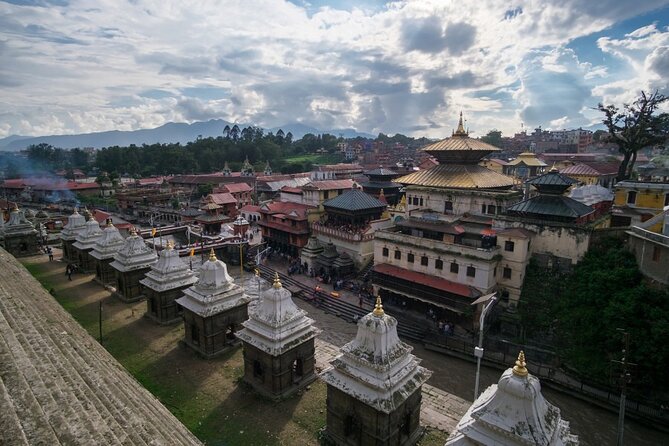
Your first major stop is Pashupatinath Temple, one of Nepal’s most important Hindu religious sites. The complex spreads across both sides of the Bagmati River and includes shrines, temples, and ashrams.
The setting gives you a strong first lesson in Kathmandu’s religious life. This is not simply one isolated building with a quick photo stop. It is a working sacred complex with a long connection to Hindu worship, pilgrimage, and temple traditions.
You have about 30 minutes here. That is enough to see part of the complex and take in the riverside setting, but it is not enough for a leisurely walk through every section. Keep your attention on the meeting time, since the group must continue to the next site.
Entrance is not included. The important restriction is that some areas, including parts of the temple itself, may be limited to Hindus. The tour information does not clearly highlight this restriction in its main description, so you should know it before booking. You can still explore permitted sections of the complex, but you should not assume that every sacred interior is open to you.
The admission charge is included in the estimated extra cost of around $30 for foreign visitors and 2,500 for SAARC citizens in total. Since the supplied information gives a total estimate rather than a separate price for this stop, treat that figure as a planning guide rather than a guaranteed itemized bill.
Swayambhunath, the hilltop Monkey Temple
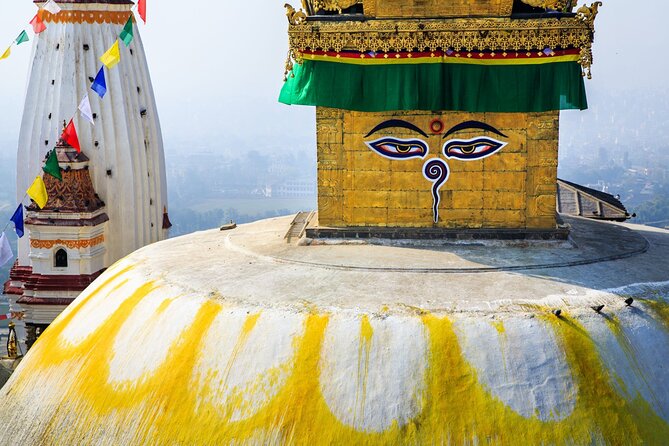
Swayambhunath gives the day a different visual rhythm. The complex sits on a hill in the Kathmandu Valley, with a central Buddhist stupa marked by the famous painted Buddha eyes.
Those eyes appear on all four sides of the stupa. They represent the Buddha’s awareness and wisdom, and they are among the most recognizable symbols in Kathmandu. A golden spire rises above the dome, adding height and color to the compact hilltop setting.
The site is also known as the Monkey Temple because monkeys live around the complex. You may find them near paths and buildings, so keep an eye on your belongings and avoid treating them as tame animals.
You have about 30 minutes, and admission is listed as free. The short stop works well for seeing the stupa and understanding its basic symbols. It is less suitable if you want extended time on the hill, detailed photography, or a slow look at every shrine.
Because this is a hilltop complex, the stop may feel more physically demanding than the time allowance suggests. The supplied information does not specify the number of steps, accessibility arrangements, or walking conditions, so anyone with mobility concerns should ask the operator before booking.
A few more bus tours around Nepal worth a look
- Pokhara: Full-Day Sharing Bus Tour on 7 Iconic Destination
★ 4.1 · 179 reviews - Pokhara: Visit Best Seven Tourist Destination by Sharing Bus
★ 3.4 · 10 reviews - Pokhara: Sightseeing tour (Unguided) in Sharing Bus
★ 4.5 · 10 reviews - Pokhara Day Bus Sightseeing 8 points
★ 3.5 · 9 reviews
Boudhanath and Tibetan Buddhist Kathmandu
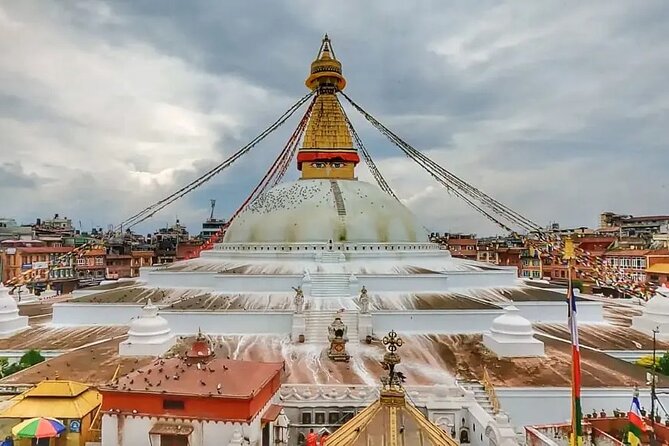
Boudhanath is the most visually unified stop of the four. Its huge stupa forms the center of the surrounding district, with prayer flags, Buddhist decoration, monasteries, temples, shops, and restaurants arranged around it.
The Buddha eyes again watch from the four sides of the stupa. Here, however, the scale of the monument and the surrounding Tibetan Buddhist community give the place a distinct character from Swayambhunath.
Boudhanath is an important center for Tibetan Buddhism in Nepal and is home to a significant population of Tibetan refugees. That makes the stop valuable beyond its appearance. You are seeing a living religious district, not only an old monument preserved for sightseeing.
The scheduled visit lasts about 25 minutes, and admission is listed as free. In that time, you can see the central stupa and get a feel for the surrounding quarter. You will not have much time for a meal, shopping, or a long visit to the monasteries and restaurants.
If you enjoy observing religious architecture and everyday worship, this may be one of the most rewarding stops. If you want to walk around the full circuit at an unhurried pace, the shared schedule will feel tight.
Budhanilkantha and the reclining Vishnu image
The final listed stop is Budhanilkantha, also called the Sleeping Vishnu temple. It lies on the northern outskirts of Kathmandu and is known for an unusual stone image of Lord Vishnu reclining on the serpent Shesha, also called Ananta.
The statue is carved from a single black stone and rests in a small pond. Vishnu is shown in a peaceful sleeping position, a Hindu image linked with the cosmic order and the preservation of the universe.
You have about 20 minutes here, the shortest stop of the day. That is probably enough to see the statue and understand why the temple is important, but not enough for a long visit to the wider area.
Admission is not included. As with Pashupatinath, you should budget for additional entrance costs rather than treating the $15.50 fare as the full price of the day.
This stop adds useful variety. Pashupatinath presents a large temple complex, while Budhanilkantha centers on one distinctive image in a pond. The two sites help you see different forms of Hindu devotion in and around Kathmandu.
What the $15.50 price really covers
At $15.50 per person, the tour is cheap for a full day of transport between four important sites. The price covers a seat in the shared minibus, not entrance fees, meals, private guiding, or personal purchases.
That makes the value fairly clear. If you want a private car, a flexible schedule, and a vehicle with more space, this is not the right product. If you mainly need an inexpensive way to connect the sites, the price is attractive.
You should set aside roughly $30 in extra costs if you are a foreign visitor, or 2,500 if you are a SAARC citizen, based on the stated estimate. The details supplied do not break that amount down by attraction, so carry enough local money and confirm the current charges if exact budgeting matters to you.
The low fare also explains the mixed comfort report. One person described the bus as dirty and without air-conditioning, while still giving credit to the guide for working hard. I would read that as a warning to value the tour for its route and price, not for vehicle comfort.
The guide and the shared-group rhythm
A guide is part of the experience, although no guide name is provided. The strongest personal praise is directed toward the guide’s effort, even in an outing affected by transport and timing problems.
That matters. A guide who keeps a group moving through four busy religious sites can make a low-cost tour much easier to manage. Still, the details do not promise a specialist historian, a particular language, or a private guide. You should book this for orientation and access rather than expecting a long lecture at every monument.
The group maximum is 22 people. That is large enough for delays when people are late returning to the minibus. One account specifically describes passengers failing to return on time, which affected the schedule.
You can help yourself by wearing an easy-to-spot item, keeping the meeting location in your phone, and returning to the vehicle a few minutes early. On a shared tour, one person’s delay can shorten everyone else’s visit.
Who will get the most from this tour?
I would recommend this outing to a first-time visitor with only one open day for Kathmandu’s major religious sites. It also suits solo visitors and budget-conscious couples who would rather share transport than pay for a private car.
It is a good fit if you want:
- A low-cost introduction to four major sites
- A fixed route with transport arranged
- A mix of Hindu and Buddhist places
- A short, active day rather than a slow single-site visit
- A mobile ticket and a return to the original meeting point
I would be more cautious if you care strongly about air-conditioning, a clean vehicle, precise departure times, or long visits at each monument. The schedule is tight, and the shared format gives you less control.
The tour may also disappoint you if Pashupatinath is your main reason for booking. Thirty minutes is brief, and some areas are restricted to Hindus. If you want a detailed religious or architectural visit, a separate longer stop would give you more time.
Booking, cancellation, and practical preparation
Confirmation is provided at the time of booking, and the mobile ticket can be shown on your phone. Most people can participate, but the supplied details do not describe special accessibility arrangements, so ask the operator directly if stairs, walking, or vehicle access could be a concern.
Free cancellation is available if you cancel at least 24 hours before the start time. Cancellations made within 24 hours are not refunded, and changes in that same period are not accepted. The cut-off follows local Kathmandu time.
For the day itself, bring water, modest clothing suitable for religious sites, and enough money for entrance fees and personal expenses. Keep the phone charged, save the meeting point, and do not assume the bus will be obvious in a crowded street.
Should you book this Kathmandu city tour?
Book it if your priority is seeing a lot for very little money. The four-stop route covers an impressive range of Kathmandu’s religious sights, and the shared minibus keeps the fare within reach for budget visitors.
Skip it if comfort and flexibility matter more than price. The small vehicle may be basic, the group can reach 22 people, and reported timing problems show that the day may not run with perfect precision.
My call: this is a useful orientation tour for a first day in Kathmandu, provided you accept the rough edges. Go for the route, the low fare, and the chance to compare four distinct sacred sites. Do not book it expecting a polished coach, generous stop times, or unrestricted access inside every temple.
FAQ
How much does the Kathmandu City Tour in Sharing Bus cost?
The price is $15.50 per person. This covers a seat in the shared minibus, while entrance fees and personal expenses are extra.
How long does the tour last?
The tour lasts approximately six to seven hours.
Where does the tour start?
It starts at The Malla Hotel, Lekhnath Marg, Kathmandu 44600, Nepal.
Where does the tour end?
The activity ends back at the same meeting point, The Malla Hotel.
Which places are included?
The route includes Pashupatinath Temple, Swayambhunath, Boudhanath, and Budhanilkantha Temple.
Are entrance fees included?
No. Entrance fees are not included. The stated estimate for foreign visitors is around $30 in total, while the estimate for SAARC citizens is 2,500.
How many people can join the shared bus?
The maximum group size is 22 people.
Can I cancel for a full refund?
Yes, if you cancel at least 24 hours before the experience start time. Cancellations within 24 hours are not refunded, and changes within that period are not accepted.
Just added around Nepal
- Luxury Sofa Bus from Kathmandu to Pokhara★ 5.0 · 3 reviews
- Kathmandu City Sightseeing Bus Tour★ 4.5 · 2 reviews
- Elegant Kathmandu to Pokhara Tour by Deluxe Tourist Bus★ 5.0 · 2 reviews
- Pokhara Sightseeing By Bus – Day Trip★ 3.2 · 8 reviews
- Pokhara: City Sightseeing Group Budget Bus Tour★ 4.7 · 6 reviews
- Pokhara Sightseeing By Bus: Day Trip★ 4.6 · 7 reviews
- Kathmandu City Sightseeing Bus tour (5 Sights)★ 4.2 · 15 reviews
- Kathmandu : City Highlights Bus Tour Full Day★ 5.0 · 2 reviews
City Tours, compared.
City Sightseeing Hop-on Hop-off Bus with Audioguide
Read our review →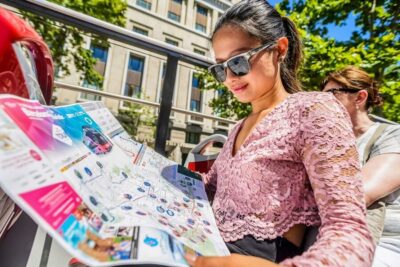
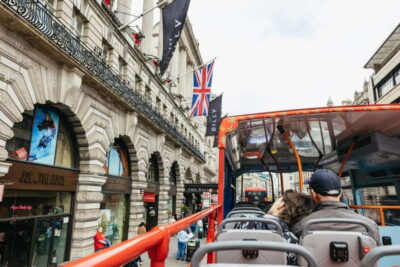
City Sightseeing London Hop-On Hop-Off Bus & Bookable Extras
Read our review →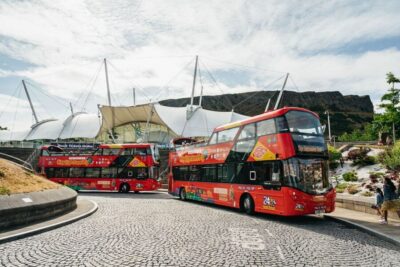
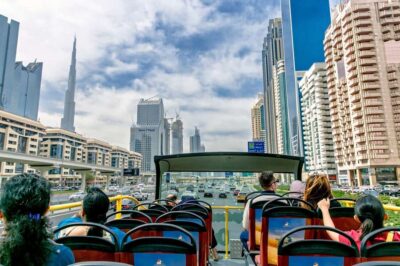
City Sightseeing HOHO Bus Tour + Sunset & Night Tour
Read our review →
City Sightseeing Hop-On Hop-Off Bus with Audio Guide
Read our review →
City Sightseeing Rome Hop-On Hop-Off Bus Tour
Read our review →
City Sightseeing Barcelona Hop-On Hop-Off Bus Tour: 24 or 48-Hour
Read our review →Browse the lists this tour appears in