
Review · JAPAN
PERFECT KYOTO 1-Day Bus Tour
Kyoto rewards planning, but this tour saves you the homework. I like that it links Kiyomizu-dera, Fushimi Inari, Arashiyama, and Kinkaku-ji in one long day, with transport and temple admissions handled for you. I also like the upbeat guiding, especially from guides such as Sakura, Mai, At-Chan, Hiroko, and Nagomi, who have been praised for clear explanations, humor, and steady organization. The catch is simple: the schedule is packed, and some stops may feel more like a preview than a proper visit.
At $129.25 per person, this is not Kyoto’s cheapest day out. Still, the price can make sense if you have only one day, dislike changing trains and buses, or want admission tickets bundled into one booking. You should expect crowds, stairs, hills, and a group of up to 42 people. This is a sightseeing sprint, not a slow temple ramble.
The best reasons to choose this Kyoto day tour
- Four major temple admissions are included: Kiyomizu-dera, Sanjusangendo, Tenryu-ji, and Kinkaku-ji.
- The route covers Kyoto’s spread-out sights: You go from Higashiyama to Arashiyama, northern Kyoto, and Fushimi.
- The bus saves valuable time: You avoid planning several separate rail and bus connections.
- Guiding is a major strength: Guides including Sakura, Mai, At-Chan, Hiroko, and Nagomi are often praised for energy, kindness, humor, and useful explanations.
- The day includes Kyoto’s famous visual highlights: Golden Pavilion, bamboo paths, vermilion torii gates, temple gardens, and city views.
- You need stamina: Expect lots of walking, stairs, hills, crowds, and short visits.
What $129.25 buys you in Kyoto
The tour runs for roughly eight to nine hours, beginning at 7:50 a.m. at Tully’s Coffee inside Kyoto Avanti near Kyoto Station. It returns to that same meeting point, so you will need to make your own way there and back. Hotel pickup and drop-off are not included.
The package includes an air-conditioned coach, onboard Wi-Fi, a professional English-speaking guide, multilingual audio guidance, and admission to four temples. Audio options are listed in English, Spanish, French, Italian, German, Portuguese, and Ukrainian. That can help when the bus is full or when you are seated farther from the guide.
Lunch depends on the option you book. The added lunch is a Japanese-style buffet in Arashiyama, with local dishes and a view from the restaurant. Vegetarians receive the same buffet selection rather than a separate vegetarian menu. If you add lunch on the day, the charge is 3,000 yen, so choosing in advance is the sensible move.
The value comes from time saved. Kyoto’s famous sights are not arranged in a neat walking circuit. You would otherwise need to coordinate several train rides, local buses, walking routes, temple tickets, and opening times. The bus handles that structure. You pay for convenience, not solitude.
More Bus Day Trips in Japan
- Osaka/Kyoto: Katsuoji, Kinkakuji, Arashiyama 1-Day Bus Tour
★ 4.6 · 33 reviews - Amanohashidate & Miyama 1-Day Bus Tour: From Osaka/Kyoto w/ Lunch
★ 4.5 · 18 reviews - Mt Fuji and Hakone 1-Day Bus Tour Return by Bullet Train
★ 5.0 · 26,383 reviews
Kiyomizu-dera starts the day with a view
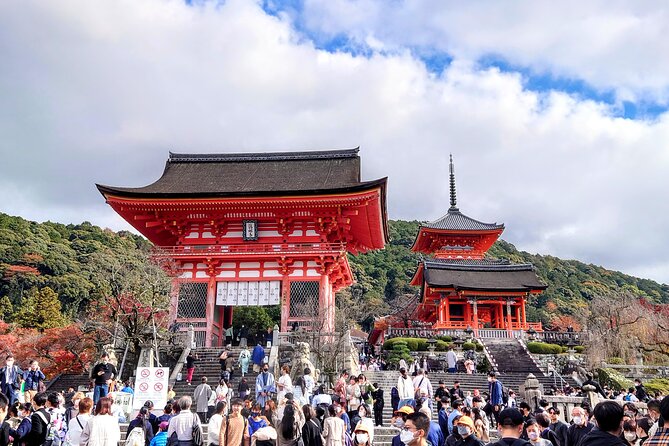
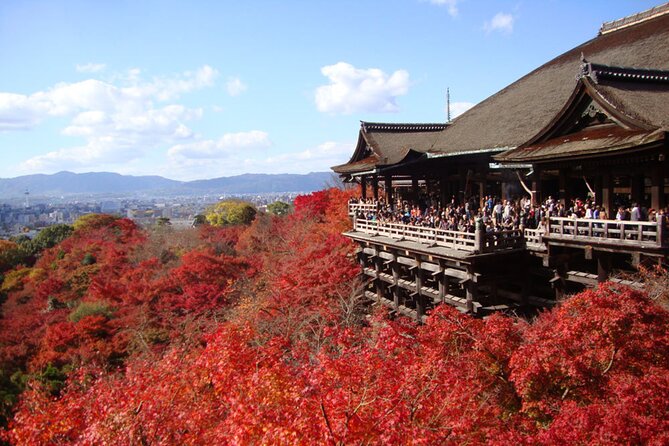
Your first stop is Kiyomizu-dera, one of Kyoto’s best-known World Heritage temples. The temple sits on Higashiyama hill, so you get a broad view around Kyoto from the grounds. The approach and temple area also give you an immediate sense of Kyoto’s traditional side, with old-style streets, shops, and wooden buildings nearby.
The allotted hour is useful, but it is not generous. You have enough time to see the main areas, take photographs, and enjoy the view, but not to inspect every corner at a relaxed pace. The route includes hills and stairs, so comfortable shoes matter from the first stop.
Starting here is smart because the morning can feel calmer than the afternoon. That said, Kyoto crowds vary by season, and Kiyomizu-dera is popular at almost any time. Keep an eye on your guide’s meeting instructions. A few extra minutes spent browsing can become a stressful race back to the coach.
Sanjusangendo delivers quiet detail
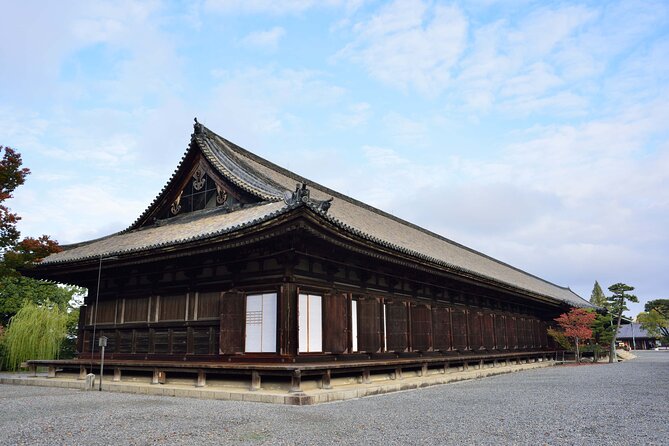
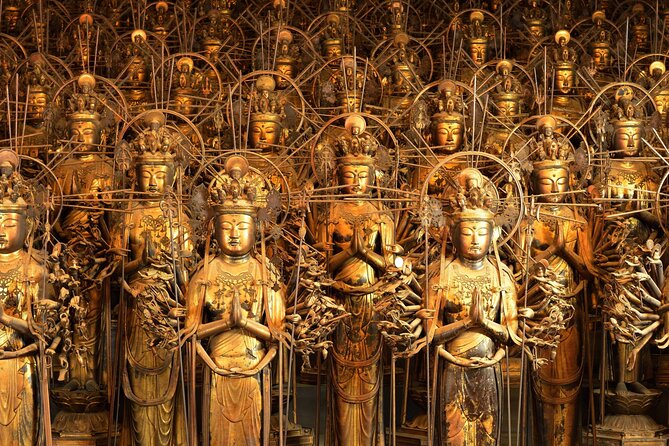
Sanjusangendo is a different kind of stop. The main hall is known for its rows of Senju Kannon statues, traditionally described as one thousand statues. Photography rules inside can limit what you record, but this is a place where looking carefully matters more than taking pictures.
The visit lasts about 40 minutes, with admission included. That is generally enough to walk through the main hall and take in the scale of the statues. The temple is also a welcome change after Kiyomizu-dera, since the focus shifts from views and outdoor movement to interior craftsmanship and stillness.
You will remove your shoes in parts of the temple route. Temple floors can feel cold, especially in cooler weather, so socks and footwear that you can remove easily are practical. This is a small detail, but it makes the stop more comfortable.
Arashiyama gives you lunch and breathing room

Arashiyama is the central break in the day. The area is known for the bamboo forest, Tenryu-ji, and its setting along the western edge of Kyoto. The tour allows about 50 minutes for lunch and the surrounding area, depending on the exact schedule and lunch option.
The Japanese buffet is convenient because you do not need to search for a restaurant while keeping track of the group. It offers local foods and is intended to suit several tastes. Still, food quality can vary. Some meals have been described as satisfying, while one direct account found fried items and other dishes cold because the buffet was not kept on warmers.
If lunch is not included in your booking, pay close attention to the group’s departure time. One person became separated after confusion about when the meal break ended. You can eat independently, but you must be especially careful about where and when to rejoin the group.
Arashiyama is one place where the time limit may bother you. It is easy to want a longer walk, a look at the river area, or more time among the shops. Treat this tour as an introduction. If Arashiyama appeals to you, return on another day with several hours to spare.
More Bus Day Trips in Kyoto:
- 1-Day Tokyo Bus Tour
★ 5.0 · 14,250 reviews - From Madrid: Guided Day Trip to Toledo by Bus
★ 4.1 · 5,280 reviews - Lisbon: 1-or 2-Day Hop-On Hop-Off Bus Tour
★ 4.1 · 4,774 reviews - Zurich: Day Trip to Grindelwald, Interlaken & Lauterbrunnen
★ 4.5 · 4,699 reviews
The bamboo forest is beautiful but brief
The Bamboo Forest Trail receives about 20 minutes. The green bamboo rises on both sides of the path, creating one of Kyoto’s most recognizable scenes. It is highly photogenic, but the short visit means you will not wander far.
The trail leads toward Tenryu-ji, making the stop efficient. You are not wasting time finding the next attraction, but you also need to stay aware of the guide and the group. The path can become crowded, and stopping for photographs may slow you down.
This is one of the tour’s clearest tradeoffs. You get the famous bamboo setting in a single day, but not the unhurried feeling many people hope for. If you want quiet photographs, the early start helps, though no schedule can guarantee empty paths.
Tenryu-ji pairs gardens with temple history

Tenryu-ji is a World Heritage temple with a traditional garden whose design has remained largely unchanged for more than 700 years. Seasonal flowers and plants add interest, so the appearance will vary depending on when you visit.
The included admission is important here because the garden is a highlight, not just a quick photo stop. You have around 30 minutes, enough for a purposeful walk and a look at the garden’s relationship with the temple buildings. You will not have time for a slow, detailed garden study.
The sequence works well. After the crowded bamboo path, Tenryu-ji gives you a more composed setting. The guide can add context, while you still have freedom to take in the garden at your own pace.
Kinkaku-ji brings the famous golden finish
Kinkaku-ji, the Golden Pavilion, is the tour’s most instantly recognizable building. Its upper levels are covered in gold leaf, and the pavilion reflects in the surrounding pond. It is a powerful sight even if you have seen countless photographs.
The visit lasts about 40 minutes and admission is included. The main route is straightforward, but crowds can make it hard to linger at the best viewing points. You will be guided along the established path rather than given unlimited time to explore the wider grounds.
This stop is visually rewarding, but it is also a good example of why expectations matter. The pavilion itself is compact. The value lies in seeing the building, pond, garden, and setting together, not in spending hours inside a vast complex.
Nijo Castle appears from the coach
On the return route, the coach passes Nijo Castle. The castle is tied to the end of the Tokugawa shogunate, when political authority was returned to the emperor. The tour does not list a dedicated visit here, so you should treat it as a drive-by sight with commentary rather than a castle tour.
This is a useful bit of historical orientation, especially if you are trying to understand how Kyoto connects to Japan’s political past. If Nijo Castle is high on your list, plan a separate visit.
Fushimi Inari closes with torii gates
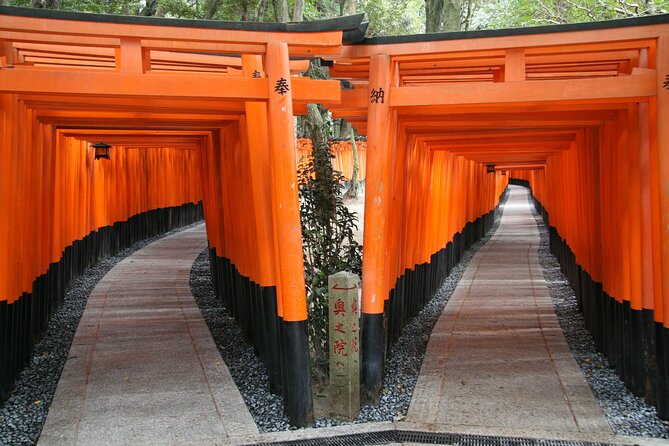
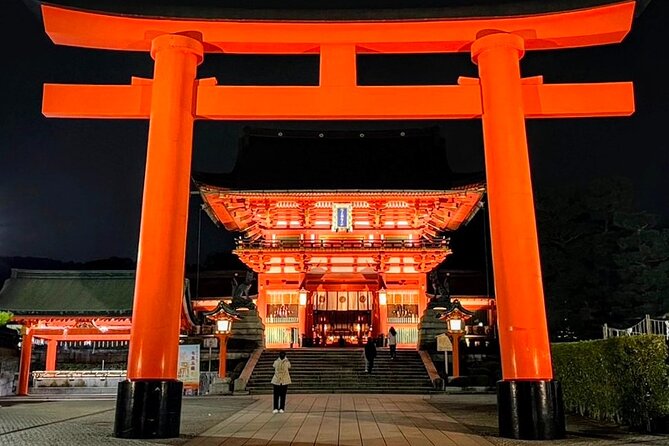
Fushimi Inari-taisha is the final major stop, with about an hour to explore. Its long rows of orange torii gates wind up the hillside, creating one of the most memorable walks in Kyoto. The gates were donated by individuals and businesses, and the shrine is dedicated to Inari, associated with rice, business success, and fox messengers.
An hour lets you enter the gate-lined route and experience the atmosphere, but it is not enough to walk the full mountain circuit. The farther you climb, the quieter the path usually becomes, but you should not go so far that you risk missing the meeting time.
This stop requires more effort than a quick photo suggests. There are stairs and an uphill route, and the day has already included several temples. If your legs are tired, enjoy the lower section rather than trying to push to the top.
The late timing has one advantage: Fushimi Inari feels like a strong final image of Kyoto. It also has a drawback. After a full day, you may have less energy for the climb, and crowds can make the lower gates slow to pass.
Guides make or break a busy schedule
The strongest part of this tour is often the human organization. At-Chan has been praised for clear English, humor, Japanese words and numbers, and an ability to keep people alert during coach rides. Sakura receives similar praise for her clear explanations and warm style. Mai is described as upbeat and educational, while Hiroko is noted for kindness, humor, and helpful Japanese phrases.
Nagomi has also been praised for preparation and energy, though one account found her English difficult to understand. That is worth keeping in mind: guide quality and communication style can vary by departure. The multilingual audio system gives you another way to follow the basic information.
A good guide matters here because the bus rides connect very different parts of Kyoto. You are not just being driven between stops. You need clear meeting instructions, time warnings, and enough background to understand why each temple matters.
The real cost is your time and energy
At $129.25, I would compare this tour with the likely cost of separate admissions, local transport, and the value of your planning time. Four temple admissions are included, along with a full day of coach transport and a guide. For a first visit with limited time, that package can be fair.
The cost is harder to justify if you are staying in Kyoto for several days and enjoy planning your own routes. Independent visits give you more time at each site and let you avoid places that do not interest you. You can also choose your own meals and return to a favorite temple later.
The tour suits you best if you have one free day, are staying near Kyoto Station, want the main sights without navigation stress, or are visiting Kyoto for the first time. It is less suitable if you dislike groups, need long breaks, use a mobility aid, or want quiet temple visits.
The maximum group size is 42. That is not a small private outing, although the coach and guide structure can keep the day orderly. Stay near the guide, remember the bus location, and photograph the meeting instructions if needed.
Practical advice for making the day work
Start with a solid breakfast. Several hours of walking, stairs, hills, and sightseeing leave little room for a slow morning meal. Bring water and snacks, even if you choose the buffet.
Wear shoes that are easy to remove and put back on. Some temple areas require you to take off your shoes, and cold floors are possible. Comfortable footwear matters more than looking polished.
Do not plan another demanding activity that evening. The tour begins early and finishes after eight to nine hours, with much of that day spent moving between sites or walking through them.
Traffic, weather, and site operations can change the order. A stop may be replaced if a place closes, and the full set of activities is not guaranteed in severe conditions or transport disruptions. Refunds are not given for these changes, so book this with some flexibility.
Cancellation is free up to 24 hours before the start time. Cancellations or changes inside that period are not accepted for a refund. Also, if you miss the 7:50 a.m. departure, you cannot join partway through the day.
Should you book the PERFECT KYOTO 1-Day Bus Tour?
Book it if you want a broad first look at Kyoto and would rather ride between distant sights than solve the city’s transport puzzle yourself. The route includes the temples, shrine, bamboo path, Golden Pavilion, and gardens most first-time visitors hope to see.
Skip it if your ideal Kyoto day means lingering in one neighborhood, eating slowly, or studying temple details without watching the clock. The tour is efficient and often warmly guided, but it is undeniably busy.
My advice is to use it as your Kyoto orientation day. Mark the place that interests you most, then return independently for a slower visit if your schedule allows. That approach gives you both the famous sights and a little room for the Kyoto experience behind the checklist.
FAQ
How long does the tour last?
The tour lasts approximately eight to nine hours.
Where does the tour start?
It starts at 7:50 a.m. at Tully’s Coffee in Kyoto Avanti, near Kyoto Station, at 31 Higashikujō Nishisannōchō, Minami Ward, Kyoto.
Where does the tour end?
The tour ends back at the same meeting point.
Is lunch included?
Lunch is included only if you select the lunch option. The meal is a Japanese-style buffet in Arashiyama. The same buffet is served to vegetarians.
Which admissions are included?
Admission is included for Kiyomizu-dera, Sanjusangendo, Tenryu-ji, and Kinkaku-ji. Fushimi Inari and the bamboo forest portion do not list a separate admission charge.
Is hotel pickup available?
No. Hotel pickup and drop-off are not included, and no extra pickup or drop-off service is supplied.
Is the tour suitable for people who cannot walk long distances?
No. The tour includes substantial walking, stairs, and hills, and it is not recommended for people unable to walk long distances.
More One-Day Trips in Kyoto
- Kyoto: Fushimi Inari, Kinkakuji, Bamboo Grove 1 Day Bus Tour
★ 4.8 · 4,316 reviews - Kyoto 1 Day Golden Route Bus Tour
★ 5.0 · 15 reviews - Hiroshima, Miyajima 1 Day Bus with Indian Lunch from Osaka, Kyoto
★ 5.0 · 7 reviews - Peaceful Hiroshima & Miyajima UNESCO 1 Day Bus Tour
★ 5.0 · 5,309 reviews
Just added around Kyoto
- Kyoto Sagano Romantic Train in Arashiyama Bus Tour★ 3.0 · 6 reviews
- NARUTO & BORUTO at Nijigen no Mori Park Entry& Bus Transportation★ 3.0 · 3 reviews
- Kyoto 1 Day Golden Route Bus Tour★ 5.0 · 15 reviews
- From Kyoto: Nara History Guided Half Day Bus Tour with lunch★ 5.0 · 23 reviews
- Kyoto Hop-On, Hop-Off Sightseeing Bus Tour★ 3.0 · 5 reviews
- Amanohashidate & Miyama 1-Day Bus Tour: From Osaka/Kyoto w/ Lunch★ 4.5 · 18 reviews
- Full Day Hiroshima and Miyajima Bus Tour★ 5.0 · 12 reviews
- Hiroshima, Miyajima 1 Day Bus with Indian Lunch from Osaka, Kyoto★ 5.0 · 7 reviews
Bus Day Trips, compared.

Mt Fuji and Hakone 1-Day Bus Tour Return by Bullet Train
Read our review →


Day Trip to Grindelwald, Interlaken & Lauterbrunnen
Read our review →
Munich Hop-On Hop-Off Tour: 1-Day or 2-Day Ticket
Read our review →
From NYC: Guided Day Trip to Washington DC by Van or Bus
Read our review →
Granada City Train 1 or 2-Day Hop-On Hop-Off Ticket
Read our review →Browse the lists this tour appears in