
Review · JAPAN
Kyoto: Fushimi Inari, Kinkakuji, Bamboo Grove 1 Day Bus Tour
Kyoto rewards an early start. This $122 full-day coach tour links seven major sights that are scattered across the city, from Kiyomizu-dera in the east to Arashiyama in the west and Fushimi Inari in the south. I like the way the bus removes much of the transport puzzle, while the English-speaking guides add context that can make temple visits far more meaningful.
I also like the range of the day. You see grand wooden halls, a famous Japanese garden, a bright gold pavilion, a bamboo path, and the red torii gates of Fushimi Inari. Guides such as Den, At-Chan, Sakura, Ciel, Tommy, and Nagomi have been praised for clear explanations, warmth, photo help, and keeping the group moving.
The trade-off is simple: this is a fast-paced sightseeing day, not a slow temple ramble. Some stops last only 20 to 40 minutes, and there is considerable walking on hills and stairs. The buffet lunch is convenient, but it may not suit strict dietary needs or people seeking a more memorable meal.
Key points to know before booking
- Seven major Kyoto sights in one day: Visit Kiyomizu-dera, Sanjusangen-do, Arashiyama, the Sagano Bamboo Forest, Tenryu-ji, Kinkaku-ji, and Fushimi Inari.
- The bus saves precious time: Air conditioning, Wi-Fi, regular ventilation, and included entry tickets make a packed day easier to manage.
- Fushimi Inari comes late: You reach the famous red torii gates near the end of the day, with about an hour to walk beneath them.
- The lunch choice matters: The Japanese buffet includes vegetarian dishes, but not Muslim-friendly, gluten-free, lactose-free, or allergy-friendly meals.
- Guides are a major strength: English guides such as At-Chan, Den, Sakura, and Tommy are repeatedly praised for energy, clear explanations, and personal help.
- Bring proper walking shoes: Hills, stairs, temple grounds, and bamboo paths make this a poor match for anyone with limited mobility.
Why this coach tour works for a short Kyoto stay
Kyoto’s famous sights are not arranged in a tidy sightseeing line. Kiyomizu-dera and Sanjusangen-do sit in the eastern part of the city. Arashiyama is far to the west. Kinkaku-ji is northwest, while Fushimi Inari lies south of central Kyoto.
You can visit them independently, but you will spend time checking train routes, changing buses, buying admission tickets, and figuring out how much time each stop needs. This tour handles those practical chores by moving you in an air-conditioned coach and supplying entry tickets for the main temples.
At $122 per person, the value depends on how much you want to see. The price includes transportation, a guide, audio equipment, and admission to Kiyomizu-dera, Sanjusangen-do, Tenryu-ji, and Kinkaku-ji. Lunch is included only if you select that option. If you have just one full day in Kyoto, the cost can make sense because it gives you access to several distant places without arranging each transfer yourself.
The compromise is personal freedom. You will not linger for an hour at every temple, stop for a long coffee, or change the order according to your mood. I would see this as a sightseeing survey of Kyoto, useful early in your visit. You can then return later to the place that captured your attention.
More One-Day Trips in Kyoto:
- PERFECT KYOTO 1-Day Bus Tour
★ 5.0 · 13,518 reviews - Osaka/Kyoto: Katsuoji, Kinkakuji, Arashiyama 1-Day Bus Tour
★ 4.6 · 33 reviews - Amanohashidate & Miyama 1-Day Bus Tour: From Osaka/Kyoto w/ Lunch
★ 4.5 · 18 reviews
Meeting the bus near Kyoto Station at 7:50 AM
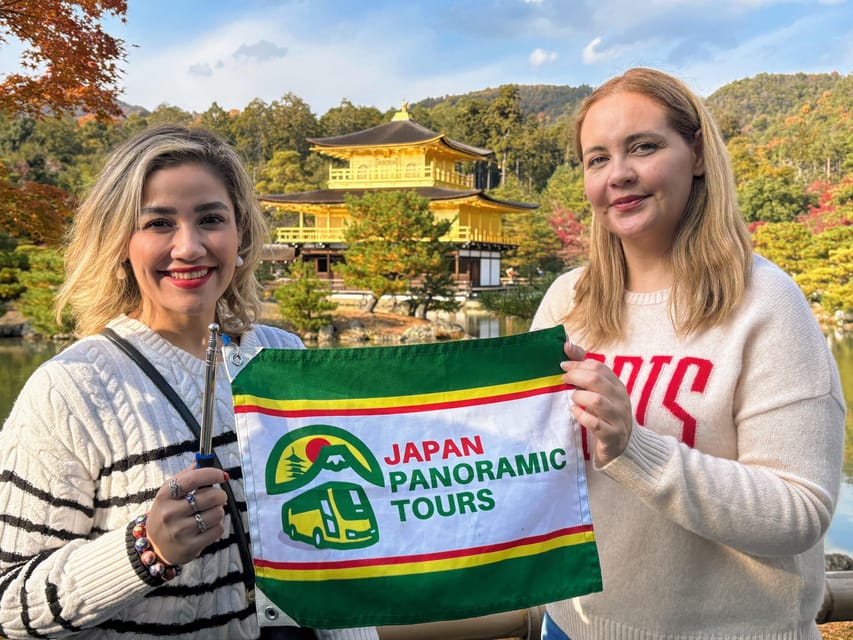
The meeting point is in front of Tully’s Coffee at the Kyoto Avanti Store, at 31 Higashikujo Nishisannocho. Check-in is at 7:50 AM, with departure at 8:00 AM. Look for the green and white Japan Panoramic Tours flag.
This is a strict start. There is no hotel pickup, and latecomers and no-shows do not receive refunds or changes. I would arrive at Kyoto Station with enough time to find the Avanti building and walk to the coffee shop without rushing.
The coach has free Wi-Fi, air conditioning, regular ventilation, and an antibacterial coating. That matters on a nine-hour day, especially when you are moving between busy temple areas and returning to the same seat for the next leg.
The ride also gives your guide time to explain the day and introduce Japanese customs or useful phrases. Tommy has used activities on the bus to keep the journey lively, while other guides have shared photos and background information between stops.
Kiyomizu-dera and the eastern temples
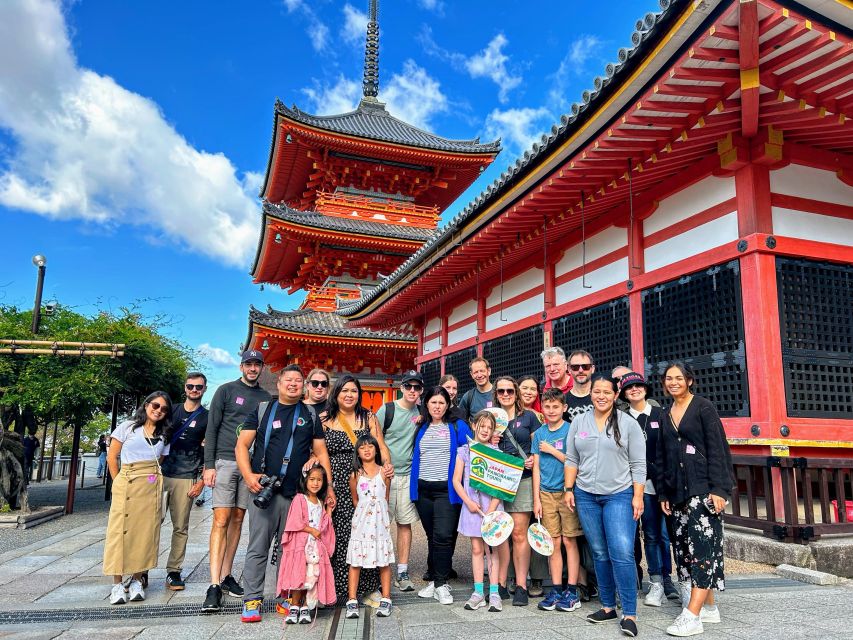
The first major stop is Kiyomizu-dera, with about an hour to explore. The temple dates back to 778 and is known for its large wooden terrace, which looks over Kyoto and the surrounding hills.
The terrace is the main visual reward, but the approach is part of the visit. You will walk uphill through the historic Higashiyama area, where the route can be crowded and uneven. Comfortable shoes are essential from the first stop, not just for the bamboo forest later.
An hour gives you time to see the principal buildings, enjoy the view, and take photographs. It does not allow for an unhurried exploration of every corner. I would listen carefully to the guide at the start, then use the remaining time for the views and the parts that interest you most.
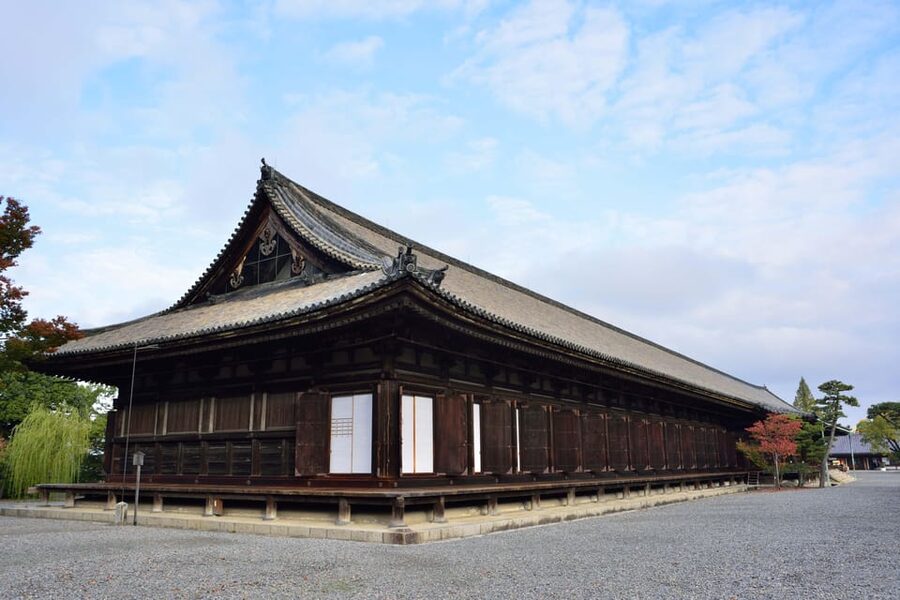
Next comes Sanjusangen-do, officially called Rengeo-in, where you have about 40 minutes. Its name refers to the 33 spaces between its columns, and its long wooden hall is divided by 35 columns. Inside, the famous display includes 1,001 Kannon statues.
This stop offers a different kind of drama from Kiyomizu-dera. Kiyomizu-dera gives you a broad city view and an open hillside setting. Sanjusangen-do is about scale inside a single wooden hall. Photography rules and the quiet atmosphere make it a place for looking rather than rushing around with a camera.
Arashiyama lunch beside Togetsukyo Bridge
The coach then crosses Kyoto to Arashiyama, one of the city’s most popular scenic districts. Lunch lasts about 50 minutes and is served as a Japanese buffet when you select the lunch option.
The setting is a strong point. The restaurant looks toward Togetsukyo Bridge, Arashiyama’s central landmark, with shops and other attractions nearby. A buffet also keeps the group moving, since you do not have to wait for a long series of individual orders.
Vegetarian dishes are available. The meal does not provide Muslim-friendly, allergy-friendly, lactose-free, or gluten-free choices. If you have a serious allergy, choose the option without lunch. You can bring your own food or use the free time in Arashiyama to buy something suitable.
The buffet has received mixed practical feedback. Some people enjoy the variety and convenience, while one detailed account found some items cold and less fresh than expected. I would treat lunch as a useful pause rather than the culinary highlight of your Kyoto day.
If you skip the meal, the 50-minute break gives you more control. You can choose street food or a nearby restaurant, though you will need to watch the meeting time carefully.
A few more bus tours around Kyoto worth a look
- Kyoto/Osaka: Nara, Fushimi Inari Taisha, Arashiyama Bus Tour
★ 4.7 · 1,275 reviews - Kyoto: Full-Day Guided Bus Tour to Top Highlights & Tickets
★ 4.6 · 533 reviews - Kyoto: Nara & Traditional Matcha Experience Bus Tour
★ 4.9 · 185 reviews - From Kyoto: Nara History Guided Half Day Bus Tour with Lunch
★ 4.8 · 114 reviews
Walking through the Sagano Bamboo Forest
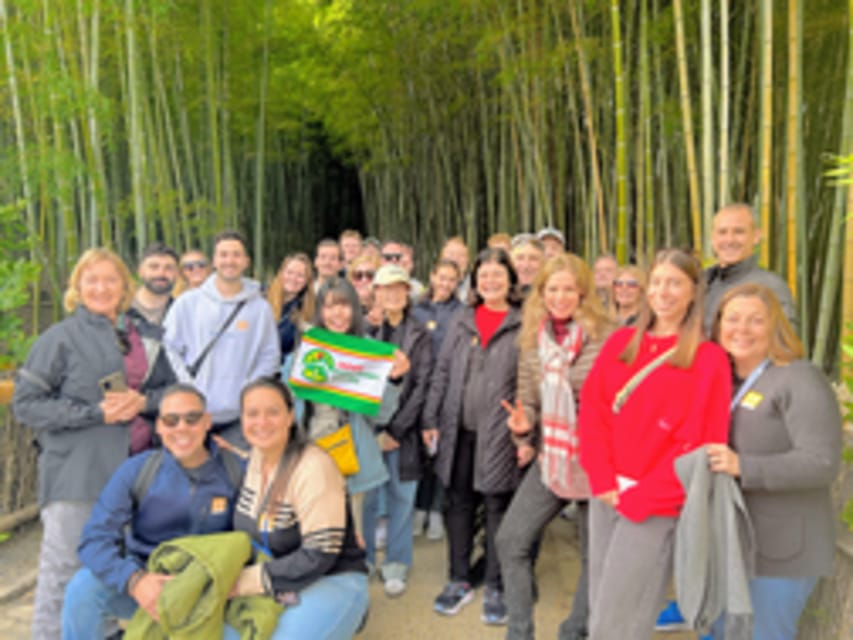
After lunch, you get about 20 minutes at the Sagano Bamboo Forest. The path runs through tall bamboo that filters the light and sways in the wind. It is one of Kyoto’s most recognizable photo spots, so expect a short, focused walk rather than a long forest hike.
Twenty minutes is enough to enter the grove, take photographs, and experience the atmosphere. It is not enough to explore every nearby lane or spend time searching for a quiet section. The short stop can feel frustrating if the bamboo forest is your main reason for visiting Arashiyama.
I like its place in the day because it follows lunch and offers a change from temple interiors. Just keep your group’s return time in mind. A few extra minutes spent posing can become a problem when the coach is covering several more stops.
Tenryu-ji’s garden and the Golden Pavilion
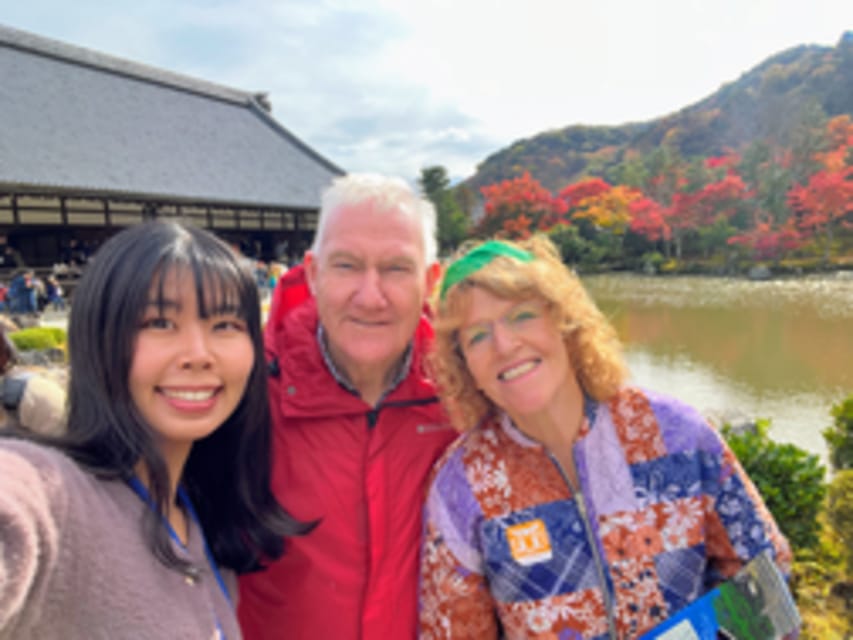
Tenryu-ji follows the bamboo grove, with about 30 minutes for the temple and garden. The temple is a World Heritage Site, and its garden gives you a clear look at Japanese design across the seasons.
The short visit means you should focus. Walk through the garden, notice how the pond, trees, and borrowed mountain views work together, and listen to the guide’s explanation. If you want a lengthy garden visit, you may wish for more time here.
The next major stop is Kinkaku-ji, the Golden Pavilion, known locally as Rokuon-ji. You have about 40 minutes to admire the gold-covered structure reflected in the pond and follow the designated visiting path.
Kinkaku-ji is visually bold and easy to appreciate quickly. The drawback is that the visit centers on an exterior view. You do not spend a long time inside the pavilion, so the stop is strongest for photographs, the garden setting, and the chance to see one of Kyoto’s most recognizable buildings.
The bus passes Nijo Castle along the way, but does not include a visit. That distinction matters if Nijo Castle is a priority for you. You will see it only from the coach, so plan a separate visit if you want to explore its grounds and interiors.
Ending beneath the red gates at Fushimi Inari
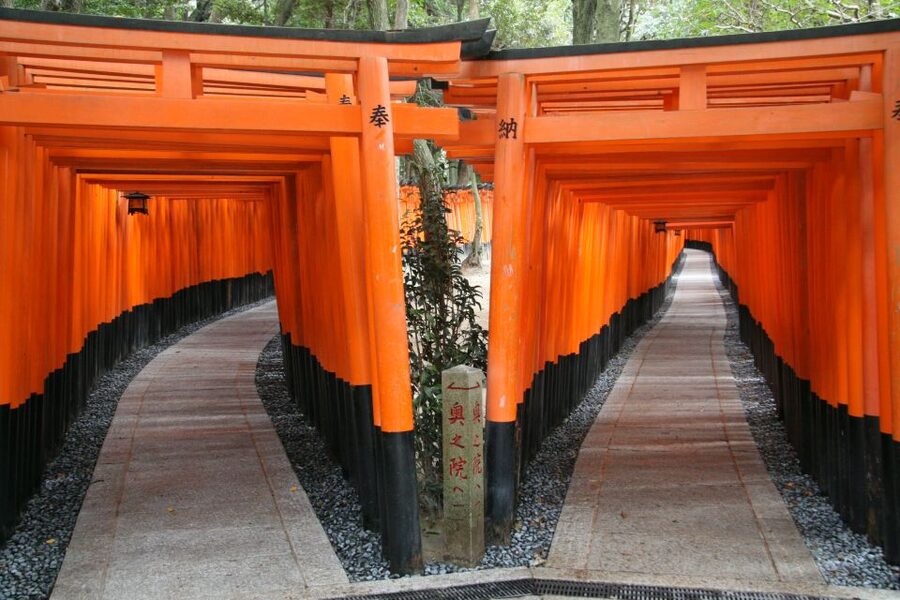
Fushimi Inari Taisha is the final major stop, with about an hour. For many people, this is the emotional high point of the day.
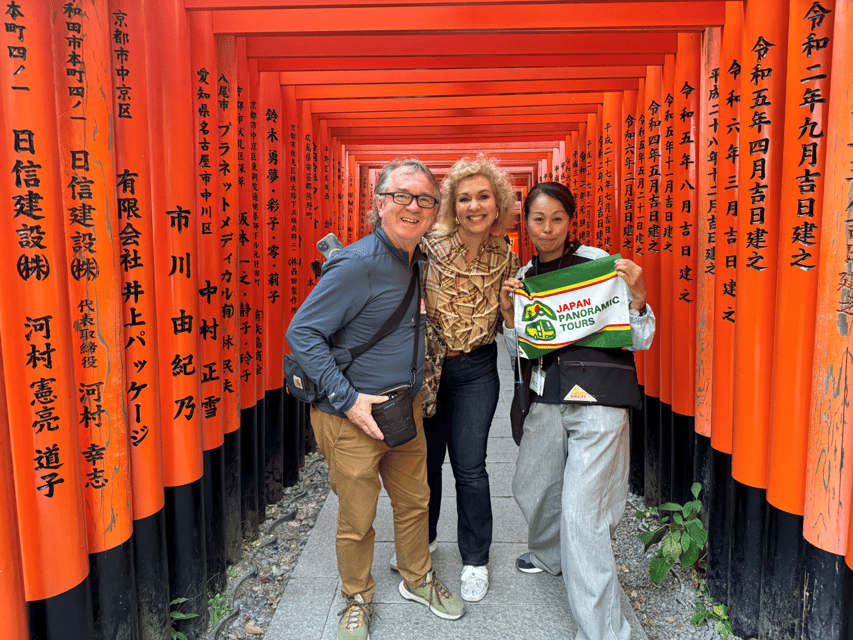
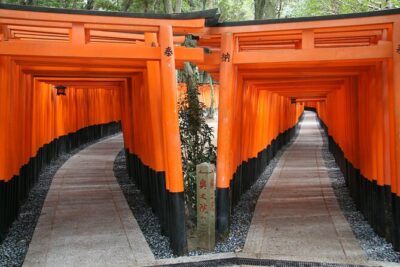
The shrine is famous for its thousands of vermilion torii gates, which form tunnels up the wooded hillside. The first section is the most accessible and photogenic, while the full mountain route takes far longer than the time provided here. You can walk beneath a substantial stretch of gates, but you should not expect to complete the entire climb.
The late timing has advantages and drawbacks. By this point you have already seen much of Kyoto, so Fushimi Inari provides a memorable final scene rather than an early-morning start. On the other hand, you may be tired after temples, stairs, hills, and the bamboo walk.
I would use the hour wisely. Walk at a steady pace, pause for photographs when the path opens up, and turn back early enough to meet the guide. The red gates are not the only feature. Look for the fox imagery associated with Inari worship and notice how the shrine shifts from a busy entrance area to a more wooded path.
The tour returns to the Tully’s Coffee meeting point near Kyoto Station after about 20 minutes of transfer time. You finish close to transport, food, and the station’s many connections.
The guides make the packed schedule easier
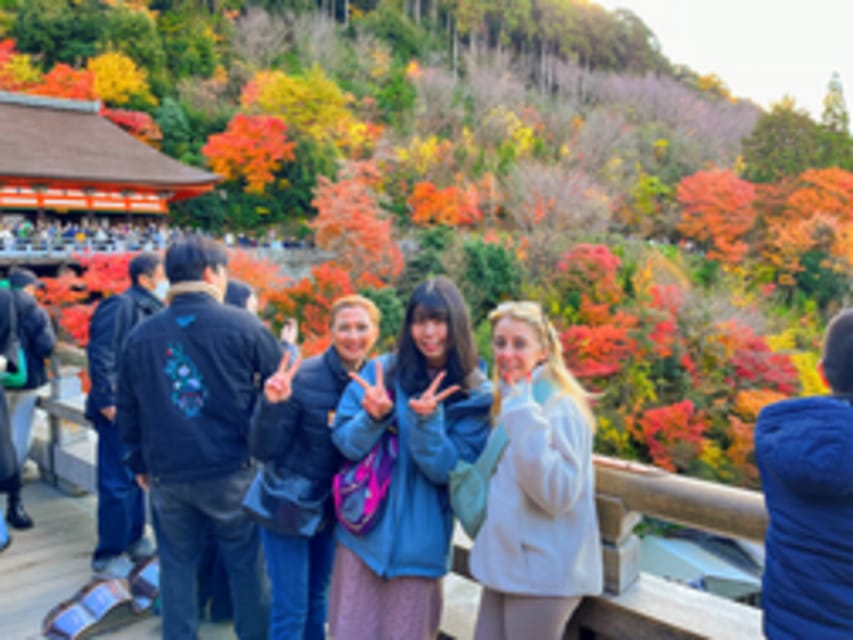
The strongest part of this experience is the human guidance. A packed day can become a blur of roofs, statues, ponds, and gates unless someone helps you understand what you are seeing.
Den is praised for historical explanations, a bright manner, and attention to the group. At-Chan has helped solo visitors with photographs, taught useful Japanese words, and made cultural explanations easy to follow. Sakura has been praised for punctuality, warmth, and even lending umbrellas when needed.
Ciel, Tommy, Nagomi, Hiroko, Mai, and other guides have also received strong praise for friendly communication and keeping the day organized. Tommy has used humor and bus activities between stops, while Mai has been noted for careful attention to safety and clear English.
Your guide will vary, so you cannot book a particular personality with certainty. Still, the repeated pattern is clear: the guide is not simply handing out tickets. The best guides explain the temples, answer questions, offer photo help, and keep a large group moving without making the day feel cold or mechanical.
Live commentary is in English. Multilingual audio guidance is available in Spanish, French, Italian, German, Portuguese, and Ukrainian, with English audio also listed among the available guidance. Audio headsets are included for the relevant language options.
Who should book this Kyoto day tour
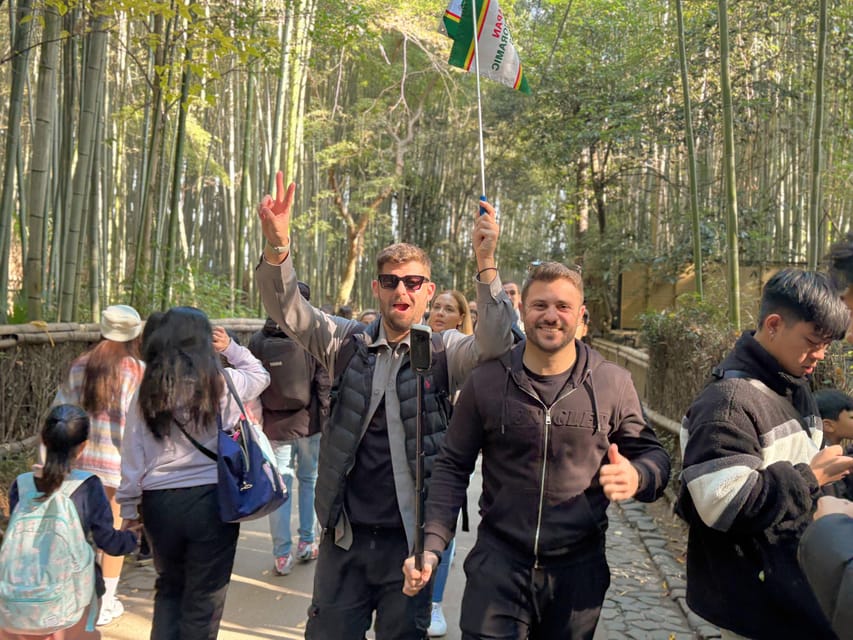
I would recommend it most strongly if you have only one or two days in Kyoto and want to cover the major names quickly. It also suits families who prefer a fixed plan, visitors who do not want to navigate Kyoto’s rail and bus network, and solo visitors who appreciate help with photos and timing.
It can work well for teenagers, too. The day is long, but the changing scenery helps: terrace views, statues, a garden, a buffet, bamboo, gold architecture, and red gates all arrive in different settings.
I would be cautious if you want slow travel. The schedule gives you a taste of many places, not extended time at one. It is also unsuitable for wheelchair users and people with mobility impairments, since the day includes stairs, hills, and walking across temple grounds.
Bring comfortable shoes, water, and clothing suited to the weather. There are no hotel transfers, pets are not allowed, and the order of stops may change because of traffic, weather, closures, or other operating needs. If a listed site closes, an alternative location may be used.
Should you book this tour?
Book it if your priority is maximum coverage with minimum transport hassle. For $122, the included admissions, coach transfers, English guide, and wide spread of famous Kyoto sights offer solid value when your time is limited.
Skip it if your ideal Kyoto day involves lingering over gardens, choosing your own lunch, or exploring one neighborhood at a leisurely pace. The best way to use this tour is as a first look at the city. Let the guide give you the background, enjoy the headline sights, then return on your own to the temple, garden, or shrine that deserves more time.
FAQ
Where does the Kyoto bus tour begin and end?
The tour begins and ends in front of Tully’s Coffee at Kyoto Avanti Store, 31 Higashikujo Nishisannocho, Minami Ward, Kyoto. Check-in is at 7:50 AM, and departure is at 8:00 AM.
How long does the tour last?
The stated duration is 510 minutes, or about nine hours. The schedule includes transfers, temple visits, lunch, walking, and photo stops.
Is lunch included?
Lunch is included only when you select the lunch option. It is a Japanese buffet with vegetarian dishes. Muslim-friendly, allergy-friendly, lactose-free, and gluten-free meals are not available.
What languages are offered?
The live tour guide speaks English. Audio guidance is available in Spanish, French, Italian, German, Portuguese, and Ukrainian. English audio guidance is also listed among the available options.
Does the tour visit Nijo Castle?
The coach passes by Nijo Castle, but the schedule does not include a visit inside the castle.
Is the tour suitable for people with limited mobility?
No. The tour is not suitable for wheelchair users or people with mobility impairments. You will walk up stairs and hills, as well as across temple and shrine grounds.
Just added around Kyoto
- Kyoto Sagano Romantic Train in Arashiyama Bus Tour★ 3.0 · 6 reviews
- NARUTO & BORUTO at Nijigen no Mori Park Entry& Bus Transportation★ 3.0 · 3 reviews
- From Kyoto: Nara History Guided Half Day Bus Tour with lunch★ 5.0 · 23 reviews
- Kyoto 1 Day Golden Route Bus Tour★ 5.0 · 15 reviews
- Kyoto Hop-On, Hop-Off Sightseeing Bus Tour★ 3.0 · 5 reviews
- Amanohashidate & Miyama 1-Day Bus Tour: From Osaka/Kyoto w/ Lunch★ 4.5 · 18 reviews
- Full Day Hiroshima and Miyajima Bus Tour★ 5.0 · 12 reviews
- Hiroshima, Miyajima 1 Day Bus with Indian Lunch from Osaka, Kyoto★ 5.0 · 7 reviews
Kyoto Bus Tours, compared.
Kyoto/Osaka: Nara, Fushimi Inari Taisha, Arashiyama Bus Tour
Read our review →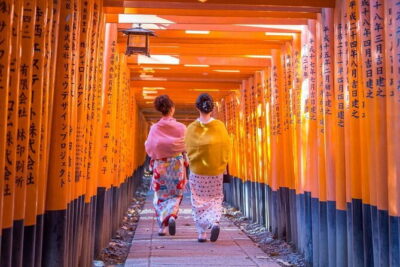
Nijo, Kinkaku-ji, Arashiyama, Kiyomizu & Fushimi Inari
Read our review →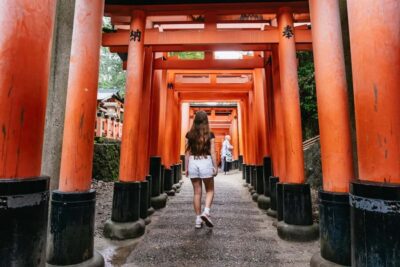
Full-Day Guided Bus Tour to Top Highlights & Tickets
Read our review →
Nara History Guided Half Day Bus Tour with Lunch
Read our review →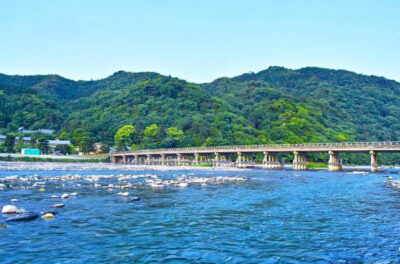
Osaka/Kyoto: Katsuoji, Kinkakuji, Arashiyama 1-Day Bus Tour
Read our review →Nara History Guided Half Day Bus Tour with lunch
Read our review →Browse the lists this tour appears in