
Review · JAPAN
Kyoto: Nara & Traditional Matcha Experience Bus Tour
Deer, Buddha, and matcha in one day. This 8.5-hour coach tour packs three major heritage sites into a well-planned trip from Kyoto, with the best moments being the Great Buddha at Todaiji and the hands-on tea experience in Uji. I also like the friendly teaching style of guides such as Mai, Nanami, At-Chan, and Tsubasa, who add simple Japanese phrases and useful cultural context along the way. The main drawback is the pace: 510 minutes sounds generous, but Nara and Uji both deserve more time than a single day can provide.
The $122 price is reasonable if you want temples, transport, entry fees, a guide, and matcha making handled in one booking. You should expect walking, stairs, hills, and a fixed schedule, though, so this is not a good fit for wheelchair users or anyone wanting a slow, independent day.
Key points to know before booking
- Todaiji’s Great Buddha is the day’s grandest sight: Your admission includes the vast wooden Daibutsuden Hall and its famous bronze Buddha.
- Nara’s deer are wonderfully close: You can buy rice crackers and feed them, but keep your fingers moving because the deer may nip.
- Kasuga Taisha adds a quieter, more atmospheric stop: Its stone lanterns give the shrine grounds a special character.
- Uji brings a different side of Japan: Byodoin Temple, tea shops, and matcha making replace Nara’s deer and ancient Buddhist monuments.
- The guides are a major part of the value: At-Chan, Mai, Nanami, Yuta, Tsubasa, Rina, Aoi, Den, Harry, and Sakura have all been praised for clear explanations and warm care.
- The bus saves time and energy: Air conditioning, free Wi-Fi, regular ventilation, and included admissions make a long day easier.
Why this Nara and Uji combination works
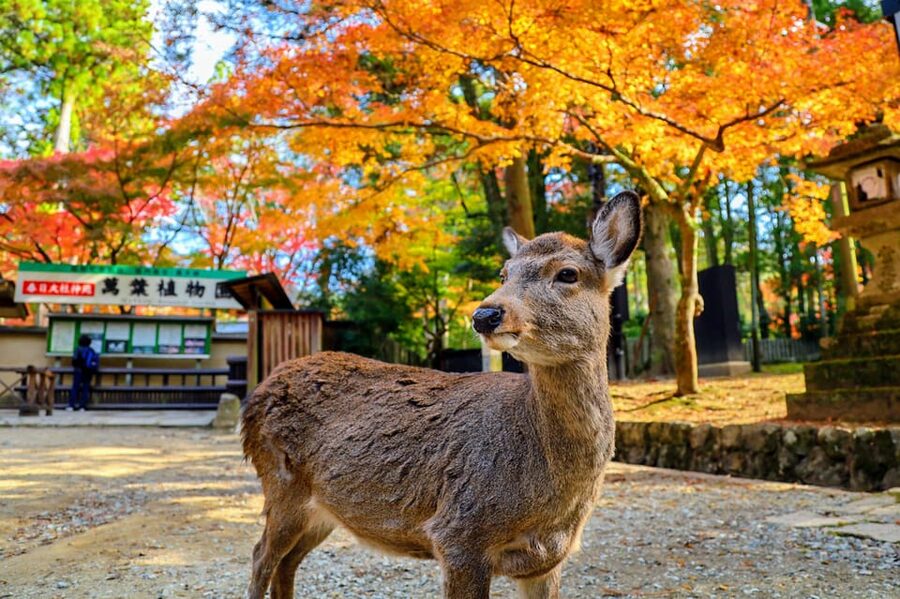
Kyoto has enough temples to fill a week, but Nara and Uji offer a useful change of rhythm. Nara gives you huge Buddhist architecture, a Shinto shrine, and free-roaming deer. Uji brings tea culture, a graceful temple, and a small-town shopping break.
I like the contrast. You begin with monumental sites that can feel grand and formal, then finish with something practical and personal: making matcha yourself. The day is not just a procession of photo stops. It gives you a taste of religious Japan, local wildlife, tea production, and ordinary sightseeing in one outing.
The coach leaves from Kyoto Station at 8:00 AM, with check-in at 7:50 AM. You meet in front of Tully’s Coffee at the Kyoto Avanti Store, at 31 Higashikujo Nishisannocho. Look for the green and white Japan Panoramic Tours flag. The meeting point is convenient once you know where it is, but Kyoto Station is large, and one person found the walk across the station confusing. Give yourself extra time rather than trying to arrive at the last minute.
The tour lasts 510 minutes. Traffic, weather, and operating conditions can change the order, so treat the schedule as a framework rather than a promise to the minute.
A few more bus tours around Kyoto worth a look
- PERFECT KYOTO 1-Day Bus Tour
★ 5.0 · 13,518 reviews - Kyoto: Fushimi Inari, Kinkakuji, Bamboo Grove 1 Day Bus Tour
★ 4.8 · 4,316 reviews - Kyoto/Osaka: Nara, Fushimi Inari Taisha, Arashiyama Bus Tour
★ 4.7 · 1,275 reviews
The coach ride from Kyoto to Nara
The air-conditioned coach is a practical reason to choose this tour. Nara is easy to reach by train, but a bus means you do not need to plan transfers, check temple opening details, or work out how to connect Nara Park with Kasuga Taisha.
On the way, the guide may point out Fushimi Castle and the former Heijokyo palace area. These are passing views rather than full visits, but they help place the journey within the wider story of Kyoto and Nara.
The bus has free Wi-Fi, is regularly ventilated, and has an antibacterial coating. The ride to the Nara area takes about an hour. Use it to listen to the guide, rest your feet, or learn a few Japanese numbers and phrases. Several guides, including Mai, At-Chan, and Tsubasa, have used the bus time for short language lessons, which adds a friendly personal touch without turning the ride into a classroom.
Kasuga Taisha and its 3,000 lanterns
Kasuga Taisha is a Shinto shrine linked with the Fujiwara family, one of the powerful families that shaped early Japanese politics. You have about 30 minutes here, enough to get a feel for the approach, see the lanterns, and take photographs.
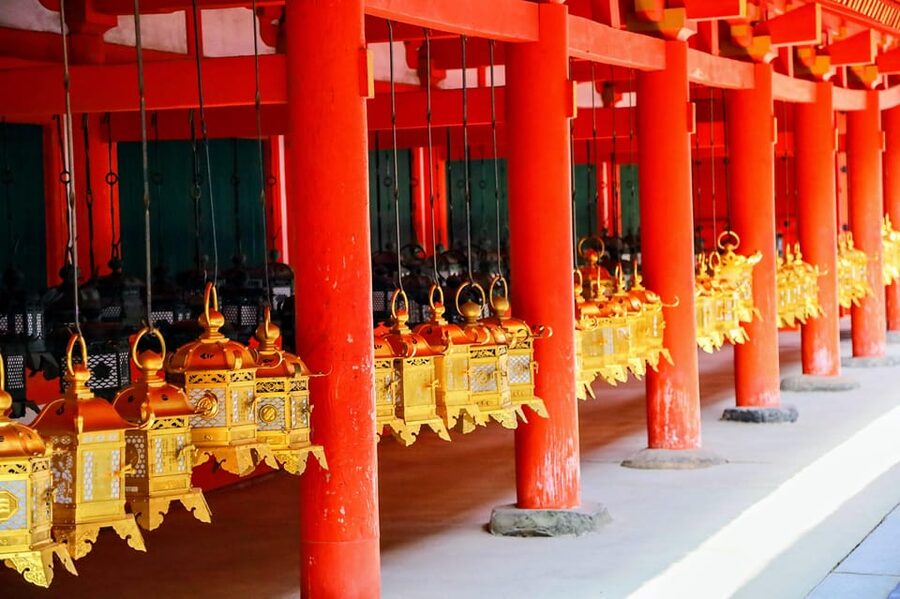
The shrine is famous for its stone and bronze lanterns. Around 3,000 lanterns are associated with the shrine, and they create a solemn, almost storybook setting along the forested paths. The short visit means you will not explore every corner, but that limitation is useful on a packed day. You get the visual character of Kasuga Taisha without spending your whole morning at one site.
Wear shoes with good grip. The route includes walking and may include uneven ground, stairs, or hills. If your ideal shrine visit involves sitting quietly and studying every detail, this stop will feel too brief. If you want a strong introduction, the 30 minutes works well.
The exact order may change. Some departures visit Todaiji before Kasuga Taisha, while others follow the listed sequence. Keep your attention on the guide’s meeting instructions rather than assuming the next stop will always be in the same order.
Nara Park and the deer encounter
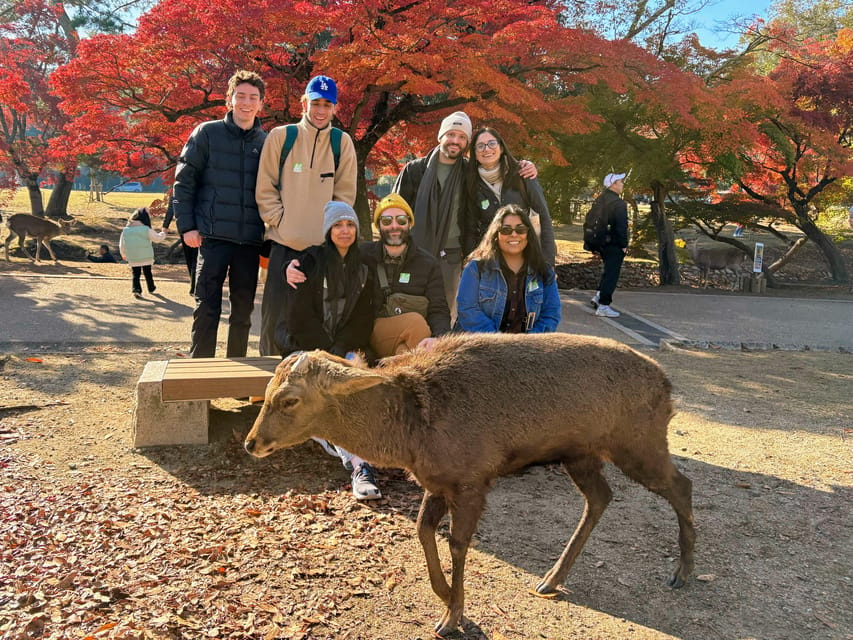
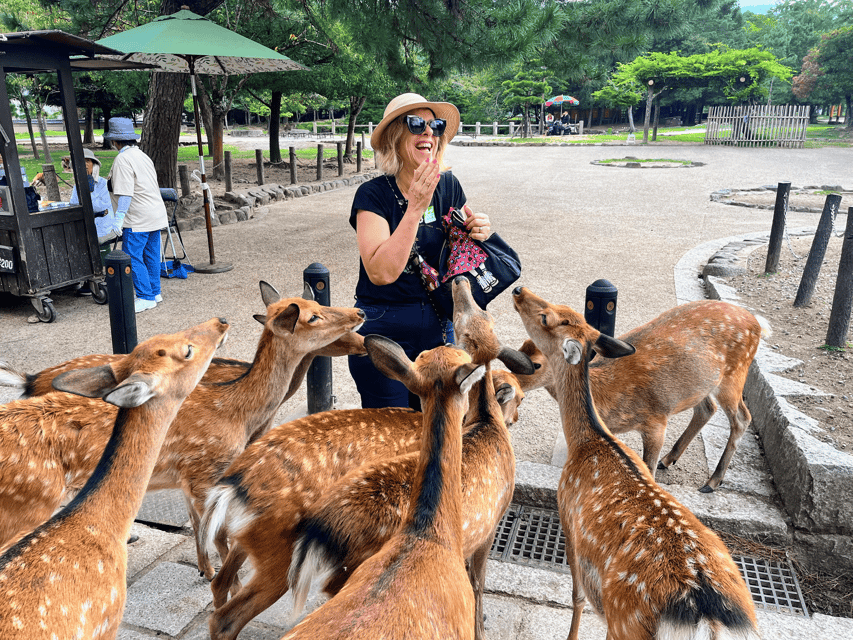
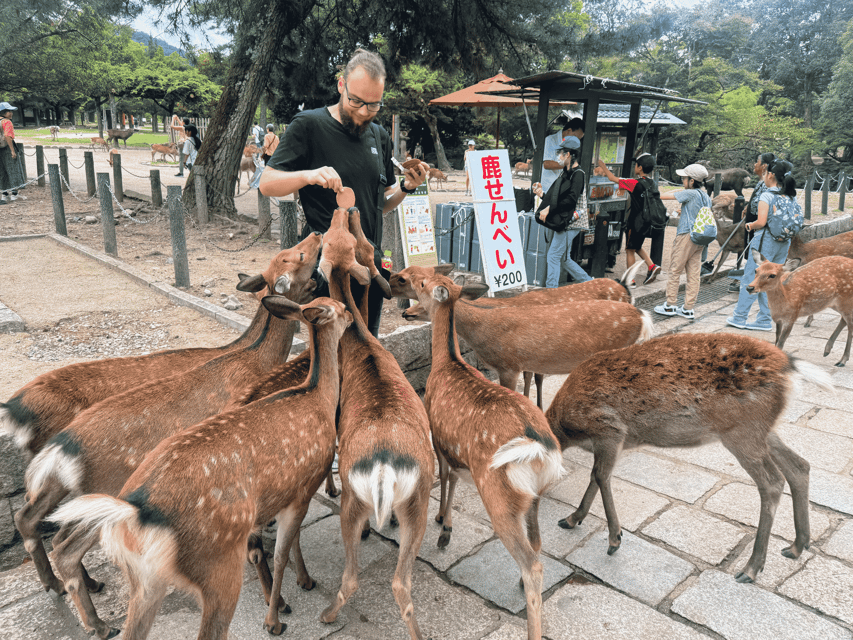
Nara Park is the most playful part of the day. Wild deer move around the park and temple approaches, often close enough for excellent photographs. You can buy special rice crackers from roadside stalls and offer them to the deer.
The deer are accustomed to people, and some will bow after receiving food. That is charming, but do not mistake them for tame pets. One guide gave the practical warning that they can bite, and that is worth remembering. Feed them calmly, keep your hands clear once the crackers are gone, and follow the guide’s instructions.
You have about 30 minutes in the park, though the park also connects with the Todaiji area. This is enough time for a deer encounter and a short walk, but it is not a full exploration of Nara Park. If you want gardens, museums, or a longer walk through the wooded sections, plan a separate visit.
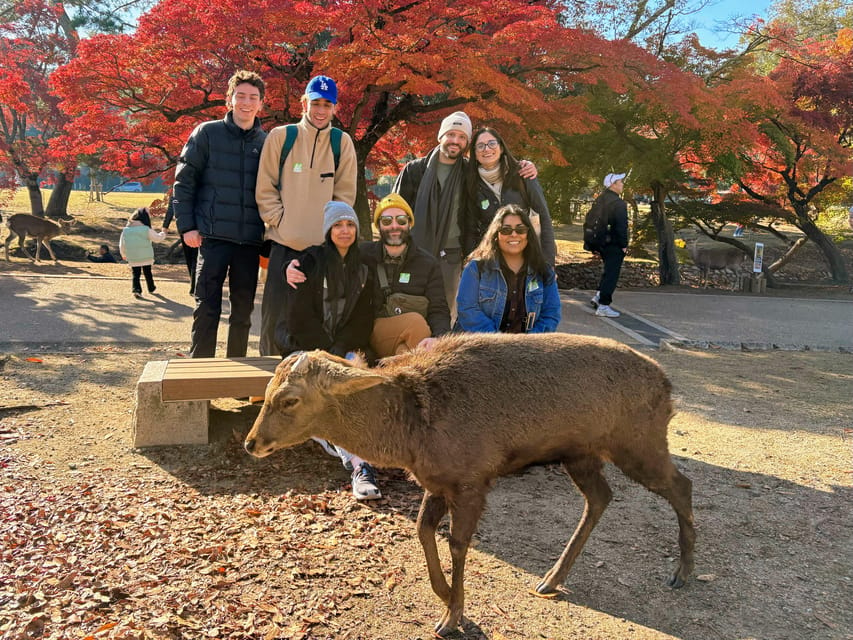
The deer are also a good reminder that Japanese sightseeing is not only about buildings. The animals have long been connected with the religious identity of Nara, and their presence changes the mood of the visit. You move from formal shrine grounds to a lively public park where history and daily life meet.
Same place, a different way to ride:
- Kyoto: Nijo, Kinkaku-ji, Arashiyama, Kiyomizu & Fushimi Inari
★ 5.0 · 699 reviews - Kyoto: Full-Day Guided Bus Tour to Top Highlights & Tickets
★ 4.6 · 533 reviews - From Kyoto: Nara History Guided Half Day Bus Tour with Lunch
★ 4.8 · 114 reviews - Osaka/Kyoto: Katsuoji, Kinkakuji, Arashiyama 1-Day Bus Tour
★ 4.6 · 33 reviews
Todaiji and the Great Buddha of Nara
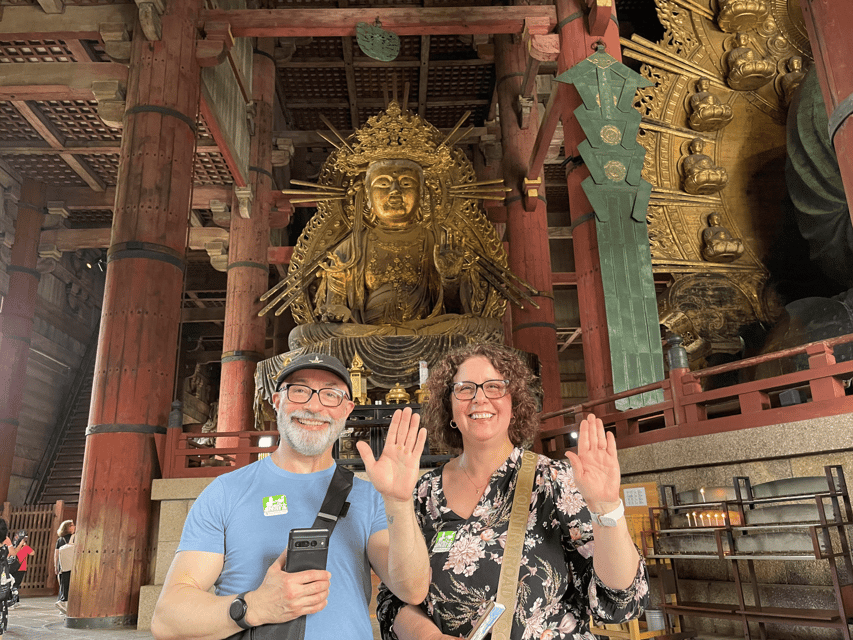
Todaiji is the day’s essential stop. Its Daibutsuden Hall houses the Great Buddha of Nara, a vast bronze figure that has drawn visitors for centuries. The hall itself is one of the world’s largest wooden buildings, so the building is as impressive as the statue inside.
The admission fee is included, and the visit lasts about 50 minutes. That gives you time to enter the hall, see the Buddha, study the scale of the structure, and walk through part of the surrounding temple grounds.
I would save your best concentration for this stop. The combination of size, age, and religious importance is difficult to appreciate through a quick photograph. Look up at the timber construction, then step back from the Buddha and notice how the hall is designed to make the statue feel even larger.
Todaiji can be crowded, especially during popular seasons. The guided structure helps you get oriented, but you will still share the space with other visitors. The tour is best for a first visit, when an English-speaking guide can explain what you are seeing and keep the group moving without wasting time.
The lunch break and what to choose
After Nara, the bus heads toward Uji, with a lunch break at a local restaurant. Lunch is optional. If you select the lunch option, you receive a Japanese meal, and several people have found it tasty and traditional.
Choosing the meal saves you from searching for food during a tight schedule. It also keeps the group together and reduces the risk of losing time. If you have strong food preferences, you may prefer to arrange your own meal, but you need to remember that extra food and drinks are not included.
Vegetarian arrangements can be made up to two days before the tour date. Last-minute bookings receive the regular meal, so do not wait until the morning of the tour to raise dietary concerns.
Bring water and some cash. Cash is useful for deer crackers, snacks, drinks, and small purchases in Uji. The tour does not include additional food and drinks.
Byodoin Temple and the Phoenix Hall
Byodoin Temple is Uji’s main architectural prize. Its Phoenix Hall appears on the Japanese 10-yen coin, so you may already have seen its image before arriving. Seeing the real building beside the pond gives that familiar coin design a new scale and setting.
The temple visit lasts about one hour, and admission is included. The Phoenix Hall is the star, but the grounds also make the visit worthwhile. The temple offers a calmer contrast to Todaiji’s enormous interior and Nara Park’s active deer.
The guide provides historical and cultural background, while you have time to take photographs and look around. Byodoin is registered as part of the UNESCO Historic Monuments of Ancient Kyoto, which gives the stop genuine importance rather than making it simply a quick photo opportunity.
Keep in mind that the Phoenix Hall interior may not be part of the standard visit described here. The safe expectation is to see the hall and temple grounds, not to assume every interior area is open.
Making matcha in Uji
The matcha experience is what gives this tour its special finish. Uji is one of Japan’s best-known tea areas, and here you make matcha from the beginning rather than only drinking a prepared cup.
Matcha is made from finely ground green tea leaves. It is used in tea practice, but also in sweets and cooking. The activity helps you understand why matcha has a different character from ordinary steeped green tea.
You have about 70 minutes in Uji for the tea activity and free time. This is a good balance. You learn the basic process, taste something you have prepared yourself, and still have time for nearby shops, restaurants, and tea purchases.
The tea session is not just a decorative ceremony added to a sightseeing day. It gives you something to do with your hands and a clearer sense of Uji as a tea town. Several guides have been praised for making this part easy to follow and enjoyable, and one experience was described as a historical matcha session with a tea champion.
Use the free time for souvenirs if you want tea to take home. Uji also has small shops and restaurants near the matcha venue, so you can browse without needing another transfer. Just watch the clock. The bus leaves after the activity, and the tour cannot wait for latecomers.
The guide makes the long day easier
A good guide matters on a day with several stops. The strongest part of this operation is its guide team. At-Chan has helped people find specific tea shops during free time, taught basic Japanese phrases, and assisted with later travel plans. Mai has used handmade visual aids and language games. Nanami has been praised for clear explanations and careful group management.
Other guides named by people on recent departures include Aoi, Yuta, Tsubasa, Rina, Den, Harry, Sakura, and Rino. You cannot request a particular guide based on the information provided, but the repeated praise for the team suggests that the human side of the tour is not an afterthought.
English is the live tour language. Audio headsets are available in Spanish, French, Italian, German, Portuguese, and Ukrainian. That is useful if members of your party prefer a language other than English, though the live guide commentary itself is in English.
What $122 really buys you
At $122 per person, this is not the cheapest way to visit Nara and Uji. You could use trains and local buses for less, especially if you skip paid entries and make your own lunch arrangements.
The value comes from convenience and structure. Your price includes:
- Air-conditioned coach transport from Kyoto and back
- A professional English-speaking guide
- Todaiji admission
- Byodoin admission
- The matcha-making activity
- Free Wi-Fi on the coach
- A Japanese lunch if you select that option
- Multilingual audio support
For a first visit, I think the price is fair. You cover two areas that would require separate planning, and you avoid spending part of the day studying routes. The tradeoff is control. You cannot linger at Todaiji, extend your deer walk, or suddenly decide to spend the afternoon in Uji.
The tour also offers free cancellation up to 24 hours before departure and a reserve-now, pay-later option. Those policies make it easier to fit into a changing Kyoto schedule.
Who should book this day trip?
I would recommend it most strongly to first-time visitors who want an organized introduction to Nara and Uji. It also suits families and mixed-age groups because the day alternates between famous sights, open-air walking, animals, food, and a hands-on activity.
It is a good choice if you are staying in Kyoto and want to see Nara without managing rail connections. It can also suit people who enjoy cultural explanation rather than simply collecting photographs.
I would hesitate if you have limited mobility. The tour is specifically unsuitable for wheelchair users and people with mobility impairments, and you will walk up stairs and hills. I would also hesitate if you dislike fixed schedules or prefer long, quiet visits at temples.
The main practical advice is simple: arrive early, wear comfortable shoes, carry water and cash, and bring a little patience for traffic. The itinerary order can change, and the day is full.
Should you book the Nara and Uji tour?
Book it if you want Nara’s major sights and Uji’s tea culture in one efficient day. Todaiji, the deer, Kasuga Taisha, Byodoin, and matcha making create a satisfying range of experiences, while the coach and guide remove much of the planning work.
Skip it if your priority is independence, long temple visits, or a relaxed pace. For most first-time visitors with one free day, though, the $122 cost is justified by the included admissions, transport, and well-regarded guide support. The deer may steal the morning, but the matcha experience gives the afternoon its own flavor.
FAQ
Where does the tour meet?
You meet in front of Tully’s Coffee at the Kyoto Avanti Store, 31 Higashikujo Nishisannocho, Minami Ward, Kyoto, 601-8003, Japan. Check-in is at 7:50 AM, and departure is at 8:00 AM. Look for the green and white Japan Panoramic Tours flag.
How long does the tour last?
The tour lasts 510 minutes, or about 8.5 hours. It begins in the morning and returns to the Tully’s Coffee meeting point at Kyoto Avanti Store.
Is lunch included?
Lunch is included only if you select the lunch option. The meal is Japanese style. Vegetarian arrangements can be made up to two days before the tour date, while last-minute bookings receive the regular meal.
What languages are available?
The live tour guide speaks English. Audio headsets are available in French, German, Italian, Portuguese, Spanish, and Ukrainian.
Are admission fees included?
Admission to Todaiji Temple and Byodoin Temple is included. The matcha experience fee is also included.
Can I feed the deer at Nara Park?
Yes. Rice crackers are sold at roadside stalls and near routes to the shrines. The deer may bow when fed, but they can also bite, so follow the guide’s safety advice and keep your hands clear after the crackers are gone.
Is the tour suitable for wheelchair users?
No. The tour is not suitable for wheelchair users or people with mobility impairments. You will need to walk up stairs and hills.
Can I cancel the booking?
You can cancel up to 24 hours in advance for a full refund. Latecomers and no-shows do not receive refunds or changes.
Just added around Kyoto
- Kyoto Sagano Romantic Train in Arashiyama Bus Tour★ 3.0 · 6 reviews
- NARUTO & BORUTO at Nijigen no Mori Park Entry& Bus Transportation★ 3.0 · 3 reviews
- Kyoto 1 Day Golden Route Bus Tour★ 5.0 · 15 reviews
- From Kyoto: Nara History Guided Half Day Bus Tour with lunch★ 5.0 · 23 reviews
- Kyoto Hop-On, Hop-Off Sightseeing Bus Tour★ 3.0 · 5 reviews
- Amanohashidate & Miyama 1-Day Bus Tour: From Osaka/Kyoto w/ Lunch★ 4.5 · 18 reviews
- Full Day Hiroshima and Miyajima Bus Tour★ 5.0 · 12 reviews
- Hiroshima, Miyajima 1 Day Bus with Indian Lunch from Osaka, Kyoto★ 5.0 · 7 reviews
Kyoto Bus Tours, compared.
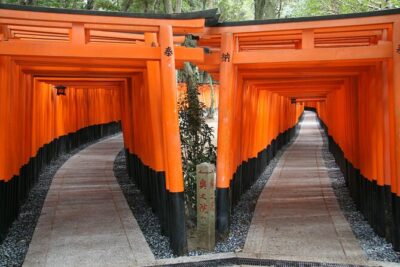
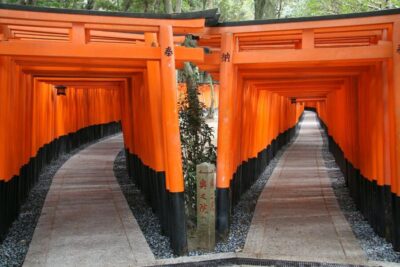
Fushimi Inari, Kinkakuji, Bamboo Grove 1 Day Bus Tour
Read our review →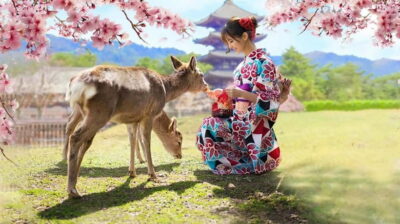
Kyoto/Osaka: Nara, Fushimi Inari Taisha, Arashiyama Bus Tour
Read our review →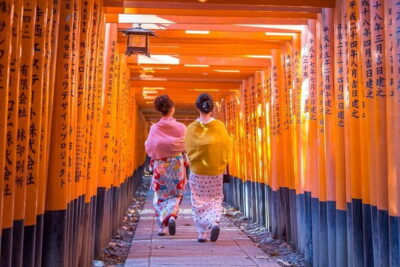
Nijo, Kinkaku-ji, Arashiyama, Kiyomizu & Fushimi Inari
Read our review →
Full-Day Guided Bus Tour to Top Highlights & Tickets
Read our review →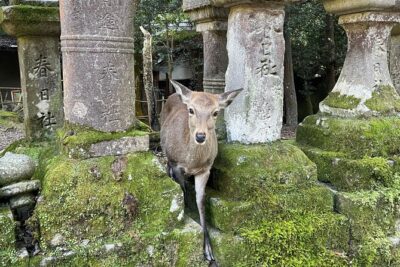
Nara History Guided Half Day Bus Tour with Lunch
Read our review →
Osaka/Kyoto: Katsuoji, Kinkakuji, Arashiyama 1-Day Bus Tour
Read our review →Nara History Guided Half Day Bus Tour with lunch
Read our review →Browse the lists this tour appears in