
Review · MEXICO
Turibus Hop On Hop Off Mexico City Tour
Mexico City rewards a wide-angle view. The Turibus makes that easy with routes linking the Historic Center, Polanco, the southern districts, and the Basilica area, so you can see far more than one neighborhood in a single outing. I like the freedom to create your own day, and I like having both an open-air upper deck and an air-conditioned lower level. The main drawback is that service can be uneven, and the current operating notice says only the Historic Downtown Route runs from 9 a.m. to 7 p.m. until further notice.
The ticket includes all listed routes and stops, a digital audio system, a route guide, and a Mexico City coupon booklet. That makes it useful for first-time visitors who want a quick sense of the city before choosing where to spend more time. Still, route changes, traffic, public events, and reduced bus frequency can affect your plans, so this works best when you keep your schedule loose.
The tour is listed at about three hours, but that describes a continuous sightseeing ride. If you get off at museums, markets, Coyoacán, or the Zócalo, you will need much more time. The current rating is 3 out of 5 from 347 ratings, which fits the experience: the coverage and convenience are appealing, but the service conditions require patience.
Key points to know before boarding
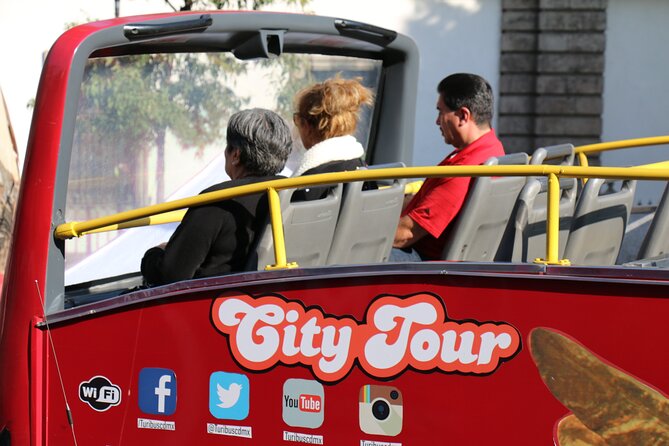
- Four themed routes cover very different sides of the city: Historic Center, Polanco, South, and Basilica.
- A single ticket connects the routes and stops: You can use the ticket for one operating day, or choose a booking option that covers one or two days.
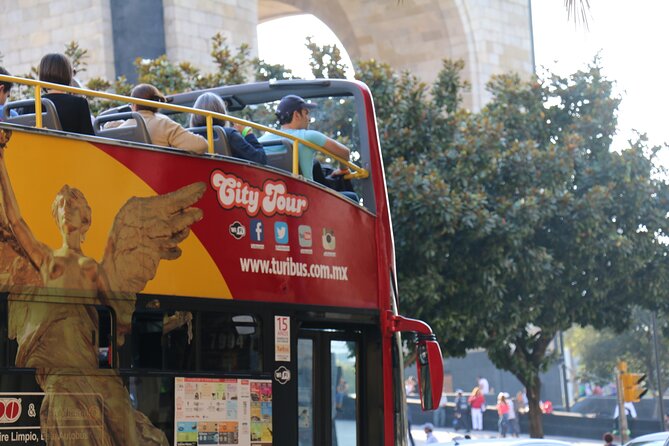
- The upper deck gives the best city views: The lower level offers air conditioning when sun, rain, or traffic fumes make open-air seating less pleasant.
- The audio system adds useful orientation: Headphones and multilingual digital commentary help explain the sights as you pass them.
- Sunday morning can bring route changes: The Ciclotón closes some streets from 8 a.m. to 2 p.m., forcing buses onto alternate roads.
- Check current operations before relying on every route: The stated service notice says only the Historic Downtown Route is operating on a regular 9 a.m. to 7 p.m. schedule until further notice.
How the Turibus works in Mexico City
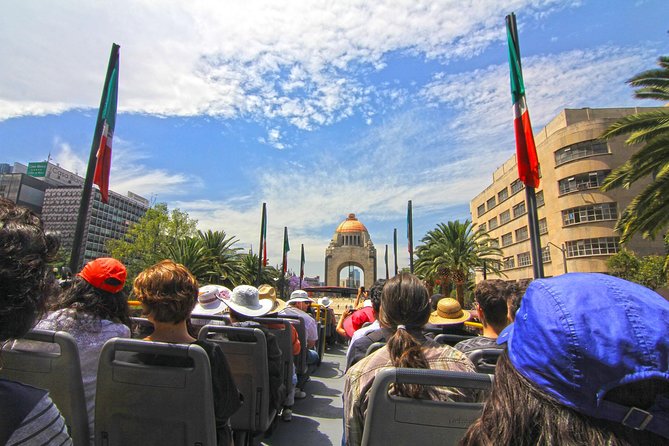
You begin by showing your mobile voucher at a designated stop. Headphones are provided at the ticket office, then you board and listen to commentary as the bus moves through the city.
The basic idea is simple: ride as long as you like, get off at a stop that interests you, then board a later bus to continue. You can finish at any stop on the routes. That flexibility is the real reason to book this rather than a fixed sightseeing circuit.
The continuous ride takes about three hours, but the full experience can fill a day. The Historic Center alone deserves several stops and walking breaks. The South Route also covers a wide area, including University City, Coyoacán, and the Frida Kahlo Museum. Trying to complete every route in one day would turn sightseeing into a bus timetable exercise.
You can choose the open top or the enclosed lower level. I would use the upper deck for broad views along Reforma and the lower level when the sun is strong or the weather turns. Bring your headphones, keep your voucher handy, and allow extra time between stops because traffic can be heavy.
More Hop-On Hop-Off Bus Tours in Mexico
- Mexico City: Hop-on Hop-off Bus Tour
★ 4.0 · 1,043 reviews - Mexico City: Hop-on Hop-off City Tour by Turibus 1-Day Pass
★ 4.1 · 691 reviews - Hop On Hop Off Tour with Free Stops in Puerto Vallarta
★ 4.0 · 647 reviews
Historic Center Route, from Auditorio to the Zócalo
The Historic Center route offers the clearest introduction to Mexico City. It begins at Auditorio Nacional, near major cultural attractions and the broad avenues of Chapultepec, then moves toward the central districts.
The early stops include the Museo de Arte Moderno and La Condesa. These are useful places to leave the bus if you want museums, cafés, or a walk through one of the city’s best-known residential areas. Fuente de Cibeles and Casa Lamm add more interest in the Condesa and Roma area, though you should check the route direction before getting off since the wider network uses some stops more than once.
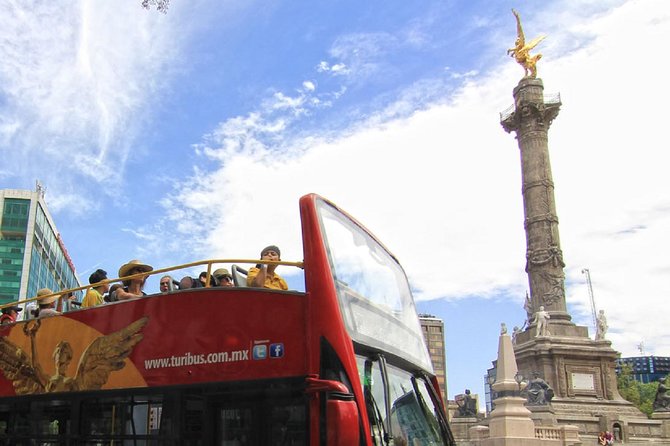
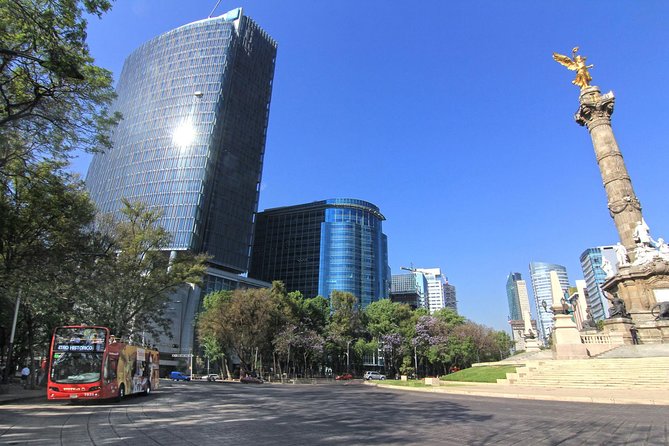
The Angel of Independence is one of the most recognizable sights along Paseo de la Reforma. This is one of the best sections for the upper deck. The avenue gives you a broad view of monuments, office buildings, and the steady movement of Mexico City traffic.
Further along, you pass Reforma 222, the Museo de Cera, and the Monument to Cuauhtémoc. The wax museum may appeal most to families, while the monument and Reforma stops are better for a short walk and photographs.
The route then moves into the Historic Center, with stops near Avenida Juárez, the Zócalo, Plaza Manuel Tolsá, and the Museo Franz Mayer. This is the most useful part of the circuit for first-time orientation. The Zócalo is the natural place to get off and walk. Plaza Manuel Tolsá and the Franz Mayer Museum give you quieter alternatives if the central square feels too crowded.
Plaza de la República and the Museo San Carlos follow. The route also includes Reforma L1, another stop near the city’s main boulevard, before continuing toward Paseo de la Reforma and the Museo Nacional de Antropología.
The Anthropology Museum is a major reason to use this route, but it is not a quick stop. If you plan to visit, set aside several hours and treat the bus as your transportation to the area, not as the whole activity. The route passes near enough attractions that you may prefer to ride the complete loop first, then return to the museum with a clearer plan.
Polanco Route, with Soumaya and Masaryk Avenue
The Polanco route starts at Auditorio, with the Bicigratis stop nearby, and then heads through Calle Arquímedes and Avenida Presidente Masaryk. This is a more polished, commercial side of the city, with upscale shopping, restaurants, and modern architecture.
Antara is one of the main stops. The Museo Soumaya is another key reason to choose this route. Its distinctive building is easy to spot, and the stop gives you access to one of Polanco’s most recognizable cultural attractions.
The route continues to Hipódromo de las Américas and Papalote Museo del Niño. Families may find Papalote especially practical, while the horse-racing venue offers a different look at the area. The Polanco circuit is shorter in feel than the southern route, but the stops are spread across districts that are not always convenient to connect on foot.
This route is a good choice if your interests include design, shopping, museums, and family activities. It is less useful if your priority is colonial architecture or traditional markets. I would not try to combine every Polanco stop with a full visit to the Historic Center on the same day unless you are content with brief visits.
South Route, from Roma to Coyoacán
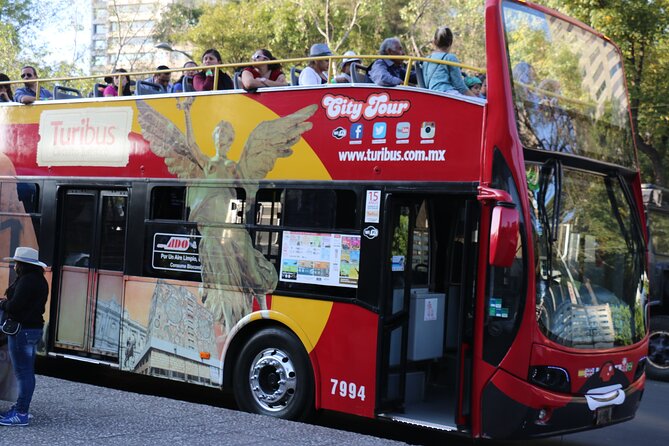
The South Route is the most ambitious of the four. It begins at Fuente de Cibeles, then passes Mercado Roma and the World Trade Center Mexico City.
Mercado Roma gives you a food-focused stop, while the World Trade Center is more of a city landmark than a sightseeing stop in itself. The route continues to Monumental Plaza de Toros México and Avenida de la Paz before reaching the southern districts.
Estadio Olímpico Universitario and University City are among the strongest stops on this route. The UNAM campus has a different character from central Mexico City, and the route lets you cover a great distance without arranging separate transport. The stops include Perisur, Avenida Centro Comercial, and the Mercado de flores San Ángel, which can be appealing if you want a mix of shopping, public spaces, and local color.
The route continues through Tlalpa Linares María Isabel, Universum, University City, and the Rectoría de la UNAM. Since this circuit covers so much ground, check the bus schedule before getting off. A long wait can make the return journey frustrating, particularly if you are trying to reach a timed museum visit.
The Alfredo Guati Rojo National Watercolor Museum and Coyoacán are especially worthwhile stops. Coyoacán is one of the best places to leave the bus and walk around. The route also stops at the Frida Kahlo Museum, followed by Aguayo.
The Frida Kahlo Museum is a major draw, but the bus ticket does not include admission. The same is true of museums and other attractions along the network. If you plan to visit Casa Azul, allow time for the museum itself and for the surrounding Coyoacán area. The Turibus gets you close, but it does not turn the stop into a quick photo opportunity.
This route has the strongest case for a full day. It links places that are far apart, and the bus saves you from piecing together several public transit connections. The tradeoff is less control over exact arrival times.
Same place, a different way to ride:
- Cancun City Sightseeing and Shopping Tour on a Double Decker bus
★ 4.0 · 540 reviews - Puerto Vallarta: Hop-On-Hop-Off City Bus Tour
★ 4.1 · 386 reviews - Mexico City: Double Decker Bus Night Tour
★ 3.8 · 373 reviews - Cancun: Hop-On-Hop-Off Sightseeing Bus Tour
★ 3.7 · 256 reviews
Basilica Route, from the Zócalo to Tlatelolco
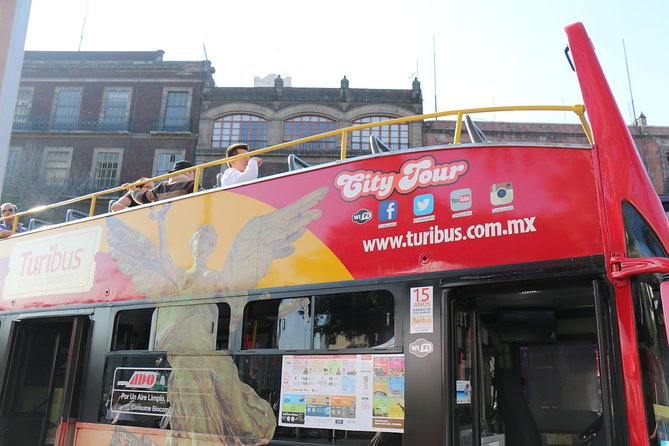
The Basilica Route begins at the Zócalo and heads to Garibaldi Plaza, Tlatelolco, and the Basilica area. It ends with a Turibus stop near the Palace of the Counts of Miravalle.
Garibaldi Plaza offers a look at one of Mexico City’s best-known music districts. Tlatelolco adds an important historic stop, while the Basilica route gives you access to one of the city’s major religious sites.
The route is shorter than the South Route, but it has a specific focus. It makes sense if you want to see the Basilica without arranging a separate taxi or transit connection. The stated operating notes include an important warning: if the bus cannot reach the Basilica for reasons beyond the operator’s control, the route may go instead to Plaza de las Tres Culturas.
That substitution matters. Road closures, demonstrations, public events, and traffic can change the route without advance notice. If reaching the Basilica is the main reason for booking, check the operating status on the day and avoid planning a tight schedule around the stop.
Audio commentary, seating, and the coupon booklet
The multilingual digital audio system is useful for getting basic context while you ride. It will not replace a museum guide or a local walking tour, but it helps you understand why a monument or district matters before you get off.
The tour is offered in English, and the system is described as multilingual. Headphones are supplied at the ticket office. Keep the volume low enough to hear instructions and your surroundings when you leave the bus.
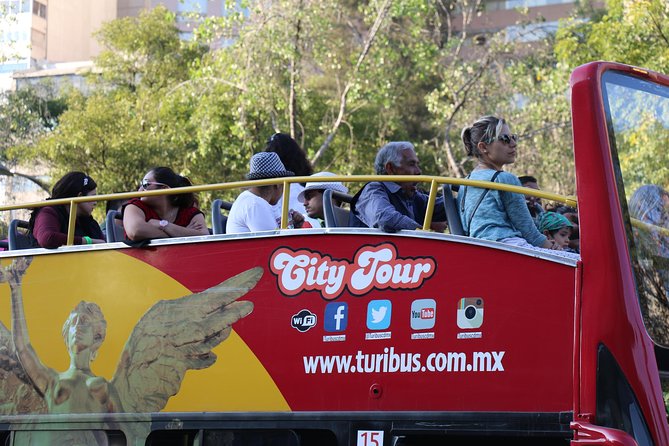
The open top is best for views along Reforma and for seeing the city’s scale. It also leaves you exposed to sun and weather. The lower air-conditioned level is a sensible choice when you want a calmer ride or when conditions are uncomfortable.
The Mexico City coupon booklet can improve the ticket’s value if you use one of its discounts. Its exact savings depend on the businesses and experiences included, so I would treat it as a bonus rather than the main reason to book. The route guide is more immediately useful because it helps you plan stops and understand how the four circuits fit together.
Timing, route changes, and the real value
The ticket includes transportation between stops on the stated routes, but it does not include lunch, beverages, museum admission, or other services not listed. Budget separately for meals and entrance fees, especially if you plan to visit the Anthropology Museum, Soumaya, Papalote, Universum, the Frida Kahlo Museum, or other attractions.
There is no stated tour price here, so I cannot judge the ticket by a specific peso amount. The value comes from what you replace: separate fares, taxis, and the time needed to work out connections between far-flung districts. The ticket is most useful when you plan to make several stops or use the bus to scout neighborhoods before returning on foot.
If you only want to see the Historic Center and Zócalo, public transit or walking may cost less and give you more control. If you want Polanco, Coyoacán, University City, Reforma, and the Basilica area in a short visit, the bus has a stronger case.
The biggest caution is current service. The operating information says that, until further notice, the regular schedule is limited to the Historic Downtown Route from 9 a.m. to 7 p.m. Route variations, delayed buses, and reduced frequency may occur because of safety measures, events, celebrations, demonstrations, traffic, and street closures.
Sunday morning needs special attention. From 8 a.m. to 2 p.m., the Ciclotón closes some streets, so the bus uses alternate roads on some routes. Do not plan a museum appointment based on an exact bus arrival during that period.
Who should book this tour?
I would recommend the Turibus to first-time visitors who want a broad introduction without mastering Mexico City’s public transit on the first morning. It also suits families, visitors with limited time, and anyone who wants a seated ride between districts that are too far apart for a simple walk.
It is less suitable if you dislike waiting, need precise arrival times, or want a guide walking beside you at every attraction. The audio system provides commentary, but the experience remains independent. You choose when to get off, what to visit, and when to continue.
I would also be cautious about booking solely for a specific route until you confirm that route is operating. The current notice about the Historic Downtown Route is more important than the attractive route map. Conditions can change, and the operator gives no advance guarantee against delays or substitutions.
Cancellation is free if you cancel at least 24 hours before the start time. Changes or cancellations inside that window are not accepted for a refund. Confirmation is normally sent at booking, though reservations made within 16 hours of travel are confirmed as soon as possible, subject to availability.
Should you book the Turibus Mexico City tour?
Book it if you want a broad first look at Mexico City, plan to use several stops, and can accept an unhurried timetable. The best value comes from combining routes with real visits, such as the Zócalo and museums on the Historic Center circuit, Soumaya in Polanco, or Coyoacán and UNAM on the South Route.
Skip it if you only need a ride to one attraction or if your day depends on exact timing. Before paying, confirm which routes are operating, then choose the one or two-day option that matches your plans. With that check in place, the Turibus can be a practical way to get your bearings across a very large city without spending the whole morning figuring out connections.
FAQ
How long does the Turibus Mexico City tour take?
A continuous ride takes approximately three hours. If you get off to visit museums, markets, neighborhoods, or monuments, you will need additional time.
How many routes are included?
The ticket includes the Historic Center, Polanco, South, and Basilica routes, along with their listed stops.
Can I get off and board again later?
Yes. You can get off at any stop, explore independently, and board a later bus to continue the route.
Is the ticket valid for one or two days?
The tickets are valid for one operating day, but booking options may cover one or two days depending on the option selected.
Is commentary available in English?
The experience is offered in English and includes a multilingual digital audio system.
Are headphones provided?
Yes. Headphones are provided at the ticket office for the onboard commentary.
Does the tour include museum admission or food?
No. Lunch, beverages, museum admission, and other services not specifically listed are not included.
Does the bus operate normally on Sundays?
Some routes use alternate roads from 8 a.m. to 2 p.m. on Sundays because of street closures for the Ciclotón.
What happens if the bus cannot reach the Basilica?
If the Basilica Route cannot reach the Basilica for reasons beyond the operator’s control, it may go instead to Plaza de las Tres Culturas.
Just added around Mexico
- Bus Wine Tour by Ansell Tours★ 5.0 · 24 reviews
- Open Top City Tour & Beach Break★ 4.0 · 120 reviews
- Full-Day Tour Chichen Itza, Valladolid and Cenote open bar in bus★ 3.5 · 10 reviews
- Private Party Bus Loop in Cancun★ 5.0 · 13 reviews
- Discovering Isla Mujeres on a Double Decker Catamaran★ 4.0 · 12 reviews
- Hop-on Hop-off City Tour Cancun plus Submarine or Bodyboard Experience★ 3.5 · 8 reviews
- Cancun City Tour by Downtown and Turistic Hightlights on Open Bus★ 3.5 · 12 reviews
- Puerto Vallarta: Hop-On-Hop-Off City Bus Tour★ 4.1 · 386 reviews
Hop-On Hop-Off Bus Tours, compared.

City Sightseeing Hop-on Hop-off Bus with Audioguide
Read our review →
Tootbus Hop-on Hop-off (Optional River Cruise)
Read our review →
Big Bus Hop-On Hop-Off Tour with Optional Cruise
Read our review →
London Big Bus Hop-On Hop-Off Tour with Optional River Cruise
Read our review →

Big Bus Hop-on, Hop-off Open-Top Sightseeing Tour
Read our review →
Browse the lists this tour appears in