
Review · JAPAN
7 Day Bus Pass: Tokyo, Kanazawa, Takayama, Kyoto and More
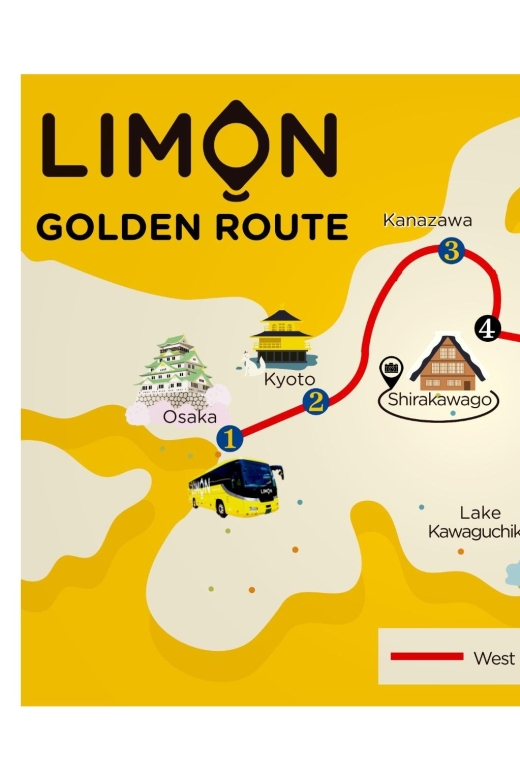
One pass, seven days, several Japans. The LIMON Pass links Tokyo with Lake Kawaguchiko, Takayama, Kanazawa, Kyoto, and Osaka, with select departures adding Mt. Fuji 5th Station and Shirakawago. I like the freedom to build your own route, and I like that daily departures make this useful when trains do not reach the most convenient places. The main catch is that you must reserve every seat after buying the pass, and all members of one booking must travel together.
The buses also earn real praise for clean, comfortable vehicles and excellent drivers. A verified October 2024 booking called the service superb. Still, this is not a guided tour, and meals, hotels, and most sightseeing are yours to arrange. You are buying a useful transport network, not a ready-made holiday.
Key points at a glance
- Seven days across central Japan: Use the pass for a flexible route between Tokyo or Osaka/Kyoto and several major stops.
- Hard-to-reach places included: Takayama, Kanazawa, Lake Kawaguchiko, Hirayu Onsen, and Shirakawago are linked by bus.
- Mt. Fuji and Shirakawago on select departures: Check the exact route before booking if either sight is essential.
- Daily departures: You get more planning options than with a service that runs only on certain days.
- Taxi connections provided on two routes: LIMON arranges a taxi between Tokyo and Kawaguchiko, and between Tokyo and Takayama, including the ride from Highland Resort Hotel and Spa to Kawaguchiko Station.
- Baggage rules matter: You may bring up to three pieces, with stated size limits, so pack carefully.
What the 7-day LIMON Pass actually gives you

The LIMON Pass is best understood as a transport framework for a multi-city Japan trip. It is not one continuous bus ride, and it does not take you sightseeing with a guide at every stop. You choose a route beginning in Tokyo or Osaka/Kyoto, then reserve seats for each leg you want to use.
The listed stops are Tokyo, Lake Kawaguchiko, Hirayu Onsen, Takayama, Kanazawa, Kyoto, and Osaka. Certain departures also include sightseeing at Mt. Fuji 5th Station and Shirakawago. That distinction matters. You should not assume every bus follows every stop or includes both sightseeing locations.
The pass costs $242 per person. Its value depends on how many connections you use and how much you value convenience over the speed of Japan’s rail network. If you only need Tokyo to Kyoto, this is probably more transport than you need. If you want to add Takayama, Kanazawa, Fuji, and Shirakawago without arranging several separate bus tickets, the price becomes easier to justify.
The booking information describes the activity as valid for one day, while the pass itself allows travel for seven days. In practical terms, treat the selected date as your starting or booking date, then confirm the exact seven-day validity and route details during reservation.
Other bus tours people book around Japan:
- Mt Fuji and Hakone 1-Day Bus Tour Return by Bullet Train
★ 5.0 · 26,383 reviews - 1-Day Tokyo Bus Tour
★ 5.0 · 14,250 reviews - PERFECT KYOTO 1-Day Bus Tour
★ 5.0 · 13,518 reviews
Starting in Tokyo: the eastern end of the route
Tokyo gives you the most obvious starting point. From here, you can build a westbound trip toward Fuji, the Japanese Alps, Kanazawa, Kyoto, and Osaka.
The strength of beginning in Tokyo is choice. You can head toward Lake Kawaguchiko for Mt. Fuji views, move into the mountain country around Takayama and Hirayu Onsen, or make a longer run toward Kanazawa and the Kansai cities. This makes the pass handy if your Japan plan is still taking shape.
The weakness is that a large city creates logistical pressure. Meeting points can vary by option, so you need to read your confirmation closely rather than going to one assumed bus terminal. Give yourself time to find the correct departure point, especially if you are carrying a large suitcase.
LIMON can arrange a taxi for the Tokyo to Kawaguchiko route. It also arranges a taxi connected with the Tokyo to Takayama service, specifically from Highland Resort Hotel and Spa to Kawaguchiko Station. These transfers can help bridge a route that is not handled by one simple bus ride.
Lake Kawaguchiko and Mt. Fuji views
Lake Kawaguchiko is one of the most appealing stops on this pass because it adds a classic Fuji setting to a city-to-city itinerary. You get a change from Tokyo’s dense streets to an area known for views around the mountain and lake.
Some departures include Mt. Fuji 5th Station sightseeing. Do not treat that as automatic. The route and departure option control what is included, so check before paying if the 5th Station is a must for you.
Weather will always affect Fuji viewing, but no weather promise is given here. You should think of Kawaguchiko as a worthwhile stop in its own right, with Mt. Fuji as a possible bonus rather than a guaranteed photograph. The bus connection is useful because Kawaguchiko can be less straightforward to fit into a classic Tokyo, Kyoto, and Osaka rail plan.
The taxi arrangement is also important. The information specifically notes a taxi connection on the Tokyo to Kawaguchiko route, so you should follow the provided instructions rather than assuming the main bus drops you at every local destination.
Hirayu Onsen and Takayama: mountain-country Japan
Hirayu Onsen gives the route a more rural feel. It is one of the stops that shows why a bus pass can make sense here. The pass is not limited to the biggest cities, and Hirayu connects with the mountain region around Takayama.
Takayama is a strong choice for anyone who wants a slower pace between Tokyo and Kyoto. Its appeal is not simply another city label on your itinerary. It gives you access to a different part of Honshu, with mountain scenery and a more compact setting than the major urban centers.
The route also includes a taxi arrangement for passengers traveling between Tokyo and Takayama. The stated transfer runs from Highland Resort Hotel and Spa to Kawaguchiko Station, so pay close attention to the precise departure instructions. This is one of those small details that can save you from a confusing transfer, but only if you follow the assigned meeting information.
You should allow enough time in Takayama to make the detour worthwhile. The pass gives you seven days, but every bus leg uses part of that window. If you try to squeeze Tokyo, Fuji, Takayama, Kanazawa, Kyoto, and Osaka into a rushed schedule, the freedom of the pass can turn into a suitcase-moving contest.
A few more bus tours around Japan worth a look
- Peaceful Hiroshima & Miyajima UNESCO 1 Day Bus Tour
★ 5.0 · 5,309 reviews - Kyoto: Fushimi Inari, Kinkakuji, Bamboo Grove 1 Day Bus Tour
★ 4.8 · 4,316 reviews - Tokyo: Meiji Shrine, Asakusa, Skytree Bus Tour and Cruise
★ 4.7 · 1,986 reviews - Mt Fuji & Hakone Cruise, Drum Show Bus 1 Day from Tokyo
★ 4.0 · 1,287 reviews
Shirakawago: check the departure before you count on it
Shirakawago is one of the most distinctive places connected with this route. Its traditional farmhouses and mountain setting make it a natural highlight between Takayama and Kanazawa.
The key warning is simple: Shirakawago sightseeing is offered on select departures. You must check the exact route before booking, then reserve the relevant seat after purchase. If Shirakawago is the reason you are considering this pass, build your itinerary around that departure instead of hoping you can add it later.
This is also a place where baggage planning matters. You are responsible for your own bags, and there are limits on both size and quantity. Moving through a mountain stop with an oversized case is not a good plan, especially when your route may include several transfers.
Kanazawa adds a welcome change of pace
Kanazawa is another major reason to consider the pass. It sits outside the most common Tokyo, Kyoto, and Osaka triangle, yet it is included in the network. That lets you add a more varied stop without arranging every connection separately.
The pass links Kanazawa with Takayama and the Kansai end of the route. This makes it useful for an itinerary that moves through central Honshu rather than simply racing between the country’s largest cities.
I would look at Kanazawa as a midpoint or a final stop before Kyoto and Osaka. The right choice depends on your departure direction. You can begin in Tokyo and work west, or start from Osaka/Kyoto and work east. The important point is to reserve each leg in the order you plan to take it.
The pass does not include meals or accommodation, so Kanazawa requires the same planning as every other overnight stop. Its transport is covered only within the stated pass route. Hotels, meals, and your time in the city remain your responsibility.
Kyoto and Osaka: the western finish
Kyoto and Osaka form the western end of the route. The booking process allows you to choose a route departing from Osaka/Kyoto, which makes the pass useful in either direction.
Kyoto is the better fit if you want your route to finish among Japan’s temples, gardens, and traditional districts. Osaka is a practical choice if your wider trip is based there or if you prefer to end in a large transport hub. The pass treats the two as part of the same western travel plan, but you should check the exact departure point for the option you select.
One advantage of finishing here is simplicity. After a mountain and regional itinerary, you can end in one of Japan’s best-connected urban areas. One drawback is that the pass may be less valuable if you use only one final connection into Kyoto or Osaka. Its $242 price makes most sense when you use several of the included routes during the seven-day period.
Why the buses may beat a train-only plan
Japan’s trains are excellent, but trains are not always the simplest answer for this particular route. Takayama, Hirayu Onsen, Lake Kawaguchiko, and Shirakawago can require combinations of rail, local buses, and separate reservations. A bus network can reduce the number of pieces you must assemble.
The pass also gives you a single framework for a route that crosses several regions. You are still responsible for selecting and reserving your journeys, but you are not starting from zero each time you move on.
The practical standard here is comfort and reliability. A verified October 2024 booking specifically praised the drivers and described the buses as clean and comfortable. That is the kind of praise that matters on long intercity rides. A pleasant vehicle will not remove every travel hour, but it makes the time easier to manage.
The service can also adapt better than a fixed escorted tour. You decide where to stay and how long to remain in each city, within the seven-day pass period. The tradeoff is that you do not have a guide handling every detail or explaining each sight along the way.
Reservations, baggage, and the details that can make or break the trip
After buying the pass, you must log in using your GetYourGuide booking reference ID and reserve a seat for every stop on your trip. Your itinerary is sent to the lead traveler’s email address.
Do this early. The pass includes guaranteed daily departures, but that does not mean every departure has unlimited seats. A pass without a reserved seat is not a complete travel plan.
All people under one booking must travel together. You can modify your reservation or departure point until noon on the day before departure, which gives you some flexibility, but it is not a reason to leave every decision until the last minute.
The baggage allowance is specific:
- One large suitcase, with maximum overall dimensions of 208 centimeters
- One small suitcase, with maximum overall dimensions of 126 centimeters
- One small carry-on bag for your seat
That is a total of three bags. You must manage your own baggage, and the operator does not accept responsibility for lost, damaged, or left-behind items where negligence is not recognized. I would label every bag, keep valuables in your carry-on, and avoid packing as if you were moving house.
Bring cash and wear comfortable clothes. Smoking and pets are not allowed. The vehicle type may vary depending on passenger numbers, so you should expect the service to be consistent in purpose rather than identical in every physical detail.
Who gets the best value from this pass?
I would recommend the LIMON Pass to you if you want to combine at least three or four of the listed regions within seven days. It is particularly useful if your plan includes Takayama, Kanazawa, Lake Kawaguchiko, or Shirakawago, places that can require extra transport planning outside the main rail corridors.
It also suits independent planners. You choose your hotels, meals, sightseeing time, and route order. The pass gives you transport support without forcing you into a group itinerary.
I would be more cautious if your plan is mainly Tokyo, Kyoto, and Osaka. In that case, compare the pass cost with the separate train or bus fares you would actually use. You may be paying for regional routes you never take.
Families and groups should also pay attention to the rule that all members of one booking travel together. That is convenient when everyone keeps the same schedule, but restrictive if different people want to split up.
Should you book the LIMON Pass?
Book it if you want a flexible seven-day route through Tokyo, Fuji, the Takayama area, Kanazawa, Kyoto, and Osaka, and you are willing to handle seat reservations and your own luggage. The clean buses, comfortable rides, daily departures, and taxi connections make the pass a practical tool for a complicated central Japan itinerary.
Skip it if you need a guided tour, want every detail arranged for you, or plan to use only a single long-distance connection. Before paying, check which departure includes Mt. Fuji 5th Station or Shirakawago, confirm the meeting point, and map your seven days honestly. Used across several regional legs, the $242 price can save both money and planning time. Used for one or two rides, it is harder to defend.
FAQ
How long is the LIMON Pass valid?
The pass allows travel along the route for seven days. The activity information also displays a one-day validity field, so confirm the exact start date and seven-day period when making your reservation.
Which cities and stops are included?
The listed stops are Tokyo, Lake Kawaguchiko, Hirayu Onsen, Takayama, Kanazawa, Kyoto, and Osaka.
Are Mt. Fuji 5th Station and Shirakawago included on every departure?
No. Sightseeing at Mt. Fuji 5th Station and Shirakawago is available on select departures. Check the specific route before booking.
Do I need to reserve seats after buying the pass?
Yes. After purchase, use your GetYourGuide booking reference ID to reserve a seat for each stop on your trip.
Can people on the same booking travel separately?
No. All members under one booking must travel together.
How much baggage can I bring?
You can bring up to three pieces: one large suitcase with maximum overall dimensions of 208 centimeters, one small suitcase with maximum overall dimensions of 126 centimeters, and one small carry-on bag for your seat.
Are meals and hotels included?
No. Meals and accommodation are not included.
What is the cancellation policy?
You can cancel up to 11 days in advance for a 95 percent refund.
Just added around Japan
- Kyoto Sagano Romantic Train in Arashiyama Bus Tour★ 3.0 · 6 reviews
- NARUTO & BORUTO at Nijigen no Mori Park Entry& Bus Transportation★ 3.0 · 3 reviews
- Kyoto 1 Day Golden Route Bus Tour★ 5.0 · 15 reviews
- From Kyoto: Nara History Guided Half Day Bus Tour with lunch★ 5.0 · 23 reviews
- Kyoto Hop-On, Hop-Off Sightseeing Bus Tour★ 3.0 · 5 reviews
- Amanohashidate & Miyama 1-Day Bus Tour: From Osaka/Kyoto w/ Lunch★ 4.5 · 18 reviews
- Full Day Hiroshima and Miyajima Bus Tour★ 5.0 · 12 reviews
- Hiroshima, Miyajima 1 Day Bus with Indian Lunch from Osaka, Kyoto★ 5.0 · 7 reviews
Osaka Bus Tours, compared.
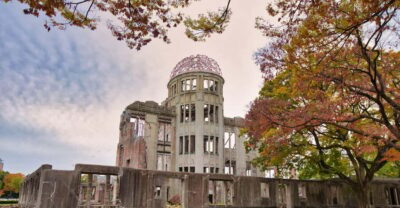
Osaka/Kyoto: Hiroshima Miyajima Bus Tour & Shinkansen Ticket
Read our review →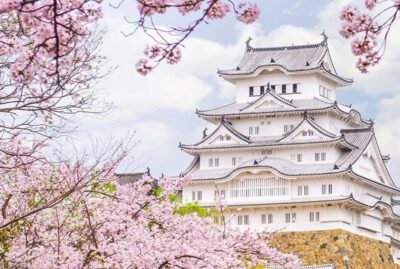
Himeji Castle, Arima Onsen & Mt. Rokko Day Tour
Read our review →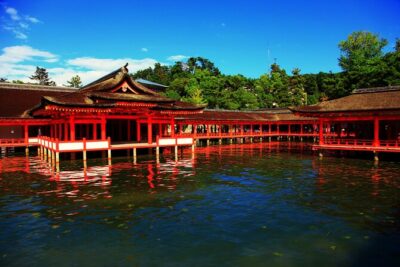
Hiroshima & Miyajima 1 Day Bus Tour with Bullet Train Tickets
Read our review →
Play with Snow Crab Buffet Lunch and Strawberry Picking Bus Tour
Read our review →Browse the lists this tour appears in