
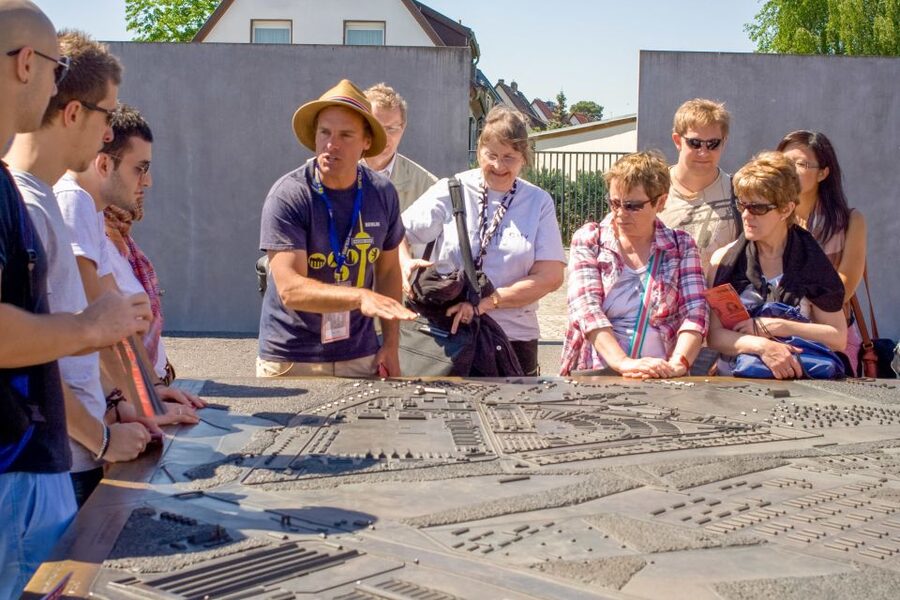
Review · GERMANY
Berlin: English Bus Tour to Sachsenhausen Concentration Camp
History can be difficult to face. This four-hour Sachsenhausen tour gives you a clear, guided way to reach one of Germany’s most important memorial sites from Berlin. I like the air-conditioned coach, which removes the hassle of arranging the trip yourself, and I like the serious historical briefing that continues on the road. The main drawback is time: two hours at the camp is enough for an introduction, but not enough to read every exhibit carefully.
I also like the care shown by guides such as Hannah, Georgia, Jamie G, Klaus, Nikolai, and Paul, who are repeatedly praised for clear explanations and a respectful tone. You should expect a sober visit, not a sightseeing outing, and you will walk across a large open site in whatever weather Berlin sends your way.
Key points to know before you go
- A 50-minute coach ride adds essential context: Guides use the journey to explain the rise of Nazism, the camp system, and Berlin’s wartime history.
- The two-hour camp visit covers the major sites: You see Tower A, the barracks, infirmaries, crematoria, gas chamber area, execution trench, isolation cells, and punishment areas.
- The site is large and emotionally demanding: Comfortable shoes, weather-appropriate clothing, a drink, and a small snack will make the day easier.
- The guide makes or breaks the experience: Hannah, Georgia, Klaus, Jamie G, Paul, Nikolai, Scott, and others receive especially strong praise for clarity and compassion.
- The $55 price buys convenience and instruction: You get transport, entry, a licensed English-speaking guide, a camp map, and a €3 memorial donation.
- Two hours is a trade-off: The visit is focused and manageable, but you may have little time to study every letter, document, and display.
Why Sachsenhausen belongs on a Berlin itinerary
Sachsenhausen is north of Berlin, near Oranienburg. It was the first concentration camp planned and built from the ground up as part of a modern camp system designed for control, expansion, and administrative efficiency.
That planning is part of what makes the site so difficult to understand. This was not simply a collection of improvised buildings. Its layout, entrance, guard towers, barracks, command structures, punishment areas, and work facilities reveal how imprisonment and mass violence were organized.
The memorial is also valuable because it helps you look beyond the barbed wire. The tour discusses Oranienburg, the nearby population, the work carried out by prisoners, and what local people could see or know about the camp system. That wider setting matters. It places the camp in the middle of an ordinary German town rather than in some remote world cut off from daily life.
The site records that approximately 35,000 people were murdered or died there from disease. The numbers are hard to absorb, so the physical places matter: a barracks room, an infirmary, a cell, a crematorium, or the entrance beneath the words Arbeit Macht Frei can make the history more concrete.
This is not a casual stop to squeeze between Berlin museums. Give it the weight it deserves. I would plan it for a day when you have no rushed lunch reservation or evening performance immediately afterward.
A few more bus tours around Berlin worth a look
- Berlin: Hop-on Hop-off Bus Tour with Live Commentary
★ 4.3 · 8,579 reviews - Berlin: Big Bus Hop-On Hop-Off Sightseeing Tour & Currywurst
★ 4.4 · 4,638 reviews - Berlin: City Sightseeing Hop-On Hop-Off Bus Tour
★ 4.1 · 4,233 reviews
Meeting the guide beside Friedrichstraße Station
The meeting point is outside Friedrichstraße train station, on the square between the station and the Tränenpalast, also called the Palace of Tears. The address is Reichstagufer 17, 10117 Berlin.
Look for a guide wearing a blue lanyard and yellow name tag, usually holding a yellow umbrella. That detail is useful because the area around a major station can be busy, and a recognizable meeting signal saves time.
The tour does not include hotel pickup. You need to reach the central meeting point yourself, so allow enough time to find the square rather than arriving at the last second. The location is beside a major transport hub, but the exact meeting area is outside, not inside the station.
Groups can vary, but the available information points to organized coach departures rather than a small private outing. One positive detail from the feedback is that the group size felt manageable to one participant, while the coach was repeatedly described as comfortable.
The coach ride north takes 50 minutes
The drive to Sachsenhausen takes about 50 minutes. That might sound like dead time, but it is one of the strongest parts of the experience.
Several guides use the outward journey as a history lesson on Berlin, the rise of Hitler and Nazism, the creation of concentration and death camps, and the political conditions that allowed the system to grow. Paul, Scott, Klaus, Hannah, and Jamie G are singled out for strong background explanations, while one participant described the ride as a useful lecture before reaching the memorial.
I like this format because it gives you a framework before you enter the grounds. Without context, a large memorial site can become a blur of buildings and dates. On the bus, you can hear how Sachsenhausen fit into the wider network and how the camp was tied to labor, punishment, administration, and murder.
The ride is not perfect in every departure. One person reported that the microphone cut out during the outward commentary. That was described as a coach equipment problem rather than a guide issue, but it is worth noting. Most feedback describes the transport as smooth, warm, comfortable, or air-conditioned.
You pass through Oranienburg and learn about the area where prisoners worked. This helps connect the camp to the town and to the labor system that extended beyond the main compound.
Entering through Tower A
At Sachsenhausen, your guide takes you through the main entrance at Tower A. The words Arbeit Macht Frei remain above the entrance, a familiar phrase from Nazi camps that takes on a grim force when seen in its original setting.
The entrance is not just a photo stop. It introduces the camp’s system of control. Your guide explains how movement, work, punishment, and surveillance were organized, then leads you into the former camp area.
You will receive a map of the former concentration camp. Keep it with you. The grounds are large, and the remaining buildings and foundations are spread across a broad area. A map helps you understand the original design and see how much of the camp once occupied the site.
Expect walking over an open memorial ground rather than moving from one intact building to another. Some structures remain, some are reconstructed or marked, and some areas are represented by foundations or memorial elements. One review notes that less survives at Sachsenhausen than at Dachau because of later destruction by Soviet forces. That means the guide’s explanations are especially important.
Same place, a different way to ride:
- Berlin: East and West Hop-On Hop-Off Bus Tour
★ 4.2 · 2,195 reviews - Sachsenhausen Concentration Camp Bus Tour in English from Berlin
★ 5.0 · 1,962 reviews - Berlin: 1.5-Hour Comedy Bus Tour in German
★ 4.5 · 1,165 reviews - Berlin City Hop-on Hop-off Tour with Optional Cruise
★ 3.5 · 1,155 reviews
Barracks, punishment, and daily life
The barracks show the harsh conditions prisoners faced. Your guide discusses daily routines, overcrowding, brutality, forced labor, and the treatment of people held there.
The physical scale of the camp matters here. You are not simply looking at a single room. You are walking through a planned prison complex where repeated buildings and empty spaces help show the number of people held there and the strict control imposed on them.
The barracks can be emotionally difficult without relying on dramatic presentation. A good guide lets the places and documented facts do the work. Hannah is praised for giving clear explanations without overwhelming the group, while Rebecca is praised for handling the difficult subject with care and precision.
You also visit punishment cells and isolation areas. These spaces help explain that violence was built into the camp’s rules and routines. Punishment was not an occasional breakdown in discipline. It formed part of the machinery of control.
The tour also covers the infirmary barracks, where medical experimentation took place during the war. This is one of the sections where you may want more time. The subject is serious, and the displays may contain documents, letters, and explanatory material that deserve a careful reading.
Crematoria, gas chamber area, and the execution trench
The tour takes you to the crematoria, the gas chamber area, and the execution trench. These are among the most distressing parts of the visit.
Your guide explains how the camp operated and how murder was carried out within the larger system. The aim is not to turn these places into shock attractions. It is to understand their function and to remember the people who were killed there.
The execution trench can be especially hard because of its plain, direct setting. It does not need much decoration to communicate what happened. The crematoria and gas chamber area likewise require a quiet pace and time to think.
This is one reason I would not book the tour as a family entertainment activity or as a quick historical photo opportunity. It can be appropriate for older teenagers, but you should consider their maturity and interest in the subject first.
The guide’s manner matters greatly at these locations. Reviews consistently praise guides for using careful wording, answering questions, and allowing pauses. Hannah, Georgia, Klaus, Nikolai, and Scott are among the guides described as warm, clear, or exceptionally well prepared.
What two hours at the memorial really means
The guided visit lasts about two hours. That is a practical length for a four-hour trip, but it forces choices.
You will see the principal areas and gain a structured understanding of the camp. You will not have unlimited time in every building. One participant specifically wished for more time to read letters and information panels, while another said that the camp was so large that two hours felt full but still left more to see.
I see this as a good first visit rather than a complete study day. The guide keeps you moving and gives the site a clear shape. If you tried to cover the whole memorial independently in the same time, you might miss the relationships between the buildings and the history behind them.
The trade-off is personal. If you prefer reading every panel at your own pace, a guided schedule may feel tight. If you want help finding the important areas and understanding what you are seeing, the time is well used.
There may also be changes on special dates. On Christmas Eve, some areas were closed, but the guide adjusted the schedule and helped with practical matters such as bathroom locations and timing. It is sensible to expect that access can change during holidays or memorial operations.
The journey back and the final hour
After the site visit, you return to Berlin by coach for another 50 minutes. The return journey can be useful because you have just seen the camp and can place the guide’s broader points in context.
Some guides use the ride back to discuss how Germany approaches education, remembrance, and public responsibility today. One participant especially valued personal stories and the explanation of modern German remembrance practices.
That closing discussion is important. Sachsenhausen is not presented as a sealed-off event that ended when the war ended. The memorial asks how the past is taught, remembered, and faced in the present.
You return to Reichstagufer 17 beside Friedrichstraße Station. From there, you can continue around central Berlin, but I would leave yourself some quiet time. The experience can stay with you, and it may not be the best lead-in to a noisy evening meal or packed nightlife schedule.
Is $55 a fair price?
At $55 per person, this is not the cheapest way to reach Sachsenhausen. You are paying for more than a seat on a bus, though.
The price includes a professional licensed guide, driver, private air-conditioned vehicle, memorial entry, a €3 donation to the Sachsenhausen Memorial, and a camp map. It also includes the historical instruction on the outward and return journeys.
That package has real value if you want the route handled for you. You avoid arranging the trip independently, worrying about train connections, or trying to understand a large memorial site from a few labels. The guide also gives you a historical frame that is difficult to build while managing transport and navigation.
The value is lower if you mainly want transportation and prefer to read independently. In that case, the guided schedule may feel too fast, and a less expensive option could suit you better.
I would spend the extra money for a strong guide if Sachsenhausen is important to you. The best comments focus not on luxury, but on the quality of the explanations and the respectful way the guides handle the subject.
Practical advice for a serious half-day
Wear comfortable walking shoes. The memorial grounds are large, and you will be outside for much of the visit.
Bring a light snack and drink. The information specifically recommends this, and the four-hour schedule includes two coach journeys plus the camp visit. A small bottle of water is sensible.
Dress for the weather. The bus may be comfortable, but the camp itself is open and exposed. Cold, rain, or sun can make an already demanding visit harder.
A camera is allowed according to the supplied information, but use good judgment. This is a memorial site, not a backdrop. Keep photography respectful and follow any posted rules at the camp.
The tour is not wheelchair accessible and is not recommended for people with limited mobility or walking impairments. If you need reduced walking or step-free access, this is not the right choice based on the available information.
The tour is in English and uses a live guide. English clarity is generally praised, though one participant found a guide’s speech less precise and quiet than ideal. A microphone problem was also reported once, so do not assume every spoken word will be perfectly audible from every seat.
Free cancellation is available up to 24 hours before departure, and you can reserve now and pay later. Those options are useful if your Berlin plans may shift.
Who should book this Sachsenhausen tour?
I would choose this tour if you want a serious introduction to Nazi Germany, prefer guided interpretation, and value easy transport from central Berlin.
It suits first-time visitors to Sachsenhausen, history-minded adults, and families with mature teenagers who are ready for a difficult subject. The coach commentary is particularly useful if your knowledge of the period is limited.
You may want another arrangement if you need a wheelchair-accessible experience, dislike fixed schedules, or want several hours to read every exhibit. The two-hour visit gives you the main story, but it does not cover everything in detail.
The strongest reason to book is the guide. Names change from departure to departure, but the praise for Hannah, Georgia, Jamie G, Klaus, Paul, Nikolai, Scott, and others points to a company that places real weight on interpretation. A good guide turns a vast, fragmented site into a clear account of how the camp worked and who suffered there.
Should you book it?
Yes, if you want a respectful, well-organized introduction to Sachsenhausen without handling the transport yourself. The $55 cost is fair for the coach, entry, memorial donation, camp map, and several hours of live historical instruction.
Book it knowing what it is: a focused four-hour visit to a place of murder, imprisonment, disease, forced labor, and suffering. It is not light sightseeing, and two hours will not let you study every display. For a first visit from Berlin, though, the combination of a comfortable coach and a careful English-speaking guide makes this a practical and meaningful choice.
FAQ
How long does the Sachsenhausen tour last?
The full experience lasts four hours. This includes about 50 minutes by coach to Sachsenhausen, a two-hour guided visit, and about 50 minutes by coach back to Berlin.
Where does the tour meet in Berlin?
The meeting point is outside Friedrichstraße train station, on the square between the station and the Tränenpalast, or Palace of Tears. The address is Reichstagufer 17, 10117 Berlin.
How do I identify the guide?
The guides wear a blue lanyard and yellow name tag and hold yellow umbrellas.
Is transportation included?
Yes. Transportation is provided by a private air-conditioned vehicle with a driver.
Is entry to Sachsenhausen included?
Yes. Sachsenhausen Memorial entry is included, along with a €3 donation per person to the memorial.
Is the tour conducted in English?
Yes. The tour has a live English-speaking guide.
How much time do I spend at Sachsenhausen?
The guided visit at the memorial lasts about two hours.
What should I bring?
Bring comfortable walking shoes, weather-appropriate clothing, a light snack, and a drink. A camera is also listed as an allowed item.
Is the tour wheelchair accessible?
No. The tour is not wheelchair accessible and is not recommended for people with limited mobility or walking impairments.
Can I cancel or pay later?
You can cancel up to 24 hours before the tour for a full refund. You can also reserve the tour and pay later.
Just added around Berlin
- Big Bus Berlin Panoramic Night Tour by Open-Top Bus★ 3.5 · 10 reviews
- Sachsenhausen Concentration Camp Bus Tour★ 4.0 · 3 reviews
- Berlin Combo: Hop-On-Hop-Off Bus and Icebar Ticket★ 3.0 · 20 reviews
- Hop-on Hop-off Berlin Tour with Audio Guide★ 3.0 · 11 reviews
- Dresden: 10-Hour-Tour from Berlin by VW-Bus★ 5.0 · 5 reviews
- Berlin: Hop-On Hop-Off City Tour by Bus and Boat★ 4.4 · 488 reviews
- Potsdam: 5-Hour-Tour “Parks & Palaces” from Berlin by VW-Bus★ 5.0 · 17 reviews
- Christmas market lights tour bus through Berlin, free mulled wine (2.5 hours)★ 4.8 · 6 reviews
Berlin Bus Tours, compared.
Big Bus Hop-On Hop-Off Sightseeing Tour & Currywurst
Read our review →

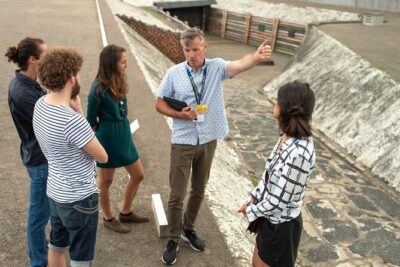
Sachsenhausen Concentration Camp Bus Tour in English from Berlin
Read our review →
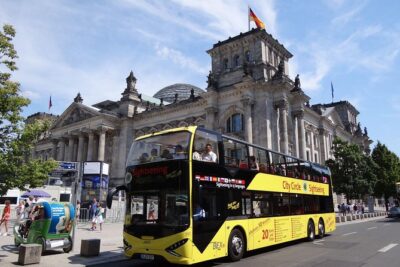
Berlin City Hop-on Hop-off Tour with Optional Cruise
Read our review →
Sightseeing Tour in Classic Volkswagen T1 Samba Bus
Read our review →Browse the lists this tour appears in