

Review · VIETNAM
Sapa 2D1N Trekking to Giang Ta Chai Village from Hanoi by Bus
Sapa rewards sturdy shoes and an early start. This two-day trip links Hanoi with the rice terraces, mountain paths, and ethnic villages around Ta Van and Giang Ta Chai, while handling the long bus ride and overnight stay for you. I like the 9-kilometer first-day trek through Y Linh Ho, Lao Chai, and Ta Van, and I like that dinner, breakfast, a guide, and a homestay are included. The main drawback is the pace: this is a proper mountain walk, not a gentle village stroll.
I also like the small group limit of 15 people, which should make the trails easier to manage than a large coach tour. The guide support matters here, especially when rain makes paths slippery or the route needs adjusting. Still, you should expect basic bungalow facilities, no hotel drop-off in Hanoi, and extra charges for a cooking class, a private room, or holiday departures.
Key points to know before booking
- The first day covers about 9 kilometers: You walk from Y Linh Ho through Lao Chai and along the Muong Hoa Stream before reaching Ta Van.
- The second day is shorter but still active: The 4-kilometer route crosses rice paddies, a bamboo forest, and the Giang Ta Chai Bridge.
- Your overnight stay is simple: The homestay or bungalow is part of the local setting, but it does not offer hotel-style facilities.
- Transport takes up much of the schedule: Pickup begins around 6:00 to 6:30 a.m. in Hanoi, with the return bus leaving Sapa after lunch on day two.
- Guide quality can shape the trip: Khoi has been praised for staying calm during a holiday delay and adapting the day’s plan. Other feedback also describes guides as helpful and good-humored.
- The $88.47 price covers the main pieces: Round-trip bus travel, guide, overnight stay, two lunches, dinner, and breakfast are included, but drinks, tips, hotel return, and optional extras are not.
Why this Sapa trip works for a short Hanoi stay
Sapa is far enough from Hanoi that getting there independently can eat up time and planning. This package puts the bus, guide, meals, and village trekking into a compact two-day plan. You leave Hanoi before breakfast and reach Sapa around 1:30 p.m., so the first day gives you a useful afternoon on the trail rather than only a quick town visit.
The value is strongest if you want to see the countryside without arranging separate transport to Lao Cai, Sapa, and the villages. At $88.47 per person, the price covers a lot: return transport by air-conditioned bus, English-speaking guide, overnight accommodation, two lunches, dinner, and breakfast.
That price is less attractive if you prefer to choose your own hotel, eat independently, or travel at a slower pace. You also need to pay for drinks, tips, and your own transfer from the Hanoi bus stop after returning. If you book during a national holiday, an additional $20 charge may apply.
The tour is limited to 15 people. That is a sensible size for narrow paths and village lanes, though you should not assume a private trek. You will still be moving according to a group timetable, especially on the bus and at meal stops.
More Walks and Hikes in Hanoi:
- 2-Day Trekking Adventure of Sapa from Hanoi with Night Bus
★ 5.0 · 134 reviews - Sapa Trekking Tour 2 Days 1 Night By Bus
★ 5.0 · 86 reviews - From Hanoi: 2-Day Sapa-Fansipan Peak & Trek & Ha Giang Bus
★ 4.8 · 52 reviews
The early bus from Hanoi to Sapa

Pickup from hotels in Hanoi’s Old Quarter runs from 6:00 to 6:30 a.m. If your hotel is outside that area, you must reach the meeting point at 30 P. Ly Thai To in Hoan Kiem. This is an important detail because the tour does not collect from every part of Hanoi.
The bus heads toward Lao Cai, with a first rest stop around 9:30 a.m. and another stop in Lao Cai City at about 11:00 a.m. You reach Sapa Town around 1:30 p.m. The journey is long, but the breaks make it more manageable than sitting without interruption for the whole morning.
Bring a light jacket or warm layer for the ride and the mountains. Sapa weather can change quickly, and the months from September through March are usually cold. A scarf, hat, sunscreen, insect repellent, and sunglasses all have a practical place in your daypack.
The bus schedule means you should not expect a leisurely morning in Hanoi. This is the tradeoff for fitting Sapa into two days. You gain a ready-made route, but you give up the flexibility to leave later or stop wherever you like.
Day one: from Y Linh Ho to Ta Van
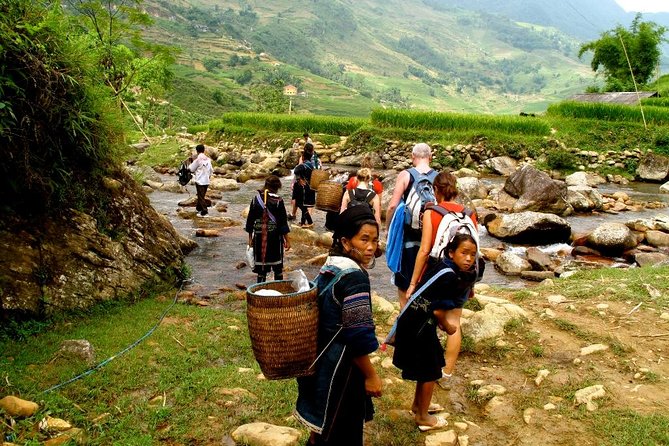
After reaching Sapa, the guide takes you for lunch at a local restaurant. The town itself gives you a quick introduction to the area’s ethnic variety, with H’mong, Dzao, and Tay people often seen in traditional clothing. The stay is brief, so treat Sapa Town as your starting point rather than the main attraction.
At around 2:30 p.m., the walk begins through Y Linh Ho. The trail then crosses rice terraces and follows the Muong Hoa Stream toward Lao Chai, a village associated with the Black H’mong community. This is the day’s major walk, covering about 9 kilometers in roughly three and a half hours.
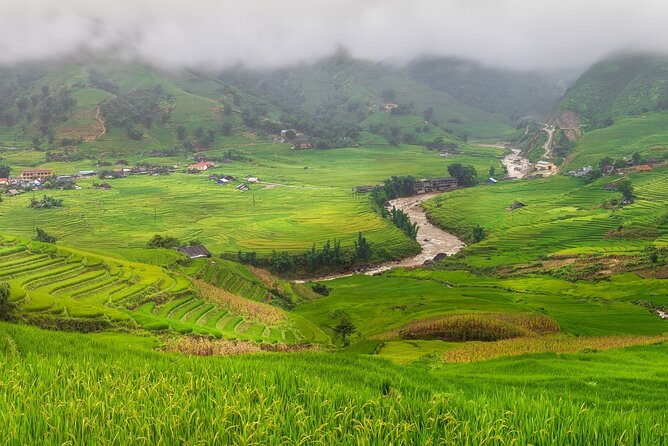
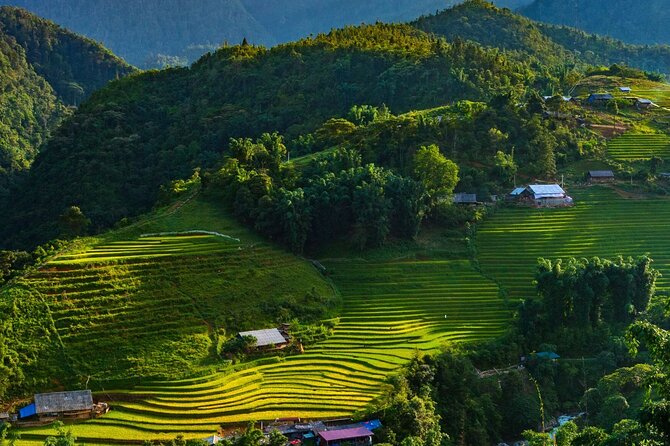
The route is worthwhile because the scenery changes as you go. You move from open terraces to streamside paths and village areas, with views toward the Hoang Lien Son mountains. The route provides a better sense of how communities live among the slopes than a quick roadside viewpoint can offer.
You should also be realistic about the physical demands. Nine kilometers over uneven mountain paths takes effort, especially after a morning on a bus. Rain can make the trail more difficult and potentially unsafe, which is why the tour requires a moderate level of fitness and does not accept children, older people, or anyone with low physical health.
Late in the afternoon, you approach Ta Van, where Giay people live. Arriving here on foot gives the village more meaning than simply stopping for a photograph. You have seen the terraces and waterways that support the communities, then reached the village by the same general routes used between the settlements.
Check-in at the homestay is scheduled for about 5:45 p.m. The accommodation is a bungalow or homestay, not a standard hotel. Facilities are described as basic and simple, so pack with that in mind. The appeal is the setting and the chance to stay close to village life, not polished rooms or extensive amenities.
Dinner is included. Food preferences should be given when you book, rather than left until you are sitting down to eat. One piece of feedback praised the dinner after the earlier meals had taken some adjustment, so keeping an open mind about local food is sensible.
Day two: bamboo forest and Giang Ta Chai
The second morning starts with breakfast prepared by the family at about 8:00 a.m. Before that, you may request a cooking class at 7:00 a.m. The lesson can cover foods such as pho and fresh spring rolls, but it costs an additional $7 to $10 per person and is not automatically part of the tour.
The day’s trek covers about 4 kilometers and lasts roughly two hours. You walk toward rice paddies, stop for views of the surrounding countryside, and continue through a bamboo forest. The shorter distance makes day two easier than day one, but it is still a real trek over village and mountain paths.
A main stop is the panorama overlooking Giang Ta Chai, a village associated with the Red Dzao community. The views and photo opportunities are a clear focus here, but the walk also gives you a chance to see another local community rather than spending the whole trip in one village.
At around 11:00 a.m., the route continues over the Giang Ta Chai Bridge toward the main road. You then return to the bungalow to shower and prepare for lunch. That shower break is welcome after two days of walking, although the basic accommodation means you should not expect hotel-level bathrooms.
Pickup for the return journey is scheduled around 1:30 p.m. You go back to the bus station, then begin the trip to Hanoi. The tour ends at the same Ly Thai To meeting point, and you arrange your own way back to your hotel. That final transfer is easy to overlook when calculating the total cost.
A few more bus tours around Hanoi worth a look
- From Hanoi: 2-Day Sapa Limo Bus Tour & Fansipan Peak Visit
★ 4.6 · 277 reviews - From Hanoi: 2D1N Ha Long Bay Deluxe Cruise with Bus Limousine
★ 5.0 · 185 reviews - Sapa trekking 2days by bus from Hanoi ( over night in homestay)
★ 5.0 · 21 reviews - Sapa 2D1N All Included (Bus & Homestay)
★ 4.5 · 8 reviews
What makes the villages worth the effort
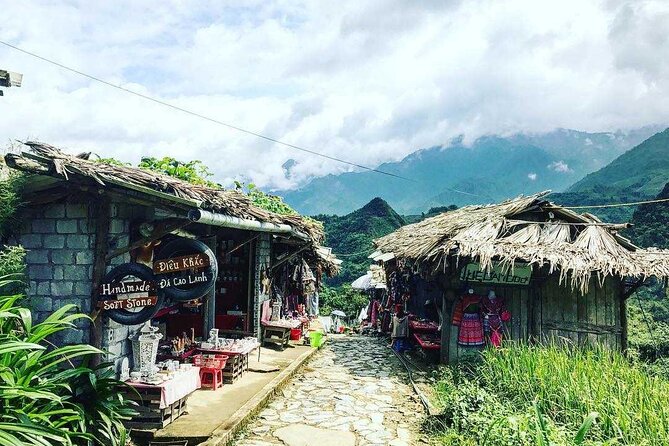
The strongest part of this trip is not simply seeing a mountain view. It is the combination of terraces, waterways, forest paths, bridges, and village life. Ta Van and Giang Ta Chai are presented as places where you can learn about customs and traditional work, including weaving, carved silver, and hand-forged farming tools.
The route also introduces several ethnic communities. You pass through areas connected with Black H’mong, Giay, and Red Dzao people, while Sapa Town reflects H’mong, Dzao, and Tay traditions. This variety gives the two days a useful cultural thread rather than making the trip only about scenery.
You should keep your approach respectful. The villages are living communities, not outdoor museum displays. Ask before photographing people, avoid treating traditional clothing as a costume prop, and remember that buying a locally made item can be more meaningful than taking only pictures.
The scenery is best understood on foot. From a bus window, rice terraces pass quickly. On the trail, you notice the slopes, streams, bamboo, bridges, and changing views at a slower human pace. That is the central reason to accept the early departure and physical effort.
Guides, delays, and the importance of flexibility
The guide is a key part of the value. You are not only being shown a route. You need help with timing, village access, meals, and trail conditions. A good guide can also explain the communities and keep the group moving without making the day feel like a forced march.
Khoi received especially strong praise for remaining composed during a Vietnamese holiday period when the start was heavily delayed. He adjusted the rest of the itinerary and kept the day on track. That detail matters because holiday traffic and mountain weather can affect a tightly timed two-day schedule.
The bus and tour have also been described as punctual and well organized on a smoother departure, with a guide who was funny and helpful. You should still build patience into your expectations. A bus trip from Hanoi to Sapa, two full trekking days, and a return journey leave little room for delays.
The group size can reach 15. That keeps the tour manageable, but the speed will still be set by the group. If you need frequent breaks or prefer to stop for long photo sessions, a private guide would give you more control, though this package is priced for a shared arrangement.
Is $88.47 good value?
For a two-day trip from Hanoi, $88.47 is a reasonable price if you use most of what is included. The return bus alone removes a major planning task, while the guide, three meals beyond breakfast and dinner, and overnight stay keep your extra costs fairly low.
The included meals are lunch on both days, dinner on day one, and breakfast on day two. Drinks are not included, so carry some Vietnamese dong for water and personal purchases. Tips and other personal expenses are also separate.
The main extra costs are easy to identify:
- Cooking class: $7 to $10 per person
- Single room for a solo participant: $15
- National holiday supplement: $20
- Drinks, tips, personal purchases, and your trip back to your Hanoi hotel
The price does not promise luxury. The bungalow is basic, and the schedule is efficient rather than slow. I would call it good value for an active visitor who wants transport and village trekking arranged in one booking, but less compelling for someone who wants comfort or independence.
What to pack for the two-day trek
Good trekking shoes are essential. Trainers with smooth soles are a poor choice if the trail is wet, and the route can become dangerous in rain. Bring clothes that can handle changing conditions, including a warm layer, scarf, hat, and rain protection if you have it.
Your daypack should also include sunscreen, sunglasses, insect repellent, and cash in Vietnamese dong. Keep it light because you will carry it along the trail, but make sure you have anything needed for a night in basic accommodation.
Tell the operator about food requirements when booking. Do not wait until the first meal, since the group is moving through a set schedule and the food is prepared in advance.
Free cancellation is available if you cancel at least 24 hours before the start time. Changes made within 24 hours are not accepted, and poor weather may lead to a different date or a full refund. That policy is especially relevant for a mountain trek, where rain can change the safety of the route.
Who should book this Sapa trek?
I would recommend it to you if you have only two days, want to walk through rice terraces, and prefer having transport, meals, and a guide organized in advance. It is also a good fit if a simple homestay feels more appealing than returning to a city hotel each night.
You should think twice if you dislike early departures, long bus rides, basic facilities, or group schedules. The 9-kilometer first day is not a minor add-on. You need reasonable fitness, suitable shoes, and a willingness to keep walking when the path is uneven.
Should you book it?
Book this trip if your priority is seeing Sapa’s countryside and ethnic villages with minimal planning. The route has real variety: Y Linh Ho, Lao Chai, Ta Van, Giang Ta Chai, rice terraces, the Muong Hoa Stream, bamboo forest, and the Giang Ta Chai Bridge.
Skip it if you want a relaxed Sapa holiday built around cafés, scenic drives, or a comfortable hotel. For the right person, the $88.47 cost is fair because it combines the difficult logistics with a substantial amount of walking. Just arrive prepared for basic accommodation, changing weather, a long first day, and your own final ride back to your Hanoi hotel.
FAQ
Where does pickup take place in Hanoi?
Pickup is offered from hotels in Hanoi’s Old Quarter between 6:00 and 6:30 a.m. If your hotel is outside the Old Quarter, you must go to the meeting point at 30 P. Ly Thai To, Hoan Kiem.
Is hotel drop-off included after returning to Hanoi?
No. The bus returns to the meeting point, and you arrange your own transfer back to your hotel.
How far do you walk on each day?
The first day covers about 9 kilometers and takes roughly three and a half hours. The second day covers about 4 kilometers and takes around two hours.
What accommodation is provided?
You stay overnight in a homestay or bungalow. The facilities are basic and simple, and the accommodation is not the same as a hotel.
Is the cooking class included?
No. The cooking class is available upon request and costs $7 to $10 per person. It may include making foods such as pho and fresh spring rolls.
Can I cancel for a full refund?
Yes, if you cancel at least 24 hours before the experience starts. Cancellations made less than 24 hours before departure are not refunded, and poor weather may result in a different date or a full refund.
Just added around Hanoi
- Vietnam Day Trips All-Inclusive, Bus, Guide, Meals & Activities★ 4.5 · 8 reviews
- Sapa trekking 2days by bus from Hanoi ( over night in homestay)★ 5.0 · 21 reviews
- 2-Day Trekking in Sa Pa from Ha Noi by sleeping bus★ 5.0 · 4 reviews
- Sapa 3-day Discovery Package Tour By Bus with 1 Night Homestay 1 Night Hotel★ 3.5 · 3 reviews
- From Hanoi: 2D1N Ha Long Bay Deluxe Cruise with Bus Limousine★ 5.0 · 185 reviews
- Sleeping bus Ninh Binh to Hue★ 4.0 · 5 reviews
- Sapa Hard Trekking by Bus for 2 days★ 5.0 · 3 reviews
- Sapa Trekking Tour 2 Days 1 Night By Bus★ 5.0 · 86 reviews
Hiking & Trekking, compared.

From Pompeii: Mount Vesuvius Hike & Tour by Bus
Read our review →
2-Day Trekking Adventure of Sapa from Hanoi with Night Bus
Read our review →




Sapa trekking 2days by bus from Hanoi ( over night in homestay)
Read our review →
Sapa – Bac Ha Trek Tour – Night Train & Bus & Homestay overnight
Read our review →Browse the lists this tour appears in