
Review · JAPAN
Tokyo: A Half-Day Trip Bus Tour in the Morning
Tokyo rewards a head start. This $40 half-day bus tour links the Imperial Palace outer garden, Sensō-ji, and Tokyo Tower without making you wrestle with Tokyo’s huge rail network. I especially like the air-conditioned hybrid bus and the licensed English-speaking guides, including warmly praised guides such as Aki, Kumiko, Yuko, and Atsushi.
I also like the sensible route: brief palace sightseeing, a longer stop in Asakusa, then Tokyo Tower views. The main drawback is simple: you do not enter the Imperial Palace, and the schedule gives you only an introduction to each place rather than a full day in any one district.
Key points to know before booking
- Three major sights in one compact outing: You visit the Imperial Palace outer area, Tokyo Tower, and Sensō-ji in roughly four hours.
- The palace visit is outside-only: You see Nijubashi Bridge and the Masashige Kusunoki statue, but the East Gardens and palace interior are not included.
- Asakusa gets the most breathing room: About one hour allows time for temple details, Nakamise shopping street, snacks, and independent wandering.
- The bus saves energy: Tokyo traffic can be tiring, so the hybrid coach and air conditioning are useful, especially in summer.
- Guides are a major strength: English-speaking guides explain Japanese history, Shinto, Buddhism, customs, and useful phrases.
- You can finish with your own plans: The tour returns to the Hato Bus Tokyo office, with departure options connected to Tokyo Station or Shinjuku Station depending on the booking.
A practical first look at the tour
Tokyo is spread out, and its famous sights sit in different neighborhoods. You can reach them by train, but a short visit still requires route planning, platform changes, station walks, and careful timing. This tour handles the long transfers by bus, giving you a clean introduction to central Tokyo with little fuss.
The experience costs $40 per person and includes the Tokyo Tower admission, transport, and an English-speaking guide. That is good value if you want orientation on your first day, especially since a guide adds context you may miss when simply taking photographs.
The tour is not designed for slow exploration. You get a look at three headline attractions, then decide which ones deserve a longer return visit. I would treat it as a smart first sweep, not a replacement for spending a full afternoon in Asakusa or visiting Tokyo Tower at sunset.
The bus is described as an eco-friendly hybrid vehicle, and the air conditioning has been particularly welcome in hot weather. One summer visit was made in temperatures above 35 degrees, and another traveler specifically appreciated the cool bus in August. You still need to walk outdoors at each stop, so comfortable shoes, water, and sun protection remain sensible.
More Bus Day Trips in Japan
- Mt Fuji and Hakone 1-Day Bus Tour Return by Bullet Train
★ 5.0 · 26,383 reviews - 1-Day Tokyo Bus Tour
★ 5.0 · 14,250 reviews - Mt Fuji and Hakone 1-Day Bus Tour Return by Bus
★ 4.5 · 929 reviews
Starting in Shinjuku or near Tokyo Station
There are two possible departure arrangements: the Hato Bus Tokyo office or the Hato Bus meeting point at Shinjuku Station East Exit. The exact meeting point depends on the option you book, so check your confirmation carefully rather than assuming every departure leaves from the same place.
This is a meeting-point tour, not a hotel pickup service. You need to reach the departure point yourself, and hotel transfers are not included. The Shinjuku East Exit option was especially convenient for someone staying nearby, while another participant found a Tokyo Station finish useful for continuing directly toward a train connection.
Allow extra time to find the correct station exit. Tokyo’s stations are large, and a few calm minutes before departure are worth more than a last-minute sprint through underground corridors.
The group size can be fairly manageable. One booking described a group of about 20 people, though the exact size can vary. That is small enough for a guide to keep an eye on the group, but you still need to listen for meeting instructions when getting off the bus.
The Imperial Palace outer garden and Nijubashi Bridge
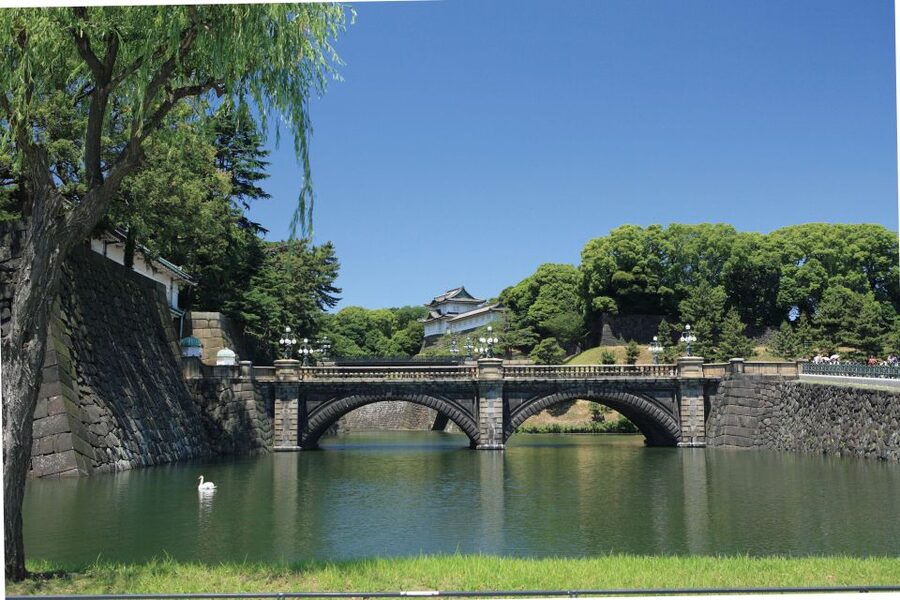
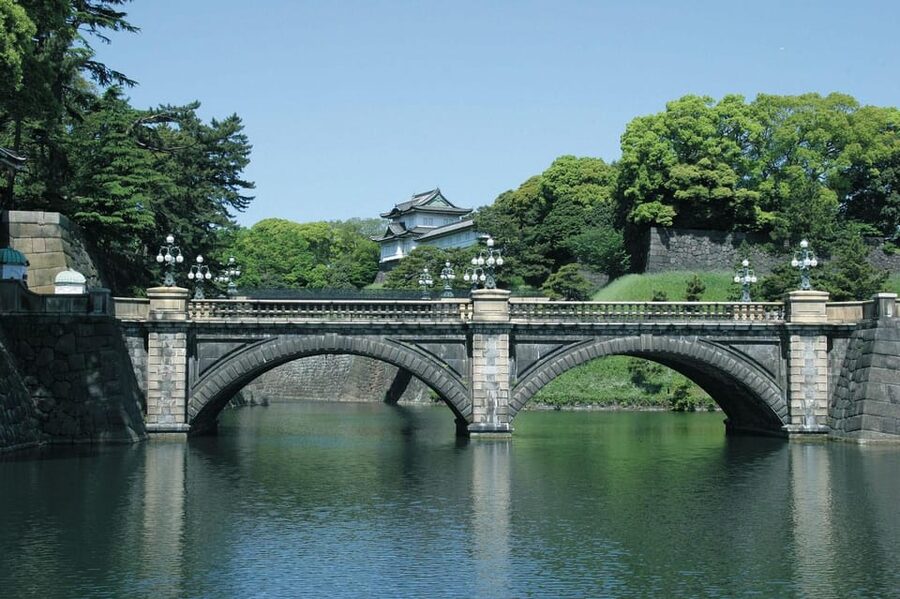
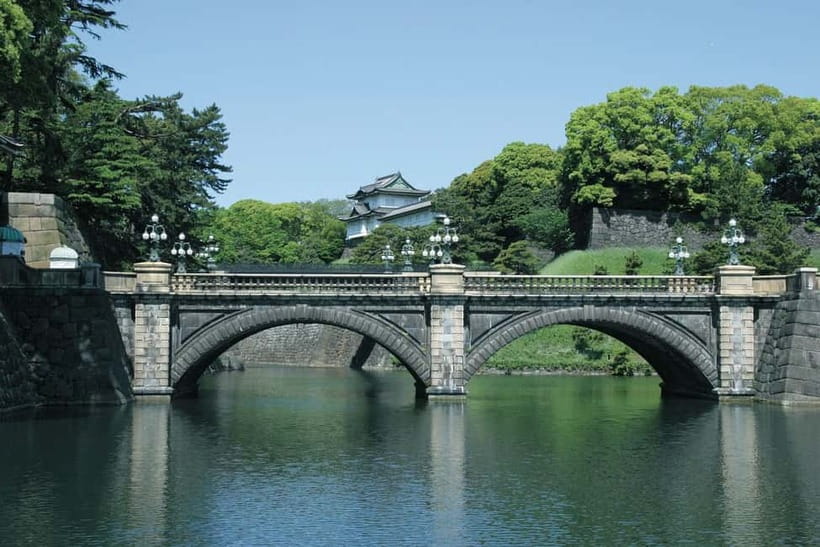
The first sightseeing stop introduces you to the Imperial Palace from the outside. You walk around the Nijubashi Bridge area and see the statue of Masashige Kusunoki, while your guide explains the setting and its connection to Japan’s imperial story.
This is a photo stop and short walk of about 40 minutes. The appeal is the combination of open space, formal stonework, historic architecture, and one of Tokyo’s best-known palace views. It gives you a quiet contrast to the city streets and helps explain why this central area matters.
Be clear about what you are not seeing. Entry into the Imperial Palace itself is not permitted on this tour, and the East Gardens are excluded. If your main goal is to walk through palace gardens, this outing will leave you wanting more. If you mainly want the bridge, outer grounds, and a useful introduction, the stop works well.
Your guide can make a short visit feel more meaningful by pointing out what you are looking at instead of leaving you with only a palace wall and a bridge photograph. Kumiko was praised for explaining historical details and showing how the area looked in the past. That kind of commentary is the point of taking the bus rather than simply stopping here alone.
Tokyo Tower at 150 meters
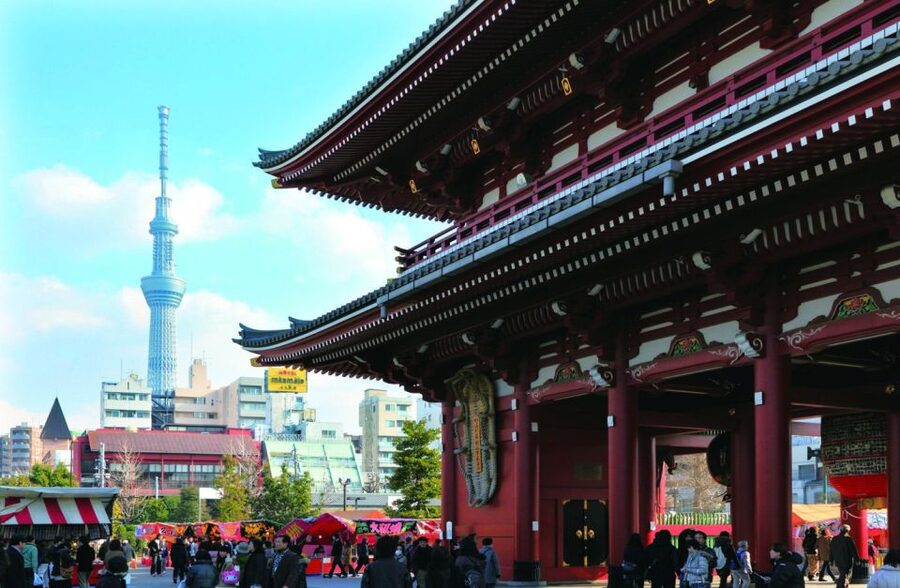
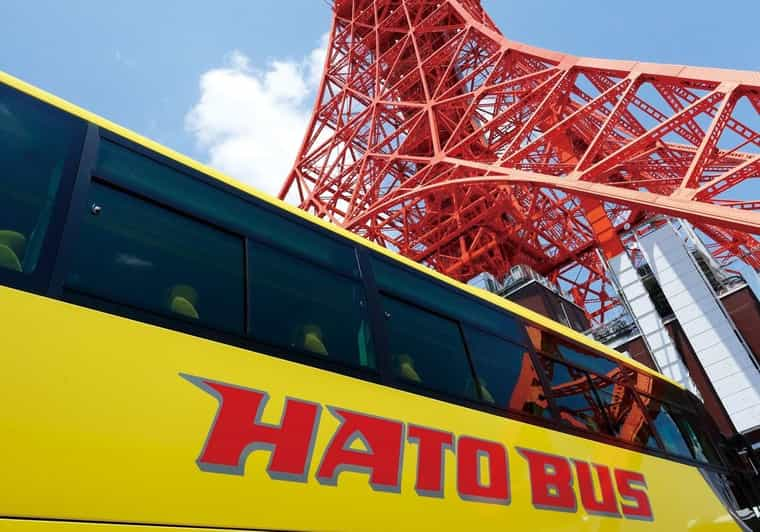
Tokyo Tower is the next major stop, with entry to the main observatory at 150 meters. From the viewing level, you get a broad look over the capital, and on a clear day you may spot Mount Fuji.
The visit lasts about 40 minutes. That gives you time to reach the observatory, look across the city, take photographs, and return to the meeting point. It is enough for a first look, though not a long, leisurely tower visit with time for every display or a slow meal nearby.
The view changes with the weather. Haze, cloud, and rain can soften the distant sights, so do not book this tour solely for a Mount Fuji sighting. The tower still gives you a useful sense of Tokyo’s scale, particularly after seeing the lower city from the palace grounds and Asakusa streets.
Several guides use the bus ride and tower stop to add small cultural explanations. One guide taught Japanese phrases, while another explained the difference between temples and shrines. Those details help turn a lookout visit into a better introduction to Japan.
The order also makes practical sense. You handle the formal palace area and the high city view before finishing in Asakusa, where you can continue eating or shopping after the organized portion ends.
More Bus Day Trips in Tokyo
- Tokyo: Mt.Fuji & Lake Kawaguchiko 1-Day Bus Tour w/Optional Lunch
★ 4.5 · 839 reviews - Tokyo: Mount Fuji Views and KABA Amphibious Bus Day Tour
★ 5.0 · 4 reviews
Sensō-ji, Nakamise, and old Tokyo in Asakusa

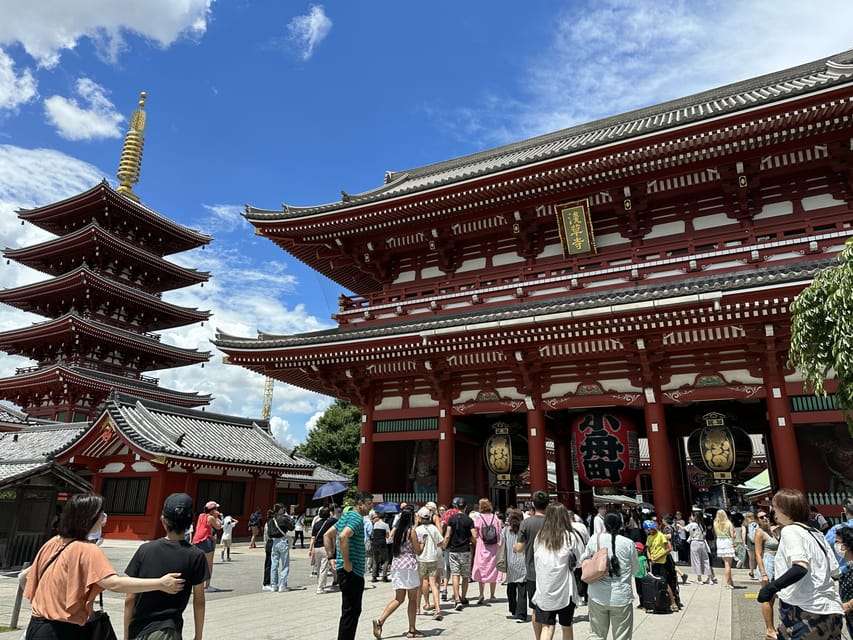
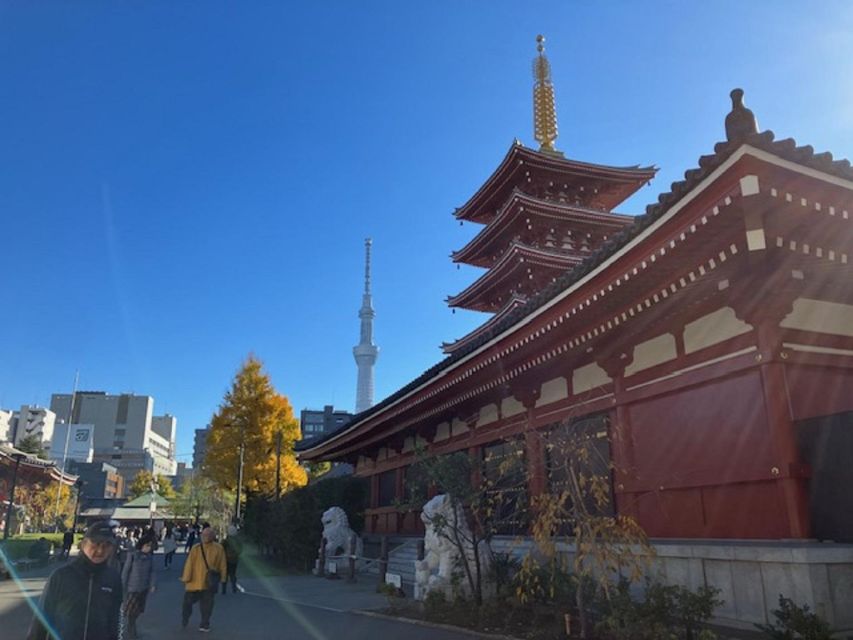
Sensō-ji, also called Asakusa Kannon Temple, is the tour’s longest stop, at about one hour. It is Tokyo’s oldest temple and one of the city’s most rewarding places for a first visit because the complex combines worship, architecture, street food, souvenirs, and a steady flow of local and international life.
Your guide leads you through the temple area and explains its craftsmanship and traditions. You may also learn how to approach a Buddhist temple, how it differs from a Shinto shrine, and what certain customs mean. One guide taught a common Japanese greeting through song, while another explained how to pray. These small lessons are useful because they give you a way to look beyond the main gate and large temple hall.
You then receive free time to explore independently. The nearby Nakamise shopping street runs for about 200 meters and is lined with traditional shops. This is the best place on the tour to browse souvenirs and try local snacks or a meal at your own expense.
Bring some cash. One person specifically noted that the market was mostly cash only. The tour price does not cover food or shopping, so you should think of this hour as flexible personal time rather than an included tasting session.
One hour is a good compromise, but it is not generous if you want to browse every shop, eat slowly, and study the temple grounds. Keep track of the meeting time and location. One person became separated from the guide at this final stop, which is a reminder to stay aware when the group spreads out among the shops and temple buildings.
The upside of ending here is that you may be able to remain in the Asakusa area after the guided program, depending on the exact return arrangements and your own plans. The published route returns to the Hato Bus Tokyo office, so confirm with your guide before deciding to leave the group permanently at Sensō-ji.
Why the guide matters more than the bus
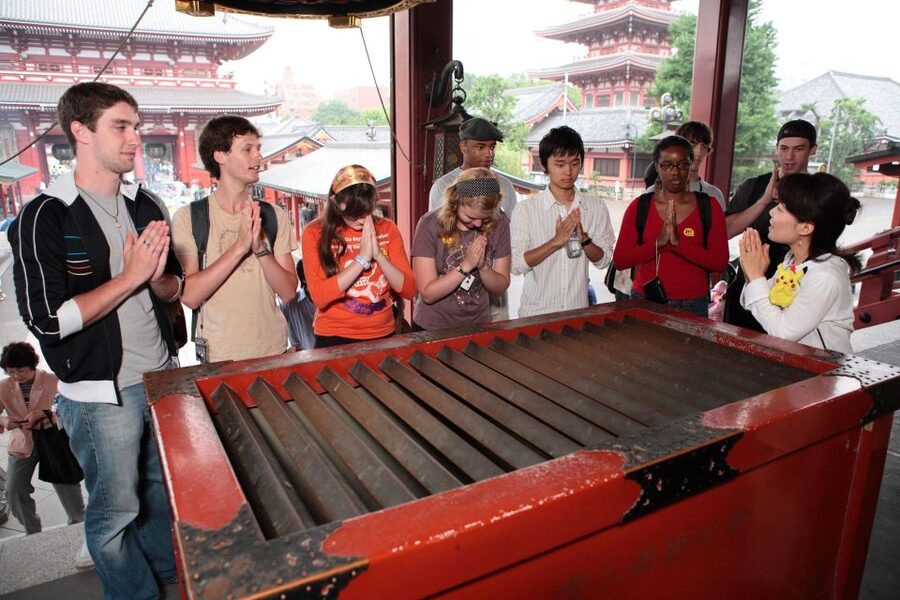
The bus gets you from place to place, but the guide determines how much you take away. The strongest part of this experience is the English commentary delivered between stops and during the walks.
Guides such as Aki, Kumiko, Yuko, Atsushi, Azumi, Makoto, and Koyiko received praise for being friendly, clear, funny, and well informed. Kumiko was especially noted for making Japanese culture relatable, while Aki was praised for historical explanations, taking photographs for people, and helping the group feel included.
That personal touch matters on a fast tour. Without it, the palace could feel like a short photo stop, Tokyo Tower could become only a lookout, and Sensō-ji could seem like a crowded shopping street with a temple attached. Good explanations connect the places to Japanese history, religion, imperial tradition, and everyday customs.
The guide also helps with practical details. Instructions are generally clear, but the group must stay together when leaving the bus and moving through crowded areas. A friendly and attentive guide cannot remove Tokyo’s crowds, particularly on holidays, but can make the route easier to follow.
The tour is conducted in English. It is not a multilingual outing, so book it only if English commentary suits you.
Timing, comfort, and accessibility
The advertised duration is roughly four hours, with the activity information also giving a maximum of 270 minutes. Starting times vary, so check availability for the date you want. The title describes a morning outing, but the broader information also refers to an afternoon option, so confirm the exact departure time during booking.
You will need to manage a few steps while boarding and leaving the bus. The tour is listed as wheelchair accessible, but the step warning is still important if you have limited mobility or use a wheelchair. Contact the provider before booking if you need to confirm how your particular equipment will be handled.
Children under six can ride free, but no seat is provided for them. That makes the offer less useful for a child who needs a guaranteed place to sit during the ride.
Cancellation is flexible: you can cancel up to 24 hours ahead for a full refund, and the reserve-now, pay-later option allows you to hold a place without paying immediately. Enter your first and last name carefully, and keep the name within the stated 20-character limit. A middle name can be omitted.
Who gets the most value from $40
I would recommend this tour to you if:
- You have only a day or two in Tokyo.
- You are visiting the city for the first time.
- You want historical and cultural explanations in English.
- You prefer a bus to several train transfers.
- You want a comfortable introduction before exploring on your own.
- You are traveling in hot weather and value air conditioning.
- You want to see Tokyo Tower, Sensō-ji, and the palace area in one outing.
The price is strong for the amount covered. Transport, a licensed English-speaking guide, and the Tokyo Tower entrance are included, while food and shopping are not. You are paying less for long visits and more for efficient connections, clear explanations, and reduced planning.
I would not choose it if your main goal is palace interior access, a full visit to the East Gardens, extended time at Tokyo Tower, or a relaxed afternoon focused only on Asakusa. Independent exploration will give you more time, but it also requires more navigation and preparation.
Should you book this Tokyo half-day tour?
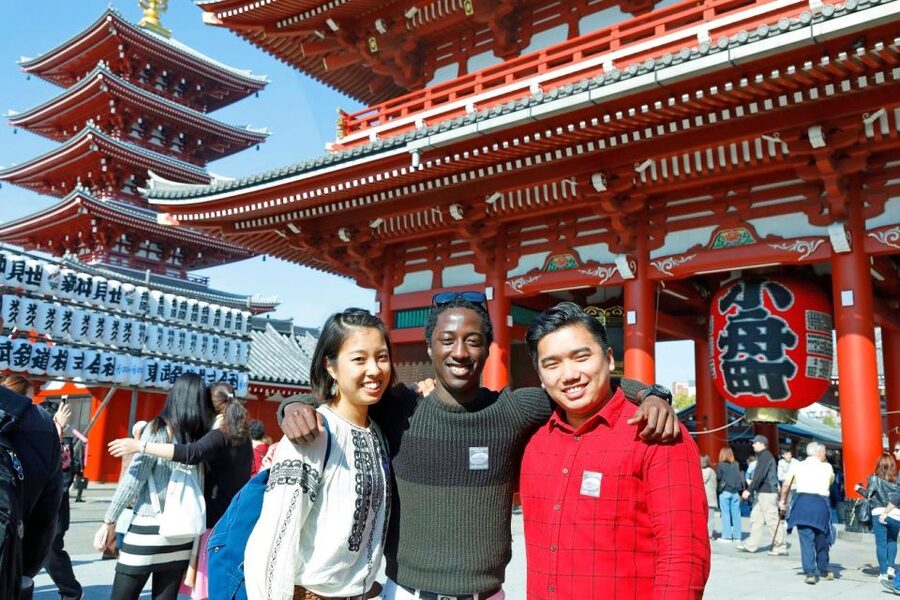
Book it if you want a well-organized first look at Tokyo without spending your opening day decoding train routes. The mix of palace views, Tokyo Tower, and Sensō-ji covers imperial tradition, modern city scale, Buddhist culture, shopping, and street life in one short outing.
Go in with the right expectations. The Imperial Palace is an outside view, the stops are timed, and Asakusa can be crowded. Stay close to the guide, keep cash ready for Nakamise, and return to the bus on time.
For $40, this is an efficient and fairly priced orientation tour. It is especially useful on your first day, when a good guide can help you understand what you are seeing and suggest what to explore next.
FAQ
How long does the tour last?
The tour lasts about four hours, with the activity information also listing a duration of up to 270 minutes.
What sights are included?
The tour includes the Imperial Palace outer garden area, Nijubashi Bridge, Tokyo Tower’s main observatory, and Sensō-ji Temple in Asakusa.
Can I enter the Imperial Palace?
No. The tour visits the outer area only. Entry to the Imperial Palace itself and the East Gardens is not included.
Is Tokyo Tower admission included?
Yes. Admission to Tokyo Tower’s main observatory at 150 meters is included.
Is the tour conducted in English?
Yes. A professional licensed English-speaking guide leads the tour.
Where does the tour start?
The available departure points include the Hato Bus Tokyo office and the Hato Bus meeting point at Shinjuku Station East Exit. The exact meeting point depends on the option you book.
Does the tour provide hotel pickup?
No. Hotel pickup and drop-off are not included.
Is food included?
No. Food and drinks at Nakamise and elsewhere are purchased at your own expense.
Can children under six join?
Yes. Children from age zero to under six can travel free, but they do not receive their own seat.
Is the tour wheelchair accessible?
The activity is listed as wheelchair accessible, but you need to manage a few steps when boarding and leaving the bus.
Can I cancel for a refund?
Yes. Cancellation up to 24 hours before the tour qualifies for a full refund.
Do I need to bring cash?
Cash is useful for snacks and shopping around Nakamise, which may be mostly cash only.
More Half-Day Trips in Tokyo
- Miami: Half-Day Open-Top Bus Tour Plus Biscayne Bay Cruise
★ 4.1 · 2,420 reviews - Half-Day Bus Tour of NYC Top Highlights
★ 5.0 · 1,764 reviews - Top Rated Brooklyn Half-Day Food, History & Culture Tour via bus
★ 5.0 · 758 reviews - Howth Coastal Half-Day Bus Tour from Dublin with Live Guide
★ 4.5 · 652 reviews
More Morning Departures in Tokyo
- Tokyo: Morning Sightseeing Bus Tour
★ 4.4 · 109 reviews - Yulara: Uluru Sunrise and Kata Tjuta Day Trip by Bus
★ 4.5 · 469 reviews - Magnetic Island: Guided Bus Tour with Morning Tea
★ 4.8 · 129 reviews - Brisbane Bus Tour: Max 10 people | Half Day | Morning tea inc.
★ 5.0 · 28 reviews
Just added around Tokyo
- Tokyo: Mount Fuji Views and KABA Amphibious Bus Day Tour★ 5.0 · 4 reviews
- Full Tokyo: Meiji Shrine, Imperial Palace, Asakusa & Skytree★ 4.4 · 7 reviews
- 3-Row Luxury Bus Tour to Mt. Fuji, Lake Kawaguchi from Tokyo★ 4.3 · 3 reviews
- Tokyo: 1 Day Bus Tour with Meiji-Jingu,Odaiba,lunch&Skytree★ 4.6 · 156 reviews
- Tokyo: Morning Sightseeing Bus Tour★ 4.4 · 109 reviews
- Tokyo: 60min Panoramic Open Top Bus Tour with Audio Guide★ 4.0 · 40 reviews
- Tokyo Thrilling Open Top Bus Expressway Adventure Tour★ 4.3 · 5 reviews
- Tokyo: Open Top Panoramic Sightseeing Bus with Audio Guide★ 3.8 · 254 reviews
Bus Day Trips, compared.

Mt Fuji and Hakone 1-Day Bus Tour Return by Bullet Train
Read our review →

Day Trip to Grindelwald, Interlaken & Lauterbrunnen
Read our review →
Munich Hop-On Hop-Off Tour: 1-Day or 2-Day Ticket
Read our review →
From NYC: Guided Day Trip to Washington DC by Van or Bus
Read our review →Browse the lists this tour appears in