
Review · JAPAN
Full Day Hiroshima and Miyajima Bus Tour from Hiroshima
History meets island beauty. This 8-hour-20-minute tour brings together two unforgettable sides of Hiroshima: the sacred island of Miyajima and the solemn Hiroshima Peace Memorial Park. I like the efficient route, which includes ferry transport, admission fees, an English-speaking guide, and a comfortable bus. I also like that you see both the Atomic Bomb Dome and Peace Memorial Museum in one day. The main drawback is the large group size, which can make it hard to hear a soft-spoken guide.
This is a practical choice if you have only one day in Hiroshima or are arriving by Shinkansen from Kyoto or Shin-Osaka. Guides such as Masako, Tomoko, Azusa, Hikari, Kyoko, Takeshi, and Taeko have earned praise for their warmth, clear explanations, and help with photographs. Still, the experience depends heavily on your assigned guide, and the free time on Miyajima may feel too long for some people or too short for anyone hoping to use the ropeway.
Key Points Before You Book
- Two UNESCO World Heritage sites in one day: See Itsukushima Shrine on Miyajima, then Hiroshima’s Atomic Bomb Dome and Peace Memorial Museum.
- A ferry ride is included: The crossing adds a scenic change of pace and takes you toward the island known as shrine island.
- Lunch is on your own: Set aside money and time for oysters, Hiroshima-style okonomiyaki, or conger eel rice.
- The group may reach 40 people: A full coach can be efficient, but outdoor explanations may be difficult to hear.
- The tour ends at Hiroshima Station: Plan to continue on your own after about 6:00 to 6:30 p.m.
- The emotional tone changes sharply: Miyajima is picturesque and lively, while the Peace Park calls for quiet attention and reflection.
What This Full-Day Hiroshima Tour Actually Covers
The tour begins at 10:10 a.m. in the lobby of Hotel Granvia Hiroshima, beside JR Hiroshima Station. You meet the guide there, board an air-conditioned vehicle, and travel toward Miyajima before returning to central Hiroshima in the late afternoon.
The structure is smart. You see Miyajima first, when you are still fresh, then spend the second half of the day at the sites connected to the 1945 atomic bombing. That order gives the day a natural rhythm: beauty and tradition first, remembrance and peace later.
The price is about $152.54 per person. That is not the cheapest way to visit these places, since Miyajima and the Peace Park can be reached independently. But the fee includes the guide, bus transportation, ferry transportation, Miyajima’s visitor tax, and admission charges listed for the tour. The real value is time and organization, especially if you do not want to work out the ferry, local transport, and route on your own.
More Full-Day Trips in Japan:
- Kyoto: Full-Day Guided Bus Tour to Top Highlights & Tickets
★ 4.6 · 533 reviews - Okinawa: Full-Day Bus Tour to Yanbaru National Park
★ 4.3 · 44 reviews - Full Day Hiroshima and Miyajima Bus Tour
★ 5.0 · 12 reviews
Miyajima and the Sacred Itsukushima Shrine
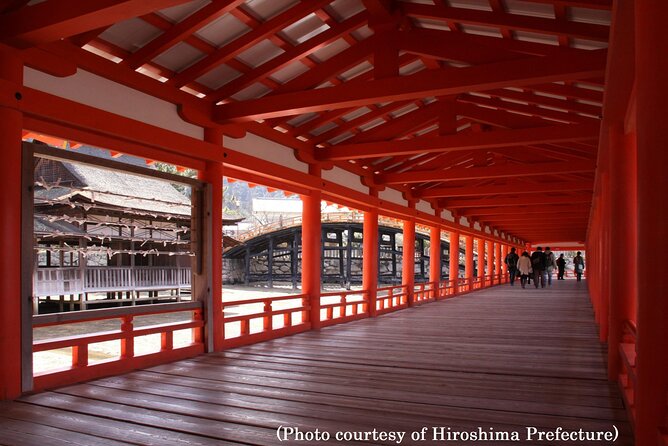
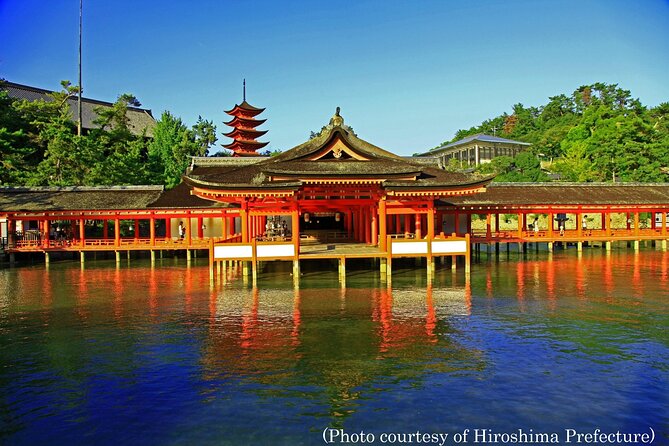
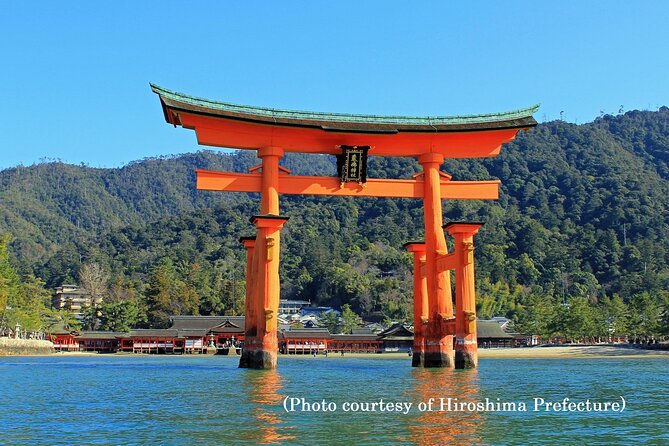
Miyajima, whose name means shrine island, is the scenic half of the day. The island is known for Itsukushima Shrine, a World Heritage site founded in the sixth century and celebrated for its Shinden-zukuri architectural style, an arrangement associated with aristocratic residences.
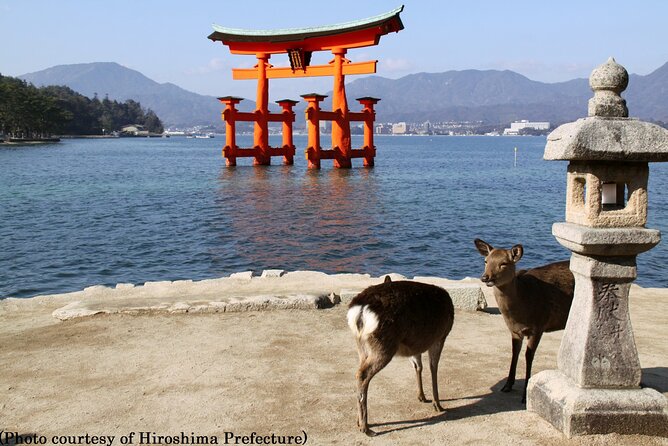
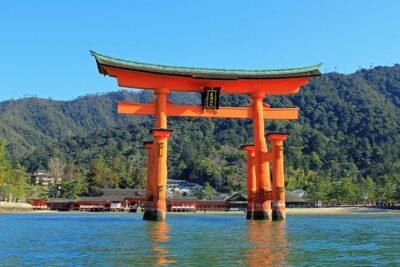
The shrine is famous for its large red torii gate, which appears to rise from the sea at high tide. The exact view depends on the tide and conditions, but the connection between the shrine buildings and the water is what gives the site its unusual character. This is not just a standard temple visit. The buildings, shoreline, and gate were designed to work together.
You receive about an hour at Itsukushima Shrine, with admission included. Your guide explains the site’s customs and background, which helps you understand why the shrine feels different from a temple complex on the mainland. Guides who have personal ties to Hiroshima or strong knowledge of Japanese manners can add useful context here.
Miyajima is also known for wild deer and monkeys. The deer are a familiar part of the island experience, but remember that they are wild animals, not a petting zoo. Keep an eye on your belongings and follow local instructions around food.
The main limit is time. An hour at the shrine lets you see the central attraction, but it does not leave room for every corner of the island. One guide may offer helpful suggestions for your free period, while another may keep the group moving closely together.
One Hour for Lunch on Miyajima
After the shrine visit, you have about an hour for lunch and independent time. Lunch is not included, so bring cash or a payment card and expect to choose your own meal from the island’s shops and restaurants.
The local specialties listed for this stop are oysters, Hiroshima-style okonomiyaki, and conger eel rice bowls. This is a good chance to try something associated with the region instead of eating a familiar chain meal.
The one-hour allowance works well for a quick meal and a little browsing. It becomes tight if you want a full sit-down meal, shop for souvenirs, and take photographs. Several people found the island time pleasant, but some wished there had been room for the ropeway. If Mount Misen is high on your list, this tour may not give you enough free time to include it.
You should also keep track of the meeting time. Miyajima is easy to enjoy at your own pace, but the ferry and group schedule cannot wait for late diners or shoppers.
The Atomic Bomb Dome and Hiroshima’s Difficult History
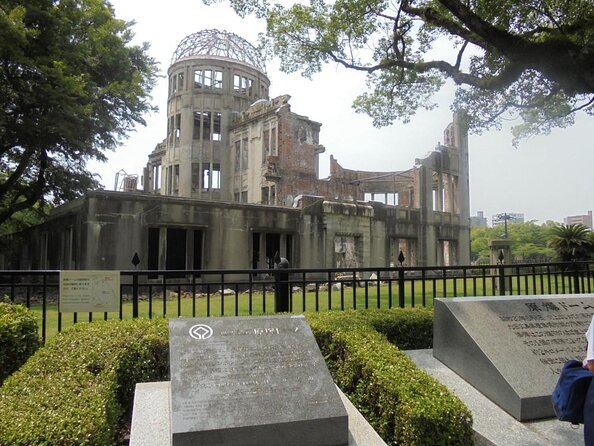
After returning from Miyajima, the tour turns to the Atomic Bomb Dome. About 40 minutes are set aside for this stop, and there is no separate admission fee.
The dome is the preserved shell of a building damaged by the atomic bomb in 1945. Its exposed structure is a stark reminder of the destruction, but it is also a symbol of the city’s effort to promote peace and the elimination of nuclear weapons.
The stop is brief, yet the site does not need much staging. You have time to look closely, hear an explanation from the guide, and take in the setting beside the river. This is one place where a guide’s voice and group management matter. If the group is spread out, you may need to move closer so you can hear the explanation.
The emotional shift from Miyajima to the dome is quick. I would not treat this as a casual sightseeing stop. Give yourself a few quiet minutes, even if the group is moving on.
A few more bus tours around Japan worth a look
- Mt Fuji and Hakone 1-Day Bus Tour Return by Bullet Train
★ 5.0 · 26,383 reviews - 1-Day Tokyo Bus Tour
★ 5.0 · 14,250 reviews - PERFECT KYOTO 1-Day Bus Tour
★ 5.0 · 13,518 reviews - Peaceful Hiroshima & Miyajima UNESCO 1 Day Bus Tour
★ 5.0 · 5,309 reviews
One Hour at Hiroshima Peace Memorial Museum
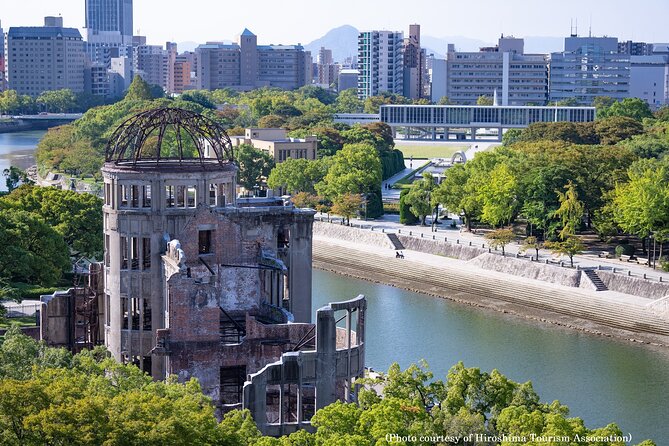
The Peace Memorial Museum sits within Hiroshima Peace Memorial Park, which was created after the Pacific War and is now one of Japan’s most important places for peace education. The museum is listed as an Important Cultural Property of Japan.
The tour allows about an hour for the museum. That gives you enough time to see a meaningful portion of the exhibitions, but not necessarily every display in detail. The material is difficult. Exhibitions document the bombing, the suffering of civilians, and the effects that continued long after the blast.
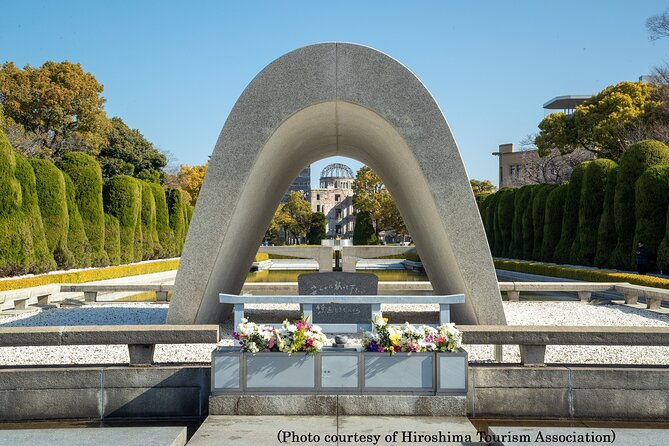
The guide leads you through the park and points out significant monuments, including the Memorial Cenotaph for Atomic Bomb Victims and the Cenotaph for Korean Victims. The cenotaph contains the names of those who died, and the scale of the list can be hard to absorb.
Some guides provide a strong introduction before allowing you to move through the museum independently. That approach works well because the museum’s displays require personal attention and quiet. Other guides have been criticized for speaking too softly or starting before everyone has gathered. Stay near the guide at the beginning of each explanation, especially if you want the historical context.
The park is spacious, but this is not a place to rush. The schedule gives you a useful first visit, though anyone wanting to read every panel should plan a separate return visit.
The Guide Can Make or Break the Day
The strongest part of this experience is often the guide. Several guides have been praised for clear English, kindness, practical help, and a strong grasp of Japanese customs.
Masako was especially appreciated for helping with photographs and even accompanying a participant toward the train station after the tour. Tomoko used visual aids for meeting points and important instructions. Azusa was praised for finding good photo angles at Miyajima. Hikari, Kyoko, Takeshi, Taeko, Minnie, Nob, Akko Watanabe, Nikki, Mitsui, and others were described as friendly, prepared, and helpful in different ways.
One guide from Hiroshima shared family connections to the city, which added a personal layer to the Peace Park visit. That kind of local perspective can make the historical material feel less like a textbook lesson.
The weakness is consistency. Some guides have spoken so quietly that people at the back heard very little. Others read from notes while seated on the bus or began explanations before the full group arrived. A large group of up to 40 people makes this problem worse.
My practical advice is simple: stay near the guide during walking sections, ask to repeat anything you miss, and do not assume you will hear clearly from the rear of the group. On hot or humid days, a fan, umbrella, and water are sensible additions. One driver was praised for handing out water bottles on a muggy day, but you should still carry your own bottle.
Transport, Timing, and Group Size
The tour uses an air-conditioned vehicle and includes the ferry to Miyajima. The transportation removes much of the route planning, which is useful in a city where you are trying to fit an island visit and two major Hiroshima sites into one day.
The tour starts at 10:10 a.m. and usually ends at Hiroshima Station around 6:00 to 6:30 p.m. The end point is convenient for onward rail travel, but you are responsible for continuing to your next destination.
If you are coming from Kyoto or Shin-Osaka with a Japan Rail Pass, take an early enough Shinkansen to reach the Hotel Granvia lobby on time. Missing the meeting time can mean missing the tour, and the operator does not promise that late arrivals can join later.
Road congestion, ferry timing, and crowds can change the order of activities. Seats may not be assigned, so arrive ready to follow the group’s instructions. The vehicle is comfortable, but this remains a full day with walking, boarding, waiting, and frequent transitions.
Children up to age five may join free without a bus seat. If you need a seat for a child, book the child rate. Participants under 18 need written parental permission, and anyone under 15 or not yet in middle school must be accompanied by a parent or guardian.
Is the $152.54 Price Worth It?
For an independent visitor, the tour price is high. You can visit Miyajima and Hiroshima’s Peace Park on your own for less, especially if you are comfortable handling train connections, ferry tickets, museum admission, lunch, and directions.
The tour earns its price through convenience. You get one organized route, an English-speaking government-licensed guide, transportation, the Miyajima visitor tax, and included admission fees. You also avoid spending part of your day checking schedules or figuring out where to go next.
The value is strongest for first-time visitors, people with only one full day, and anyone who prefers historical context instead of reading everything alone. It is weaker for independent planners who want to control every minute, spend several hours at the museum, or hike on Miyajima.
The free-cancellation policy allows cancellation up to 24 hours before the start time for a full refund. Changes or cancellations made inside that period are not accepted for a refund.
Who Should Choose This Tour?
I would choose this tour if you want the major Hiroshima sights covered in one organized day and you appreciate having a guide explain customs, monuments, and historical events as you go.
It also suits visitors arriving from Kyoto or Shin-Osaka who want a carefully arranged day trip, though the early train and fixed meeting time require planning. The included return to Hiroshima Station makes the end of the day straightforward.
You may prefer to go independently if you want several hours at the Peace Memorial Museum, hope to ride the ropeway on Miyajima, dislike fixed schedules, or want a quiet visit with no group commentary. A private guide could also be a better fit if hearing clearly is important to you.
Should You Book the Hiroshima and Miyajima Bus Tour?
Book it if you want efficient coverage of Hiroshima’s two essential areas and do not mind paying extra for transport and guidance. The day is well planned, the ferry adds variety, and the combination of Itsukushima Shrine with the Atomic Bomb Dome and Peace Memorial Museum gives you a useful first understanding of the region.
Go independently if you are comfortable navigating Japan’s rail and ferry system and want more control over your time. If you book the tour, arrive early, stay close to the guide, budget for lunch, and expect a serious, emotional afternoon at the Peace Park. The scenery may draw you to Miyajima, but Hiroshima’s memorial sites are the reason this day stays with you.
FAQ
Where does the tour begin?
The tour begins at 10:10 a.m. in the lobby of Hotel Granvia Hiroshima, at 1-5 Matsubaracho, Minami Ward, Hiroshima.
Where does the tour end?
The tour ends at Hiroshima Station, usually around 6:00 to 6:30 p.m. You must make your own arrangements from the station afterward.
Is lunch included?
No. Lunch is not included. You have time to eat on Miyajima, where oysters, Hiroshima-style okonomiyaki, and conger eel rice bowls are available.
Are ferry transportation and admission fees included?
Yes. The tour includes transportation costs, the Miyajima visitor tax, and other listed admission fees, including admission to Itsukushima Shrine and the Peace Memorial Museum.
How long is the tour?
The tour lasts approximately 8 hours and 20 minutes.
How large can the group be?
The maximum group size is 40 participants. Seats on the bus may not be assigned.
Can children join the tour?
Children up to five years old may join free of charge without a bus seat. If a bus seat is needed, you must book the child rate. Participants under 18 need written parental permission, and anyone under 15 or not yet enrolled in middle school must be accompanied by a parent or guardian.
What happens if I need to cancel?
You can cancel at least 24 hours before the experience start time for a full refund. Cancellations or changes made less than 24 hours before the start time are not accepted for a refund.
Just added around Japan
- Kyoto Sagano Romantic Train in Arashiyama Bus Tour★ 3.0 · 6 reviews
- NARUTO & BORUTO at Nijigen no Mori Park Entry& Bus Transportation★ 3.0 · 3 reviews
- Kyoto 1 Day Golden Route Bus Tour★ 5.0 · 15 reviews
- From Kyoto: Nara History Guided Half Day Bus Tour with lunch★ 5.0 · 23 reviews
- Kyoto Hop-On, Hop-Off Sightseeing Bus Tour★ 3.0 · 5 reviews
- Amanohashidate & Miyama 1-Day Bus Tour: From Osaka/Kyoto w/ Lunch★ 4.5 · 18 reviews
- Full Day Hiroshima and Miyajima Bus Tour★ 5.0 · 12 reviews
- Hiroshima, Miyajima 1 Day Bus with Indian Lunch from Osaka, Kyoto★ 5.0 · 7 reviews
Japan Bus Tours, compared.
Mt Fuji and Hakone 1-Day Bus Tour Return by Bullet Train
Read our review →
Peaceful Hiroshima & Miyajima UNESCO 1 Day Bus Tour
Read our review →
Fushimi Inari, Kinkakuji, Bamboo Grove 1 Day Bus Tour
Read our review →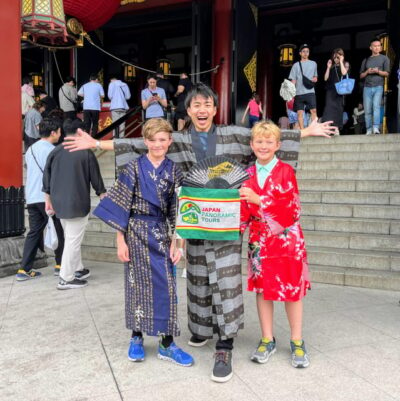
Meiji Shrine, Asakusa, Skytree Bus Tour and Cruise
Read our review →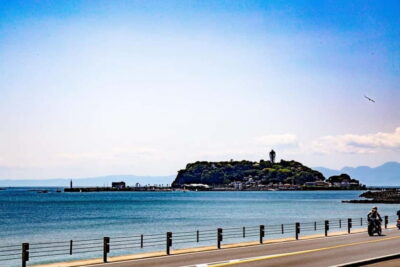
Kamakura & Enoshima Day Trip including Temple Tickets
Read our review →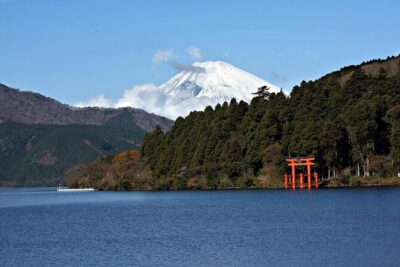
Mt Fuji & Hakone Cruise, Drum Show Bus 1 Day from Tokyo
Read our review →Browse the lists this tour appears in