Review · JAPAN
Tokyo: Open Top Sightseeing Bus with Audio Guide
Tokyo looks different from the top of a bus. This roughly 70-minute open-top ride gives you a quick way to see major sights without wrestling with train maps, while GPS-triggered commentary explains what you are passing in English, Japanese, Chinese, French, Korean, Vietnamese, or Thai. I like the sweeping Bay Course views and the low price, but you should know this is a continuous sightseeing ride, not a hop-on, hop-off service.
I also like the easy first-day appeal. You can sit back, get your bearings, and see how Tokyo’s modern districts, temples, towers, and waterfront fit together. The main drawback is that the recorded commentary may not always match the view perfectly, and repeated music can become tiresome during the ride.
Key points to know before you book
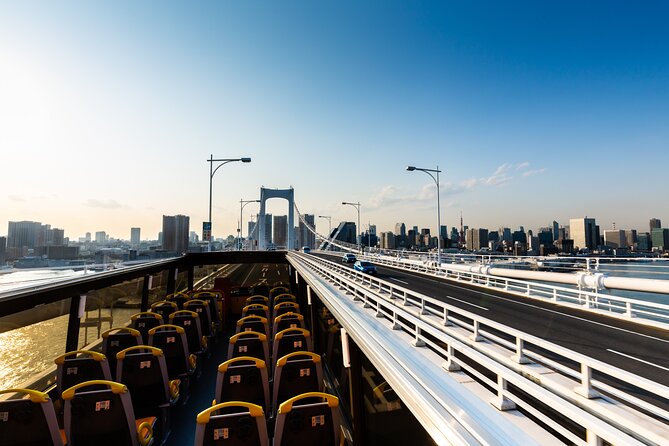
- Two different routes: Choose between the Bay Course, with Rainbow Bridge and Odaiba, and the City Course, covering areas such as the Imperial Palace, Roppongi, Tokyo Tower, and Ginza.
- No getting off along the way: The bus returns to the meeting point, so this is for seeing Tokyo from your seat rather than visiting each attraction.
- GPS audio in seven languages: Commentary starts automatically according to the bus location, though timing can occasionally feel slightly out of sync.
- A strong first-day activity: The short ride offers a useful overview after a long flight or when you have limited time in Tokyo.
- Bring the right earphones: The audio system accepts 3.5mm mini plugs. Earphones can also be bought for 100 yen.
- Arrive early: Check in 20 to 40 minutes before departure at the Tokyo VIP Lounge near Tokyo Station. Late arrivals are not accepted.
What this Tokyo bus ride actually offers
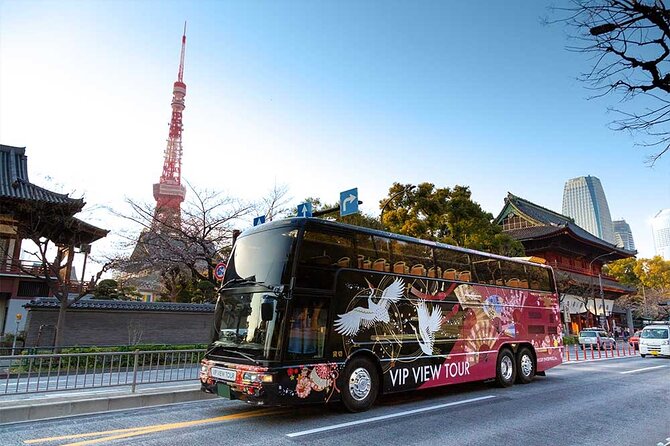
This is a sightseeing loop with a fixed departure and return. You board at the Tokyo VIP Lounge in Yaesu, near Tokyo Station, then remain on the bus for the full route. The bus does not stop so you can explore Tokyo Tower, Odaiba, Ginza, or any other sight.
That distinction matters. If you want to step into a temple, shop in Ginza, or take photos from the waterfront, you will need to visit those places separately. If you want a comfortable overview with no planning beyond showing up on time, this format works well.
The bus holds up to 40 people. That is large enough to feel like a proper sightseeing vehicle, but still a manageable group size. Japanese-speaking staff are available to help at the meeting point, and the lounge offers drinks while you wait. That small pre-departure comfort is useful, especially if you have just arrived in Tokyo and are still adjusting to the city.
The price, listed at about $11.71 per person, is one of the clearest reasons to consider it. For the cost of a casual meal or a few train rides, you get a structured route through several major districts. It is not a replacement for exploring Tokyo on foot, but it is inexpensive enough to work as an orientation ride.
More Open-Top Bus Tours in Japan
- Tokyo: Open Top Panoramic Sightseeing Bus with Audio Guide
★ 3.8 · 254 reviews - Tokyo: 60min Panoramic Open Top Bus Tour with Audio Guide
★ 4.0 · 40 reviews - Tokyo Thrilling Open Top Bus Expressway Adventure Tour
★ 4.3 · 5 reviews
Bay Course: Tokyo Bay, Rainbow Bridge, and Odaiba
The Bay Course is the more scenic choice if you want water views and large modern landmarks. It begins at the Tokyo Station red brick building and moves through Marunouchi before heading toward Zojoji Temple and Tokyo Tower.
Starting near Tokyo Station gives the route a useful contrast right away. The red brick station building is one of central Tokyo’s most recognizable structures, while Marunouchi is known for offices, broad streets, and polished city architecture. From an open-top seat, you get a broad view rather than the close-up detail you would have on foot.
Zojoji Temple adds a cultural pause to the route. It sits near Tokyo Tower, creating one of Tokyo’s classic visual pairings: traditional temple grounds with a tall orange-and-white tower rising behind them. You do not get time to enter or explore the temple, but the passing view helps show how old and new Tokyo share the same city blocks.
Tokyo Tower is one of the route’s major visual moments. The open roof gives you a better upward view than you would get from inside a regular coach. The route then moves toward Shibaura and Rainbow Bridge, where the city begins to feel more open and coastal.
The bridge section is a major reason to choose this course. The bus uses both the first-level and second-level areas of Rainbow Bridge, giving you different views across Tokyo Bay and the surrounding districts. Traffic and road conditions can affect the timing, but the bridge remains the route’s most memorable feature for many people.
From there, the bus passes the Fuji TV Building, the Statue of Liberty, and Odaiba Seaside Park. Odaiba is a planned waterfront district with wide public areas and modern attractions. The small Statue of Liberty replica is an amusing landmark, especially if you are not expecting it. The route gives you a look at Odaiba’s unusual mix of open space, towers, bridges, and entertainment buildings.
The Bay Course then returns through Shiodome and Ginza. Shiodome is a modern office and commercial district, while Ginza offers a very different type of city scene, with department stores, luxury shops, and carefully planned streets. You see all this from above, but you will not have time to browse or stop for food.
If you want the most visual variety in one hour, I would favor the Bay Course. It combines historic Tokyo, Tokyo Tower, the bay, a major bridge, Odaiba, and central shopping districts. The tradeoff is that some of the route may feel more like a moving panorama than a detailed visit.
City Course: central Tokyo and major landmarks
The City Course focuses on Tokyo’s central districts. It passes the Imperial Palace, Tokyo Midtown, Roppongi, Tokyo Tower, and Ginza.
This option may suit you better if your main interest is central Tokyo rather than the waterfront. The Imperial Palace area gives you a sense of the city’s formal center, while Roppongi and Tokyo Midtown show a more modern side of Tokyo with large commercial and office developments.
Tokyo Tower appears on this route as well, making it a useful choice if you want to see one of the city’s signature landmarks but do not need Rainbow Bridge or Odaiba. Ginza adds a final look at one of Tokyo’s best-known shopping districts.
The supplied information does not give a full stop-by-stop order for the City Course, so check the departure details when booking. The route can also be affected by traffic, weather, or other road conditions. That is normal for a bus ride through central Tokyo, where a short distance can take much longer at busy times.
The City Course is likely the better fit if you want a broad introduction to Tokyo’s central districts and already plan to visit the bay area separately. The Bay Course offers more dramatic open views, while the City Course keeps the focus on major central landmarks.
The GPS audio guide: useful, but not flawless
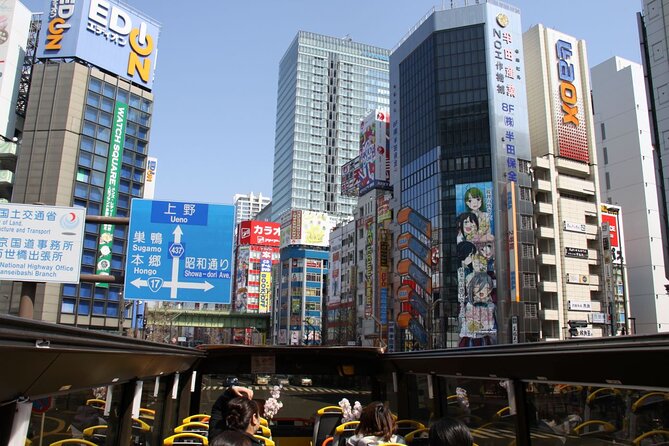
The automatic audio system is a practical feature. It uses GPS to detect the bus’s location and begins commentary in your selected language. Available languages are Japanese, English, Chinese, French, Korean, Vietnamese, and Thai.
The system also adjusts to road conditions, including changes caused by traffic. In theory, this means the information should arrive at the right point rather than playing according to a rigid timetable. In practice, the timing may not always be perfect.
You might hear an explanation just before the relevant building comes into view, or after the bus has already passed it. Keep looking around instead of relying only on the audio. The commentary is best treated as background context, not a perfectly synchronized guide.
The audio is recorded, not live. There is no personal guide narrating the ride or answering questions as you go. Some people will appreciate the quiet and predictable format. Others may prefer a live guide who can react to weather, traffic, and the exact view from the bus.
You need earphones with a 3.5mm mini plug. If you do not have a suitable pair, optional earphones cost 100 yen. Check your headphones before departure, since a wireless pair may not connect to the vehicle’s audio system.
One criticism worth taking seriously is the repeated music between commentary segments. It may add atmosphere at first, but the repetition can become annoying on a 60 to 70-minute ride. If you are sensitive to background music, you may want to focus on the views and use the audio selectively.
More Sightseeing Bus Tours in Japan
- Tokyo: Morning Sightseeing Bus Tour
★ 4.4 · 109 reviews - Departing from Takayama [Regular sightseeing bus] World Heritage Sites Shirakawago and Gokayama Ainokura
★ 4.5 · 137 reviews - Okinawa: Bus Tour to Churaumi Aquarium with Sightseeing
★ 4.3 · 20 reviews - Kyoto Hop-On, Hop-Off Sightseeing Bus Tour
★ 3.0 · 5 reviews
Open-top seating and Tokyo weather
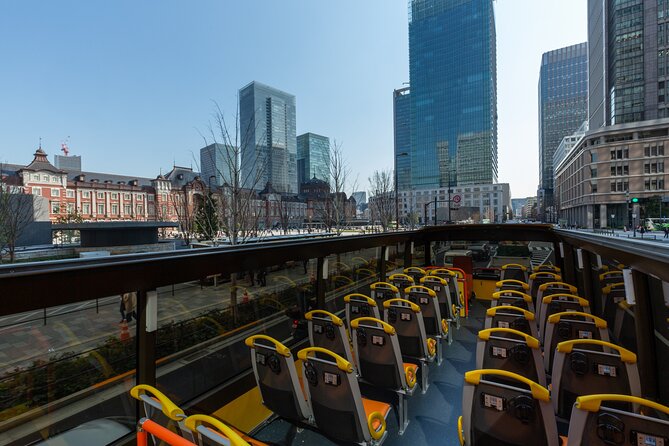
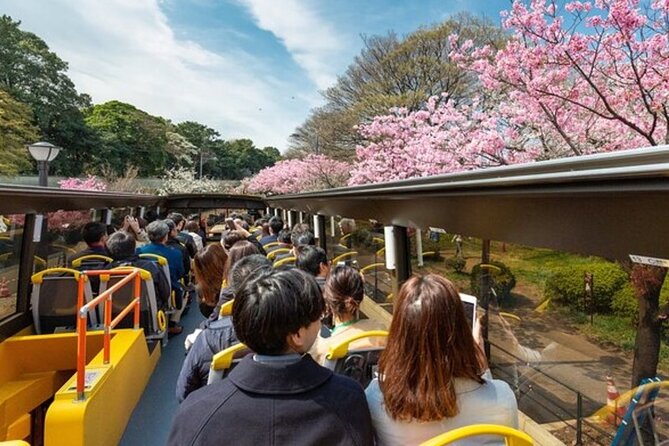
The open roof is the main reason to choose this tour over a standard bus. You get a clear view upward, better sightlines to tall buildings, and a more direct sense of Tokyo’s streets and bridges.
The roof is not guaranteed in every condition. The tour operates in light rain, but the open top may be closed if it rains. The activity can also be canceled in extreme weather, such as a typhoon.
That makes the weather forecast important. On a clear day, the open roof should make the ride feel much more special than an ordinary city transfer. On a rainy day, you may still get the route and commentary, but the main visual advantage is reduced.
Bring clothing that suits the forecast. The information specifically prohibits umbrellas, so do not plan to open one on the bus. Smoking, food, and selfie sticks are also not allowed.
The best seat is not guaranteed, and the vehicle can carry up to 40 people. Try to arrive early within the required check-in window if the departure instructions allow it. You should still expect to share the view, especially on a busy departure.
Meeting point, timing, and luggage rules

The meeting point is the Tokyo VIP Lounge at 1-5-9 Yaesu, Chuo City, with the activity ending back at the same location. The area is near public transportation, but you should verify the exact meeting point before leaving for the departure.
Check in 20 to 40 minutes before departure. The bus leaves on time and does not wait for late arrivals, including people who have called ahead. No refund is issued for arriving late or going to the wrong location.
The lounge is a paid facility for general users. You can use it free of charge starting 40 minutes before your departure, but use outside that period may involve a facility fee. It is a shared space, so follow the staff instructions and keep the area orderly.
One manageable piece of luggage is allowed per person. Luggage stored in the trunk should not exceed a combined height, width, and depth of 155 centimeters. You cannot access stored luggage during the ride, so keep passports, medication, cameras, and other valuables with you.
These rules are easy to handle if you treat the tour as a scheduled activity rather than casual public transport. Leave extra time to find the lounge, especially if Tokyo Station is unfamiliar to you.
Who will get the most from this experience

I would recommend this ride to someone visiting Tokyo for the first time, especially if you want a quick sense of the city before exploring individual districts. It also fits a short stay, a first afternoon after a long flight, or a day when you want sightseeing without a lot of walking.
It is useful for people who enjoy looking at a city from above and prefer a set route. The short duration keeps the commitment low, and the low price makes it easy to add to a larger Tokyo itinerary.
Families may also appreciate the novelty of an open-top bus, though the no-food rule and fixed seating are worth noting. People who want a quiet, self-paced visit to each attraction should choose a regular sightseeing day instead.
I would not book this if your main goal is entering Tokyo Tower, touring Zojoji Temple, shopping in Ginza, or spending time in Odaiba. You will see these places, but you will not visit them. I would also think twice if perfect audio timing is important to you.
Price, cancellation, and overall value
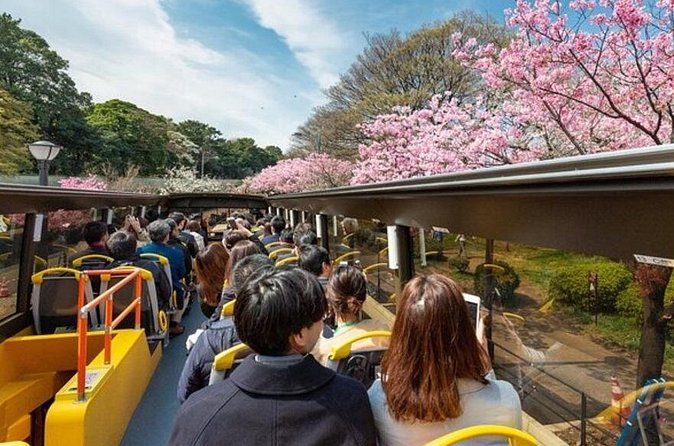
At around $11.71, this is a reasonably priced introduction to Tokyo. The value comes from the number of districts covered in a short period, the open-top format, and the included multilingual audio.
The tour is not cheap because it includes extensive personal guiding or attraction admission. It is cheap because it gives you a moving overview. That is a fair trade if you want orientation, photos, and a relaxed ride rather than a full sightseeing day.
Free cancellation is available if you cancel at least 24 hours before the scheduled start time. Changes or cancellations inside that window are not accepted for a refund. The tour also requires a minimum number of participants, and if that minimum is not met, you will be offered another date or experience, or a full refund.
The overall rating is 4.4, based on five published ratings. The strongest praise centers on the comfortable waiting area, drinks before departure, the friendly assistance, and the simple pleasure of seeing Tokyo from the bus. The clearest criticism concerns the lack of stops and the occasionally imperfect audio timing.
Should you book the Tokyo open-top bus?
Book it if you want an inexpensive, easy introduction to Tokyo, especially on your first day or during a short visit. I would choose the Bay Course for Rainbow Bridge, Odaiba, Tokyo Bay, and the widest mix of scenery.
Choose the City Course if central Tokyo matters more to you and you want the Imperial Palace area, Roppongi, Tokyo Midtown, Tokyo Tower, and Ginza. Go in with the right expectation: this is a scenic orientation ride, not a transport pass or guided walking tour.
Arrive early, bring compatible earphones, check the weather, and keep your valuables with you. If you accept that you will stay on the bus, the low price and broad city view make this a sensible addition to a Tokyo itinerary.
FAQ
How long does the Tokyo open-top bus tour last?
The ride lasts approximately 1 hour and 10 minutes.
Does the bus stop so I can visit the attractions?
No. This is not a hop-on, hop-off tour, and you remain on the bus during the route.
Where does the tour start and finish?
It starts at the Tokyo VIP Lounge in Yaesu, Chuo City, and ends back at the same meeting point.
Which routes are available?
You can choose between the Bay Course and the City Course. The Bay Course includes Tokyo Bay, Rainbow Bridge, Fuji TV Building, the Statue of Liberty, Odaiba Seaside Park, Shiodome, and Ginza. The City Course includes sights such as the Imperial Palace, Tokyo Midtown, Roppongi, Tokyo Tower, and Ginza.
What languages are available for the audio guide?
The GPS audio guide is available in Japanese, English, Chinese, French, Korean, Vietnamese, and Thai.
Do I need to bring earphones?
Earphones are not included in the listed inclusions. The audio system accepts 3.5mm mini plugs, and optional earphones are available for 100 yen.
Does the bus operate in rainy weather?
The tour operates rain or shine unless extreme weather, such as a typhoon, causes cancellation. If it rains, the open top may be closed.
How early should I arrive?
You should check in 20 to 40 minutes before departure. The bus leaves at the scheduled time and does not wait for late arrivals.
Can I cancel for a full refund?
Yes, if you cancel at least 24 hours before the experience start time. Cancellations or changes made less than 24 hours before departure are not accepted for a refund.
More Sightseeing Bus Tours in Tokyo
- Rome: City Sightseeing Hop-on Hop-off Bus with Audioguide
★ 4.0 · 16,045 reviews - Barcelona: City Sightseeing Hop-On Hop-Off Bus Tour
★ 4.4 · 10,061 reviews - City Sightseeing London Hop-On Hop-Off Bus & Bookable Extras
★ 4.4 · 7,374 reviews - Hamburg: Line A Sightseeing Hop-On Hop-Off Bus Tour
★ 4.6 · 6,958 reviews
More Open-Top Bus Tours in Tokyo
- Rome: Big Bus Hop-on, Hop-off Open-Top Sightseeing Tour
★ 4.1 · 9,537 reviews - New York: Hop-on Hop-off Sightseeing Tour by Open-top Bus
★ 4.2 · 5,863 reviews - London: London by Night Sightseeing Open-Top Bus Tour
★ 4.5 · 5,516 reviews - Big Bus NYC: Hop-On Hop-Off Sightseeing Tour by Open-top Bus
★ 3.5 · 4,762 reviews
Just added around Tokyo
- Tokyo: A Half-Day Trip Bus Tour in the Morning★ 4.6 · 236 reviews
- Tokyo: Mount Fuji Views and KABA Amphibious Bus Day Tour★ 5.0 · 4 reviews
- Full Tokyo: Meiji Shrine, Imperial Palace, Asakusa & Skytree★ 4.4 · 7 reviews
- 3-Row Luxury Bus Tour to Mt. Fuji, Lake Kawaguchi from Tokyo★ 4.3 · 3 reviews
- Tokyo: 1 Day Bus Tour with Meiji-Jingu,Odaiba,lunch&Skytree★ 4.6 · 156 reviews
- Tokyo: Morning Sightseeing Bus Tour★ 4.4 · 109 reviews
- Tokyo Thrilling Open Top Bus Expressway Adventure Tour★ 4.3 · 5 reviews
- Tokyo: Open Top Panoramic Sightseeing Bus with Audio Guide★ 3.8 · 254 reviews
Bus Tours with Audio Guide, compared.
City Sightseeing Hop-On Hop-Off Bus with Audio Guide
Read our review →
Big Bus Dublin Hop-on, Hop-off Sightseeing Tour with Live Guide
Read our review →
London by Night Bus Tour with Christmas Lights and Live Guide
Read our review →
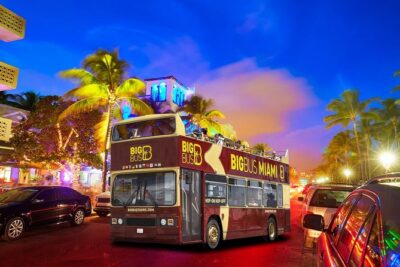
Open-top Bus Sightseeing Night Tour with Live Guide
Read our review →